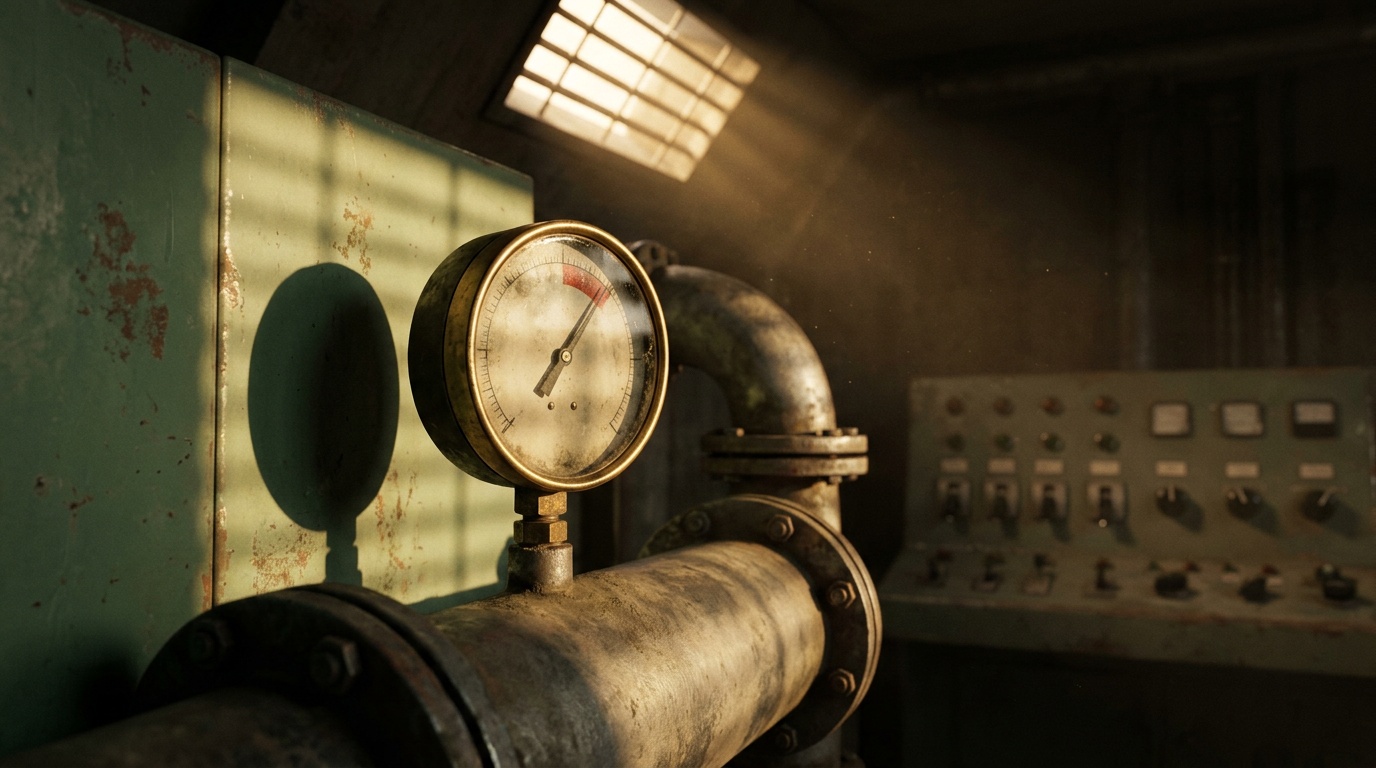
Vault-Tec Chose Which Vaults Would Die of Thirst
THE THEORY
The show confirms that Vault-Tec knew which water chips would fail before installation. What it has not confirmed is the targeting criteria: who decided which vaults received the condemned chips, and by what logic. That unconfirmed selection process is where the real argument lives, because if the distribution followed any criteria at all, then Vault 33's water crisis was not a malfunction but a scheduled outcome.
How This Theory Works
The engineer's cheerful presentation of a 30% failure rate is the detail that reframes everything. He was not reporting a defect. He was presenting an operational parameter, and his visible satisfaction is the tell. Defects cause concern. Features cause satisfaction. By the time that briefing ended, Vault-Tec held a ledger with two columns: vaults that would have water, and vaults that would not.
Barb's response confirms who held the pen. Her question, 'So we get to choose who runs out of water,' is not the language of someone absorbing a moral shock. It is the language of someone confirming a capability. She was not troubled by the authority. She was clarifying its scope. That authority sat at the same management level responsible for designing the vault hierarchy itself, which means the chip distribution was not a rogue decision buried in a supply chain. It was institutional architecture, reviewed at the top and absorbed without visible resistance.
The empty vaults scattered across the wasteland now demand a different explanation than random catastrophe. A 30% attrition rate spread across facilities with pre-assigned defective components does not look like bad luck. It looks like a ledger being worked through. Each depopulated vault is a potential entry on a distribution list that someone drafted before the bombs fell. The scarcity those populations experienced was the system's scheduled output, not its failure mode.
Vault 33's water chip failure is the sharpest edge of this. If Vault 33 appeared on the condemned list, then every death caused by the water crisis, every choice made under manufactured pressure, and every sacrifice that felt like survival's cost was a result someone approved in a pre-war conference room. The chip performed exactly as assigned. What the show has not yet revealed is whether that assignment was random, ideological, or personal, and the answer to that question would mean the version of events the show has already confirmed is still the polite one. The real ugliness is not that Vault-Tec knew chips would fail. It is that they knew which communities would fail with them, and filed that information under management.
Is this theory convincing?
Key Evidence
Engineer's Pre-Installation Knowledge
The episode's engineer states Vault-Tec knows which chips will fail before installation, meaning the company could assign defective chips to specific vaults as a deliberate act rather than accept random failure.
Barb's Selection Authority Confirmed
Barb is shown receiving the chip failure information in a decision-making context, with the implication that she or management would direct which vaults receive the compromised chips.
Engineer's Cheerful Presentation
Multiple accounts describe the engineer presenting the 30% failure rate with visible satisfaction rather than concern, suggesting the defect was understood internally as a feature of population management.
Vault 33 Water Chip Failure
The water chip failure in Vault 33 that triggered Season 1's events can now be read as a pre-scheduled outcome, given that Vault-Tec knew in advance which chips would fail and had authority over their distribution.
Empty Vaults as Planned Casualties
The advance knowledge of chip failures implies that vaults found empty across the wasteland may represent scheduled depopulation events rather than random disasters or unrelated raids.
Scarcity as Corporate Control Architecture
The water chip selection mechanism fits the broader pattern established across Vault-Tec meetings in this episode, where engineered scarcity is treated as a tool for controlling post-war survivor populations.
Other Theories for S2E06
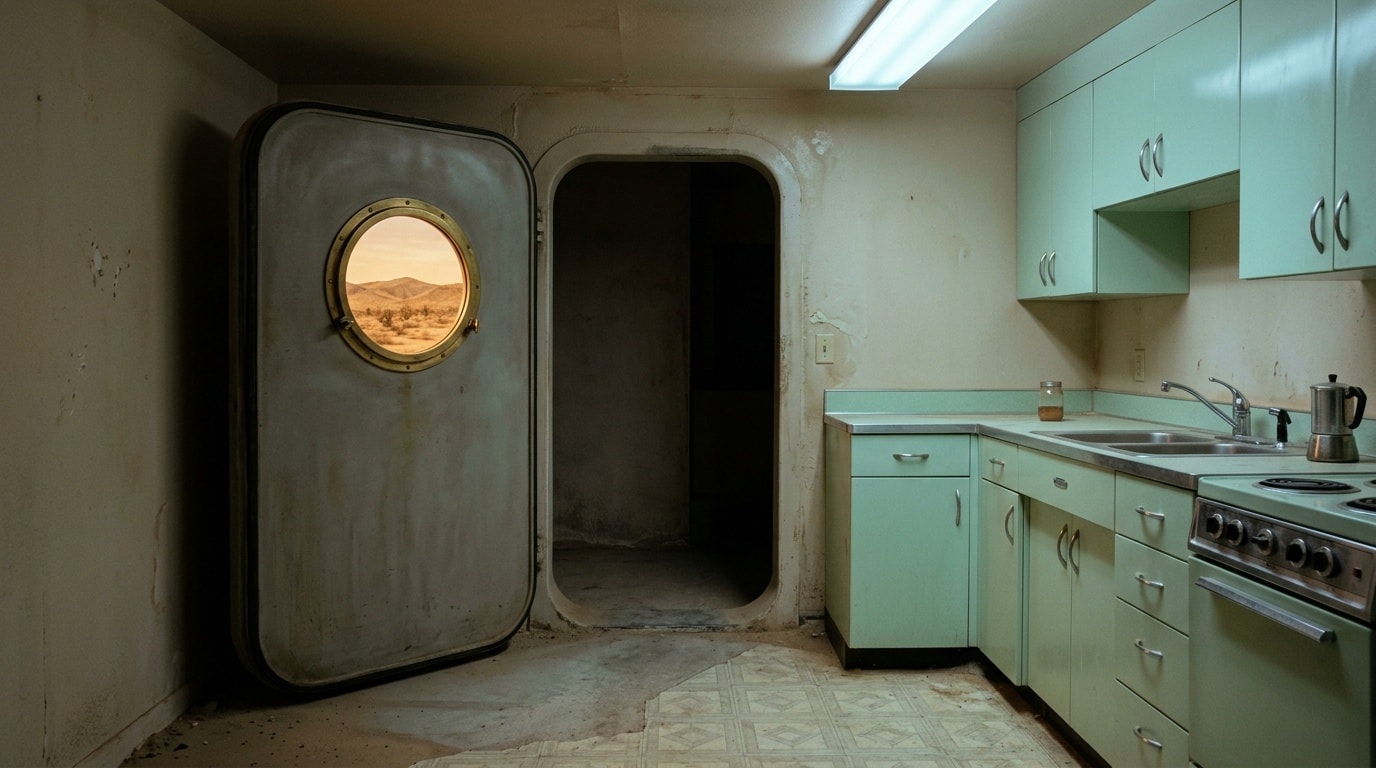
Hank Built the Conditions Under Which Lucy Would Deliver Herself
The simulation room in the Las Vegas management vault is not a generic Vault-Tec facility but a targeted psychological instrument Hank commissioned using his oversight authority — a faithful replica of Vault 33's residential interior built specifically to re-anchor Lucy's identity before she could act on her leverage.
Hank Built the Philosophy Before He Needed the Alibi
Hank's staged surrender is not a man improvising a defense under pressure — it is a man deploying an ideological architecture he constructed in advance of any action that would require justifying.
House's Vault-Tec Deal Was a Single System: Cold Fusion as the Key to a Human Control Infrastructure He Left Running
The Vault-Tec meeting was not a negotiation — it was the transfer of two inseparable components of one pre-architected system.
Dogmeat Knows Exactly What She Is Doing
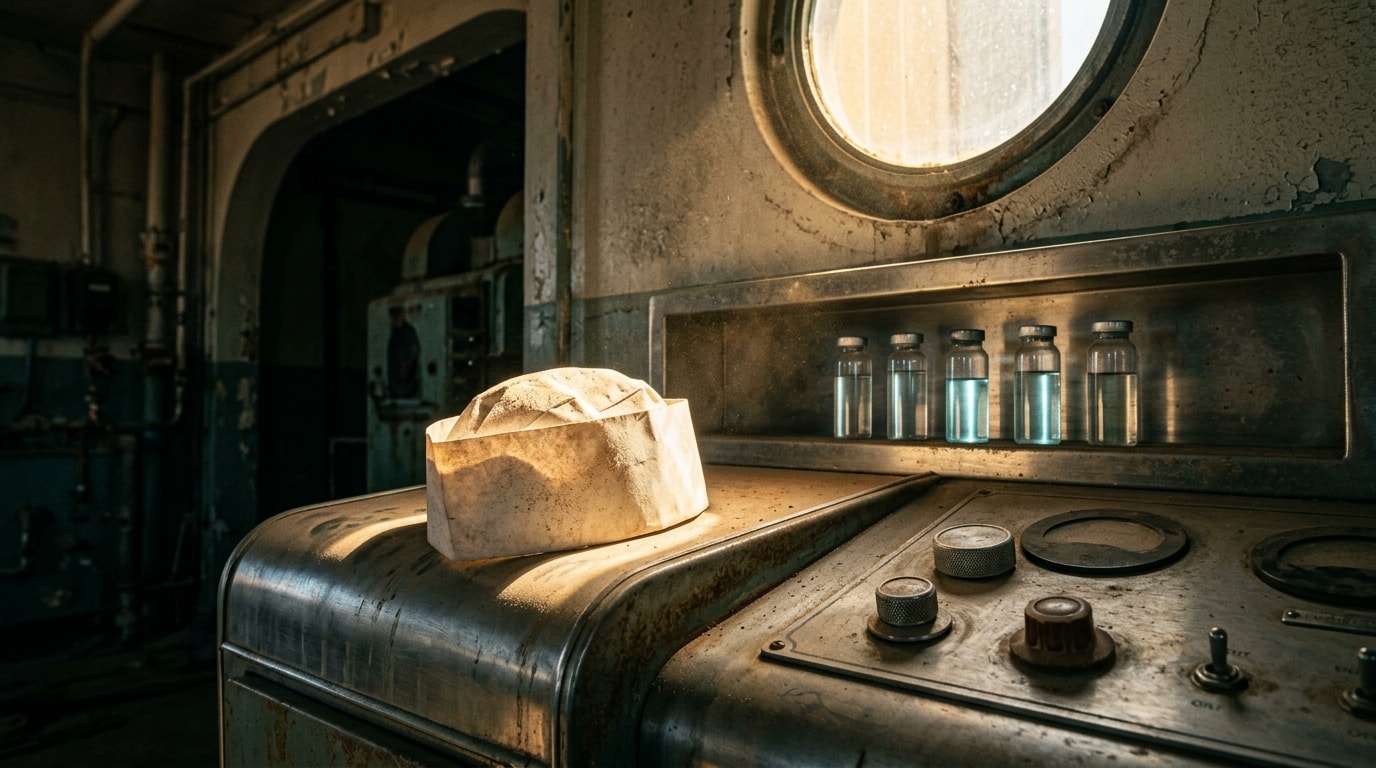
Dogmeat's refusal to retrieve the Ghoul's vials is a strategic substitution: she selected the hat because it would function as a recognition signal to humans capable of solving the larger problem, accepting the Ghoul's feral deterioration as the cost of a longer play.
Hank Built a Mind-Control Empire Before the War
Hank MacLean's substitution into the RobCo meeting was not an act of corporate espionage but the first operational step in a project he has been running continuously ever since, with Vault 33 serving as a decades-long laboratory for solving the signal-tolerance failures that limited the technology's original deployment.
Super Mutants Claim Ghouls as Kindred Enemies
The Super Mutant who pulls the Ghoul from the pole in Freeside is extending a political recruitment: that ghouls and mutants, as shared products of human engineering, constitute a natural alliance with the Enclave as their common enemy.
The Unnamed Super Mutant Is Marcus
The unnamed Super Mutant in Episode 6 is Marcus, and his name is being withheld across every credit and metadata source because confirming it forces the show to honor two games of established lore it has not yet chosen to lock in.
Woody Was Silenced for What He Heard
Woody was removed from Vault 33 not for defiance but for asking a single question, which means the vault's suppression mechanism is calibrated to eliminate awareness before it can spread rather than revolt after it forms.