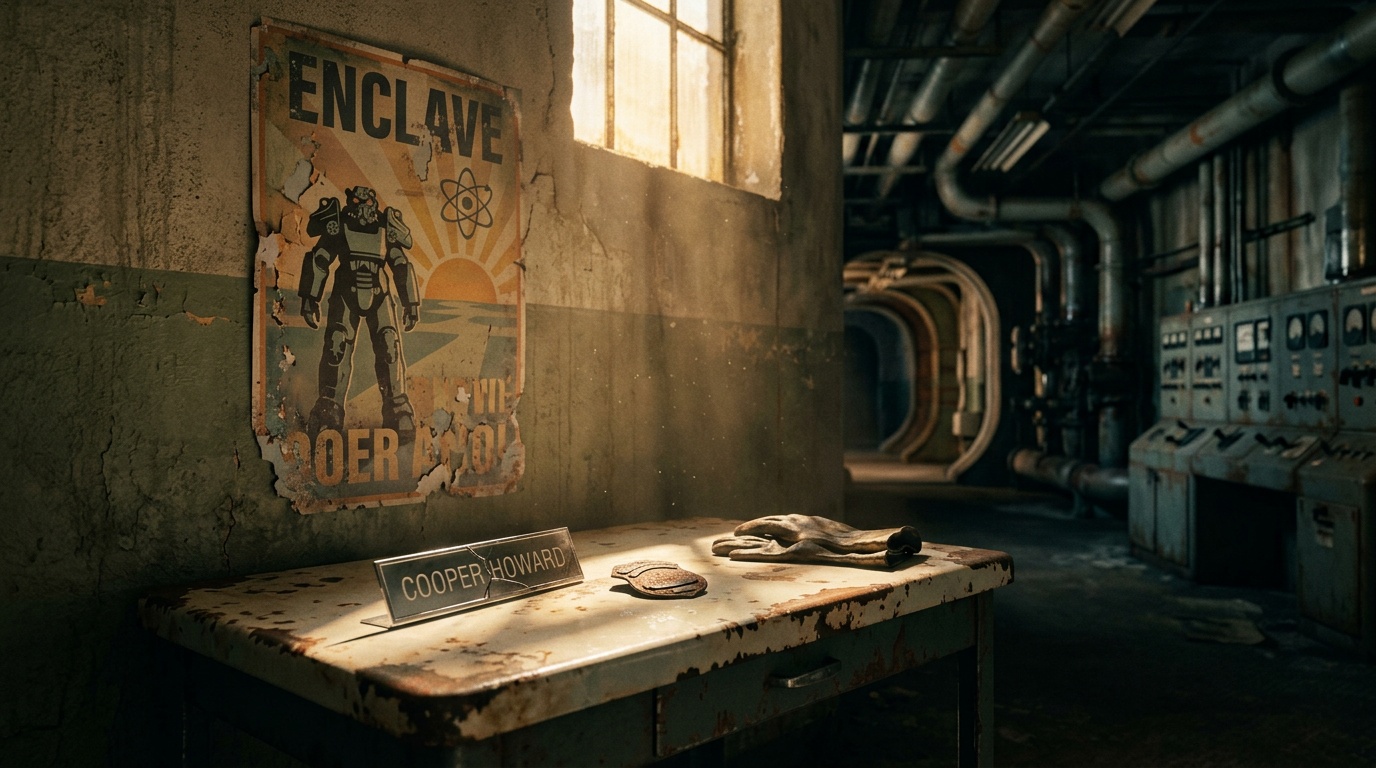
Super Mutants Claim Ghouls as Kindred Enemies
THE THEORY
The Super Mutant who pulls the Ghoul from the pole in Freeside is extending a political recruitment: that ghouls and mutants, as shared products of human engineering, constitute a natural alliance with the Enclave as their common enemy. If the Ghoul accepts this framing, his personal search for his daughter collapses into a structural war between the created and their creators, and Cooper Howard's identity recovery arc becomes a radicalization arc instead. The show has not confirmed whether the Ghoul will take the offer, but the rescue's power dynamics and the Ghoul's desperate grip on his own name suggest he is precisely vulnerable enough to.
How This Theory Works
The Super Mutant's address to the Ghoul is not a greeting. It is a political argument. By naming ghouls and mutants as kin, both made rather than born, the Super Mutant proposes a taxonomy of the post-war world that the show has so far left implicit. The Enclave, as the identified common enemy, becomes the thread that would connect the Ghoul's personal mission with something larger than bounty work or survival.
The Ghoul arrives at this moment already stripped of agency. The power dynamic of the rescue gives the Super Mutant's argument unusual leverage. The Ghoul cannot dismiss the creature who just saved his life, and the show frames this vulnerability deliberately. He has spent the episode fighting to remember his name and his daughter's existence. His identity is the one thread he is clinging to. A Super Mutant who offers him not just vials but a shared origin story is offering something the Ghoul has been quietly losing: a reason to remain himself rather than surrender to the feral pull.
The artificial origin argument is not merely philosophical. It is a recruitment pitch. And the show is quietly building the evidentiary base for it from multiple directions. FEV-driven transformation and radiation-driven ghoulification are not the same process, but the Super Mutant's claim does not require them to be. It requires only that both result from human engineering rather than nature, and that both leave the transformed person discarded by the institutions that produced them. The Brotherhood cannot process one of its own becoming something other than human. The Enclave has no loyalty to the experiments it no longer controls. The Super Mutant's taxonomy names this shared abandonment.
If the Super Mutant's framing holds, then every feral ghoul, every disfigured mutant, and every discarded experiment becomes political evidence rather than collateral damage. The show has not confirmed whether the Ghoul accepts this or rejects it, and that refusal to confirm is exactly where the theory's weight sits. The Ghoul's arc has been built around recovering Cooper Howard's lost humanity. But if he accepts the Super Mutant's taxonomy, he stops being a man reclaiming himself and becomes a weapon the engineered world is building against its engineers.
Is this theory convincing?
Key Evidence
Super Mutant Names Ghouls as Kin
The Super Mutant explicitly tells the Ghoul that ghouls and mutants are kin, both created by the same forces, and uses the word 'abominations' to describe how they are categorized by others.
Enclave Named as Common Enemy
The Super Mutant directly names the Enclave as the common enemy that both ghouls and mutants should unite against, framing the conflict as between the created and their creators.
Ghoul's Feral Vulnerability at Rescue
The Ghoul is near-feral, impaled, and unconscious when the hulking figure arrives, placing him in a position of total dependency that amplifies the weight of any ideological offer extended at that moment.
Ghoul's Identity Fight Before Rescue
Immediately before the rescue, the Ghoul spends his final conscious moments repeating his name and insisting his daughter Janey is alive, establishing that his sense of self is the one thread he is fighting to preserve.
Artificial Origin as Moral Claim
The Super Mutant's argument rests on the idea that being created rather than born confers a shared political identity, reframing monstrousness as a manufactured condition rather than an inherent one.
Other Theories for S2E06
Hank Built the Conditions Under Which Lucy Would Deliver Herself
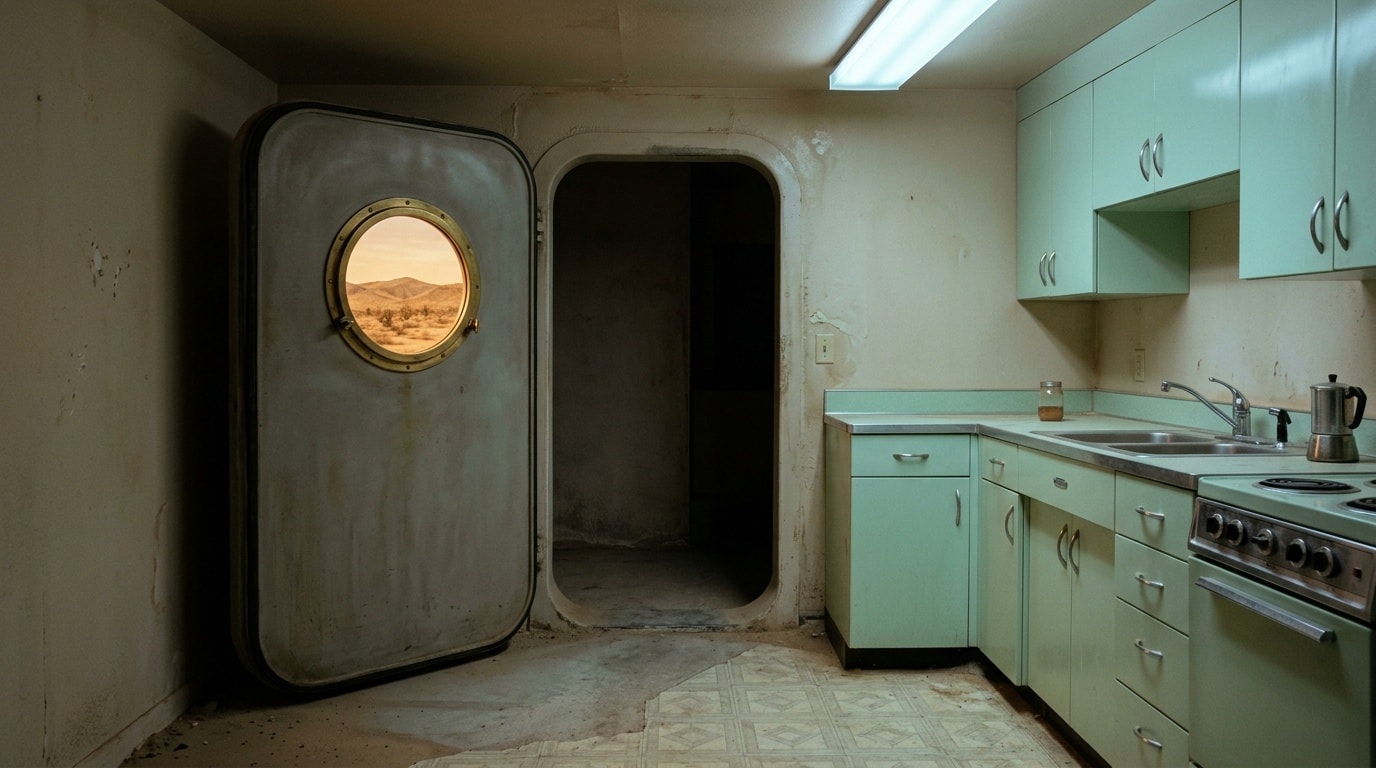
The simulation room in the Las Vegas management vault is not a generic Vault-Tec facility but a targeted psychological instrument Hank commissioned using his oversight authority — a faithful replica of Vault 33's residential interior built specifically to re-anchor Lucy's identity before she could act on her leverage.
Hank Built the Philosophy Before He Needed the Alibi
Hank's staged surrender is not a man improvising a defense under pressure — it is a man deploying an ideological architecture he constructed in advance of any action that would require justifying.
House's Vault-Tec Deal Was a Single System: Cold Fusion as the Key to a Human Control Infrastructure He Left Running
The Vault-Tec meeting was not a negotiation — it was the transfer of two inseparable components of one pre-architected system.
Dogmeat Knows Exactly What She Is Doing
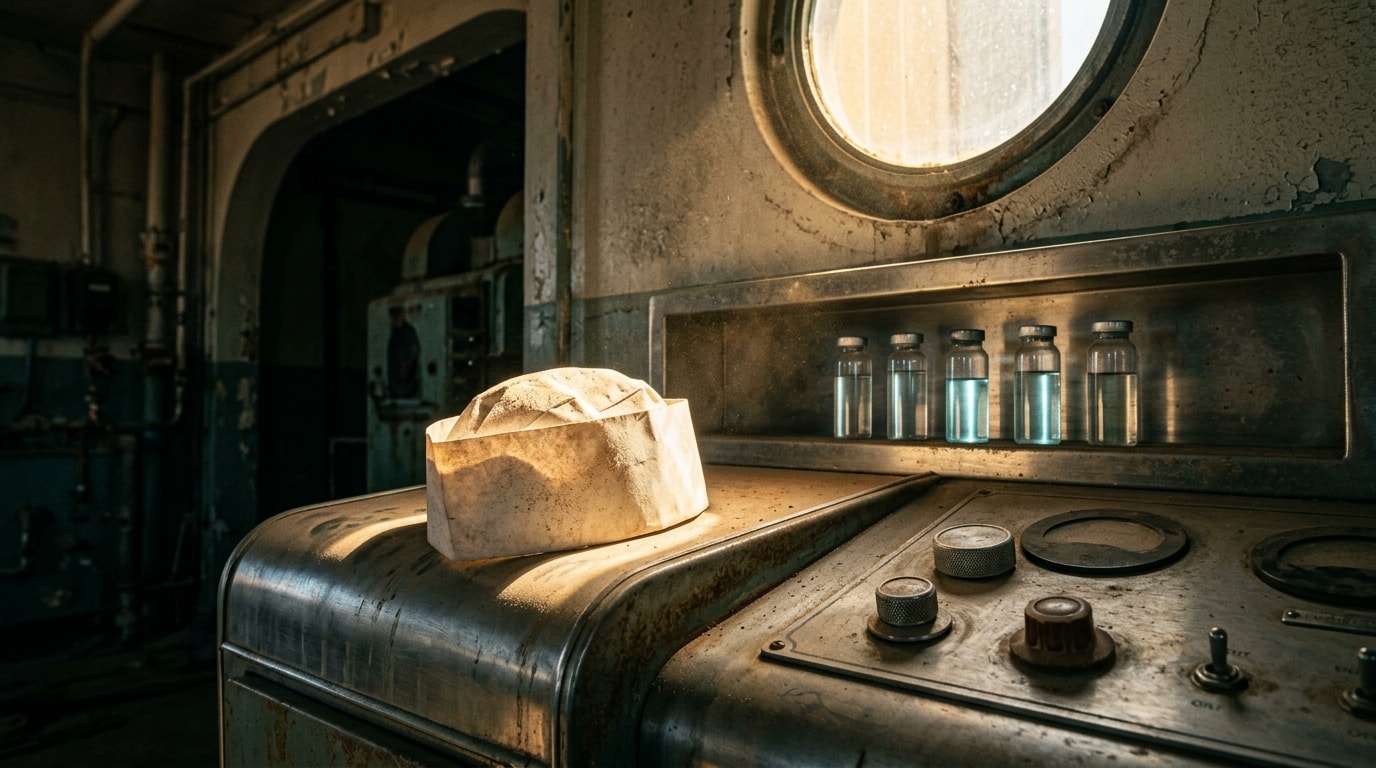
Dogmeat's refusal to retrieve the Ghoul's vials is a strategic substitution: she selected the hat because it would function as a recognition signal to humans capable of solving the larger problem, accepting the Ghoul's feral deterioration as the cost of a longer play.
Vault-Tec Chose Which Vaults Would Die of Thirst
The show confirms that Vault-Tec knew which water chips would fail before installation.
Hank Built a Mind-Control Empire Before the War
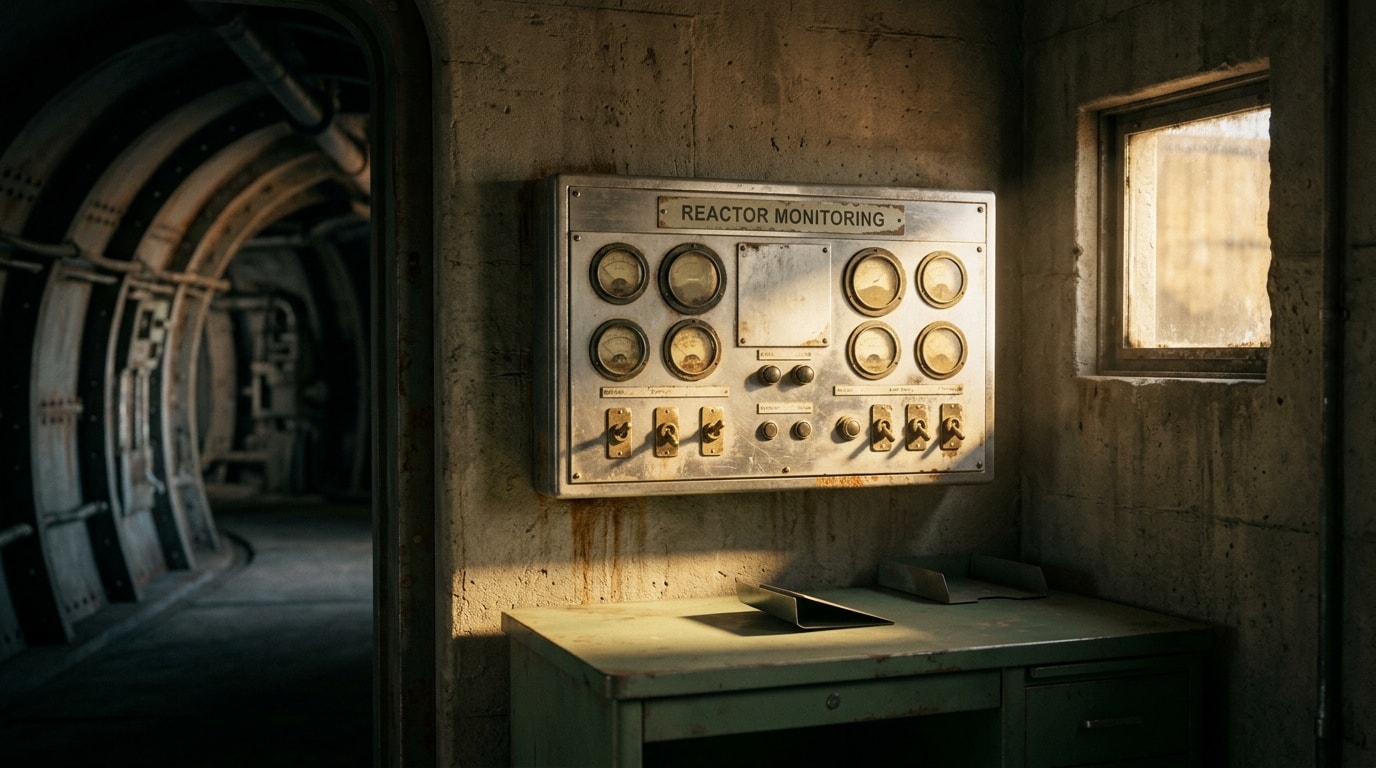
Hank MacLean's substitution into the RobCo meeting was not an act of corporate espionage but the first operational step in a project he has been running continuously ever since, with Vault 33 serving as a decades-long laboratory for solving the signal-tolerance failures that limited the technology's original deployment.
The Unnamed Super Mutant Is Marcus
The unnamed Super Mutant in Episode 6 is Marcus, and his name is being withheld across every credit and metadata source because confirming it forces the show to honor two games of established lore it has not yet chosen to lock in.
Woody Was Silenced for What He Heard
Woody was removed from Vault 33 not for defiance but for asking a single question, which means the vault's suppression mechanism is calibrated to eliminate awareness before it can spread rather than revolt after it forms.