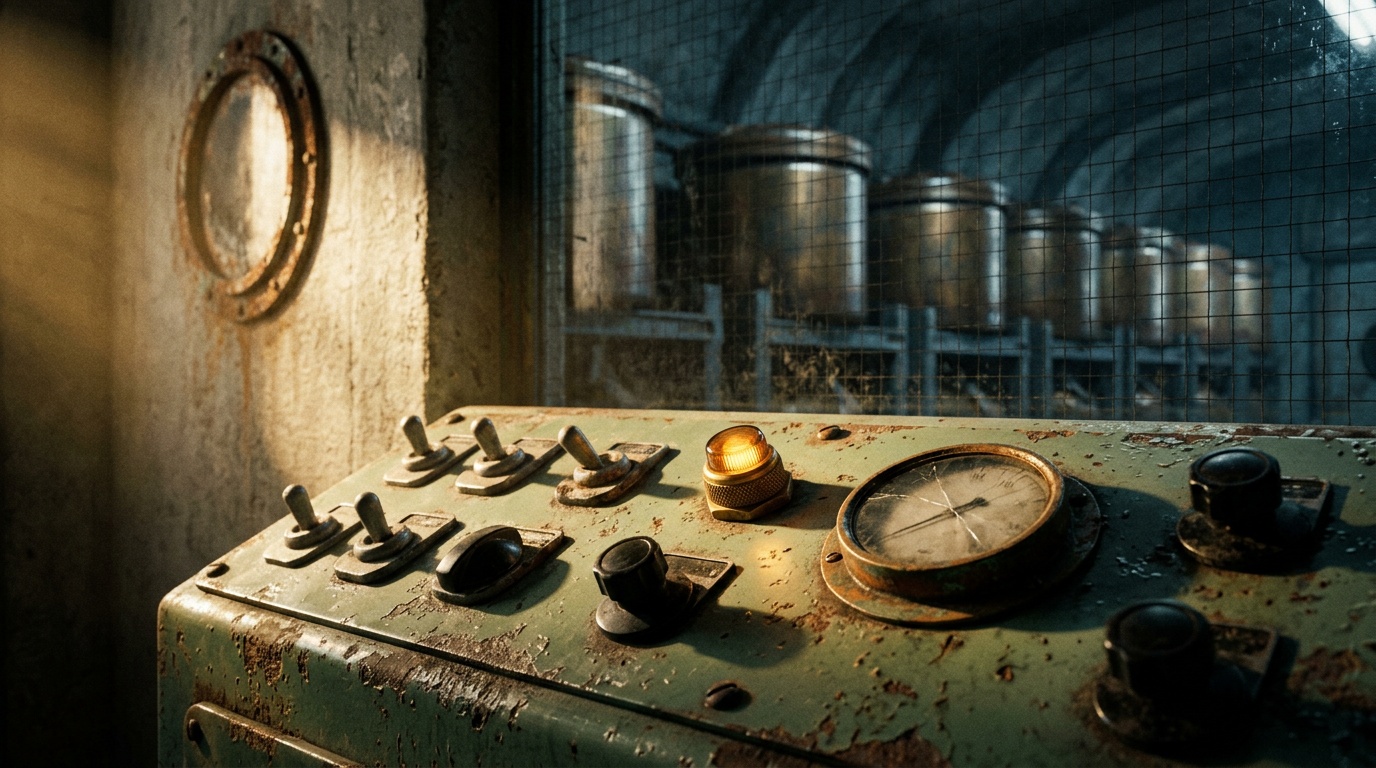
House's Vault-Tec Deal Was a Single System: Cold Fusion as the Key to a Human Control Infrastructure He Left Running
THE THEORY
The Vault-Tec meeting was not a negotiation — it was the transfer of two inseparable components of one pre-architected system. House exchanged the automated man technology for ownership of the cold fusion diode, and those two pieces are not a power source and a separate behavioral product; they are the infrastructure layer and the control layer of the same post-War apparatus. The black box chips operating inside the Las Vegas management Vault are the realized deployment of what House sold that day, and the diode Maximus is carrying through the Mojave is the on-switch for all of it.
How This Theory Works
House walked into that meeting having already closed the core exchange above Barb Howard's access tier. That sequencing is not a minor detail — it is the architecture of the entire encounter. Barb Howard is not a peripheral figure. She is a senior Vault-Tec executive with clearance to classified briefings, and she learned about the cold fusion transfer at the same moment the audience did. House did not neglect to brief her. He arranged the transaction at a level she could not reach, then sat across from her while she processed it in real time. When she pressed him on what his Las Vegas project actually required, he told her it was above her paygrade. When she pushed further, he told her she could wait for the results after the bombs drop. These are not deflections designed to end a conversation — they are precise. House is telling her that the war is a scheduled event inside his timeline, that her institution occupies a lower tier of the plan than it believes, and that the project already knows what it needs. He was not browsing Vault-Tec's offerings. He arrived with a list of one.
The specific demand for the cold fusion diode — rather than capital, access, or any other form of compensation — confirms that House's Las Vegas project had already been engineered around a gap he had not yet filled. A man acquiring speculative leverage takes whatever is most transferable. A man acquiring a missing component takes the component. House took the diode. In exchange, Vault-Tec received the automated man technology along with confirmed access to RobCo's chip implementation across multiple Vaults. The framing of these as two separate acquisitions — one for House, one for Vault-Tec — is precisely the misreading the meeting's structure is designed to produce. They are not a power source traded against a behavioral product. They are two halves of one system changing hands at the same table.
The black box chips close the circuit. The chip-controlled legionaries Lucy observes in the Las Vegas management Vault, the assembly workers already wearing the devices they are manufacturing, the self-replicating architecture of controlled humans producing the instruments of their own control — none of this is improvised post-War engineering. It is the realized deployment of a blueprint House designed, transferred to Vault-Tec with full knowledge of what was coming, and left running beneath the city he built to outlast every institution in that room. The management Vault does not sit under Las Vegas by coincidence. It sits there because the cold fusion infrastructure and the automated man technology were always meant to operate together in that location, and the deal Barb witnessed was the moment both halves of the system found their permanent owners.
The assembly room is where the theory becomes structurally damning. Workers wearing black box chips are producing black box chips. The system scales by consuming its own output — controlled labor generating the instruments of additional control. House did not design a tool. He designed a population management architecture with a self-replicating production layer, and the only thing the system requires to function at full scale is the cold fusion diode providing stable power to the infrastructure beneath Las Vegas. That is what Maximus is carrying through the Mojave. That is why people are dying over it. The show has chosen this specific component — not a generic power cell, not a fungible energy source, but the singular pre-War artifact identified by name in House's meeting — as the object in motion across the wasteland. The narrative is not using cold fusion as shorthand for energy. It is using cold fusion as shorthand for completion.
The sharpest version of the argument is this: House did not lose the diode and spend two centuries waiting to recover a misplaced asset. He transferred it into Vault-Tec's custody as part of a system that required Vault-Tec's infrastructure to function during the post-War period — the Vaults as housing, the chip technology as control, the cold fusion component as power — and the delivery mechanism for returning it to his direct possession was always going to be the chaos of the wasteland sorting itself out. Every institution between House and the diode was, from his perspective, temporary. The NCR, the Legion, the Brotherhood — all of them are operating inside a timeline House scheduled from a conference room before the bombs fell, and the diode moving toward New Vegas is not a loose relic. It is the final step in a transaction that was never actually interrupted.
Is this theory convincing?
Key Evidence
Cold Fusion Traded for Chip Access
House reveals mid-meeting that Vault-Tec is already committed to buying RobCo's automated chip in exchange for his ownership of the cold fusion diode, a deal Barb Howard had not been informed of.
Vegas Project Kept Above Barb's Paygrade
When Barb attempts to ask what House's Las Vegas project entails, he explicitly tells her it is above her paygrade, shielding the project's purpose even from senior Vault-Tec leadership.
Wait for Results After the Bombs Drop
House tells Barb she can wait around for the results of his project after the bombs drop, indicating his plans are designed to survive and function in the post-war period.
Diode as Project's Power Source
House's specific demand for the cold fusion diode rather than any other compensation implies it is a foundational component for his Las Vegas project rather than a speculative acquisition.
Vault Access Granted to House
Barb confirms that House will have the use of multiple Vaults to test the automated chip as he wishes, giving RobCo direct access to Vault-Tec's human population for experimentation.
Black Box Chips in Las Vegas Vault
The automated chip technology from House's pre-war deal now appears as black box control devices on the necks of legionaries in the Las Vegas management Vault, connecting the pre-war exchange to present-day operations.
Other Theories for S2E06
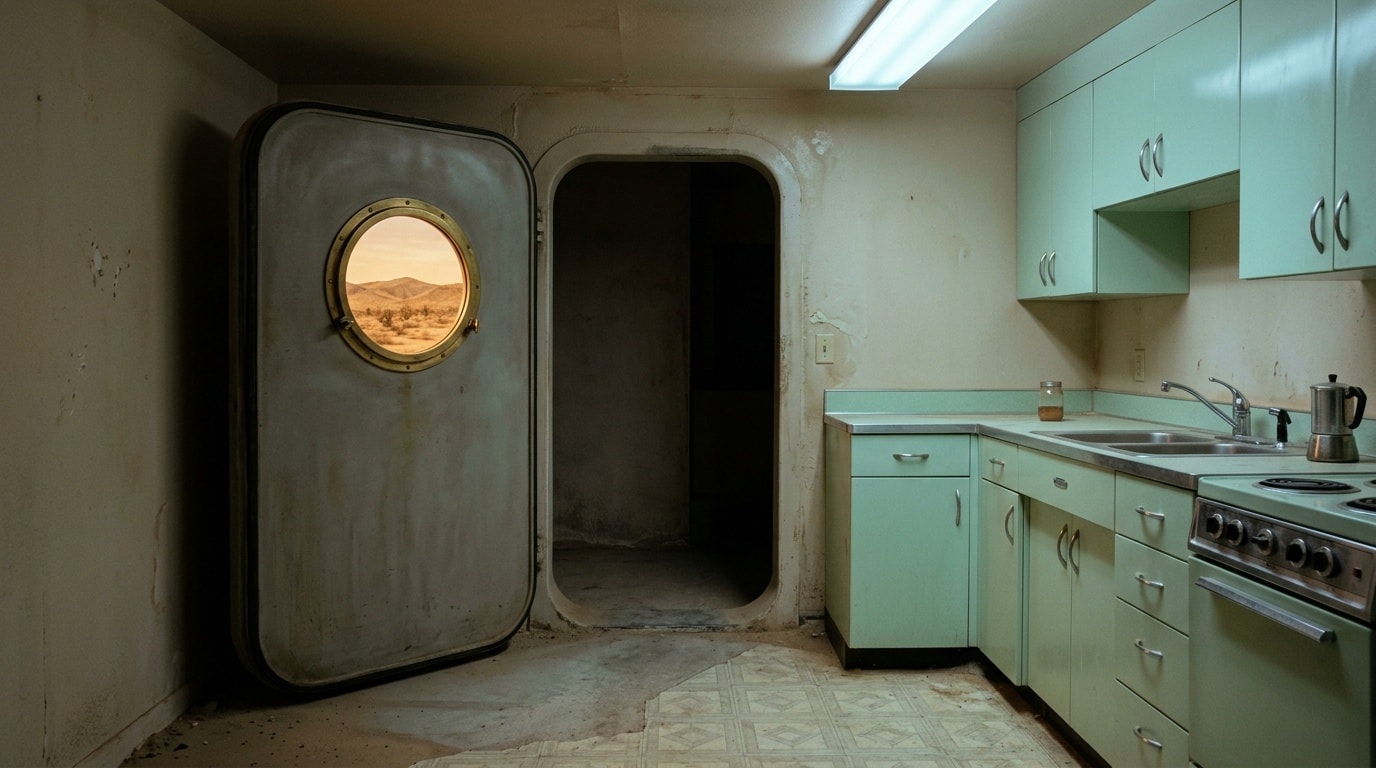
Hank Built the Conditions Under Which Lucy Would Deliver Herself
The simulation room in the Las Vegas management vault is not a generic Vault-Tec facility but a targeted psychological instrument Hank commissioned using his oversight authority — a faithful replica of Vault 33's residential interior built specifically to re-anchor Lucy's identity before she could act on her leverage.
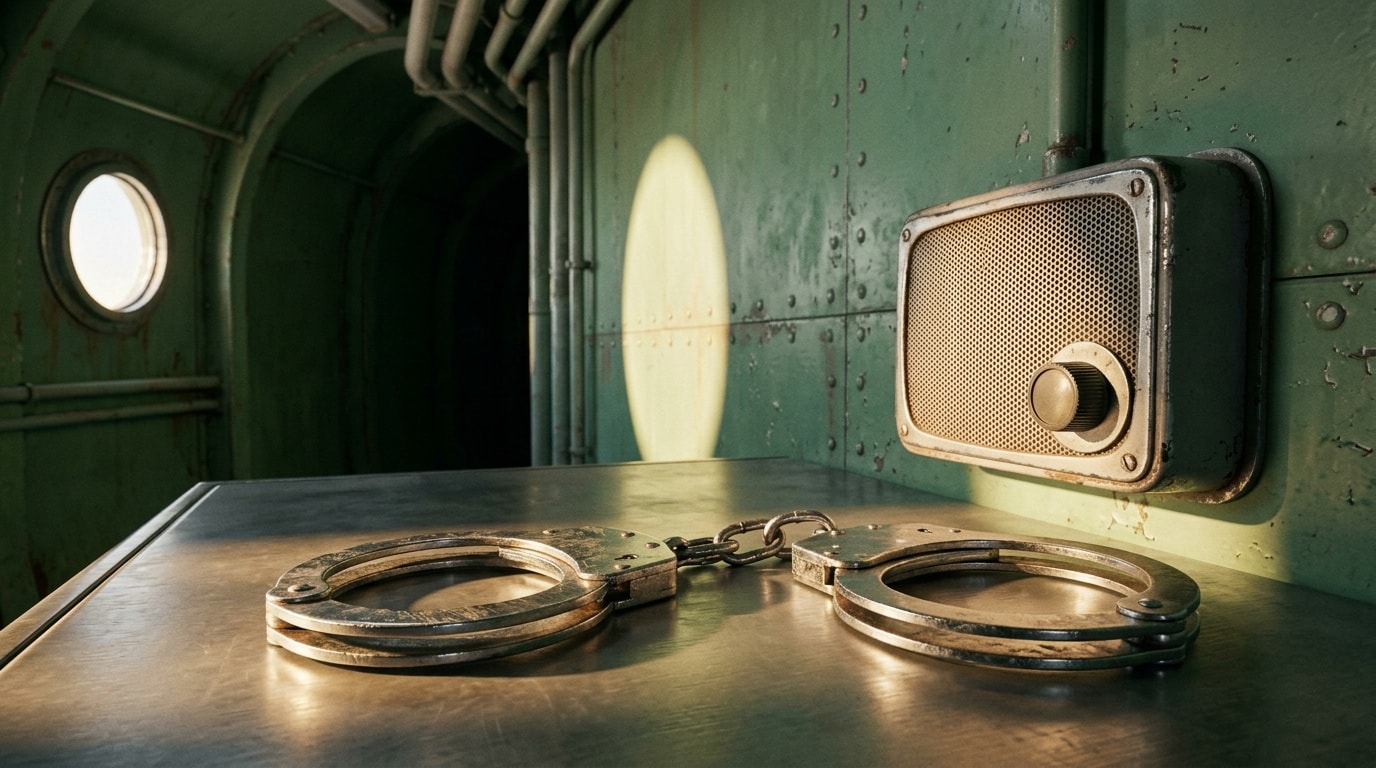
Hank Built the Philosophy Before He Needed the Alibi
Hank's staged surrender is not a man improvising a defense under pressure — it is a man deploying an ideological architecture he constructed in advance of any action that would require justifying.
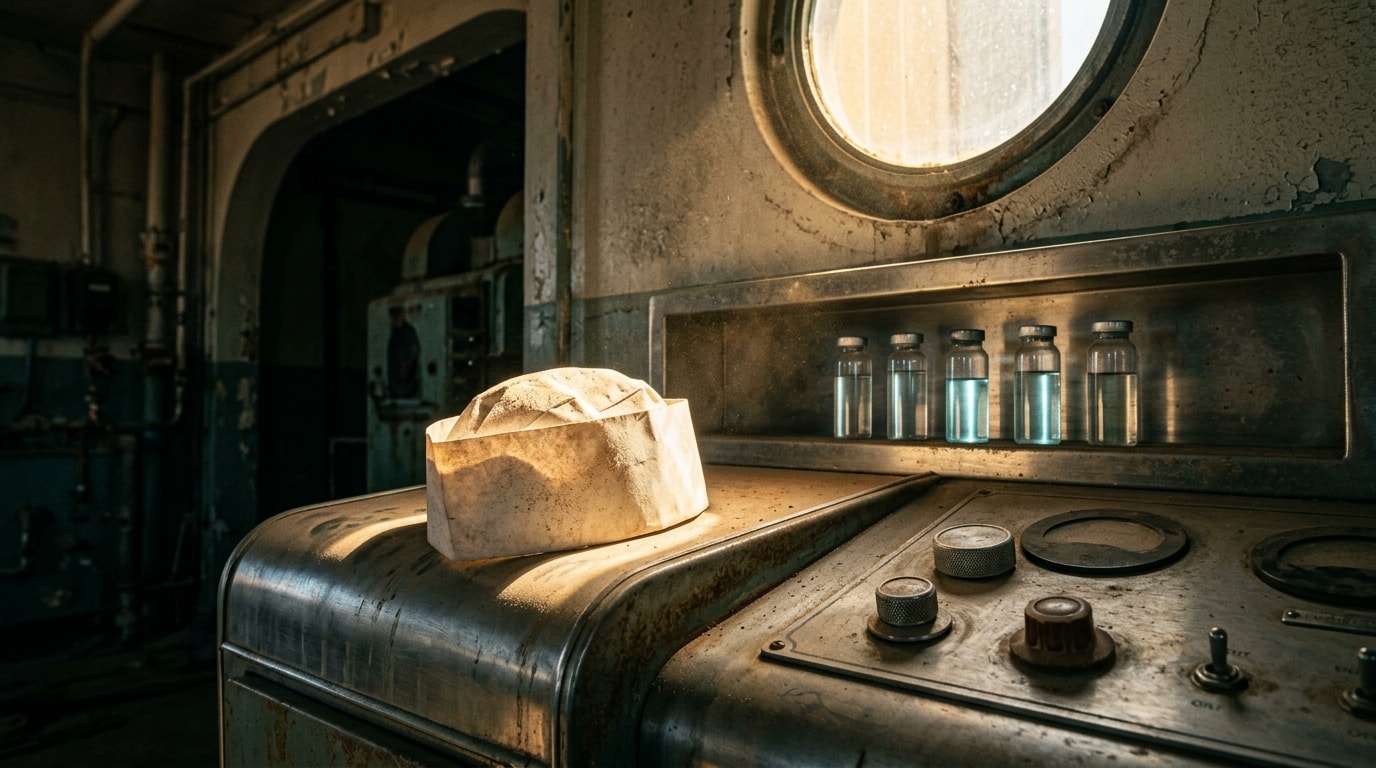
Dogmeat Knows Exactly What She Is Doing
Dogmeat's refusal to retrieve the Ghoul's vials is a strategic substitution: she selected the hat because it would function as a recognition signal to humans capable of solving the larger problem, accepting the Ghoul's feral deterioration as the cost of a longer play.
Vault-Tec Chose Which Vaults Would Die of Thirst
The show confirms that Vault-Tec knew which water chips would fail before installation.
Hank Built a Mind-Control Empire Before the War
Hank MacLean's substitution into the RobCo meeting was not an act of corporate espionage but the first operational step in a project he has been running continuously ever since, with Vault 33 serving as a decades-long laboratory for solving the signal-tolerance failures that limited the technology's original deployment.
Super Mutants Claim Ghouls as Kindred Enemies
The Super Mutant who pulls the Ghoul from the pole in Freeside is extending a political recruitment: that ghouls and mutants, as shared products of human engineering, constitute a natural alliance with the Enclave as their common enemy.
The Unnamed Super Mutant Is Marcus
The unnamed Super Mutant in Episode 6 is Marcus, and his name is being withheld across every credit and metadata source because confirming it forces the show to honor two games of established lore it has not yet chosen to lock in.
Woody Was Silenced for What He Heard
Woody was removed from Vault 33 not for defiance but for asking a single question, which means the vault's suppression mechanism is calibrated to eliminate awareness before it can spread rather than revolt after it forms.