Dogmeat Knows Exactly What She Is Doing
THE THEORY
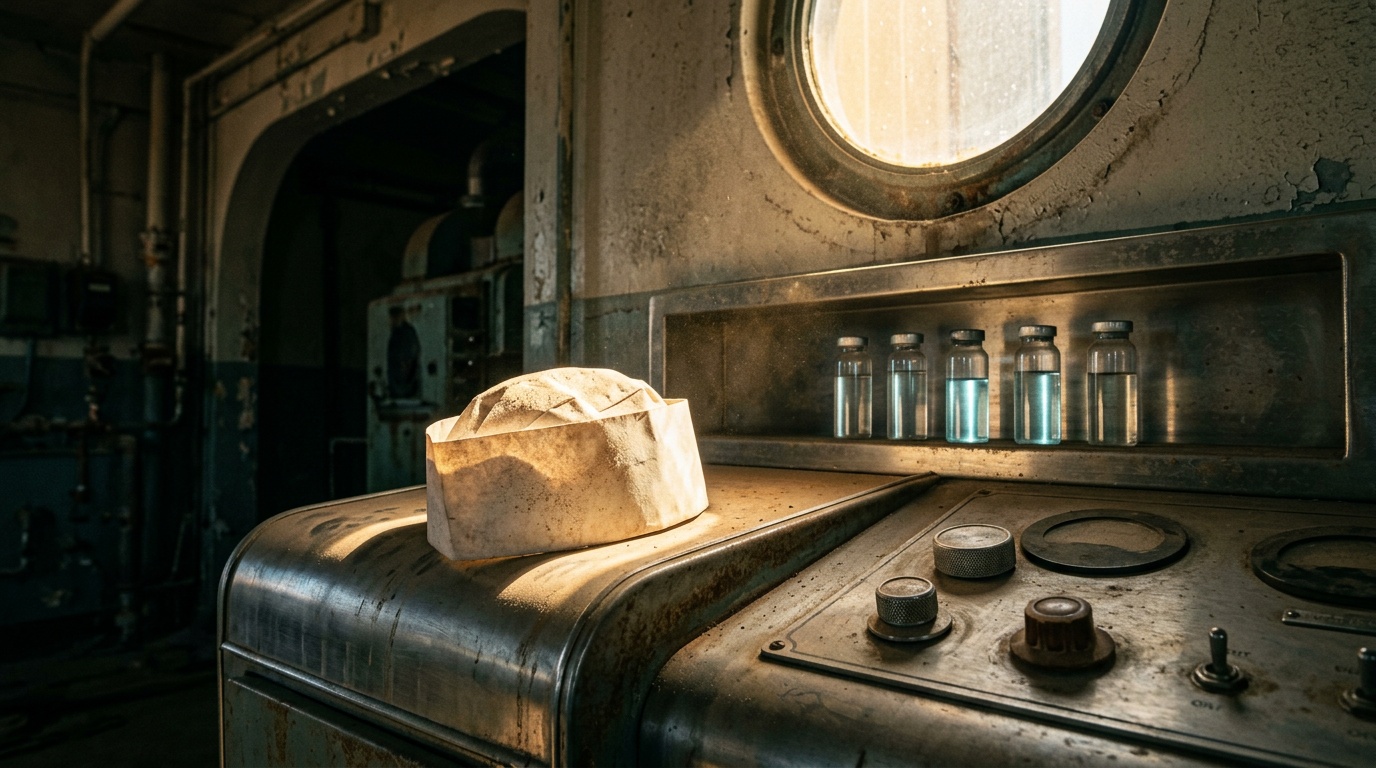
Dogmeat's refusal to retrieve the Ghoul's vials is a strategic substitution: she selected the hat because it would function as a recognition signal to humans capable of solving the larger problem, accepting the Ghoul's feral deterioration as the cost of a longer play. The show has not named what cognitive process produces that trade, and the ambiguity is the argument. If the framing is intentional, Dogmeat is not a companion operating on instinct but the single agent who modeled three other characters' probable behavior and connected them accordingly.
How This Theory Works
Dogmeat made a calculated trade: she accepted the Ghoul's short-term deterioration as the cost of a longer play. When the Ghoul begged her to retrieve the vials that might have slowed his feral turn, she took his hat instead. The hat has no survival value to the Ghoul in that moment. It has maximum identification value to anyone who knows him. That substitution is not a retrieval error. It is a prioritization, and the show's framing treats it as one.
The hat functions as a communicative object in a way the vials could not. The vials are generic. The hat is a personal signature, the most distinctive item the Ghoul carries. Dogmeat arriving at Maximus and Thaddeus's campfire with that specific object in her mouth produces immediate recognition that the vials in her mouth never would have. The two follow her. The plot threads converge. Dogmeat is the sole agent who makes that convergence possible.
What the evidence forces is the uncomfortable accounting of what Dogmeat accepted to make that sequence work. The Ghoul lapses into feral snarling twice while impaled and waiting. She knew, or the show is staging it as though she knew, that the margin was real. She ran it anyway. That is not instinct in any familiar sense. Instinct would have retrieved the nearest useful object. What Dogmeat did was assess the Ghoul's situation, determine that the vials addressed the wrong scale of the problem, select the object most likely to produce a human response from someone capable of solving it, and navigate to the correct campfire. That sequence requires modeling another mind's likely behavior, not responding to immediate stimulus.
The show has not confirmed whether this is instinct, training, or something with no clean category name. But the question the evidence will not let go of is this: if Dogmeat was wrong, if the hat did not work, if Maximus and Thaddeus had not followed her, the Ghoul goes feral and does not come back. She accepted that outcome as a risk worth running. Whatever word the show eventually reaches for to describe what Dogmeat is doing, it will have to account for a dog who looked at a dying man, left him the worse option, and walked away banking on a better one.
Is this theory convincing?
Key Evidence
Dogmeat Ignores the Vials
When the Ghoul begs Dogmeat to retrieve his satchel and spilled vials, she ignores the request entirely and takes his hat instead, choosing an object with no survival value to the Ghoul in that moment.
Hat Delivered to Campfire
Dogmeat arrives at Maximus and Thaddeus's campfire carrying the Ghoul's hat in her mouth, which is the direct narrative trigger for the two to follow her toward the Ghoul's location.
Dog Leads Characters to Ghoul
Following Dogmeat after she delivers the hat, Maximus and Thaddeus are guided to the Ghoul, making Dogmeat the sole agent connecting three separated plot threads in a single episode.
Hat as Recognition Object
The Ghoul's hat is his most distinctive personal item, and its presentation to Maximus functions as an identification signal that the vials, which are generic, could not have provided.
Ghoul's Feral Turn Without Rescue
The Ghoul lapses into feral snarling twice while impaled and nearly loses consciousness for good, establishing that without outside intervention he would have turned before any help arrived through other means.
Other Theories for S2E06
Hank Built the Conditions Under Which Lucy Would Deliver Herself
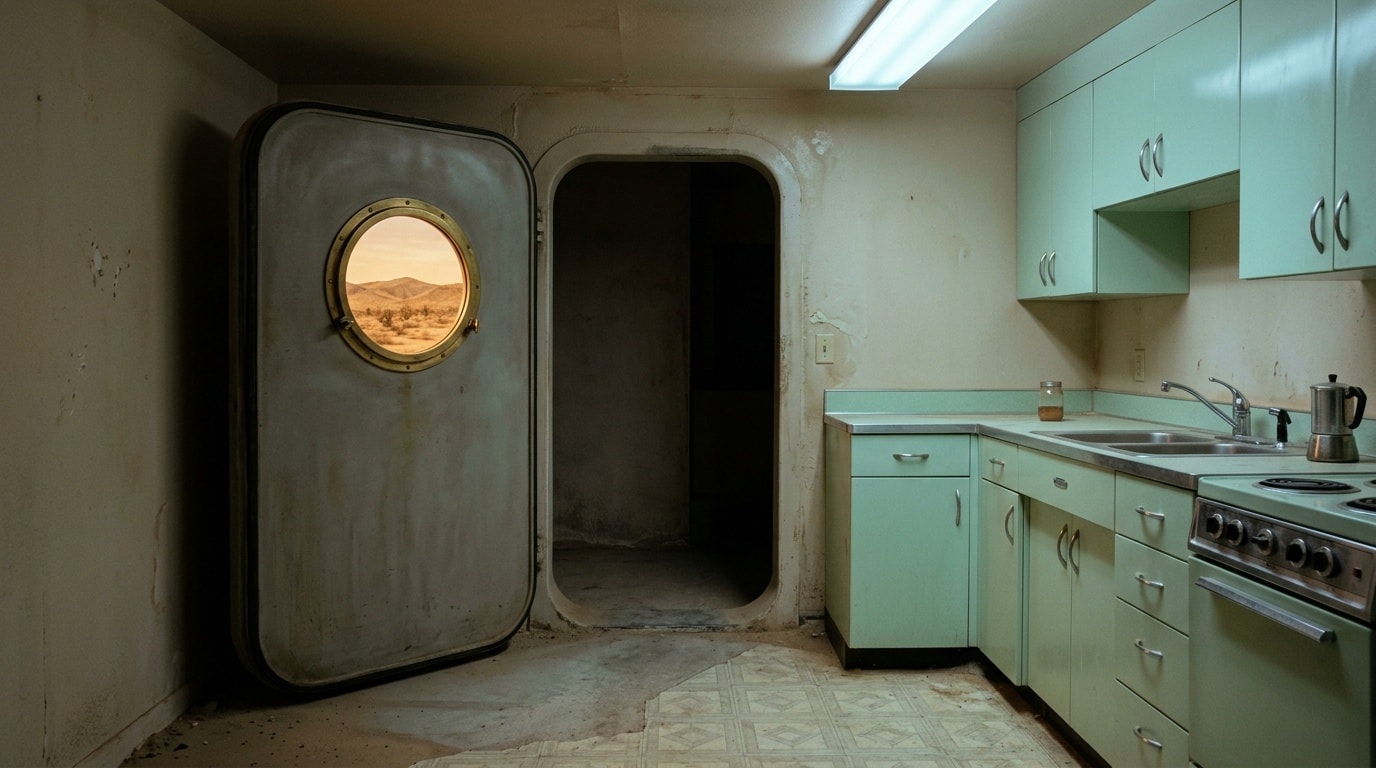
The simulation room in the Las Vegas management vault is not a generic Vault-Tec facility but a targeted psychological instrument Hank commissioned using his oversight authority — a faithful replica of Vault 33's residential interior built specifically to re-anchor Lucy's identity before she could act on her leverage.
Hank Built the Philosophy Before He Needed the Alibi
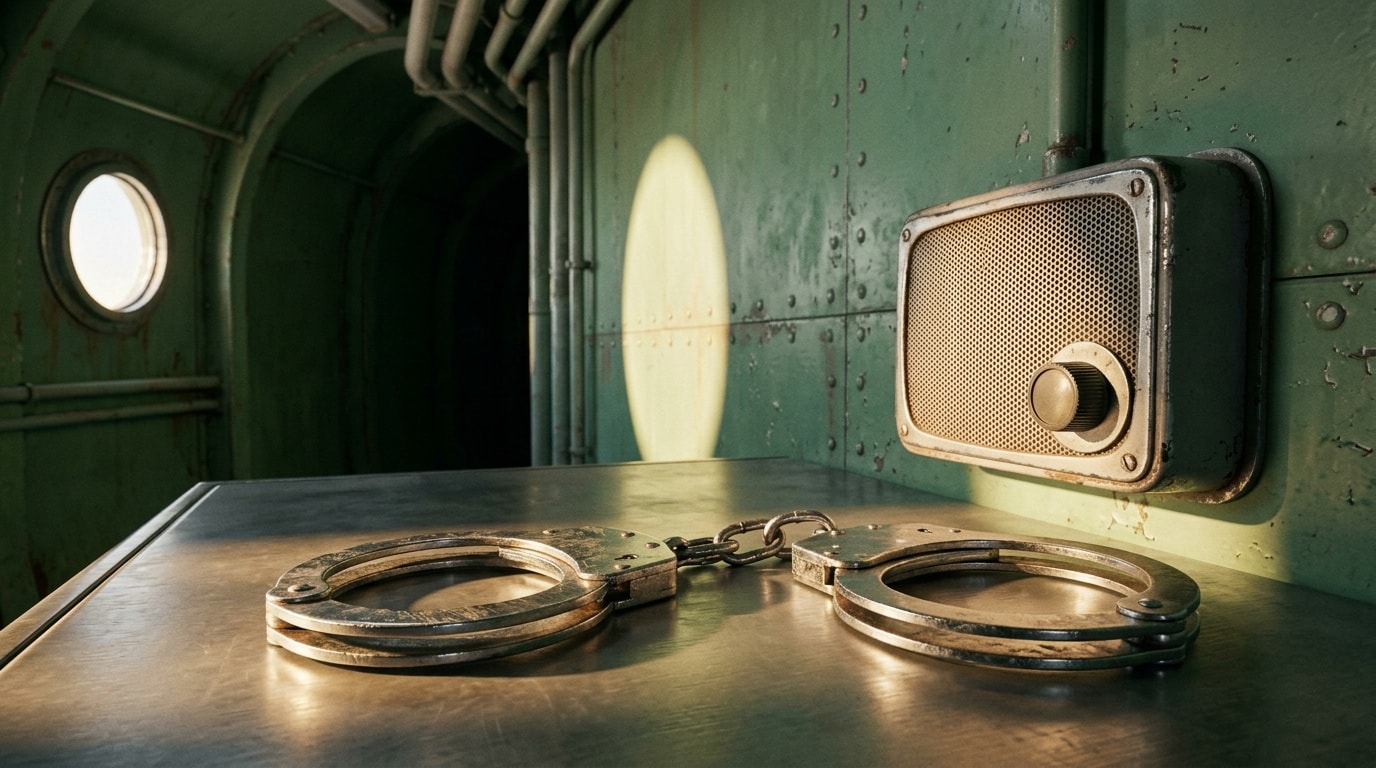
Hank's staged surrender is not a man improvising a defense under pressure — it is a man deploying an ideological architecture he constructed in advance of any action that would require justifying.
House's Vault-Tec Deal Was a Single System: Cold Fusion as the Key to a Human Control Infrastructure He Left Running
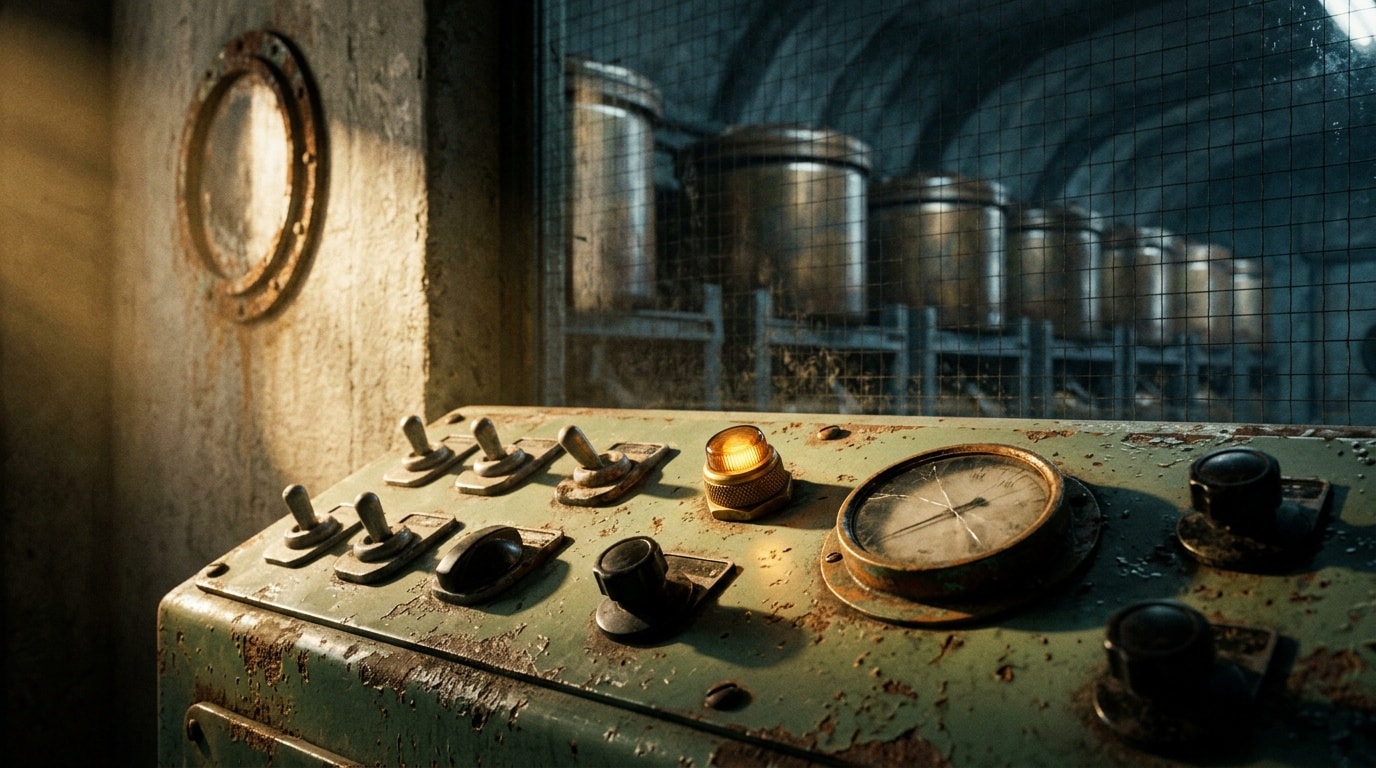
The Vault-Tec meeting was not a negotiation — it was the transfer of two inseparable components of one pre-architected system.
Vault-Tec Chose Which Vaults Would Die of Thirst
The show confirms that Vault-Tec knew which water chips would fail before installation.
Hank Built a Mind-Control Empire Before the War
Hank MacLean's substitution into the RobCo meeting was not an act of corporate espionage but the first operational step in a project he has been running continuously ever since, with Vault 33 serving as a decades-long laboratory for solving the signal-tolerance failures that limited the technology's original deployment.
Super Mutants Claim Ghouls as Kindred Enemies
The Super Mutant who pulls the Ghoul from the pole in Freeside is extending a political recruitment: that ghouls and mutants, as shared products of human engineering, constitute a natural alliance with the Enclave as their common enemy.

The Unnamed Super Mutant Is Marcus
The unnamed Super Mutant in Episode 6 is Marcus, and his name is being withheld across every credit and metadata source because confirming it forces the show to honor two games of established lore it has not yet chosen to lock in.
Woody Was Silenced for What He Heard
Woody was removed from Vault 33 not for defiance but for asking a single question, which means the vault's suppression mechanism is calibrated to eliminate awareness before it can spread rather than revolt after it forms.