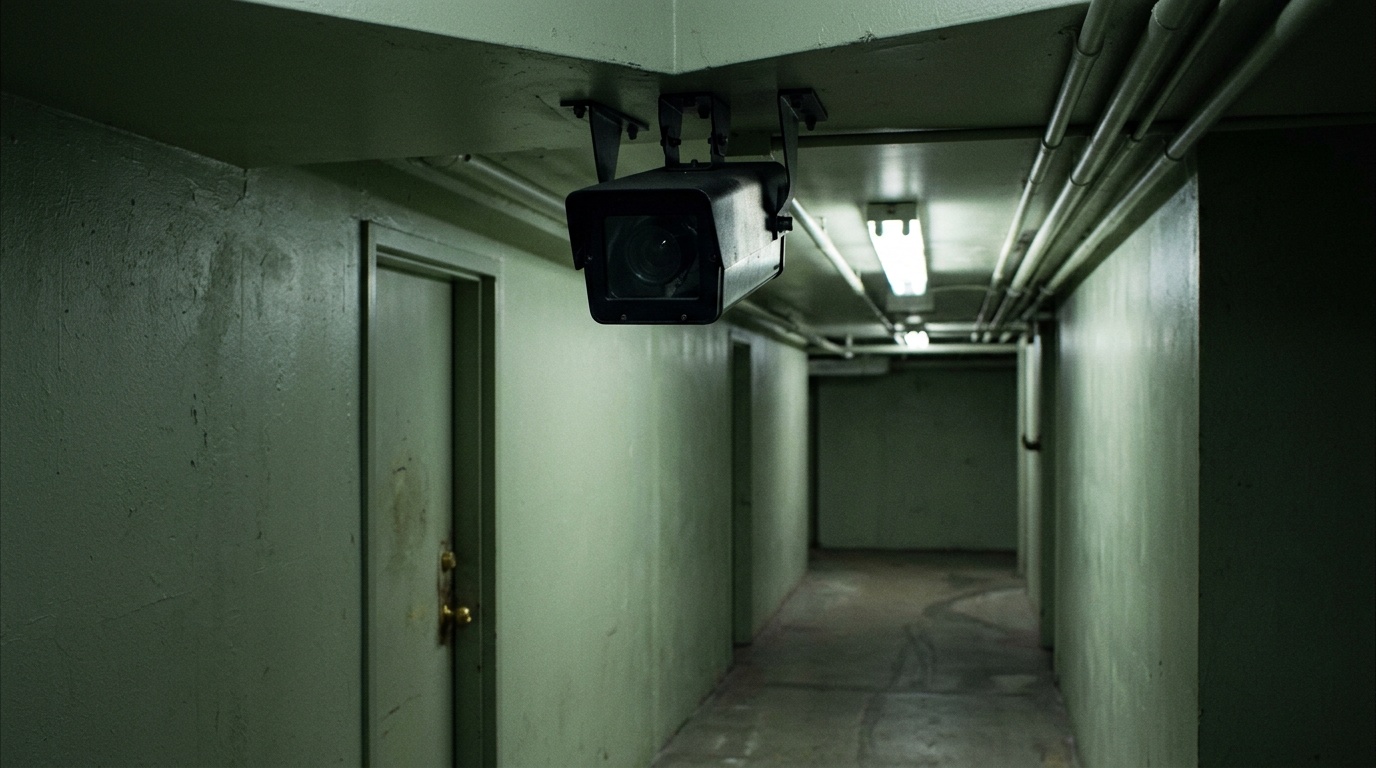
The Plant Room Is Unsanctioned Space
THE THEORY
Burt's plant room is either an undetected gap in Lumon's spatial control or a monitored space the company has chosen to leave apparently unsanctioned, and the distinction determines whether the intimacy it enables is an escape or a resource Lumon is quietly accumulating. Burt's independent discovery of the room, in a context where all other amenities are granted rather than found, marks it as anomalous. If Lumon already knows about the room, the open question is not whether the company can act on what happens there, but what it is waiting for.
How This Theory Works
The plant room is either a genuine blind spot in Lumon's monitoring architecture or a space the company has chosen not to police, and the distinction determines whether Burt's confidence in it constitutes courage or a trap. Employees on the severed floor do not discover amenities, they are granted them. Burt found this room independently, has been using it alone, and frames it as a secret. That mode of access falls outside every mechanism the company uses to control movement: handbook rules, hallway privileges, Milchick's surveillance rounds.
The same episode establishes how precisely Lumon calibrates spatial access. Cobel revokes MDR's hallway privileges as punishment for unauthorized movement, and monitors corridor traffic closely enough to dispatch Milchick the moment the MDR team moves toward O&D. Against that backdrop, a room Burt has quietly occupied without consequence is an anomaly the theory cannot resolve from evidence alone. Either Lumon has a geographic loose end on the severed floor it has not detected, or it has detected it and elected silence.
The second possibility is the harder one. Lumon's recording of the stairwell excursion demonstrates its capacity for comprehensive capture. Burt's assurance that the room is safe may be precisely what Lumon wants him to feel. The specific unanswered mechanism here is this: if Lumon knows about the room, what triggers the decision to act on what happens inside it versus allowing continued use? A company that manufactures intimacy through carefully worded prohibitions has strong incentive to let two department heads bond in a space they believe is secret. The room does not need to be a blind spot to function as a pressure point. It only needs Burt and Irving to believe it is one.
Is this theory convincing?
Key Evidence
Burt Discovered Room Independently
Burt tells Irving he found the plant-filled room on his own some time ago, a mode of discovery that differs from any space Lumon officially extends to employees.
Room Framed as Their Secret
Burt explicitly proposes the room as their secret place, and Irving expresses relief at having somewhere they can be alone, framing the space as outside normal institutional visibility.
Burt's Solo Prior Use
Burt says he comes to the room alone sometimes, indicating he has been using it as a private retreat without any sign of disciplinary response from Lumon.
Same-Episode Hallway Privilege Revocation
In this episode, Cobel revokes MDR's hallway privileges as punishment for unauthorized movement, establishing how strictly spatial access is controlled on the severed floor.
Surveillance Visibility in Room Background
Hallways and doors are visible in the room's background, raising the possibility that the room is not actually outside Lumon's camera network despite being treated as secret.
Intimacy Enabled by Apparent Privacy
The privacy of the room directly enables Burt and Irving's physical closeness, suggesting the space functions as a zone where the handbook's prohibitions feel suspended.
Other Theories for S1E06
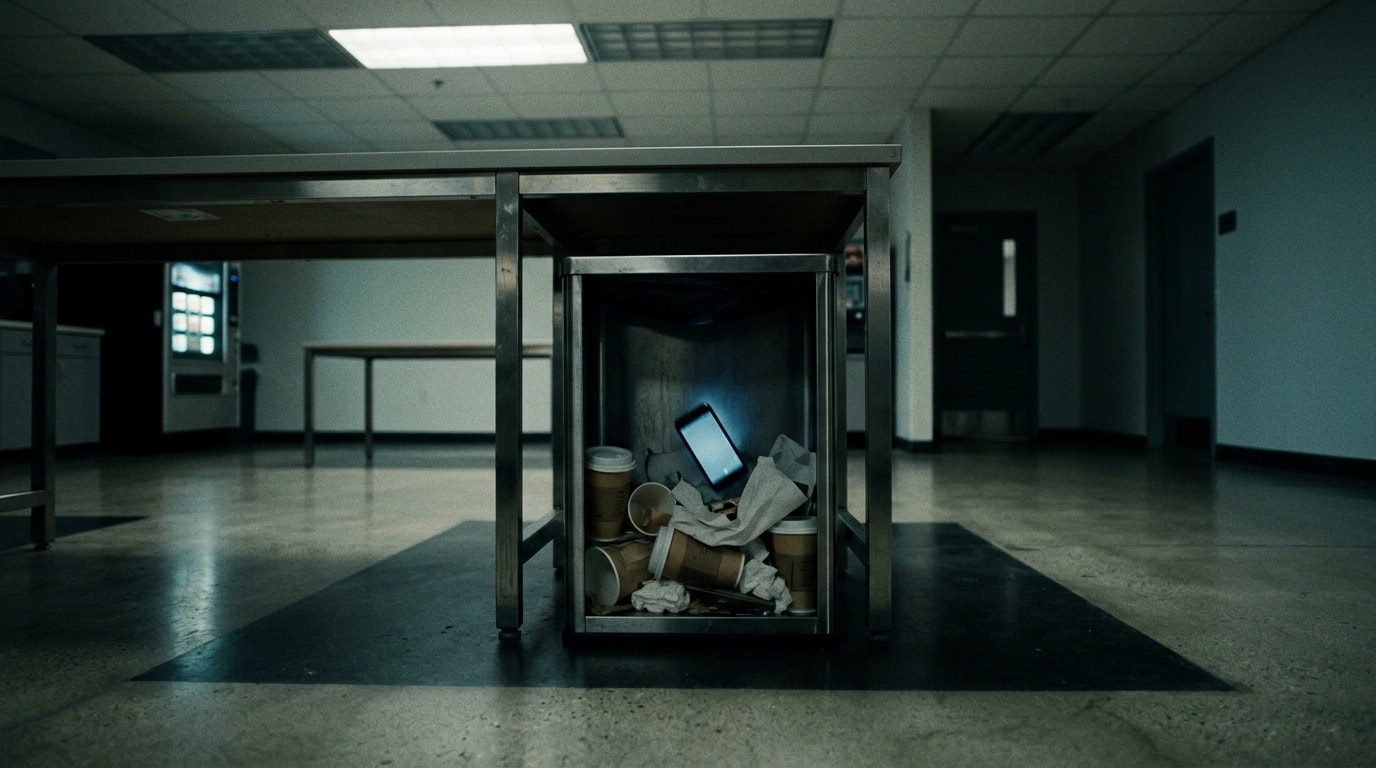
Mark Buries the Evidence to Bury Himself
Mark's outie is as much an obstacle to his own liberation as Lumon is, and the phone disposal proves it: he reviews the missed calls, understands what he is suppressing, and destroys the evidence anyway.
Cobel Serves Kier Before Lumon
Harmony Cobel's obedience to Lumon is conditional on her private judgment that the company remains aligned with Kier's true teachings, making her a theological agent using corporate power rather than a corporate loyalist who happens to be devout.

Mark's Disposal Signals Deliberate Evidence Burial
Mark's disposal of Petey's phone is not evidence destruction but a performance of it: the battery separation, the review of missed calls, and the return to his own curb all indicate someone staging closure while unconsciously ensuring the connection remains traceable.
Lumon Preempts Coordination It Cannot Survive
Lumon's control over its severed employees is not primarily maintained through surveillance and punishment but through designed attention fragmentation: every person with dangerous knowledge is simultaneously obligated to a local, pressing problem that prevents them from pooling that knowledge with anyone else.
Irving's Devotion Accidentally Drives Resistance
Irving's Kier-worship is not a cover for resistance but its accidental engine and its automatic suppressor: he breaches institutional isolation through doctrinal logic and then recants through the same logic, leaving Lumon's control intact.
Kier's Philosophy Condemns Lumon's Own Secrecy
Lumon's leadership did not fail to implement Kier's philosophy of 'illumination beyond all.
Dylan's Son Makes Him Lumon's Leverage
Dylan's innie is now structurally the most dangerous member of MDR, not the most compliant, because Lumon's documented leverage over him and his own radicalization were created by the same witnessed moment.
The Arteta Family Is Lumon's Proof of Concept: Capture Looks Like Friendship
Lumon's relationship with the Arteta family operates simultaneously at the macro level of Angelo's legislative advocacy and the micro level of Gabby's deliberate erasure of Devon, and both registers serve the same institutional function.