Mark Buries the Evidence to Bury Himself
THE THEORY
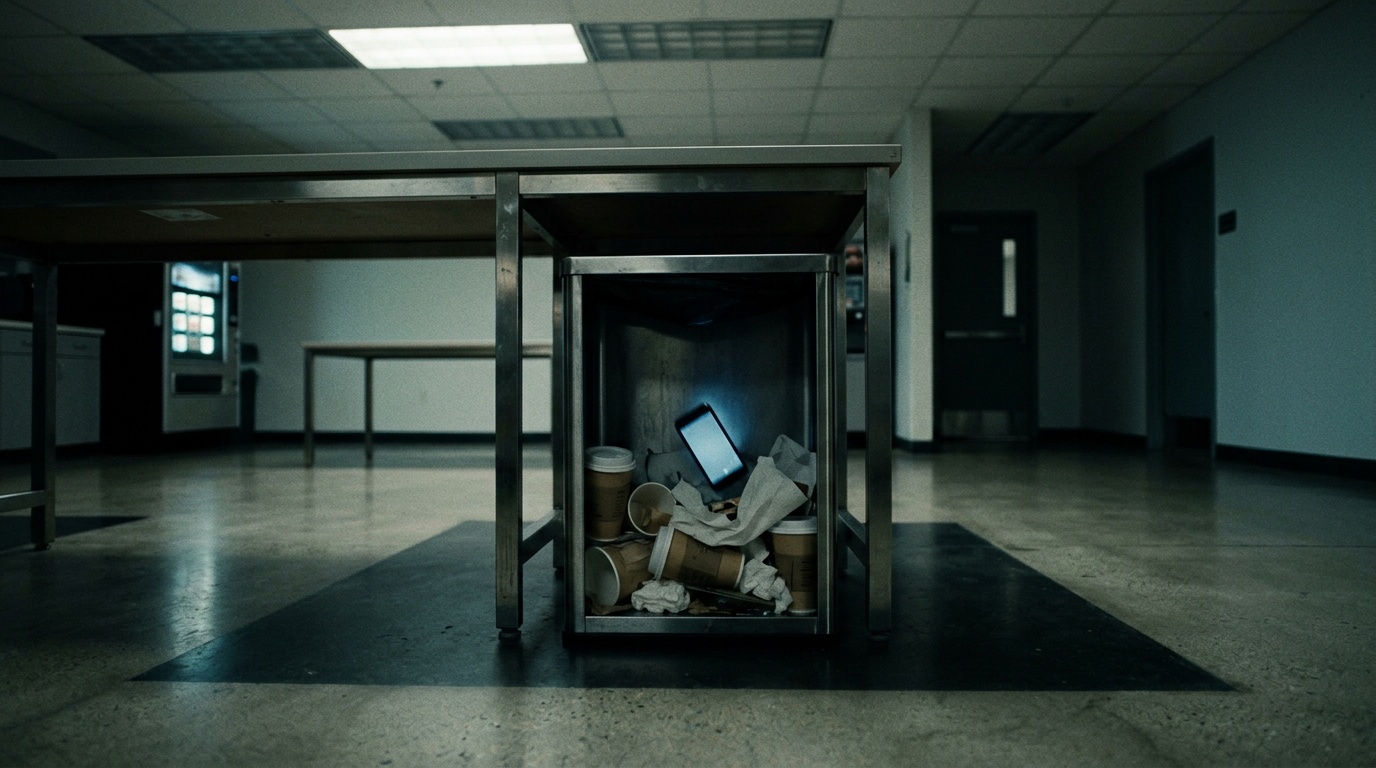
Mark's outie is as much an obstacle to his own liberation as Lumon is, and the phone disposal proves it: he reviews the missed calls, understands what he is suppressing, and destroys the evidence anyway. This is not caution -- it is a pattern of deliberate self-ignorance that mirrors his earlier shredding of Petey's map. What Mark is protecting is not his safety but the psychological architecture that lets him function without confronting what severance has cost him.
How This Theory Works
Mark is not merely covering his tracks. He is choosing to unknow what Petey knew, and the choice is informed. He reviews the missed calls before discarding the phone, which means he sees the evidence, registers it, and destroys it anyway. The deliberateness of the disposal -- phone and battery separated, dropped into an ordinary trash can -- signals that he understood reassembly was a risk he was not willing to accept.
This act lands harder when placed alongside what is already established about Mark's outie. He shredded Petey's map rather than absorb its implications. He is reading Lumon-approved philosophy in his apartment. He disposes of the phone not after being cornered or threatened, but voluntarily, on a quiet morning drive. The pattern is consistent: Mark's outie is not a passive prisoner of Lumon's system but an active participant in maintaining his own ignorance. The phone was his last material connection to a man who died trying to expose Lumon, and he put it in the trash.
The sharpest implication here is not that Mark fears Lumon but that he fears reintegration itself. Petey came back across the severance barrier and it destroyed him. Mark watched that happen. The missed calls on that phone do not just point toward Lumon's secrets; they point toward a version of Mark who might choose to follow them -- the same version who would have to absorb everything his innie has experienced, everything Lumon has done with his severed hours, and everything he chose not to know on the morning he separated the battery from the phone. Shredding the map and discarding the phone are not acts of loyalty to Lumon. They are acts of loyalty to the specific psychological arrangement that lets Mark function: a clean break between the man who grieves his wife on the surface and the man who works in MDR below it. Petey's phone was a thread that, if pulled, would not just expose the company but collapse the architecture Mark has built his survival around. Mark is not protecting himself from Lumon. He is protecting himself from himself.
Is this theory convincing?
Key Evidence
Phone Retrieved Then Discarded
Mark goes to his basement specifically to retrieve Petey's phone, reviews the missed calls, then drives away before reversing course and throwing both the phone and the battery separately into the trash.
Battery Separated From Phone
Mark discards the phone and battery as two separate objects, a detail that signals deliberate rather than impulsive disposal and implies he understood the risks of the device being reassembled.
Pattern of Evidence Destruction
Mark previously shredded Petey's map rather than study it, establishing a prior instance of voluntary destruction of information that could have illuminated Lumon's operations.
Missed Calls Reviewed Before Disposal
Mark looks at the missed calls on Petey's phone before discarding it, confirming he made an informed choice to suppress the leads rather than acting out of ignorance.
U-Turn as Moment of Decision
Mark initially drives away from his house after retrieving the phone, then reverses course to discard it, visually staging his choice to abandon any intention of following Petey's trail.
Other Theories for S1E06
Cobel Serves Kier Before Lumon
Harmony Cobel's obedience to Lumon is conditional on her private judgment that the company remains aligned with Kier's true teachings, making her a theological agent using corporate power rather than a corporate loyalist who happens to be devout.

Mark's Disposal Signals Deliberate Evidence Burial
Mark's disposal of Petey's phone is not evidence destruction but a performance of it: the battery separation, the review of missed calls, and the return to his own curb all indicate someone staging closure while unconsciously ensuring the connection remains traceable.

Lumon Preempts Coordination It Cannot Survive
Lumon's control over its severed employees is not primarily maintained through surveillance and punishment but through designed attention fragmentation: every person with dangerous knowledge is simultaneously obligated to a local, pressing problem that prevents them from pooling that knowledge with anyone else.
Kier's Philosophy Condemns Lumon's Own Secrecy
Lumon's leadership did not fail to implement Kier's philosophy of 'illumination beyond all.
Irving's Devotion Accidentally Drives Resistance
Irving's Kier-worship is not a cover for resistance but its accidental engine and its automatic suppressor: he breaches institutional isolation through doctrinal logic and then recants through the same logic, leaving Lumon's control intact.
Dylan's Son Makes Him Lumon's Leverage
Dylan's innie is now structurally the most dangerous member of MDR, not the most compliant, because Lumon's documented leverage over him and his own radicalization were created by the same witnessed moment.

The Arteta Family Is Lumon's Proof of Concept: Capture Looks Like Friendship
Lumon's relationship with the Arteta family operates simultaneously at the macro level of Angelo's legislative advocacy and the micro level of Gabby's deliberate erasure of Devon, and both registers serve the same institutional function.

O&D Is a Conditioning Program With a Leak
Lumon's O&D department is not a manufacturing operation but a physical-conditioning curriculum, and its most portable artifacts, the pictogram cards, are already moving through an active internal smuggling channel financed by an unknown Lumon insider.