Carol's Resistance Is the System's Most Elegant Product
THE THEORY
Every act of defiance Carol performs is conducted inside the infrastructure she performs contempt for, making her resistance not an exception to the system's logic but its most sophisticated expression. The fireworks ritual is where this becomes indictment rather than tragedy: a cry for help engineered to guarantee no answer arrives, loud enough to prove the attempt and structured enough to ensure its failure. Carol is not a naive captive but a skilled analyst of managed compliance who has reproduced its identical architecture inside herself — and the show frames her inability to see this as the sharpest thing it has to say.
How This Theory Works
Carol's structural position becomes legible the moment she picks up the phone to file a complaint about the Gatorade delivery. That sequence does not begin with defiance; it begins with dependency, which the defiance then attempts to paper over. She specifies ice-cold red Gatorade. The drone delivers it lukewarm. She complains. Every step is conducted inside the infrastructure she is supposedly contesting, and the complaint — a request that the system serve her better — is the most it will ever hear from her. The playlist operates on identical logic: Carol curates rather than simply listens, converting passive consumption into the appearance of aesthetic agency. The song she lands on, 'It's the End of the World as We Know It,' is not a provocation aimed outward but a semiconscious self-description, a piece built around imagery designed to numb its listener into acceptance. The curation is the tell. And when Carol reaches 'And I feel' and stops before 'fine,' the performance's cost exceeds what she can pay. The anger in that gap is not directed at the Others. It is directed inward, at her own knowledge of what she is doing. If the defiance were genuine, the sentence would finish differently. That it breaks precisely at the word she cannot say is the episode's most precise behavioral datum.
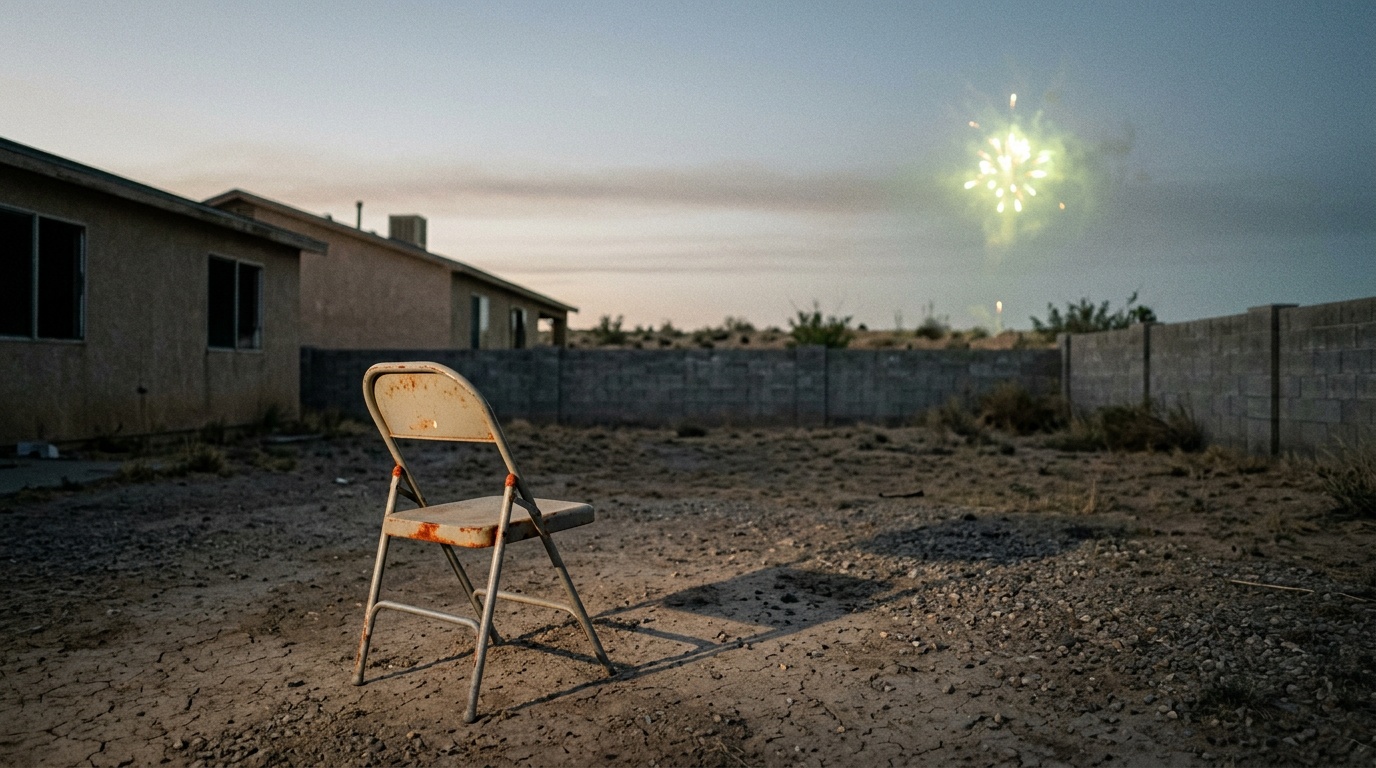
The fireworks sequence does not contradict this reading — it descends to the same argument's root and strips the last layer off. The fireworks are the loudest, most conspicuous, most unmissable activity available to Carol, performed nightly for an audience that never materializes. Read as a cry for help, this looks like social invisibility, a failure of the people around her to register distress. But the frequency is not an accident. Carol places her chair in the center of the display area, closes her eyes, and waits. Those closed eyes are where the argument sharpens beyond pathos into something more organized. She has structured the ritual so that rescue, if it came, would have to announce itself without invitation. She dares someone to stop her while preserving total deniability that she was waiting. The fireworks are loud enough to prove she tried and opaque enough to guarantee she fails. The cry for help and the refusal of the answer are not in tension. They are the same gesture.
The show's visual language ratifies this without dialogue. A wide shot places Carol small at the bottom of the frame while fireworks detonate above and off-camera — not illustrating isolation as a condition but as a verdict. The color progression moves from blue to red to black as Carol turns to face the display, tracking her emotional state into territory she will not name aloud. And when the episode gives her the one moment of genuine physical contact — the embrace with Zoa — she looks away. That averted gaze is not ordinary shame. It is the tell of someone who cannot be seen receiving what she arranged to need. Closed eyes during the fireworks, averted gaze during the embrace: both are Carol engineering her own unwitnessing at the exact moment witness becomes structurally available. The performance of distress and the refusal of its answer are identical in form.
The Bella Donna acquisition names this condition from the outside. When Carol removes the original painting from the museum wall and hangs it in place of the reproduction she already owned, the gesture is visually indistinguishable from her old life. Structurally it is its inversion. The reproduction was an object embedded in social exchange — displayed, shared, part of a world with other people in it. The original is removed from every circuit and witnessed by no one. Carol reaches for the authentically human-made object at precisely the moment actual humans have become too dangerous to need: the painting's title translates as 'beautiful woman' and names a plant that is ornamental and poisonous in equal measure, which is Carol's current condition named before she can name it herself. That the composition holds two blooms — one open and facing outward, one angled away — and that Carol stares at it impassively while waiting for Zosia, checking whether she still registers as the thing the painting depicts, is not incidental. The painting does not answer. It mirrors. That is its function for her now, and why she has chosen it over any living alternative.
The synthesis the episode makes is damning precisely because Carol is not naive. She has observed, at close range, how a system sustains itself by absorbing its subjects' small resistances rather than suppressing them, how behavioral constraints can be exploited because their logic is fully legible to the person inside them. That analytical clarity, applied outward, is formidable. Applied inward, it is nowhere. Carol cannot see that she is filing complaints inside the same architecture she studies from the outside, because seeing it would require her to acknowledge that her defiance has a structural ceiling she chose not to raise. The Others hold her more completely than they hold the Joined, whose surrender was at least unconcealed. Carol is the one maintaining, for her own benefit, the fiction that she has not surrendered — and the analytical intelligence she directs so precisely at external systems of managed compliance is the exact faculty that, turned inward, would end the fiction entirely. The show's indictment is that she does not turn it inward. The truncated lyric is where the fiction momentarily fails. The fireworks are where she rebuilds it, nightly, with her eyes closed.
Is this theory convincing?
Key Evidence
Carol's Chair Placement and Closed Eyes
Carol positioned her chair in the center of the fireworks area, then closed her eyes and waited, which the theory reads as deliberate exposure testing whether anyone would intervene rather than passive enjoyment.
Wide Shot Framing Carol Below Fireworks
A wide shot places Carol small at the bottom of the frame while fireworks explode off-camera above her, visually representing her isolation and her existence in the gap between order and chaos.
Blue-to-Red-to-Black Color Progression
The fireworks scene uses a color sequence shifting from blue to red to black as Carol turns to face the display, with the theory reading this as a visual track of her emotional state moving from safety through danger into darkness.
Fireworks as Nightly Attention-Seeking Ritual
Carol's repeated fireworks displays are the most conspicuous, attention-demanding activity available to her, and the theory reads this choice as an unconscious broadcast of distress rather than genuine celebration.
Carol's Averted Gaze During Embrace
When Carol grabs Zoa in an embrace, she looks away rather than meeting her eyes, which the theory interprets as shame and psychological collapse rather than an act of genuine connection or control.
Other Theories for S1E07
Principled Defiance That Defeats Itself
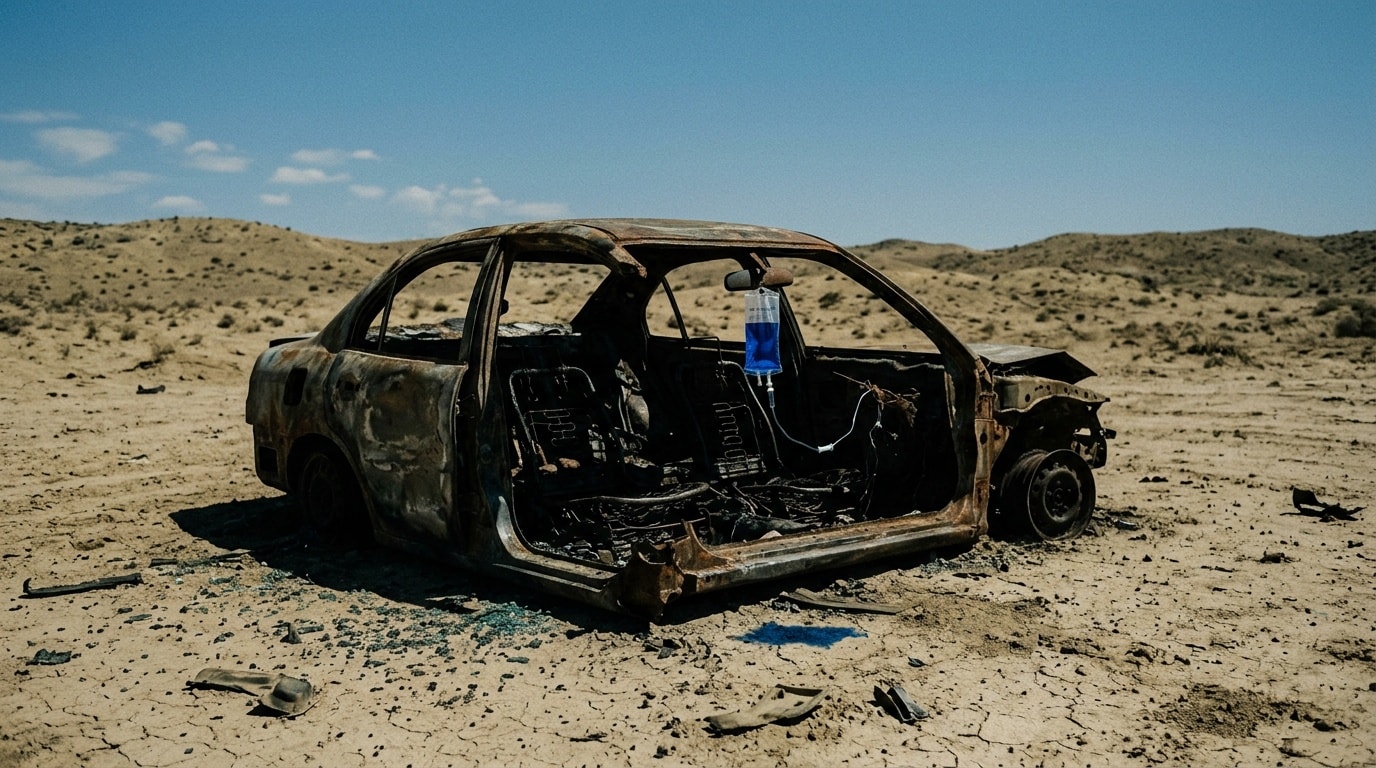
Manousos refuses every form of hive assistance on ideological grounds, insisting that nothing the hive possesses on Earth is rightfully theirs.
The Hive's Most Elegant Trap Is Carol's Own Need
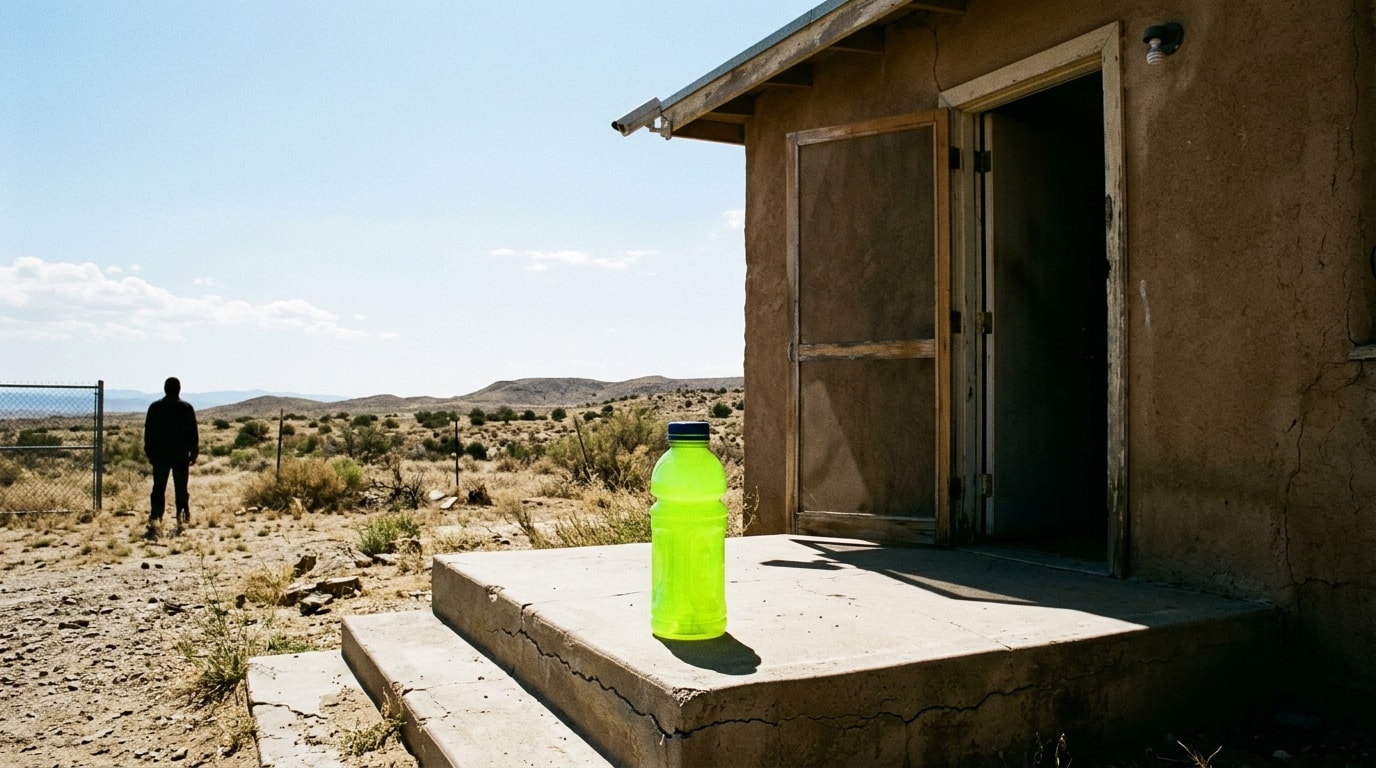
Carol's resistance to the hive was never undermined from outside.
Manus Burns Everything to Commit Forward
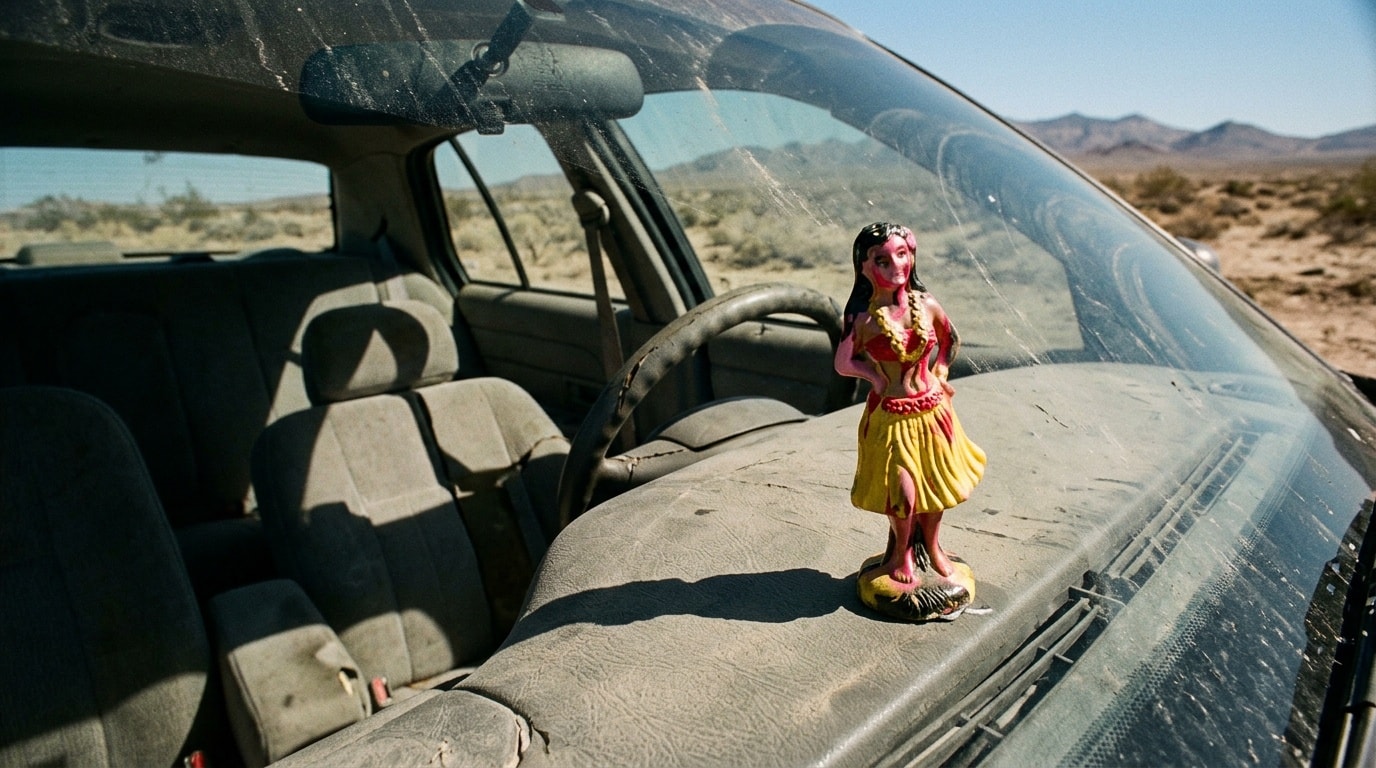
The burning at the Darien Gap is not renunciation Manus stumbles into.
Two Breaking Points, One Missing Balance
Carol and Manus have each developed survival strategies that are precise inversions of the other's failure: Carol has started treating collapse as permission while Manus cannot stop honoring obligations the collapsed world has made meaningless, and the show positions their separation as the condition that makes both traps fatal.
Carol's Frozen Eggs as a Consent Loophole
The Joined have already circumvented Carol's refusal to consent to conversion by identifying her frozen eggs as a source of stem cells that requires no extraction from a living person, rendering the consent framework the show treats as a moral boundary structurally inapplicable to their actual method.
Carol Joins the Pack, Leaves Civilization
Carol's animal encounters across these episodes are the show's argument that civilization can be consciously and methodically abandoned, not simply lost.