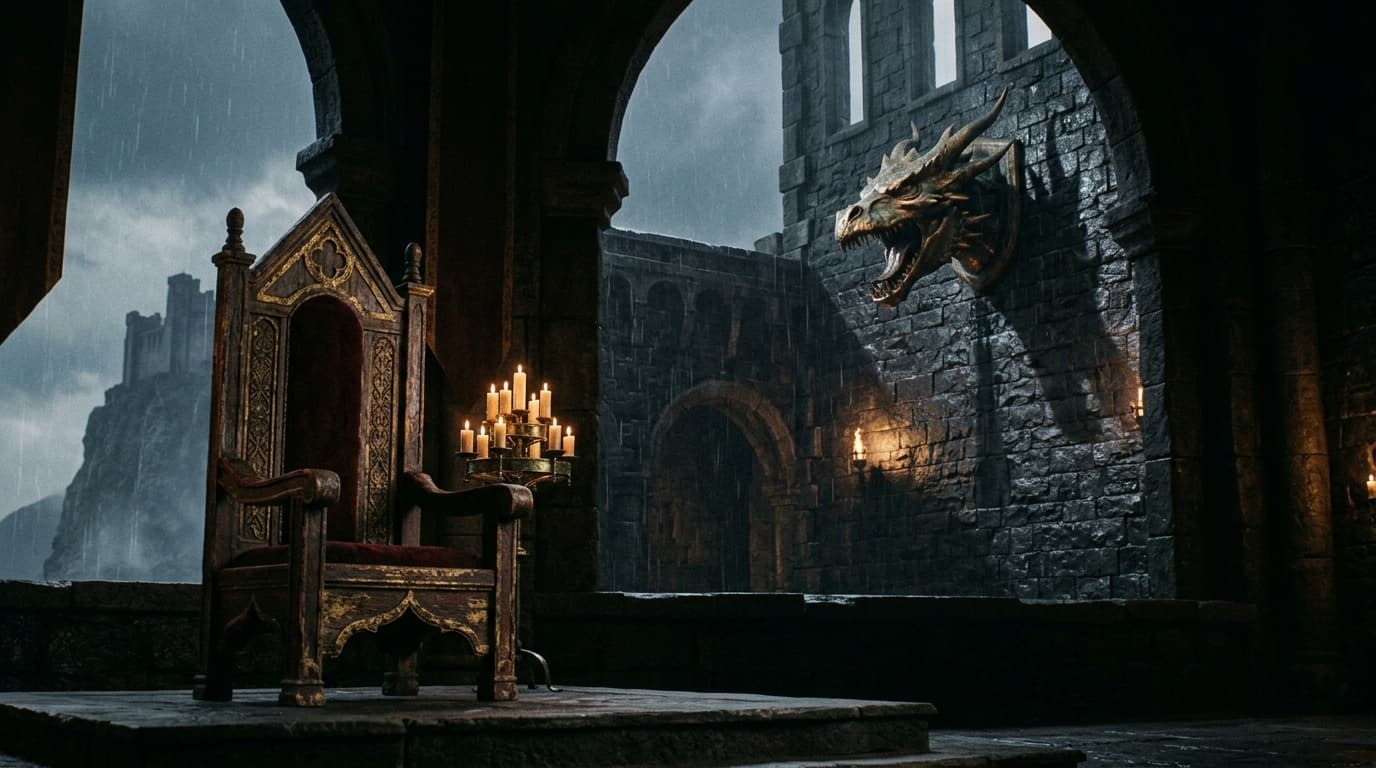
Rhaenys's Mercy Is a Power Play That Guarantees the War
Plausibility Score
(?)Convinced
(?)#382
of 705 theories
Theory Ranking
(?)READER VERDICT
Is this theory convincing?
Trend builds after 10 votes.
Be among the first to weigh in.
THEORY ASSESSMENT
The episode confirms every physical beat the theory describes, and the show's invention of the entire scene from source material strongly supports reading Rhaenys's restraint as purposeful, but the episode provides no dialogue or internal confirmation of her reasoning.
STORY CONTEXT
She has more dragons yet keeps holding back, and this thread asks why. Theories weigh whether it's strategic wisdom, fear of mass casualties, trauma from losing Lucerys, or a fundamental hesitation that may cost her everything.
WHY THIS MATTERS
If Rhaenys acts from self-assertion rather than loyalty, and Alicent acts from sentiment rather than strategy, then neither woman is serving her queen or her cause. Both are serving the war's prolongation. The show is arguing that in a system designed to deny women decisive power, the moments when women choose restraint are not its moral exceptions but its engine.
ALTERNATE INTERPRETATION
A minority of the contributing readings frame the restraint not as strategic calculation but as purely instinctive moral revulsion at kinslaying, suggesting Rhaenys had no rational plan and simply could not bring herself to give the kill order regardless of consequences. That reading locates the decision in emotion rather than tactics, which would mean Rhaenys leaves King's Landing without a message to deliver, only a wound she could not inflict.
Adjacent Reading — Not a Competing Theory
Other Theories for S1E09
Erryk's Conscience Becomes Rhaenys's Exit
Erryk's rescue of Rhaenys is not heading anywhere specific.
Alicent's Ignorance Was Otto's Most Sophisticated Weapon
Otto Hightower ran an active coup apparatus for years before Viserys died, and the conspiracy's most deliberately engineered feature was Alicent's complete exclusion from it.
Mysaria Uses Aegon as Political Bargaining Chip
Mysaria's demand that Otto shut down the child fighting rings was not the point of the exchange.
Beesbury Names the Crime No One Will Investigate
The Green council's coup rests on a charge its members never rebut: Lyman Beesbury's argument that a king well the night before does not reverse thirty years of succession policy on his deathbed with only the new heir's mother as witness.

Cole Kills for Alicent, Not the Crown
Criston Cole does not serve the Green faction.
Aemond Is Already Positioning Against Aegon
Aemond views Aegon's coronation not as a settlement but as an opening position, and he is already constructing the internal architecture that would allow him to govern from behind or beneath a king he considers illegitimate.
Mysaria Undersold Aegon to Protect Something Else
Mysaria's decision to trade Aegon for the closure of child fighting pits was not a failure to press her advantage but a deliberate refusal to enter the court's economy of power and debt.
Helaena's Line Predicts the Throne's Fate
Helaena's line 'if one possesses a thing, the other will take it away' is not oblique character texture but a directional prophecy with a specific implied outcome: Rhaenyra will take the Iron Throne from Aegon, and the verb 'take' demands an agent, a deliberate act, and a victor rather than stalemate or mutual destruction.