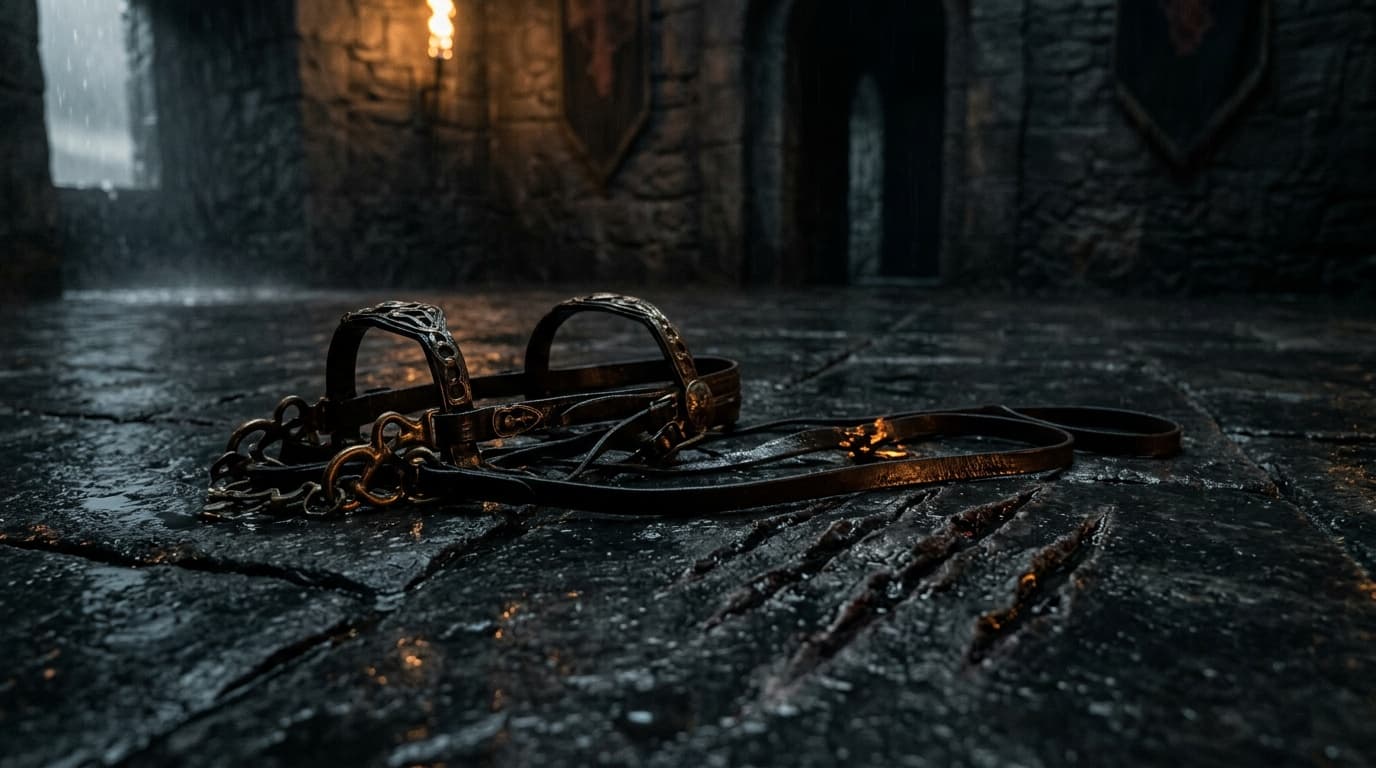
Vhagar Chose: Aemond Never Had Control
Plausibility Score
(?)Convinced
(?)#348
of 705 theories
Theory Ranking
(?)READER VERDICT
Is this theory convincing?
Trend builds after 10 votes.
Be among the first to weigh in.
THEORY ASSESSMENT
The episode ground truth confirms Lucerys' death and Rhaenyra's devastated response, and the show's visual language in the finale actively supports the unintended-killing reading, making this theory a close fit with confirmed narrative events rather than a speculative extension of them.
STORY CONTEXT
Blood of the dragon matters, but how much? This thread wrestles with the mechanics and magic of bonding, from whether dragons sense legitimacy to what Seasmoke's behavior tells us about the rules Westeros thinks it knows.
WHY THIS MATTERS
If Vhagar chose, then the Dance of the Dragons begins not with a murderer but with a weapon that no one controls, and Viserys' opening warning becomes the show's thesis rather than its prologue. Every faction's claim to moral high ground in the war that follows is undermined before the first battle, because the atrocity used to justify it cannot be cleanly assigned to any human will.
ALTERNATE INTERPRETATION
The strongest counterargument does not dispute that Aemond failed to stop Vhagar. It argues that the failure is irrelevant to his culpability. Initiating a chase in those conditions, with that size disparity, in a storm, against a boy he had already threatened, was itself a form of intent. On this reading, the show's sympathy toward his shocked expression is a misdirection. Aemond knew what Vhagar was capable of. Claiming he did not choose the death while choosing every condition that made the death inevitable is not innocence. It is a narrower species of guilt the show may be flattering him by obscuring.
Adjacent Reading — Not a Competing Theory
Other Theories for S1E10
Rhaenyra Has Been Counting Casualties in Her Body Since Before the War Had a Name
Rhaenyra's restraint at the Black Council was never a strategic posture.
The Choking Scene Is Two Betrayals Landing at Once
When Daemon's hands close around Rhaenyra's throat, he is not reacting to a single provocation but to two simultaneous revelations: Rhaenyra has refused to be the conqueror he constructed her as, and she has inadvertently exposed that Viserys judged him, privately and permanently, as unfit to carry the dynasty's deepest inheritance.
Daemon Builds Loyalty Through Dragon Threat
Daemon is not managing Rhaenyra's Kingsguard on her behalf.
Prophecy Drives Rhaenyra's War, Not Vengeance
Rhaenyra's strategic restraint is not caution or grief but prophetic obligation: Viserys entrusted her alone with Aegon the Conqueror's Song of Ice and Fire vision, making her the sole keeper of a mandate that reframes the Dance of Dragons as a war fought under constraint rather than for conquest.
Otto Harvests What Alicent Can No Longer Read
Otto Hightower deploys the Nymeria page not because he believes it can stop a war but because he has identified a specific cognitive pattern in Alicent: decades of learned submission have caused emotional memory to replace textual content, rendering her constitutionally unable to read political symbols correctly.
Rhaenys Is the Alliance's Ceiling: Corlys Sails on Her Collateral, Not Rhaenyra's Cause
Corlys Velaryon's fleet does not belong to Rhaenyra's war; it belongs to the version of Rhaenyra that Rhaenys staked her own credibility to describe.
Aemma's Death Drives Rhaenyra's Refusal
Rhaenyra's refusal of midwife assistance during her labor is a deliberate assertion of bodily sovereignty modeled on the specific violation done to Aemma, whose body was cut open without consent while Rhaenyra watched.
Syrax Screams Because Rhaenyra Does
The rider-dragon bond transmits physical suffering across distance without contact or command, and the labor sequence at Dragonstone is structured to prove it.