
Vault-Tec Wired Americans to Become Communists
THE THEORY
Vault-Tec used at least one vault to manufacture ideological enemies, not study them, implanting residents with neural control devices and forcing communist indoctrination as a deployable political asset rather than a behavioral science project. The dead residents, still costumed in Soviet attire with propaganda films looping in an empty vault, indicate a program designed to run without survivors or ongoing observation. Vault-Tec's vaults were not a survival program with experimental edges; at least one was a weapons program that used American citizens as its test material and discarded them when the test concluded.
How This Theory Works
Vault-Tec built at least one vault specifically to transform American citizens into communist believers through direct neural override, not persuasion, and the most uncomfortable implication is not that this experiment was cruel but that it was useful. A population of Americans hardwired into Soviet ideology was not a scientific curiosity. It was a deployable asset. Vault-Tec, operating in a pre-war climate where communist infiltration was treated as an existential domestic threat, had every institutional incentive to manufacture that threat rather than merely study it. A vault full of implanted ideological enemies could fabricate evidence of domestic communist cells, justify expanded surveillance and control architectures, or test the threshold at which identity itself becomes a configurable variable. The experiment was not behavioral science. It was infrastructure for a political fiction that someone intended to use.
The House flashback establishes that behavioral-override implant technology was operational and in private hands before the war. Vault-Tec did not need to develop the mechanism. They needed to apply it at population scale, behind sealed doors, with no oversight. The propaganda films running on loop inside the vault were not for the residents' benefit. By the time the loop matters, the residents are already dead. The films were either a component of the conditioning system or evidence that the apparatus was never designed to be turned off by anyone other than the subjects, who had no capacity to turn it off.
The vault's sealed, survivor-free state is the theory's hardest piece of evidence. If Vault-Tec intended long-term observation of a conditioned communist population, living subjects were a prerequisite. The residents are dead, still costumed, with the system still running. This is not what an ongoing experiment looks like. It is what a concluded one looks like when the operators stopped caring about retrieval. Vault-Tec did not lose control of this vault in the chaos of nuclear war. The vault's design never required them to maintain control after the initial sealing. The subjects were expended by the experiment itself, which means the experiment's output was never the subjects. It was the proof of concept.
Is this theory convincing?
Key Evidence
Dead Residents in Soviet Attire
The vault's residents were found dead and dressed in conspicuous communist-style outfits, suggesting they were costumed as part of the experiment rather than having chosen their attire voluntarily.
Looping Communist Propaganda Films
Propaganda films were still playing on loop inside the vault, consistent with a conditioning system that was never turned off and never monitored by its operators after the war.
Neural Control Devices Implanted in Residents
The theory identifies implanted control chips as the mechanism for forced ideological conversion, paralleling the black-box neural device Robert House tests on a worker in the episode's pre-war flashback.
House's Pre-War Neural Control Test
In the episode's flashback, Robert House forcibly injects a black box into a worker's neck that overrides his behavior, establishing that behavioral-override implant technology was functional and in use before the bombs fell.
Vault Out of Service, No Survivors
The vault appears to have been sealed and abandoned long before the present timeline, with no living subjects, suggesting the experiment concluded without ongoing observation or intervention from Vault-Tec.
Other Theories for S2E01
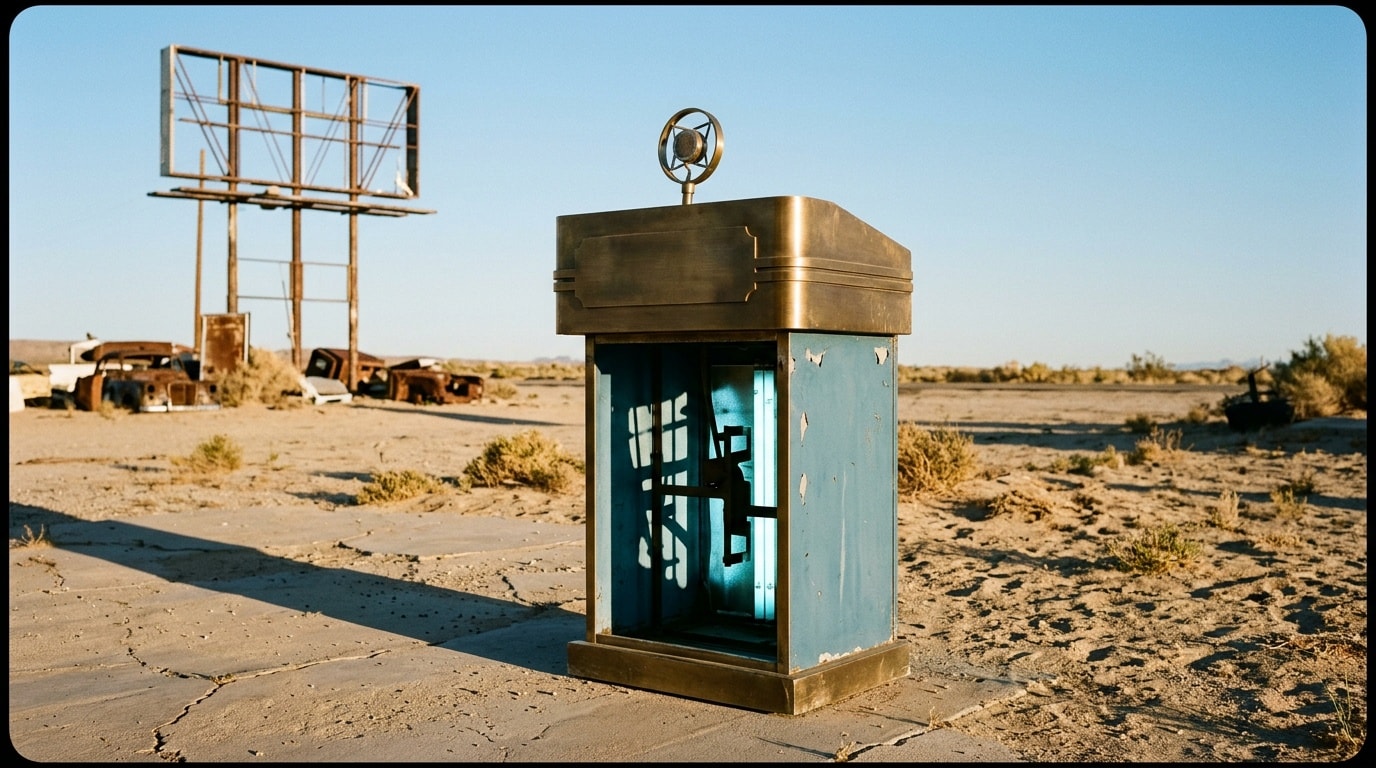
Cooper Knew Before the Bombs Fell
Cooper Howard knew the bombs were coming, said nothing to save anyone but his daughter, and failed even at that.
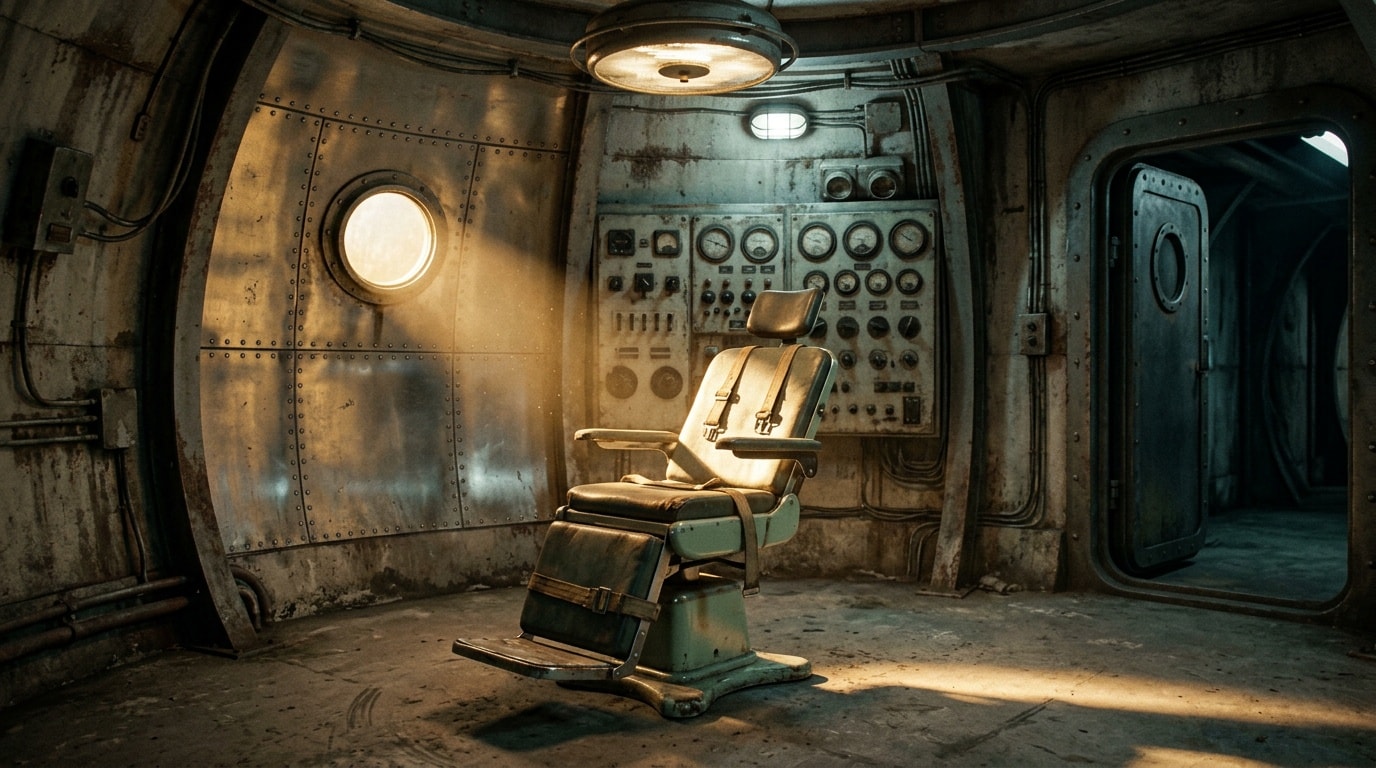
Vault 33 Was Never a Shelter — It Was a Laboratory With a Cover Story
House's 2077 black-box experiment was not abandoned when Bill's brain failed under amplified signal — it was institutionalized.

Cooper's Khan Vendetta Spans Two Centuries
Cooper Howard has spent two centuries in deliberate, recurring conflict with the Great Khans, not as an incidental consequence of wasteland survival but as a sustained vendetta he has chosen to maintain across multiple generations of tribal leadership.

Moldaver Sent Cooper to Kill House
Moldaver tasked Cooper Howard with assassinating Robert House, not merely spying on him, using his wife's cold-fusion deal as cover to place him inside House's orbit before the bombs fell.
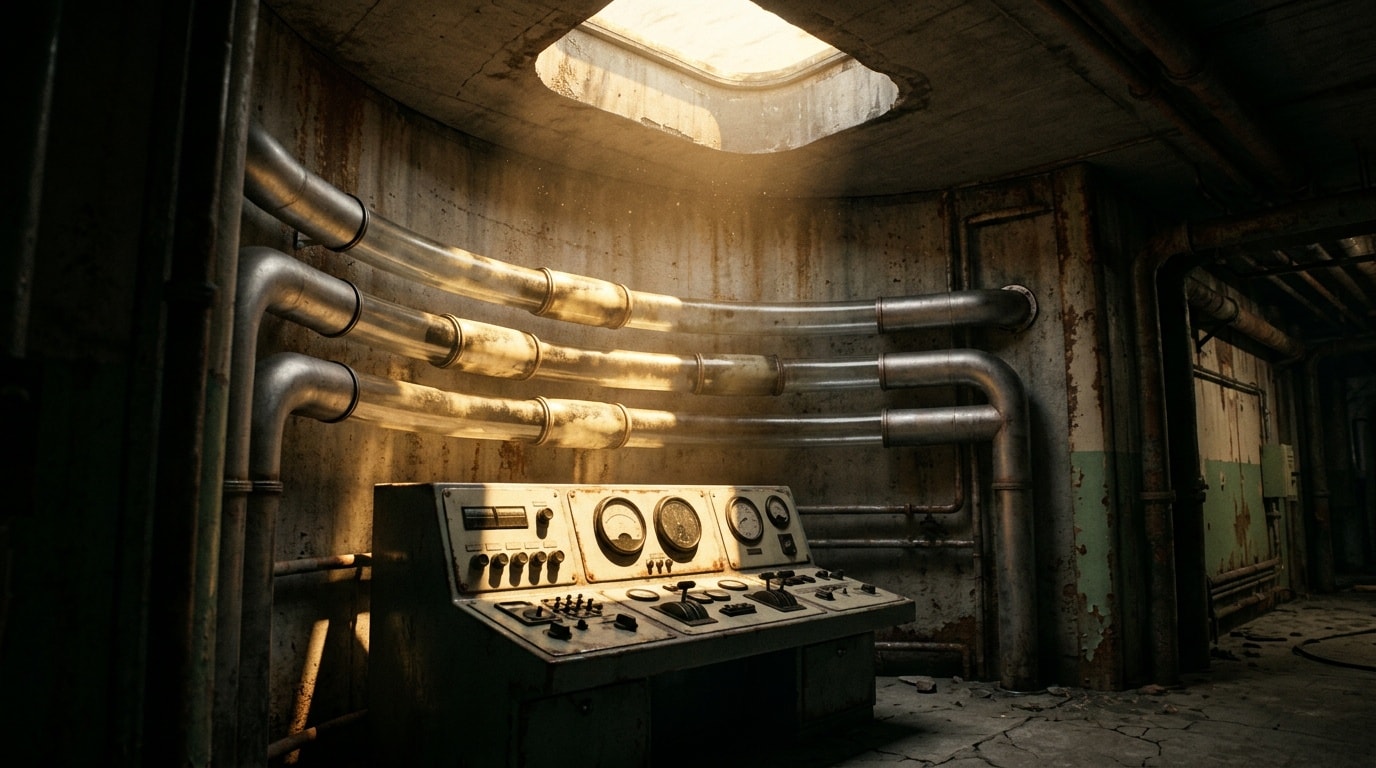
House's Double Hides the Real Power
The bar scene does not reveal a security precaution House adopted under pressure.
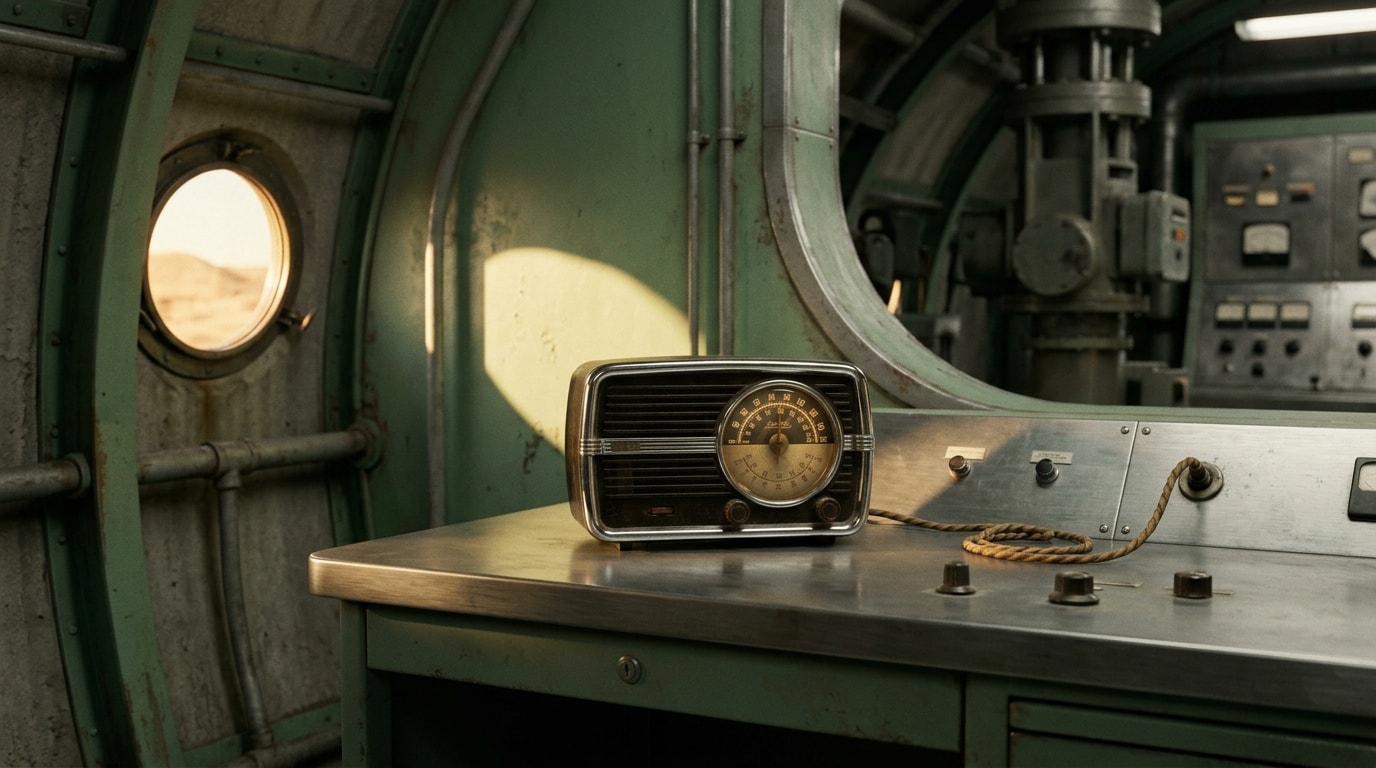
Hank MacLean Reports In to Vault-Tec Command
Hank MacLean has been executing a coordinated Vault-Tec assignment, not fleeing one, and his radio check-in at a secret facility places him inside a chain of command that survived the war and is now pointing him toward Robert House's territory.