
Moldaver Sent Cooper to Kill House
THE THEORY
Moldaver tasked Cooper Howard with assassinating Robert House, not merely spying on him, using his wife's cold-fusion deal as cover to place him inside House's orbit before the bombs fell. House's missile defense system made him the one man capable of surviving the apocalypse intact, which made killing him before the war ended the only intervention that mattered. If Cooper reached Las Vegas and failed, or never arrived at all, House's survival and the existence of New Vegas are the permanent record of that incomplete mission.
How This Theory Works
Moldaver's assignment to Cooper Howard is not framed as intelligence-gathering. The explicit language from their exchange positions Cooper's Hollywood access and spousal proximity as means to an end that goes beyond surveillance. Moldaver identifies House as a singular threat: he is building a privately owned missile defense system in Las Vegas, and her conclusion is not that more intelligence is needed. Her conclusion is that when the bombs drop, it will be Robert House who presses the button. That framing makes assassination the only logical next step, and the cold-fusion deal Cooper's wife is about to close with House is not incidental context. It is the delivery mechanism.
Cooper's value to Moldaver is precisely his unusability as a conventional operative. When he tells her he is not a spy or a communist but an actor who likes horses and cars, she does not treat this as a limitation. She treats it as the qualification. A face attached to a Vault-Tec campaign is above suspicion. His wife's business trip to Vegas manufactures a cover no professional intelligence asset could produce. Moldaver is not recruiting a spy. She is placing a weapon adjacent to a target under the most plausible cover imaginable, and she recruits him only after Cooper volunteers what he overheard at the Vault-Tec meeting, establishing that he is already entangled enough to be useful and compromised enough to be controllable.
The mission did not complete. House survived, New Vegas survived, and the Ghoul is still moving through the Mojave two centuries later carrying a warning that nowhere around House is safe. That warning, from a man with two hundred years to form his judgment and his own pre-War history with House, is not a general threat assessment. It reads as knowledge earned from proximity, possibly from a failed attempt. If Cooper reached Las Vegas before the bombs fell and could not finish what Moldaver sent him to do, House's survival is not background lore. It is the direct consequence of that failure, and the physical monument to it is the city glowing on the horizon every time the Ghoul crosses the desert. The sharpest test of this theory is whether the show will eventually reveal what happened in Las Vegas before the war ended: whether Cooper made it there, how close he got, and what stopped him. If he never arrived, the theory holds in structure but loses its edge. If he arrived and failed, the Ghoul's two centuries of violence take on a specific and irrevocable shape, the shape of a man who was given one task that would have changed everything and did not complete it.
Is this theory convincing?
Key Evidence
Moldaver Names House as Target
Moldaver explicitly tells Cooper that House is building a privately owned missile system in Las Vegas and that when the bombs drop, it will be Robert House who presses the button, framing him as an existential threat requiring direct action.
Cold Fusion Deal as Access Vector
Moldaver tells Cooper that his wife is going to Vegas the following week to sell cold fusion to Robert House, and directs him to play nice with his wife and get on that trip, positioning the deal as the mechanism for placing Cooper near House.
Cooper's Denial of Spy Identity
Cooper tells Moldaver he is not a spy or a communist but a Hollywood actor who likes horses and cars, and she responds by emphasizing exactly that his access to people and rooms is what makes him rare and useful.
House's Missile Defense as Motive
The briefing Moldaver gives Cooper identifies House's privately owned missile defense system as what will make him uniquely powerful after the war, establishing why he must be stopped before the bombs fall rather than after.
Ghoul Warns Vegas Is Not Safe
In 2296, the Ghoul tells Lucy that nowhere around House is safe, a warning carrying unusual weight from a man who has had two centuries to form that judgment and who has his own pre-War history with the man.
Cooper's Vault-Tec Intelligence as Leverage
Cooper shares what he overheard at the Vault-Tec meeting with Moldaver, and she reciprocates by revealing what she knows about House, establishing an intelligence exchange that deepens his commitment to her agenda.
Other Theories for S2E01
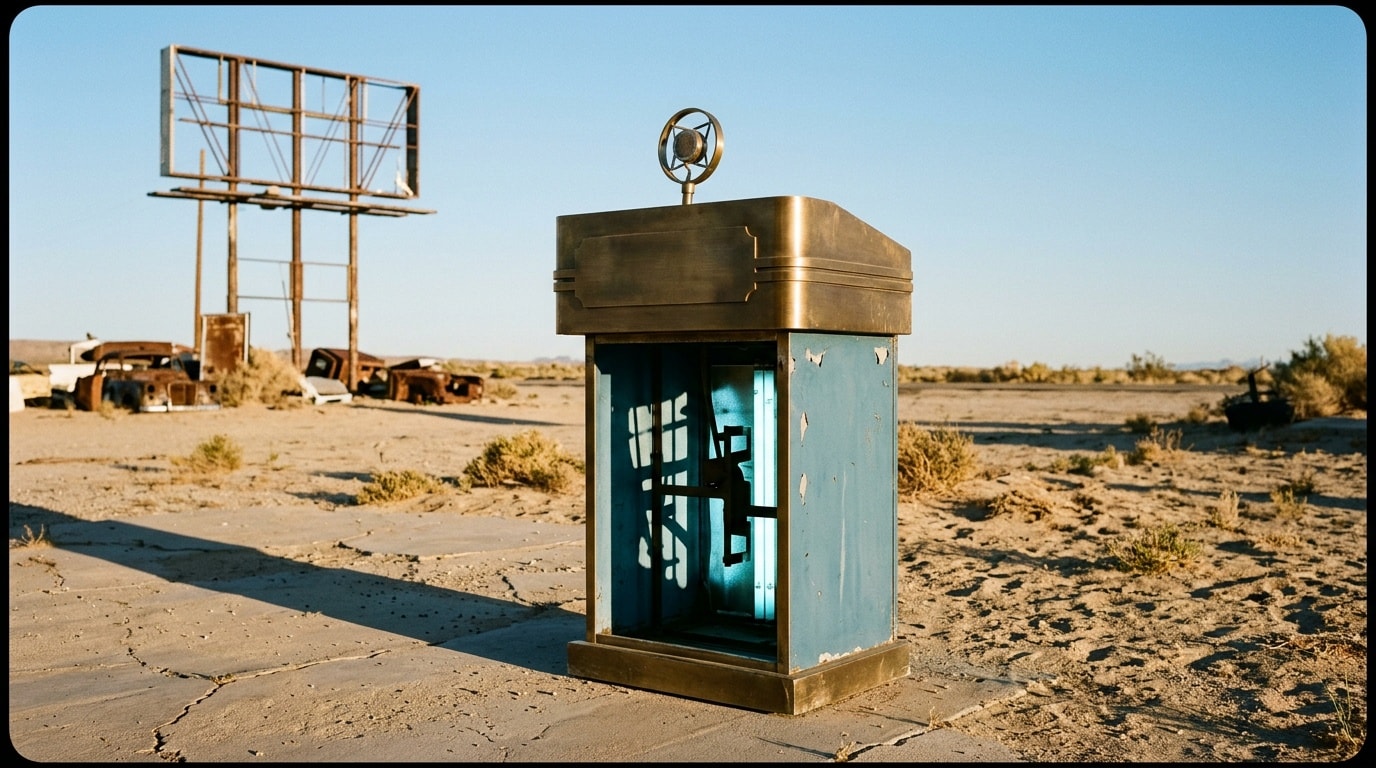
Cooper Knew Before the Bombs Fell
Cooper Howard knew the bombs were coming, said nothing to save anyone but his daughter, and failed even at that.
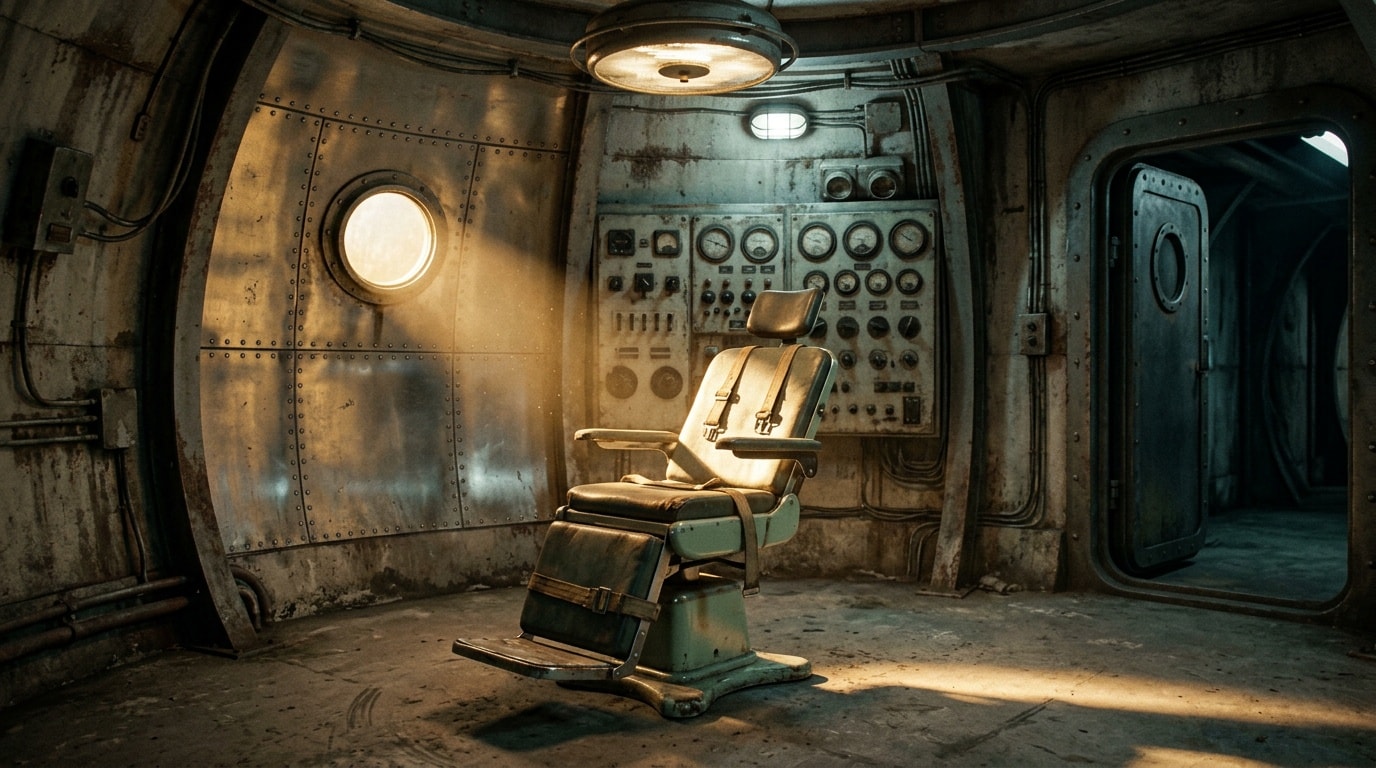
Vault 33 Was Never a Shelter — It Was a Laboratory With a Cover Story
House's 2077 black-box experiment was not abandoned when Bill's brain failed under amplified signal — it was institutionalized.
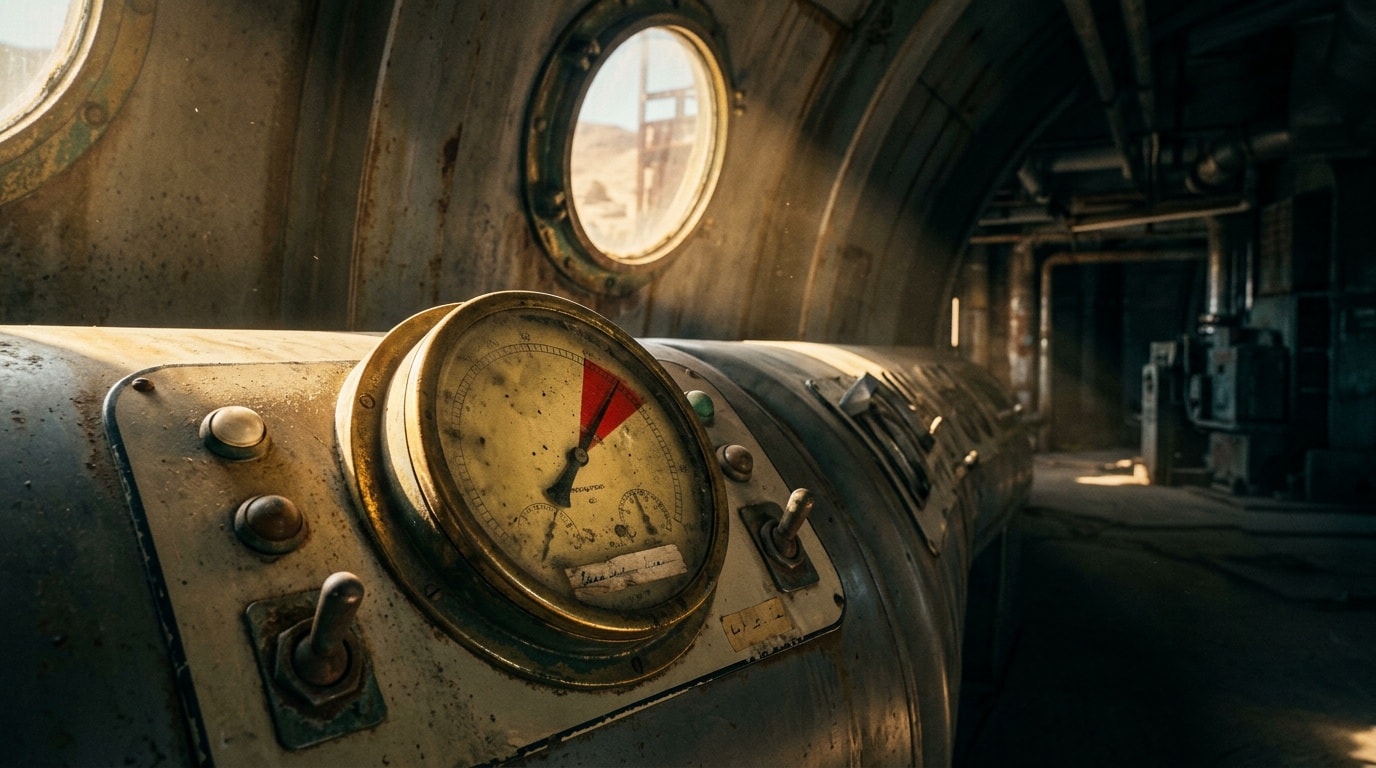
Cooper's Khan Vendetta Spans Two Centuries
Cooper Howard has spent two centuries in deliberate, recurring conflict with the Great Khans, not as an incidental consequence of wasteland survival but as a sustained vendetta he has chosen to maintain across multiple generations of tribal leadership.
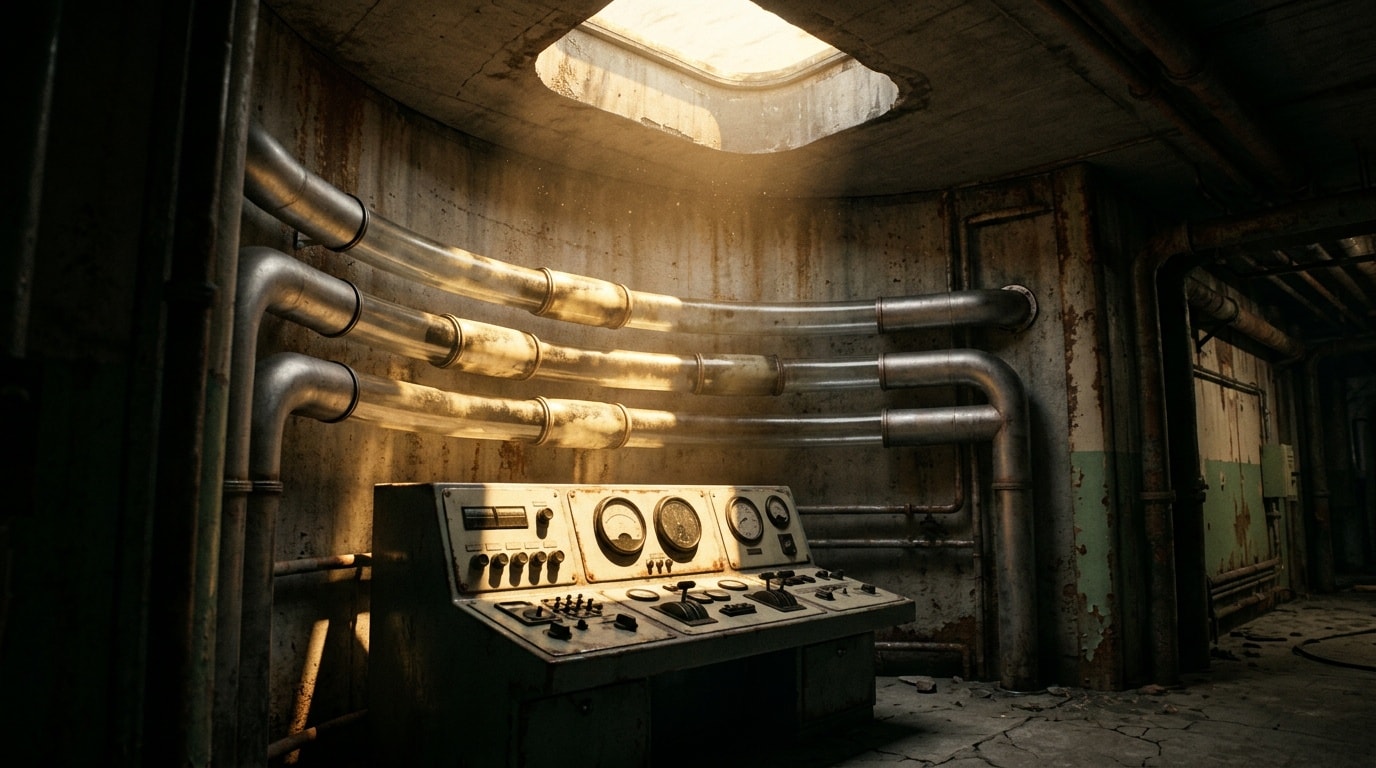
House's Double Hides the Real Power
The bar scene does not reveal a security precaution House adopted under pressure.

Hank MacLean Reports In to Vault-Tec Command
Hank MacLean has been executing a coordinated Vault-Tec assignment, not fleeing one, and his radio check-in at a secret facility places him inside a chain of command that survived the war and is now pointing him toward Robert House's territory.
Vault-Tec Wired Americans to Become Communists
Vault-Tec used at least one vault to manufacture ideological enemies, not study them, implanting residents with neural control devices and forcing communist indoctrination as a deployable political asset rather than a behavioral science project.