House's Double Hides the Real Power
THE THEORY
The bar scene does not reveal a security precaution House adopted under pressure. It reveals the mature form of a system he built before the War: a lifelong architecture in which the real decision-maker was never findable, and all public conflict landed on a face that was not his. If that system predates the bar, then every pre-War record of Robert House is a managed performance, and post-War audiences know no more about the actual man than those rioting workers did.
How This Theory Works
The most important detail in the bar scene is not the double. It is House's stillness. He sits unrecognized feet from workers directing genuine rage at the figure on the television above them, and he does not move, does not correct anything, does not register surprise. That is not the behavior of someone improvising a clever exit. It is the behavior of someone watching a system function exactly as designed.
The Howard Hughes parallel is not decorative. It is the interpretive frame the show embedded deliberately. Hughes did not use surrogates as a late-stage defensive measure. His reclusiveness and his proxy infrastructure developed together, becoming inseparable from how he actually exercised power. House is constructed on that template. A man modeled on Hughes, observed running a mature double operation, is not someone who adopted the strategy under duress. He is someone for whom the strategy and the power structure are the same thing.
What the double absorbs tells you what the architecture was built to handle. The automation riots, the public hatred, the physical threat in that alleyway: all of it lands on a surrogate. The real House remains invisible and unaccountable while conflict finds a face designed to receive it. That is not a defensive posture. Redirecting accountability is an offensive act. It is a specific decision about how power operates.
The sharpest implication is this: if the double system was operational and mature before the War, then no confirmed pre-War record of House's public identity is a record of the actual man. His known positions, his media presence, the persona workers were rioting against, all of it ran through a curated proxy. The show has already demonstrated that the version of Robert House the public encounters is a performance. It has given no moment, pre-War or post, where that changes. Which means the unknowability is not a side effect of House's reclusiveness. It is the product he was selling all along.
Is this theory convincing?
Key Evidence
Two Actors, One Character Simultaneously
The episode shows a different actor delivering a televised RobCo CEO interview on a bar TV at the exact moment the real Robert House sits unrecognized in a corner booth of the same bar.
House Watches His Own Double
The real House observes the public version of himself on television without intervening or identifying himself, suggesting this arrangement is intentional and ongoing rather than coincidental.
Howard Hughes Design Parallel
Robert House's character is explicitly modeled on Howard Hughes, an eccentric billionaire documented to have used body doubles and surrogates to maintain a public image while withdrawing from direct exposure.
Double Absorbs Public Hostility
The workers in the bar direct their rage at the figure on television rather than at the real House sitting feet away, demonstrating the practical security value of the double strategy.
Other Theories for S2E01
Cooper Knew Before the Bombs Fell
Cooper Howard knew the bombs were coming, said nothing to save anyone but his daughter, and failed even at that.
Vault 33 Was Never a Shelter — It Was a Laboratory With a Cover Story
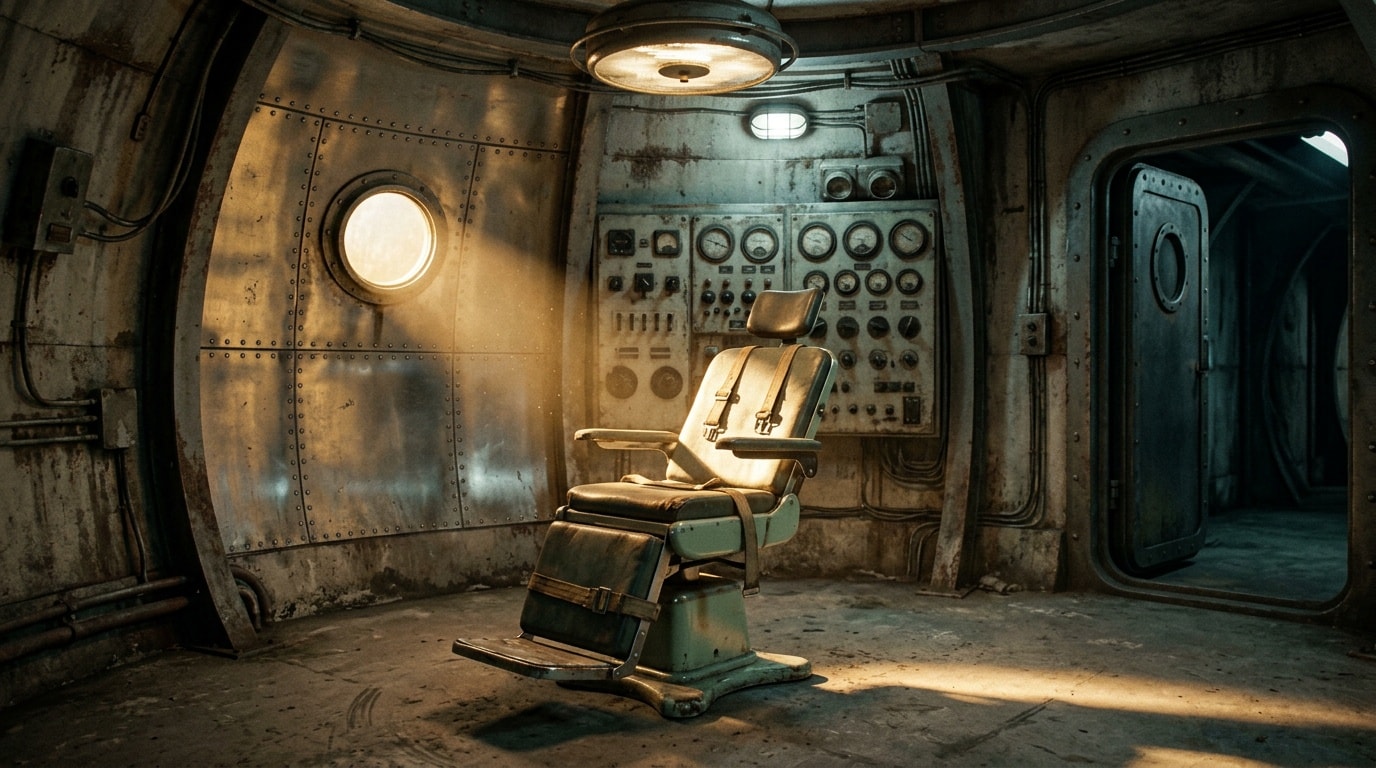
House's 2077 black-box experiment was not abandoned when Bill's brain failed under amplified signal — it was institutionalized.
Cooper's Khan Vendetta Spans Two Centuries
Cooper Howard has spent two centuries in deliberate, recurring conflict with the Great Khans, not as an incidental consequence of wasteland survival but as a sustained vendetta he has chosen to maintain across multiple generations of tribal leadership.

Moldaver Sent Cooper to Kill House
Moldaver tasked Cooper Howard with assassinating Robert House, not merely spying on him, using his wife's cold-fusion deal as cover to place him inside House's orbit before the bombs fell.
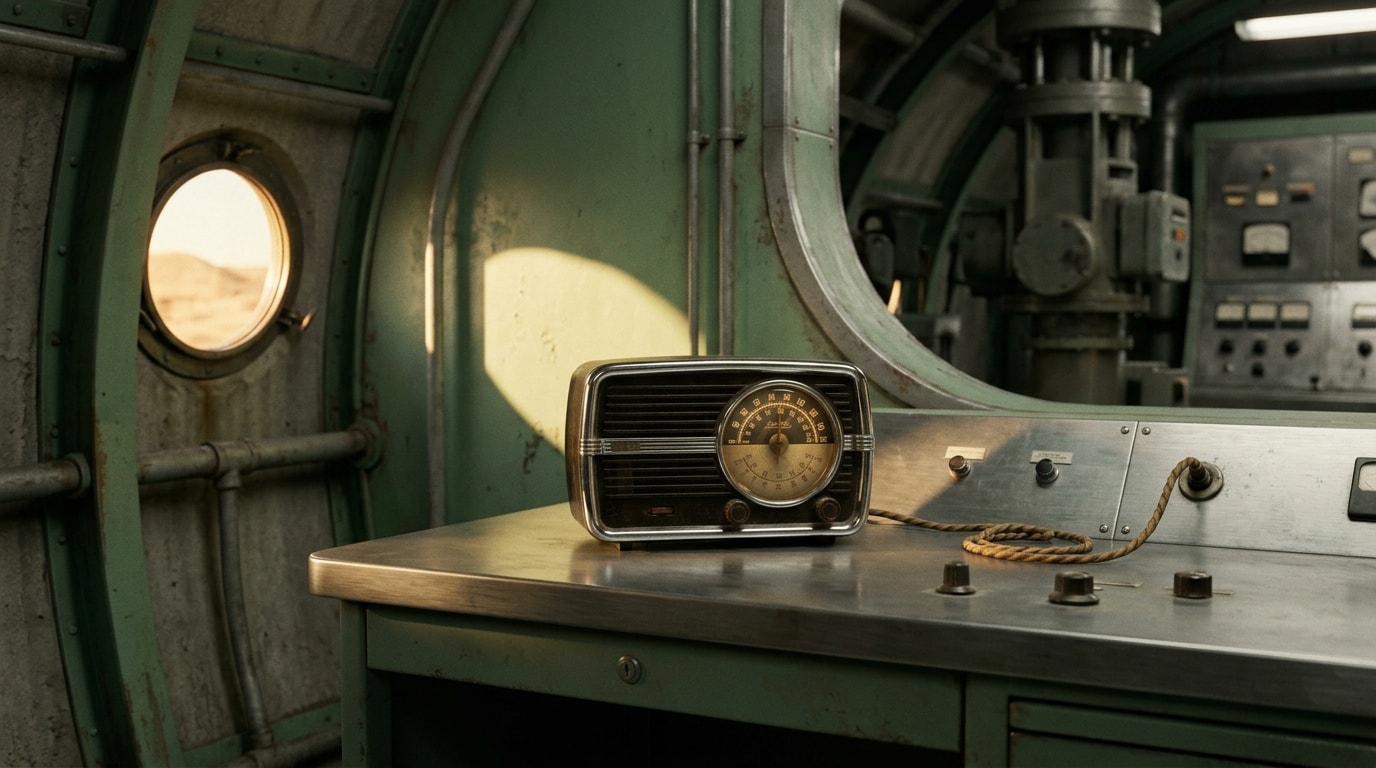
Hank MacLean Reports In to Vault-Tec Command
Hank MacLean has been executing a coordinated Vault-Tec assignment, not fleeing one, and his radio check-in at a secret facility places him inside a chain of command that survived the war and is now pointing him toward Robert House's territory.
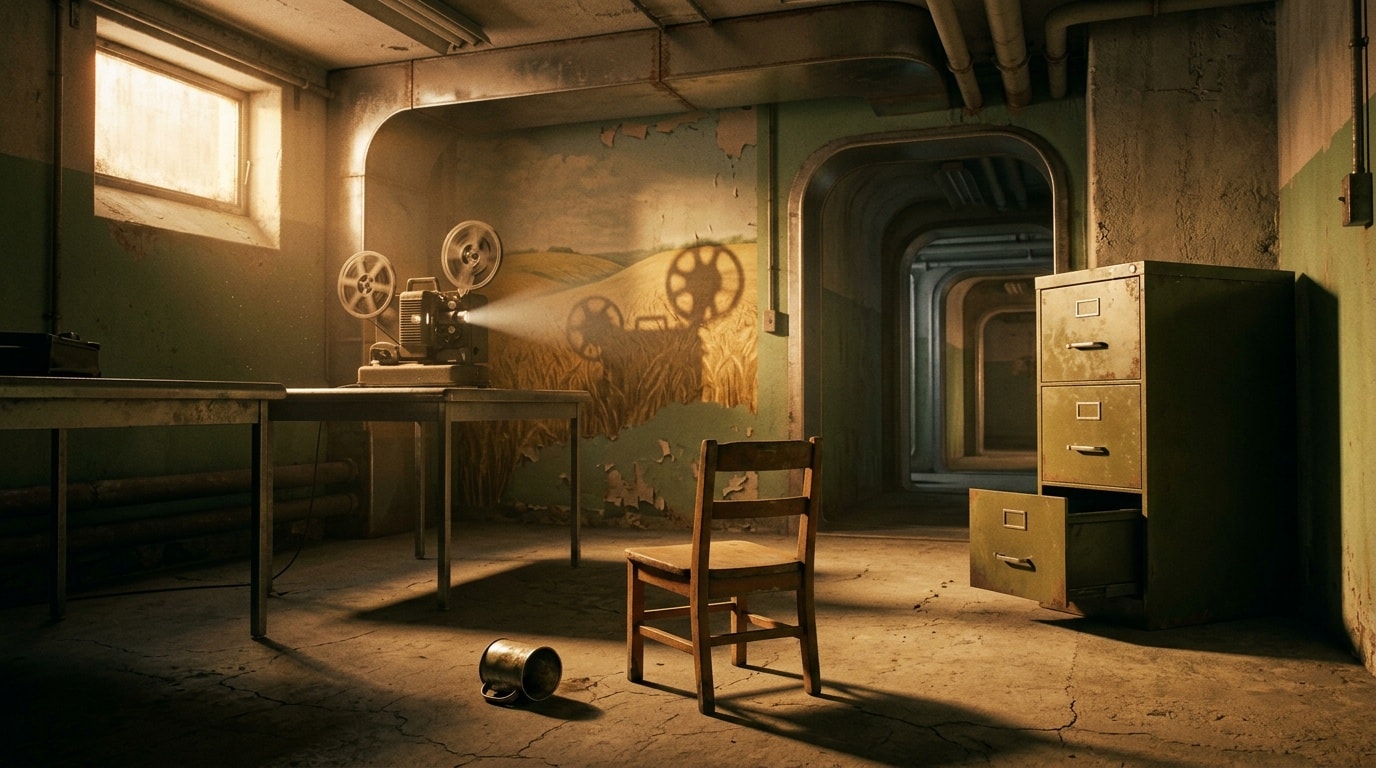
Vault-Tec Wired Americans to Become Communists
Vault-Tec used at least one vault to manufacture ideological enemies, not study them, implanting residents with neural control devices and forcing communist indoctrination as a deployable political asset rather than a behavioral science project.