Solo Played Moon River to Draw Juliette In
THE THEORY
Solo engineered first contact with Juliette on his own terms by using Moon River as an audible lure, exploiting the music's reach in a silo where he could have remained permanently invisible. His 'good, good' response confirms the approach was planned. The deeper claim is that his capacity for strategy and his capacity for desperation had collapsed into the same act, and the music was not a tool he chose so much as the only thing left he could not stop himself from doing.
How This Theory Works
Solo chose to broadcast music in a silo where silence was always available to him. He has camera feeds. He could have tracked Juliette through every level without making a sound and without ever being found. The decision to play Moon River loudly enough to stop her mid-step and reverse her direction is not a passive act. It is a man who concluded, at a specific moment, that being known was more necessary than being safe.
His response when she reaches the door removes any ambiguity about whether this was accidental. A person caught off guard does not greet their discoverer with satisfaction. 'You heard the music, good, good' is the language of a plan working as intended. Solo was waiting. The encounter was already his before Juliette knew it was happening.
What he wanted from it is the open question, and the threat he issues immediately after is the only available clue. He wanted contact but not access. He wanted her near but not inside. That is a very specific set of terms to establish in the first thirty seconds of meeting someone, and it points toward a man who had rehearsed this encounter long before she arrived.
Two readings sit inside that calculation, and the theory is stronger if it holds both without resolving them. One is strategic: Solo needed something from Juliette that required revealing himself, and the music was the cleanest way to engineer first contact without ceding control. The other is that the strategy and the loneliness are the same thing. A man who has outlived everyone in his silo does not play a beloved song loud enough to be followed back to him because he is in full command of himself. He does it because the discipline of invisibility finally cost more than the risk of being found. The harder claim is that Solo no longer had the capacity to distinguish between a calculated move and a cry for contact, and the threat he issued the moment she arrived was not proof of control but proof of how little was left underneath it.
Is this theory convincing?
Key Evidence
Camera access versus audible music
Solo has screens showing camera feeds throughout the silo, meaning he could have tracked Juliette silently without ever revealing his presence, making the choice to play audible music a deliberate departure from the easier option.
Juliette follows the music directly
Juliette stops when she hears Moon River and turns back around to follow the sound, meaning the music functioned as a physical guide leading her straight to the vault door.
Solo's 'good, good' response
When Juliette reaches the door, Solo's reaction through the panel includes language interpreted as 'you heard the music, good, good,' expressing satisfaction rather than alarm at being discovered.
Threat issued after contact made
Solo immediately warns Juliette that trying to open the door again will get her killed, suggesting he wanted to establish contact and set terms but had no interest in letting her in.
Isolation as motivation for sound
Solo's extended solitary existence in a silo full of the dead provides a thematic context in which playing a beloved song loudly enough to be heard could reflect an inability to maintain complete silence rather than purely calculated behavior.
Other Theories for S2E01
Someone Has Been Waiting Behind That Door
The man behind the vault door in Silo 17 is a deliberate placement, most likely the boy named Tim from the opening flashback, sealed inside before the rebellion ended by someone who anticipated the silo's collapse and never returned.
Silo 17's 'Lies' Marks a Rebellion Betrayed
The controllers of the silos do not fear rebellion because rebellion, properly managed, eliminates the population most likely to destabilize the system.
Rebels Flooded the Generator to Force the Door
The generator flood in Silo 17 was deliberate sabotage coordinated to strip IT of control over the door mechanisms, not a mechanical failure the rebels opportunistically exploited.
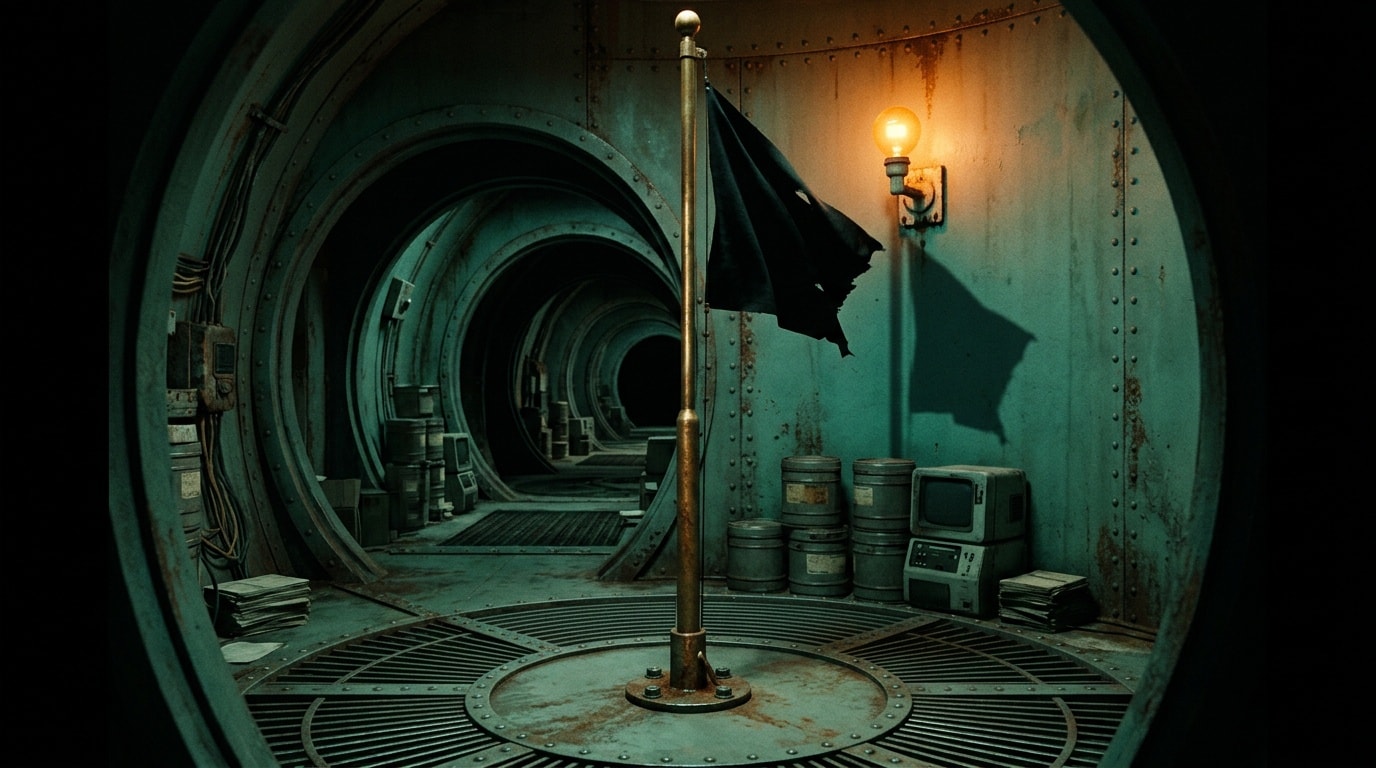
The Flashback Shows Silo 17's Rebellion
The flashback depicts the specific rebellion of the silo Juliette enters, confirmed by the precise mapping of its damage events onto the silo's current physical state and the black flag still flying above thousands of corpses at the entrance.
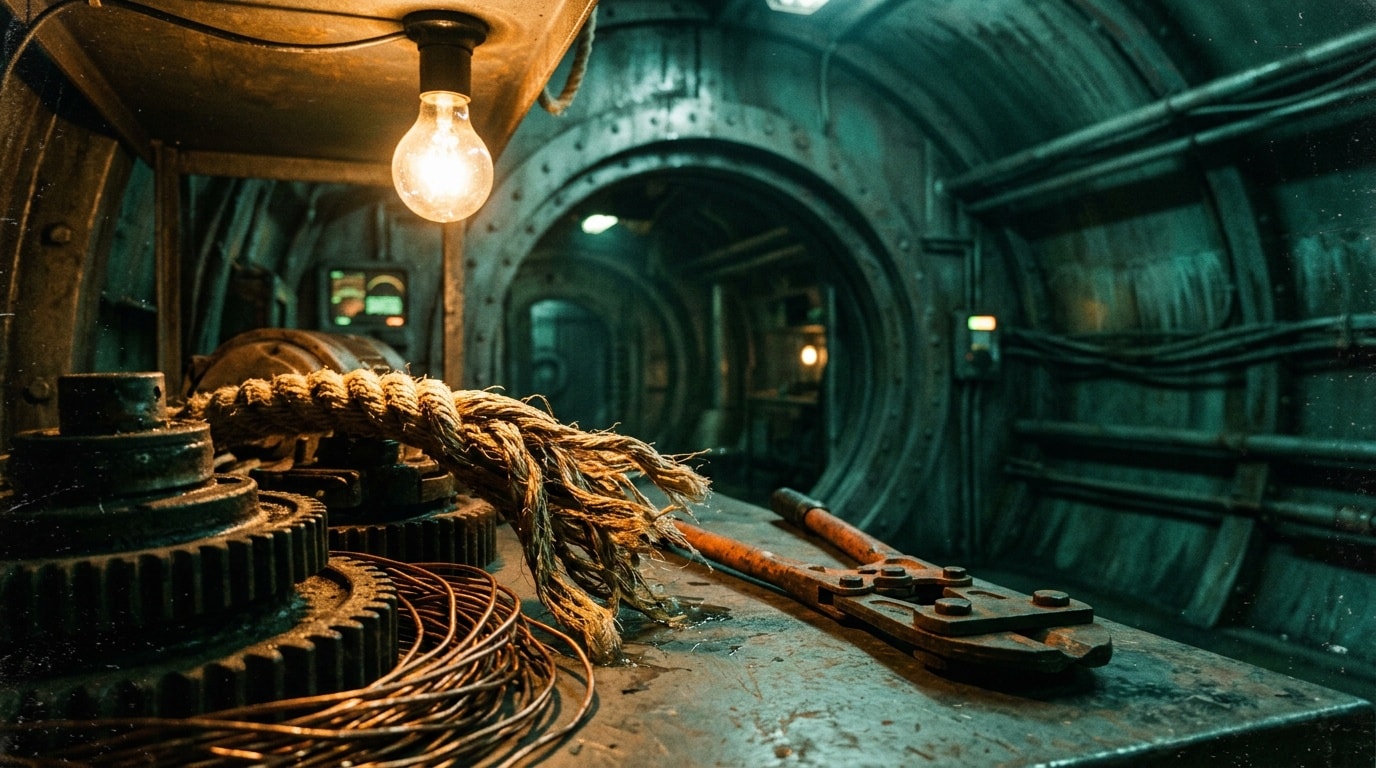
Someone Cut Juliette's Rope On Purpose
The vault figure behind the reinforced door cut Juliette's rope before her chasm crossing, staging a survivable failure as a demonstration of control rather than an attempt on her life.