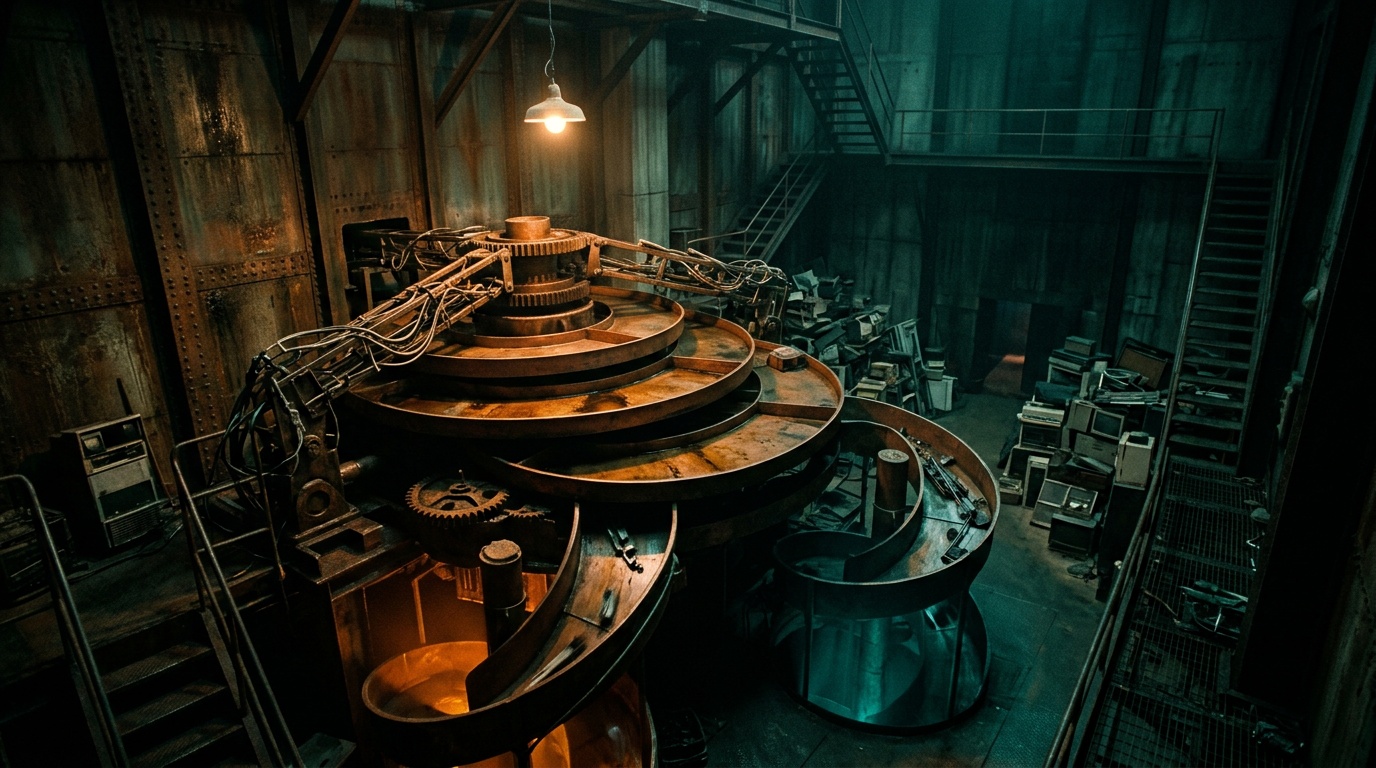
Silo 17's 'Lies' Marks a Rebellion Betrayed
THE THEORY
The controllers of the silos do not fear rebellion because rebellion, properly managed, eliminates the population most likely to destabilize the system. The word 'Lies' over the cafeteria screen and the thousands of corpses outside Silo 17 are not evidence of a system that failed to contain an uprising but of a system that used an uprising as a disposal mechanism. Juliette's position as someone who knows she has been deceived may not be a threat to her silo's controllers at all. It may be exactly where they need her.
How This Theory Works
The system controlling the silos does not need to prevent rebellion. It needs to direct it. The word 'Lies' painted over the cafeteria display screen in Silo 17 is not the residue of a successful awakening. It is the residue of a managed one, and the thousands of bodies piled at the entrance ramp are the proof of management, not failure.
The targeting of the word matters. It was placed over the display screen, not on a corridor wall or an office door. The screen is the instrument, and whoever wrote 'Lies' understood that. The rebellion moved through IT's fortified position before the exodus, which means the rebels understood IT controlled what the screens showed. They breached IT, painted their verdict, and walked outside without suits under a black flag. That sequence reveals a population that believed it had neutralized the deception and was now acting on the truth. The bodies at the base of the entrance ramp, including those on the stairs reaching back toward the door, indicate they were wrong, or that the truth they found was itself a designed product.
The outside may be exactly as lethal as the screens claim. The lie the residents discovered may not have been about survivability at all. It may have been about something else entirely, something that made them willing to die rather than stay. IT's role as gatekeeper of information means the deception could have been surgical: enough truth released to produce an exodus, not enough truth to prevent the deaths. The screen bearing 'Lies' may have been precisely what IT needed the rebels to find before they opened the door.
This is the system's actual structure. It does not stop people from discovering lies. It controls which lies they discover, in what order, and at what emotional temperature. A population that learns it has been deceived and responds with rage is a population that can be steered. Juliette has been outside. She has returned. She knows she was deceived. The institutional consequence of Silo 17 is that none of that makes her dangerous to the people running her silo. It makes her useful to them, or it makes her the next body on the stairs, and from the perspective of whoever built this system, both outcomes are acceptable. The design was never meant to protect the people inside. It was built to protect the system from them, and to ensure that when they finally broke, they broke in the right direction.
Is this theory convincing?
Key Evidence
Cafeteria Screen Graffiti
Juliette finds the word 'Lies' painted directly on the cafeteria display screen, the same type of screen used in every silo to show imagery of the outside world to residents.
Mass of Bodies at Entrance
Thousands of corpses surround the entrance ramp to Silo 17, including bodies on the stairs of people who tried to get back inside, suggesting residents exited en masse and died.
Rebels March Out Without Suits
The flashback shows the Sheriff leading survivors out of the silo under a black flag with no protective suits, indicating they believed or accepted that the outside was not as dangerous as they had been told.
IT Department as Gatekeeper
The rebellion centers on a violent assault to breach IT's fortified position, consistent with IT controlling the information infrastructure including the display screens used to maintain the deception.
Parallel to Juliette's Own Discovery
Juliette, who was herself sent outside on false pretenses and has seen the real exterior, recognizes the graffiti as meaningful precisely because she understands what the screens were used to hide.
Deliberate Placement of the Word
The graffiti is positioned over the display rather than on a wall, a targeted choice that frames the screen itself as the instrument of the lie rather than the authority behind it.
Other Theories for S2E01
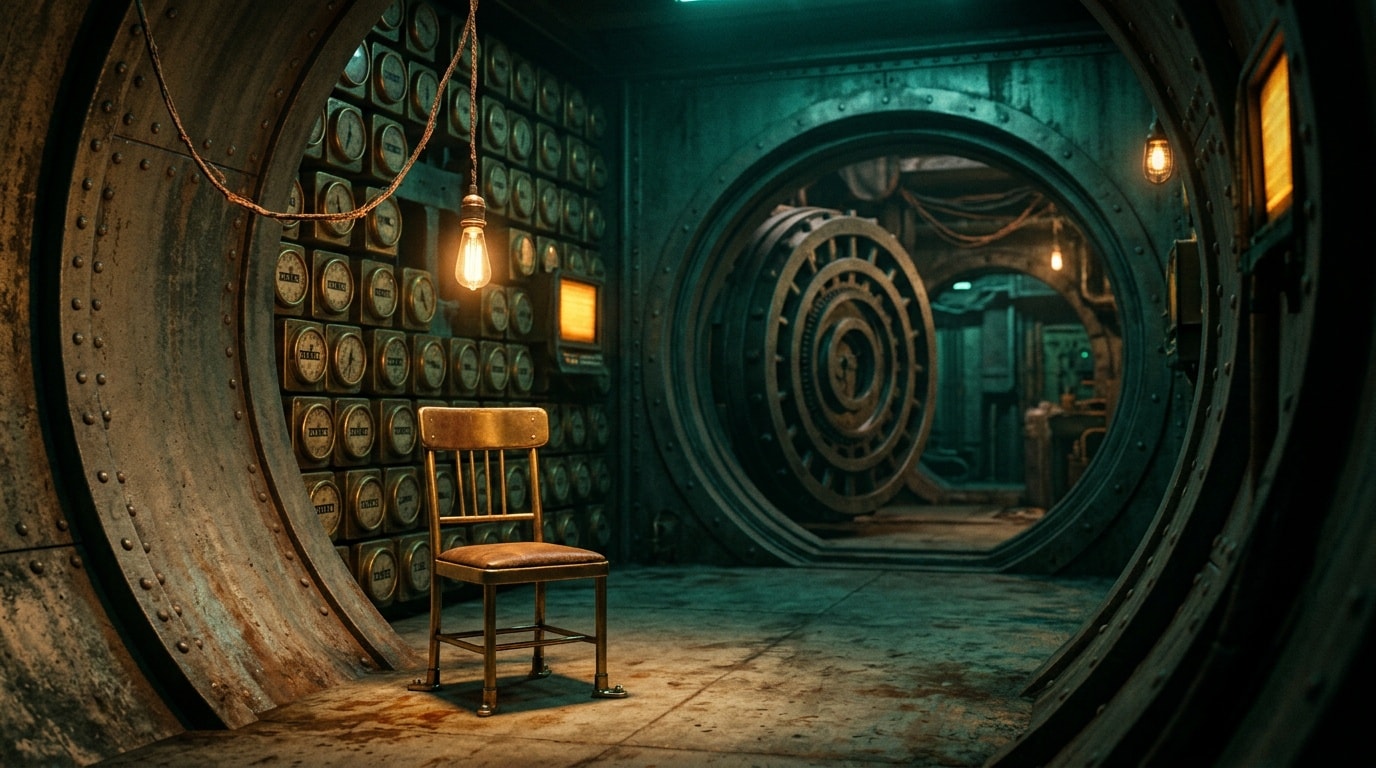
Someone Has Been Waiting Behind That Door
The man behind the vault door in Silo 17 is a deliberate placement, most likely the boy named Tim from the opening flashback, sealed inside before the rebellion ended by someone who anticipated the silo's collapse and never returned.
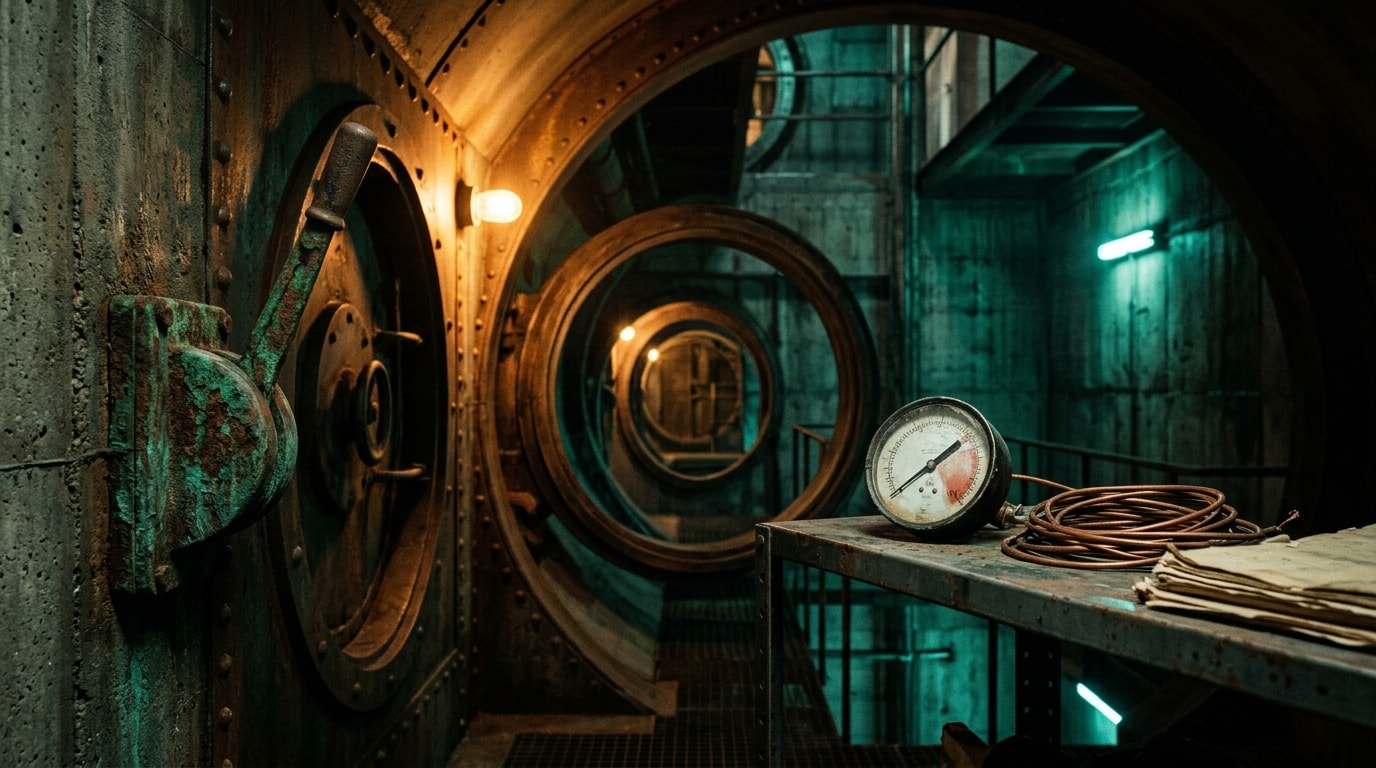
Rebels Flooded the Generator to Force the Door
The generator flood in Silo 17 was deliberate sabotage coordinated to strip IT of control over the door mechanisms, not a mechanical failure the rebels opportunistically exploited.
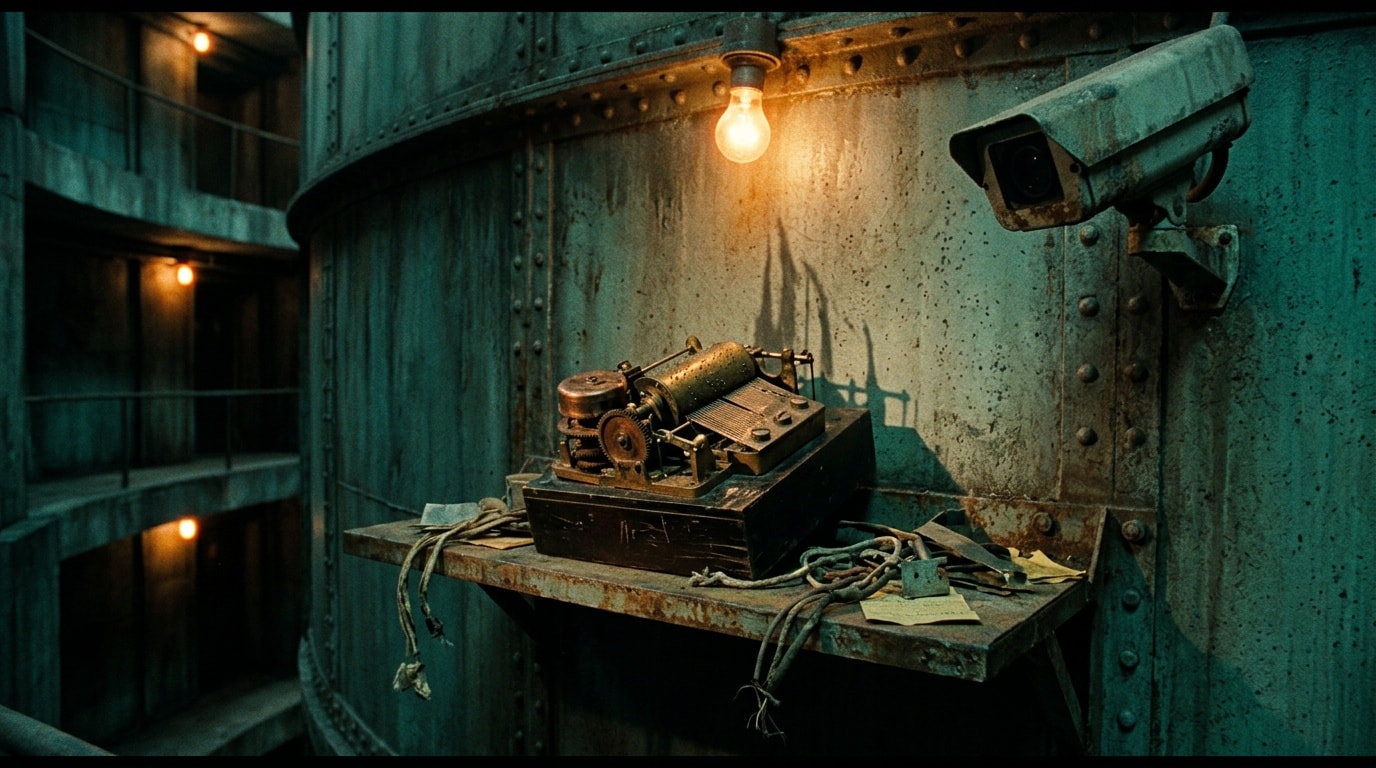
Solo Played Moon River to Draw Juliette In
Solo engineered first contact with Juliette on his own terms by using Moon River as an audible lure, exploiting the music's reach in a silo where he could have remained permanently invisible.
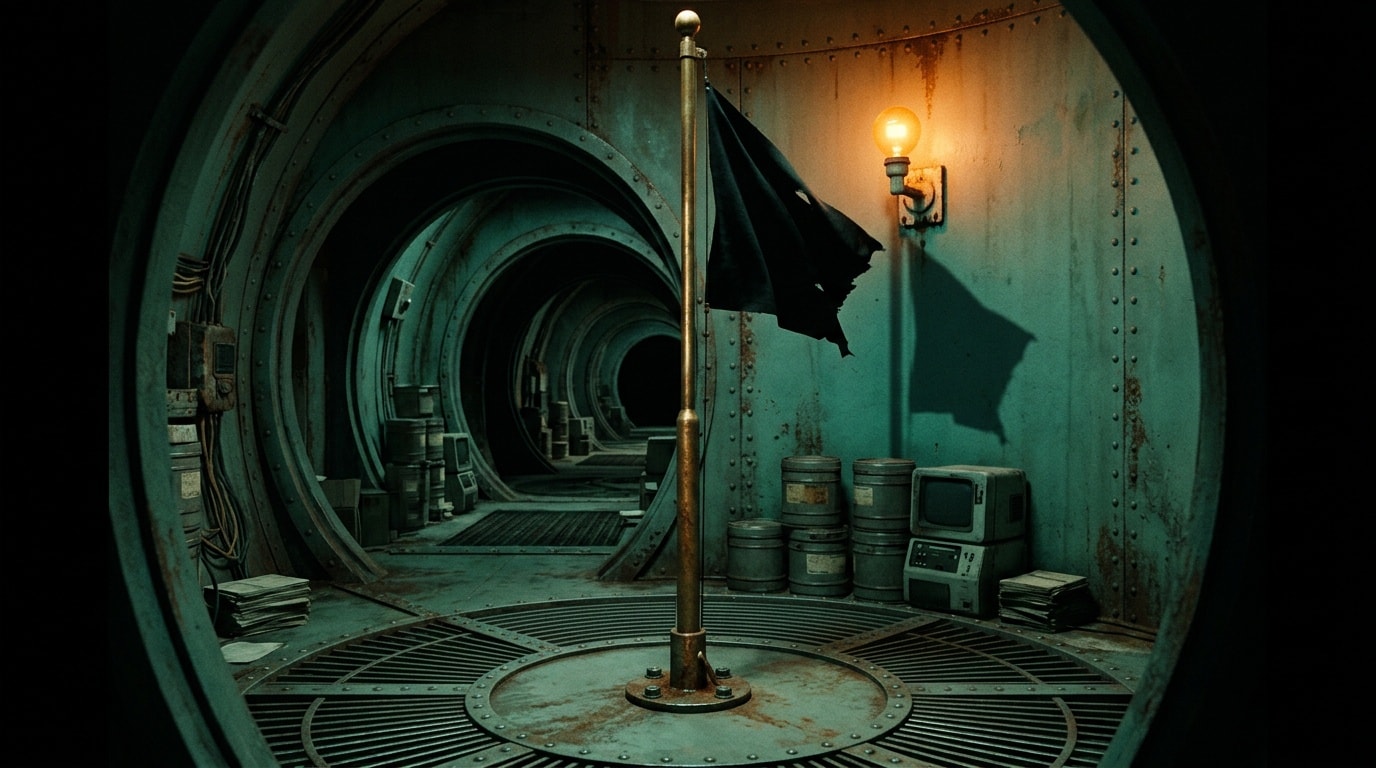
The Flashback Shows Silo 17's Rebellion
The flashback depicts the specific rebellion of the silo Juliette enters, confirmed by the precise mapping of its damage events onto the silo's current physical state and the black flag still flying above thousands of corpses at the entrance.
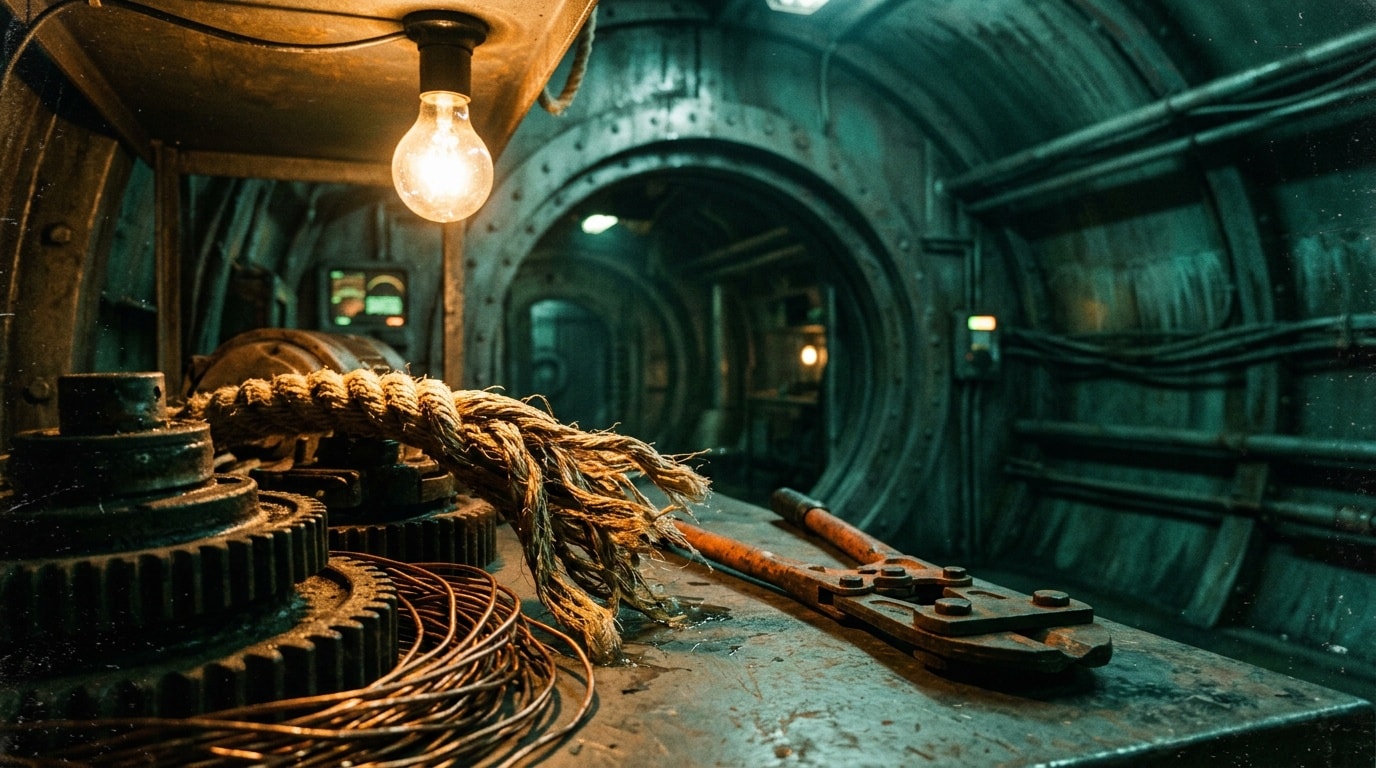
Someone Cut Juliette's Rope On Purpose
The vault figure behind the reinforced door cut Juliette's rope before her chasm crossing, staging a survivable failure as a demonstration of control rather than an attempt on her life.