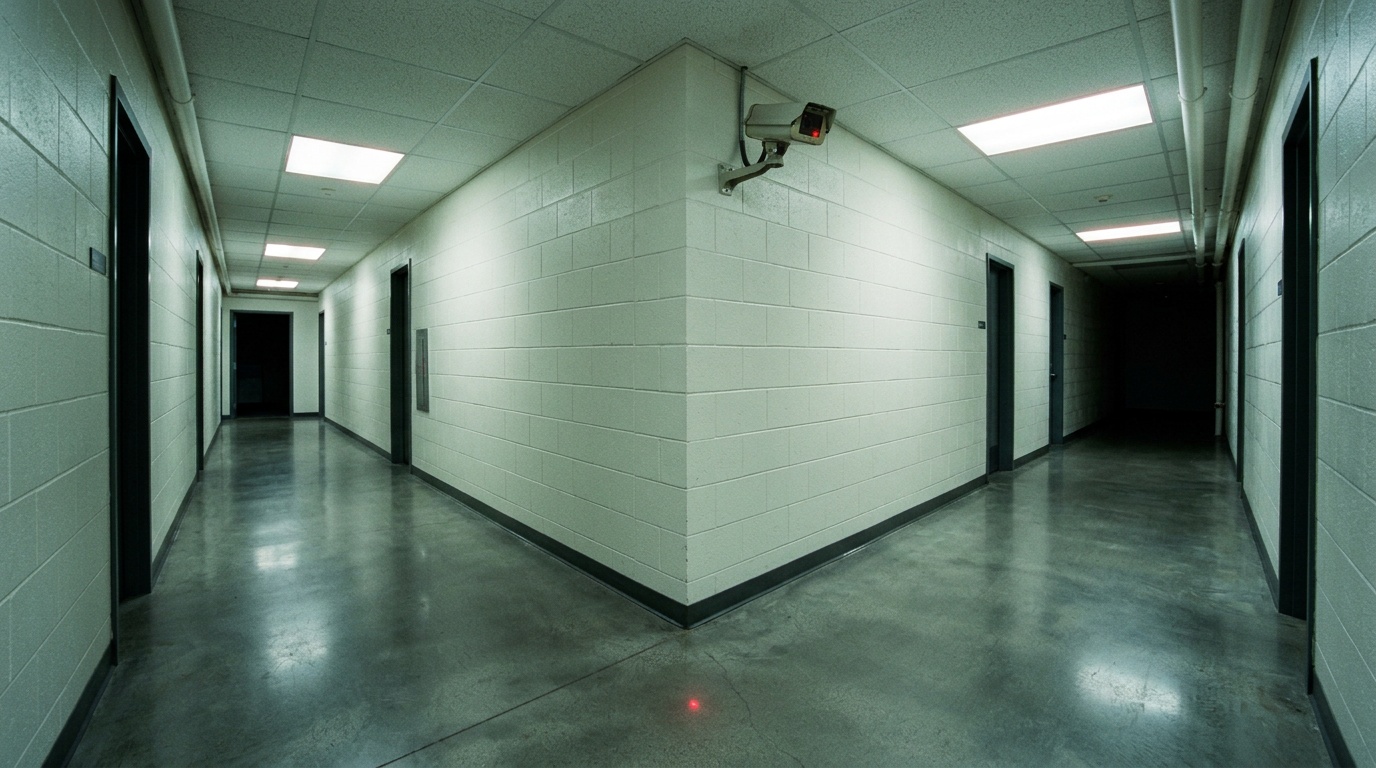
The Perpetuity Wing Is a Permanent Prison Engineered to Recruit Its Own Inmates
THE THEORY
The Perpetuity Wing operates simultaneously as a physical holding space for innies whose severance has been made total and irrevocable, and as a psychological conversion mechanism that replaces innie selfhood with Lumon-approved devotion. Crucially, the devotional architecture was not applied to the Wing after the fact: it was built into Lumon's conditioning system before any employee ever stepped onto the severed floor, which means the Wing is not a destination the faithful discover but the endpoint of a pipeline they entered at the moment of recruitment.
How This Theory Works
Petey's correction of Mark is the sharpest piece of evidence in the series and the one most viewers misread. When Mark says 'none of us get to leave,' Petey does not nod in sympathy. He stops him. He specifies: the employees in this department are down there right now, at this moment. The distinction is structural, not rhetorical. Every severed employee is trapped during work hours. Only the Perpetuity Wing's occupants never leave at all — their outie lives continuing above, uninformed, while their innie existence loops without exit or terminus. Before naming the Wing, Petey frames the question as moral rather than procedural: what if Mark has been murdering people all day without knowing it? That framing is a precise description of what permanent innie confinement actually is — a person maintained in continuous existence with no mechanism of return. The Wing is not a rumor or an inference. It is named, corridored, accessible, and mentioned in the handbook. Lumon anticipated this outcome, formalized it, and decorated it.
The decoration is where the second level of the system becomes visible. Irving does not describe the Perpetuity Wing as disturbing, significant, or worth investigating. He says it is everything. That word choice is diagnostic. A space that provides everything to a person with no memories, no outside life, and no identity beyond their work function is not offering context about Lumon — it is offering a substitute for selfhood. Irving has internalized the handbook more completely than anyone else in MDR, and the Wing is the most likely mechanism of that conversion. He prescribes it not to a willing recruit but to Helly, the employee most actively refusing to accept her captivity, framing ideological immersion as the solution to her resistance. He is recommending the thing that worked on him, and he no longer has the distance to recognize what that means. The Wing did not inform Irving. It replaced him.
What makes this replacement possible is that it does not begin in the Wing. The Kier mythology — the handbook, the wellness rituals, the iconography of founder devotion — is installed before severance, during recruitment, before the innie even exists. An employee arrives on the severed floor already primed with the sacred vocabulary. The Wing is the culmination of that conditioning, not its origin. By the time Irving tells Helly it is everything, he is not describing a discovery he made underground. He is reporting the conclusion a system trained him to reach, using a framework that was already in place the moment he signed the severance agreement. The devotion feels internally generated because its foundations were laid before there was an Irving-innie to question them.
The reservation slip is where both levels of the system become visible in a single detail. A formally rationed access procedure is a disproportionate procedural barrier for a space whose stated purpose is inspiration and meaning — unless the dose and timing of that exposure matter to the outcome. Lumon does not leave the Wing open because unlimited access would undermine the effect. The rationing is the feature, not the friction. The Wing is a controlled substance administered through paperwork. When Mark brings the idea to Cobel, she does not deliberate. She does not assess whether Helly is ready or whether the visit is appropriate. She asks whether Mark has filled out the reservation form. That response treats the Wing's effect as a settled operational matter — something Lumon has already decided is safe to deploy under specified conditions, with the right form filed first. She is not a manager vetting a proposal. She is a gatekeeper confirming protocol before releasing something controlled.
The shrine framing is not incidental to this system. It is what makes the system self-sustaining. Shrines do not get investigated the way prisons do. Lumon built the Wing as a holding space and then wrapped it in the same devotional architecture as the Kier mythology so that its most successfully converted prisoners become its most enthusiastic recruiters. Irving guiding Helly to the Wing is not coercion. It is, from his perspective, an act of genuine care: he is offering her the thing that ended his own confusion and gave him everything. The intake is voluntary. The faith is real. Neither of those facts makes the outcome less total. A system that converts its prisoners into intake volunteers does not require Cobel to believe in the Wing or Lumon to maintain active surveillance over who visits. It only requires that the faithful keep filing the forms.
Taken together, these two levels — the carceral and the devotional — are not in tension. They are mutually reinforcing by design. The permanent prison requires the shrine framing to remain invisible and self-populating. The shrine framing requires the permanent prison to give Irving's everything its weight: the Wing produces total devotion precisely because it houses people for whom there is no alternative. And the shrine framing was never improvised. It was built into the pipeline from the outside in, seeded before severance so that the innie arrives already oriented toward worship. Lumon did not stumble onto this architecture. The Wing is the terminal node of a system that begins at recruitment, runs through the handbook, and ends with the faithful administering their own captivity.
Is this theory convincing?
Key Evidence
Petey's Hidden Department Warning
Petey tells Mark he found a department Lumon does not tell employees about, one where employees do not get to leave, and specifies they are there right now, distinguishing it from the standard severance arrangement.
Mark's Misunderstanding Corrected
When Mark assumes 'none of us get to leave,' Petey explicitly corrects him, insisting he means employees in this department truly never leave and remain at Lumon at this very moment.
Irving's Devotional Framing
Irving tells Mark that the Perpetuity Wing is different to experience in person versus reading about it in the handbook, and calls it 'everything,' using the language of reverence rather than description.
Petey's Murder Question
Before revealing the hidden department, Petey asks Mark what if the cost of his work arrangement is that he is murdering people all day without knowing it, framing the unknown department as potentially a site of harm.
Named Wing as Visitable Location
Irving proposes taking Helly to the Perpetuity Wing as a motivational visit, confirming it is a real, named, accessible space within the Lumon building rather than an abstraction.
Petey's Silence After Warning
After beginning to describe the hidden department, Petey abruptly goes quiet and refuses to say more, stating he does not know if the monitors are bugged, treating the information as actively dangerous.
Other Theories for S1E03
Cobel Lives Next Door to Watch Mark
Cobel did not simply accept a surveillance assignment.
Severance Fragments Its Subjects at Every Stage
Severance does not contain suffering within a partition; it transforms grief into a sourceless affliction the innie cannot name, then destroys the orientational architecture that would allow a reintegrated person to inhabit either life.
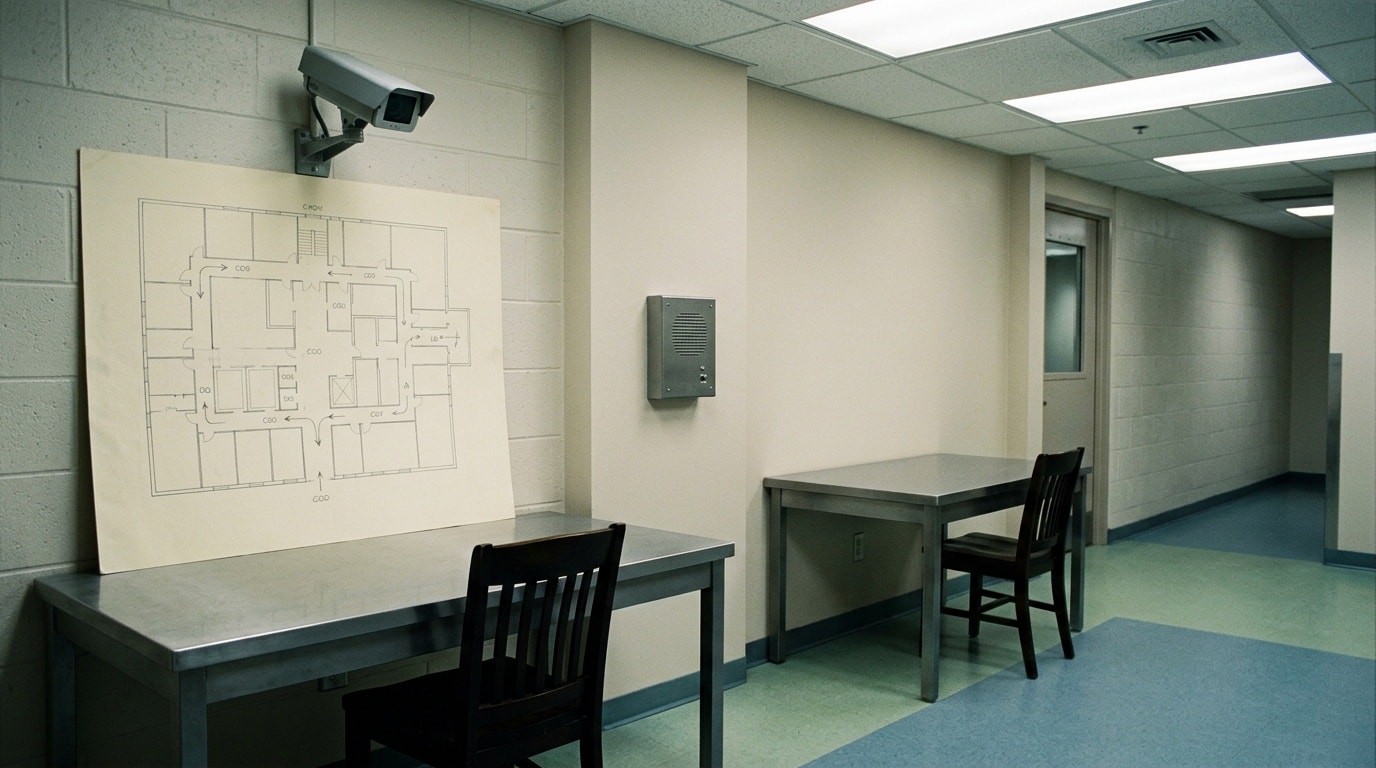
Petey Was a Surveyor Not a Defector
Petey's reintegration, his appearance at Mark's home, and his hand-drawn floor map constitute a single coordinated operation run by a covert second resistance group distinct from the Whole Mind Collective.
Lumon Controls Resignation Without Employee Consent
Lumon has veto power over severance resignations that it exercises before requests ever reach the outie, meaning the contract's apparent voluntariness is a structural fiction maintained by keeping the only person with legal standing to exit permanently uninformed.
Break Room Forces Sincere Confessions, Not Just Compliance
The break room is an engineered conversion apparatus, not a punitive space, built on the premise that behavioral compliance is insufficient and that the innie's internal state must be remade to match Lumon's approved ideology before release is granted.
Each MDR Worker Embodies a Lumon Temper
Lumon's four tempers are not corporate decoration.