The Meeting Rhaenyra Is Engineering Is the One Alicent Cannot Survive Without a Confession
Plausibility Score
(?)Convinced
(?)#310
of 705 theories
Theory Ranking
(?)READER VERDICT
Is this theory convincing?
Trend builds after 10 votes.
Be among the first to weigh in.
THEORY ASSESSMENT
Rhaenys's dialogue in the episode directly confirms the core claim, and the structural isolation of Alicent through Otto's removal and Criston's departure maps cleanly onto the theory's mechanism, with the only gap being that Alicent's internal state remains unconfirmed from her own perspective in this episode.
STORY CONTEXT
Is Alicent a master player or a pawn of her father and sons? This thread debates whether she's driving Green strategy or increasingly sidelined, with close readings of her political maneuvering and moments of visible doubt.
ACTIVE SIGNALS
This theory ranks among the most-contested in the Theory Atlas catalog — a grounded competing reading meaningfully challenges the dominant interpretation.
WHY THIS MATTERS
If this reading is correct, the show is not building toward a political negotiation but toward a scene of mutual reckoning in which peace is possible only if both women can simultaneously bear what honesty requires of them, and the war's continuation is not the failure of diplomacy but the cost of two people who cannot yet do that. It reframes the entire conflict as one sustained by private irresolution as much as by factional momentum.
ALTERNATE INTERPRETATION
One dissenting angle in the cluster argues that Rhaenys may be underestimating Alicent's genuine complicity by framing the war as something imposed on her. Aegon has shown independent agency in the Green Council, and Alicent permitted the usurpation at the moment it mattered most. On this reading, Alicent's reluctance is real but does not exonerate her, and Rhaenys's sympathy may be exactly the kind of misreading that prevents Rhaenyra's faction from accurately assessing their opponents.
Adjacent Reading — Not a Competing Theory
Other Theories for S2E03
Harrenhal Selects for Fire, Processes Through Alys, and Destroys Through Recognition
Harrenhal operates as a three-stage trap: it admits claimants through fire as a structural criterion, uses Alys Rivers as its active processing mechanism to engineer the psychological sequence that follows, and delivers its killing blow not through spectral violence but through the one confrontation Daemon has organized his entire life to avoid.
Larys Manufactured the Threat He Sold Aegon
Larys Strong manufactured the council conspiracy rumor he presented to Aegon as a warning, engineering the very threat he claimed to be exposing in order to secure the Master of Whisperers appointment that now gives him control over the king's entire information supply.
A Local Feud Ignites the Dance of Dragons
The Dance of Dragons does not spread through the Riverlands by royal command but through feudal hatreds that use the succession crisis as permission to activate.
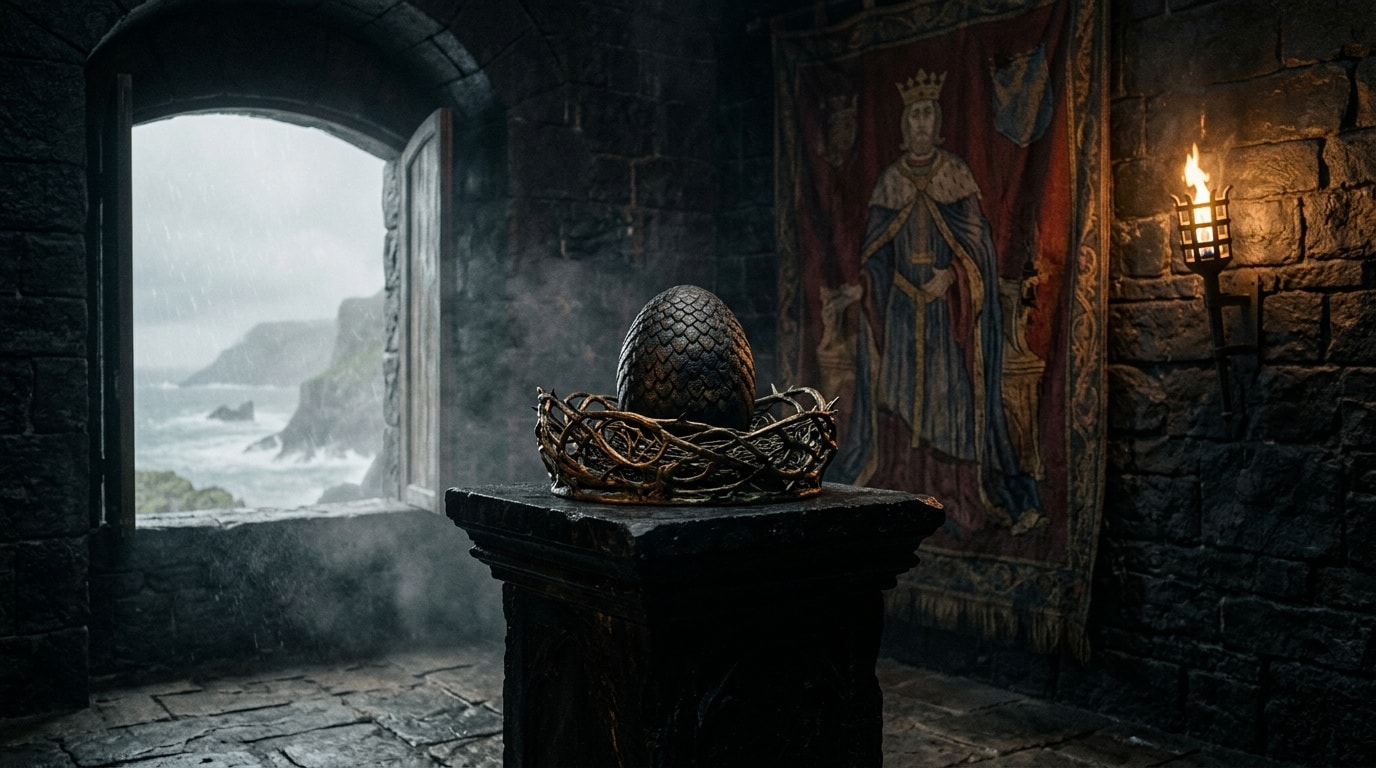
Dragon Eggs Sent to Pentos as Dynastic Failsafe
Rhaenyra has already run the losing scenario to its end, and the Pentos mission is what that conclusion looks like in practice: she is moving irreplaceable dynastic assets beyond the reach of any Westerosi outcome and installing a bonded Targaryen rider there by promising Rhaena a hatchling.
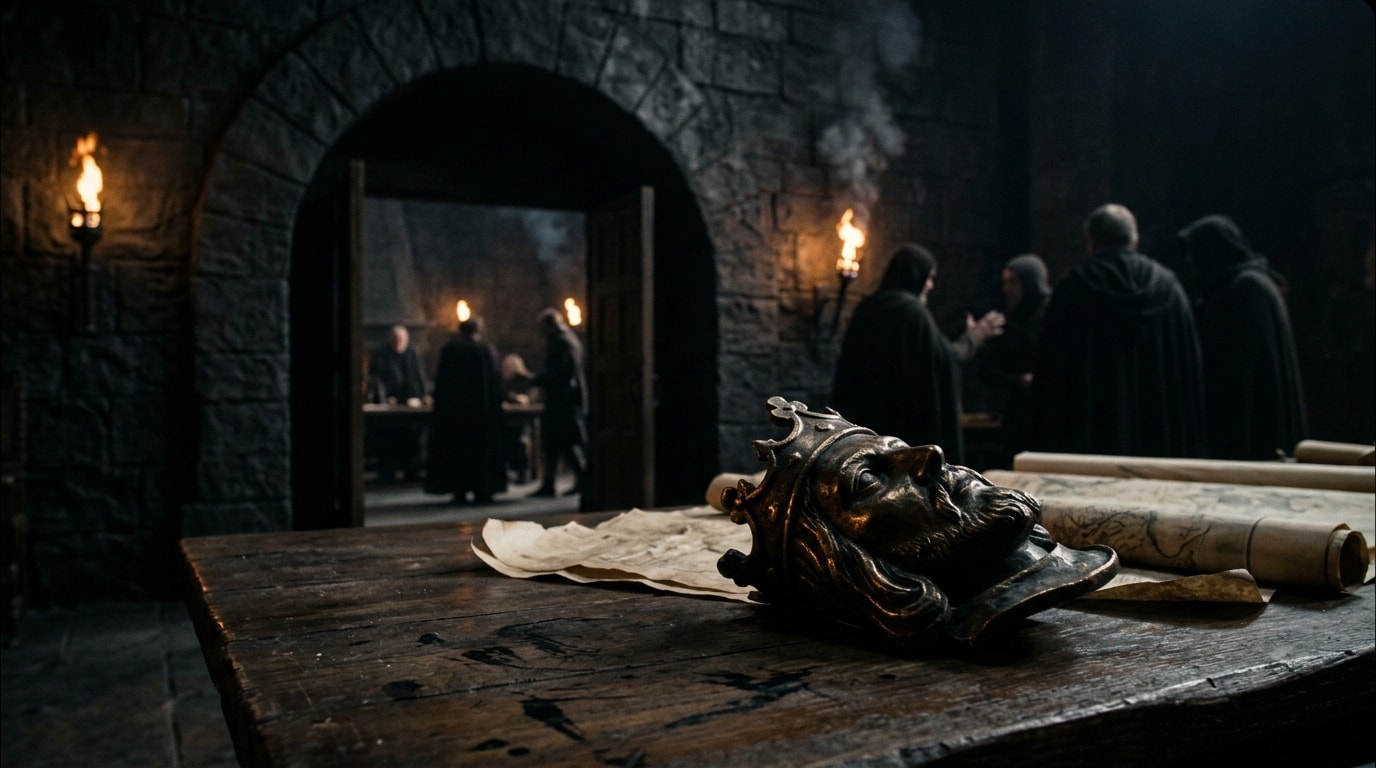
Simon Strong's 'Prince' Is a Power Move
Ser Simon Strong's repeated use of 'my Prince' instead of 'Your Grace' is a calculated refusal to recognize Daemon's kingship, not an old man's oversight.
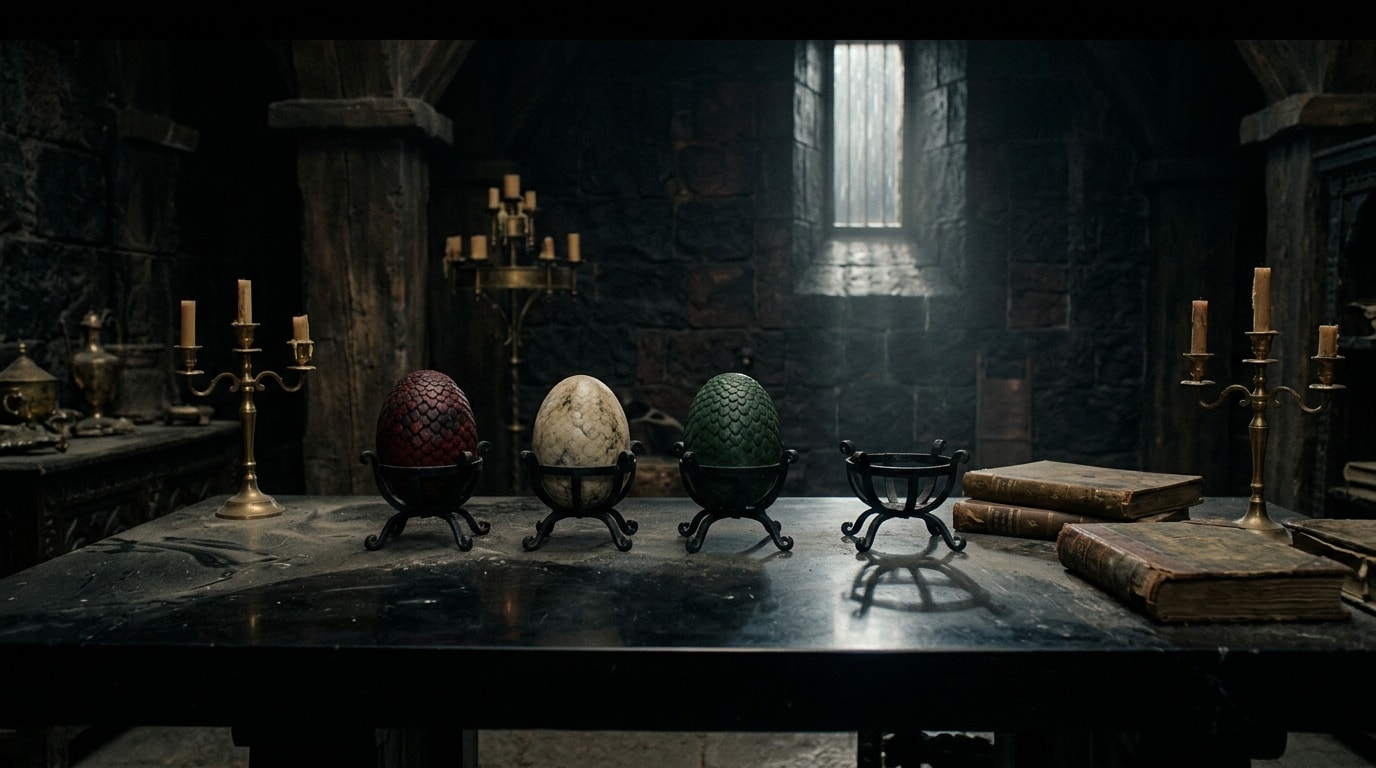
Rhaena's Four Eggs Become Daenerys's Three
The four dragon eggs Rhaenyra sends with Rhaena to Pentos are the same clutch that hatches into Drogon, Viserion, and Rhaegal at Daenerys Targaryen's wedding, with one egg lost somewhere in the intervening two centuries.