Harrenhal Selects for Fire, Processes Through Alys, and Destroys Through Recognition
THE THEORY
Harrenhal operates as a three-stage trap: it admits claimants through fire as a structural criterion, uses Alys Rivers as its active processing mechanism to engineer the psychological sequence that follows, and delivers its killing blow not through spectral violence but through the one confrontation Daemon has organized his entire life to avoid. Rhaenyra has always been the load-bearing structure of his identity, absorbing the costs he creates and cannot pay. The castle did not surrender to Daemon. It admitted him, assessed him, and has already decided what he is for.
How This Theory Works
The structural argument arrives in a single piece of dialogue that the show frames as historical color but encodes as a rule. When Simon Strong tells Daemon that Larys's kinslaying arson was Harrenhal's first fire since Aegon the Conqueror burned Harren the Black inside its walls, the comparison is not atmosphere; it is a mechanism. Fire claims Harrenhal, and Harrenhal then claims whoever enters through fire. Simon catalogs the families that have held the seat since: each broken or extinguished, each arriving with authority and departing without it. Larys Strong murdered his father and brother, seized the castle through the purest possible version of this logic, and became an exile serving an enemy court before the year was out. Daemon recapitulated the pattern without recognizing it, landing on Kingspyre Tower on dragonback, in a storm, in the dark, conducting his own private version of the founding fire. The castle gave him no battle because it did not need one. The acquisition phase was already complete the moment he touched down.
Alys Rivers was already watching when that acquisition happened. She appears in the great hall during Simon Strong's formal submission: not summoned, not responding to anything Daemon has yet experienced, simply present and tracking him from the periphery before the castle has done anything to him at all. This placement is the show's clearest structural signal, and it inverts the reading Daemon's perspective would prefer. He would like her to be a prophetess who happened to find a distressed man at a sacred site. The sequencing establishes something colder: she was there first, positioned at the destination before the journey began, which means she is not a respondent to Harrenhal's operations. She is a component of them, the mechanism by which the castle identifies new occupants, assesses what they carry, and initiates the process of returning it to them.
What the show presents as a supernatural night is a single unbroken chain of external stimuli, not a passive dream state. Doors pound with no one outside. A humming figure moves through the corridors. A vision surfaces: young Rhaenyra reattaching Prince Jaehaerys's severed head, upbraiding Daemon in the present tense for messes he creates and cannot clean. It does not diffuse across his guilt generally but lands with the precision of something that has read him. Then Daemon wakes already standing at the weirwood heart tree with no memory of the walk, stripped of the military authority he arrived with less than a day earlier. Alys is already there. The sequencing earns only one explanation: she did not find him at the heart tree. She delivered him to it. The vision was not his unconscious producing what it knows. It was the castle acting on him through her. She identified the wound in the great hall, administered the sequence that would pull it to the surface, and was waiting at the sacred ground when the process was complete.
The specific wound the vision targets is where the psychological argument sharpens. Daemon's paranoia about the food is not tactical caution; it is the first symptom of a man whose identity depends on resistance, and who received none. Simon Strong's immediate compliance denied him the external threat his self-concept requires, and the unease displaced onto the plate, the walls, the sounds in the corridor is the first sign that without an opponent he has only himself to contend with. What the castle exploits is not his fear of death but his terror of insignificance, and the vision is its instrument. Young Rhaenyra does not appear wearing the face of a rival or an enemy. She appears wearing the face of the one person who represents the specific cost Daemon has never paid: the cost of being him. He has never been the figure who repairs. He has always been the figure who breaks and departs, leaving the wreckage for her to absorb. The vision arrives wearing her childhood face because that is the one form he cannot dismiss or cut down. He cannot draw Dark Sister against his own dependency. The temporal collapse the vision enacts, with past Rhaenyra performing a present-tense reproach, is not how guilt-dreaming works. It is how an external intelligence delivers an indictment.
Alys's warning at the heart tree is not, then, a prophecy offered in Daemon's interest. He arrived at Harrenhal as a lord with military authority and political purpose. Within a single night he was moved through his own castle without awareness, confronted with the recognition he has spent his life engineering around, and deposited at a sacred site where she was already stationed. Her words, that he will die at Harrenhal, do not close an ominous scene. They close a process. The castle has already assessed him: fire brought him in, Alys administered the sequence that opened him, and the vision returned him to the one confrontation his entire architecture of aggression, displacement, and departure was constructed to avoid. The warning is not about his future. It is a closing statement about what Harrenhal has already decided he is for: not a conqueror, not a lord, but the latest in a sequence of men the castle has admitted through fire and returned, with precision, to themselves.
Is this theory convincing?
Key Evidence
Refusal to Eat at Harrenhal
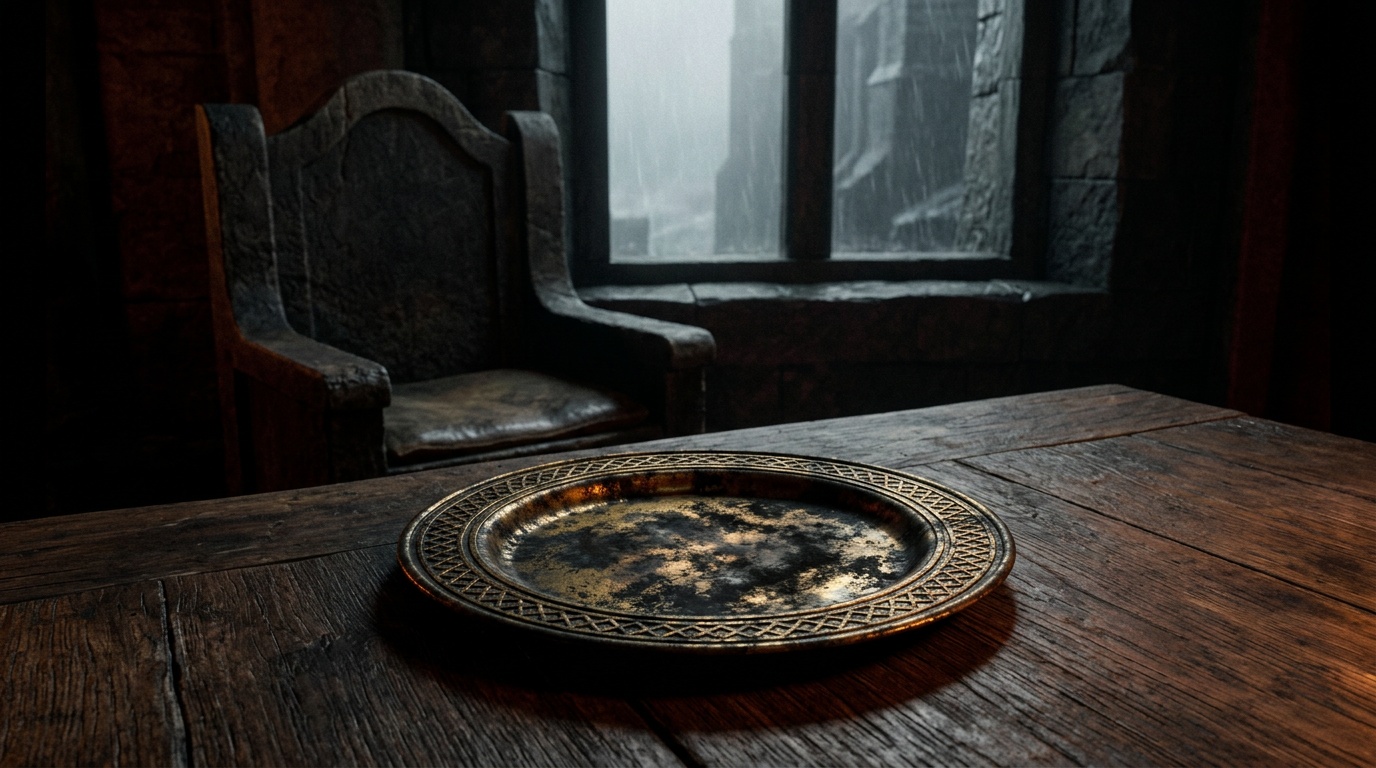
Despite Simon Strong's reassurances, Daemon refuses to touch his plate, suspecting poison, a response disproportionate to the situation and revealing an underlying psychological instability rather than sound tactical caution.
Displeased by Bloodless Surrender
Daemon is visibly displeased by the ease of his victory over Harrenhal, suggesting his paranoia feeds on the absence of an external threat rather than its presence.
Vision of Young Rhaenyra Stitching Jaehaerys
Daemon experiences a vision of a young Rhaenyra reattaching Jaehaerys's severed head and accusing Daemon of creating messes she must clean up, a hallucination that strikes at the core of his self-image as a decisive actor.
Sleepwalking to the Godswood
Daemon wakes to find himself standing before Harrenhal's weirwood heart tree with no memory of leaving his chambers, indicating the castle is acting on him below the level of conscious awareness.
Death Warning from the Dark-Haired Woman
A mysterious woman who watched Simon Strong's surrender tells Daemon he will die at Harrenhal, a warning that arrives precisely when he is most psychologically exposed and least able to dismiss it.
Other Theories for S2E03
Larys Manufactured the Threat He Sold Aegon
Larys Strong manufactured the council conspiracy rumor he presented to Aegon as a warning, engineering the very threat he claimed to be exposing in order to secure the Master of Whisperers appointment that now gives him control over the king's entire information supply.
The Meeting Rhaenyra Is Engineering Is the One Alicent Cannot Survive Without a Confession
Rhaenyra is quietly protecting a direct approach to Alicent from her own council, drawn to it not by strategic logic but by unresolved guilt over a false oath sworn at the most vulnerable moment of their friendship.
A Local Feud Ignites the Dance of Dragons
The Dance of Dragons does not spread through the Riverlands by royal command but through feudal hatreds that use the succession crisis as permission to activate.
Dragon Eggs Sent to Pentos as Dynastic Failsafe
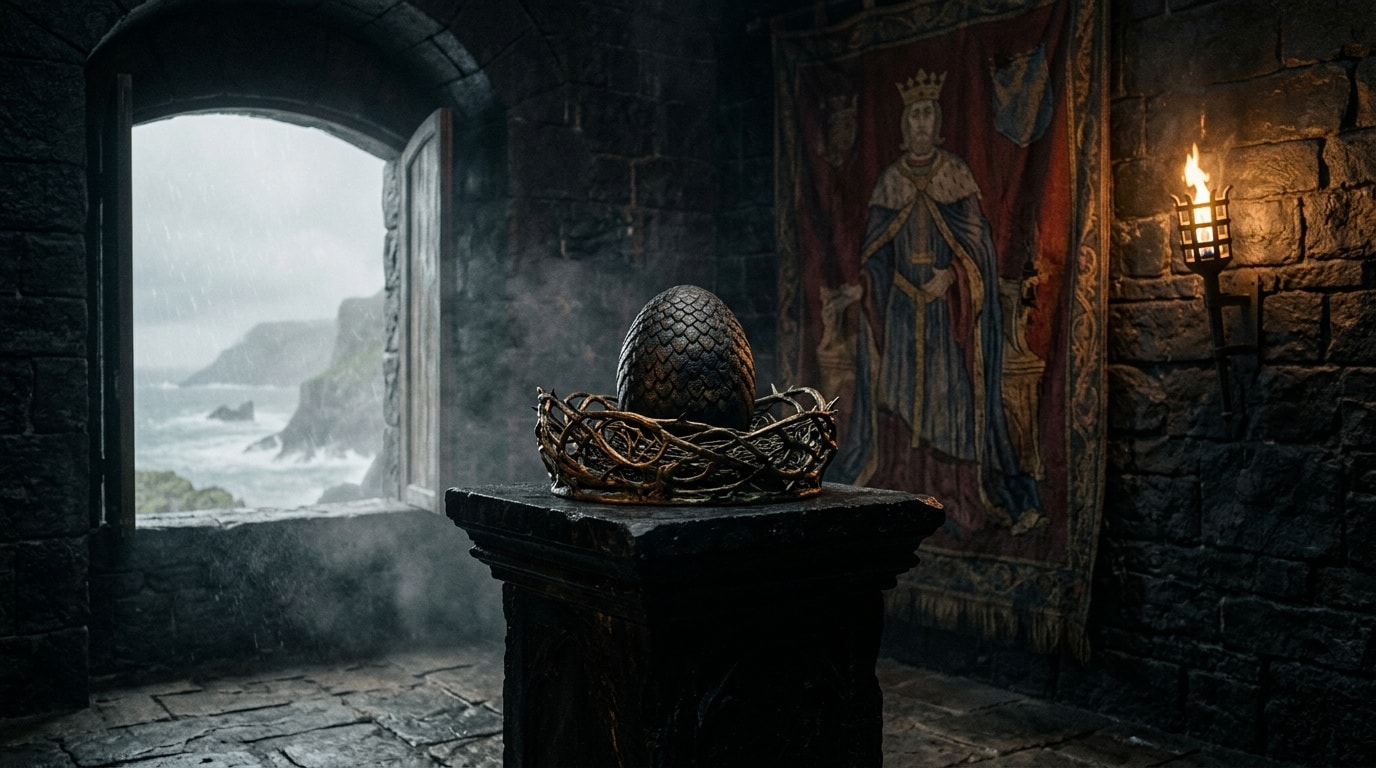
Rhaenyra has already run the losing scenario to its end, and the Pentos mission is what that conclusion looks like in practice: she is moving irreplaceable dynastic assets beyond the reach of any Westerosi outcome and installing a bonded Targaryen rider there by promising Rhaena a hatchling.
Simon Strong's 'Prince' Is a Power Move
Ser Simon Strong's repeated use of 'my Prince' instead of 'Your Grace' is a calculated refusal to recognize Daemon's kingship, not an old man's oversight.
Rhaena's Four Eggs Become Daenerys's Three
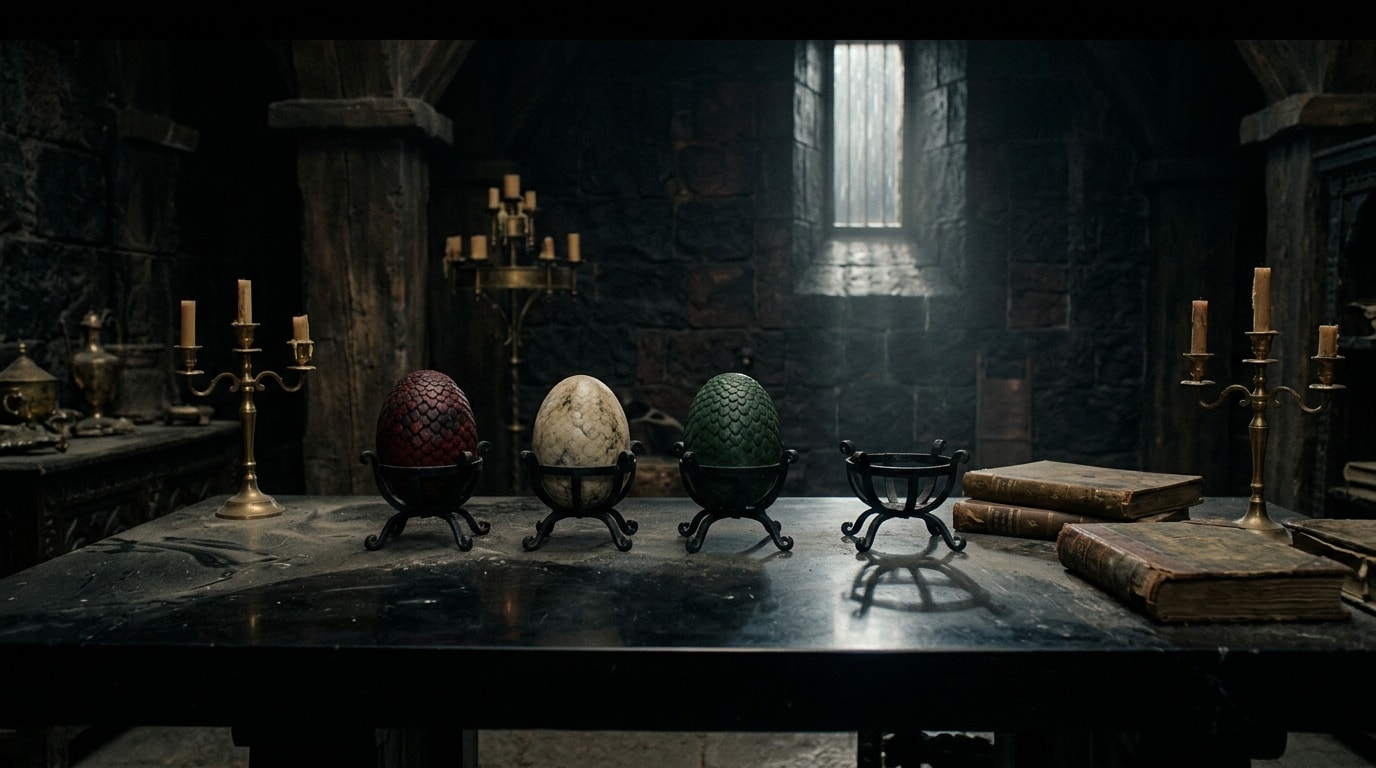
The four dragon eggs Rhaenyra sends with Rhaena to Pentos are the same clutch that hatches into Drogon, Viserion, and Rhaegal at Daenerys Targaryen's wedding, with one egg lost somewhere in the intervening two centuries.