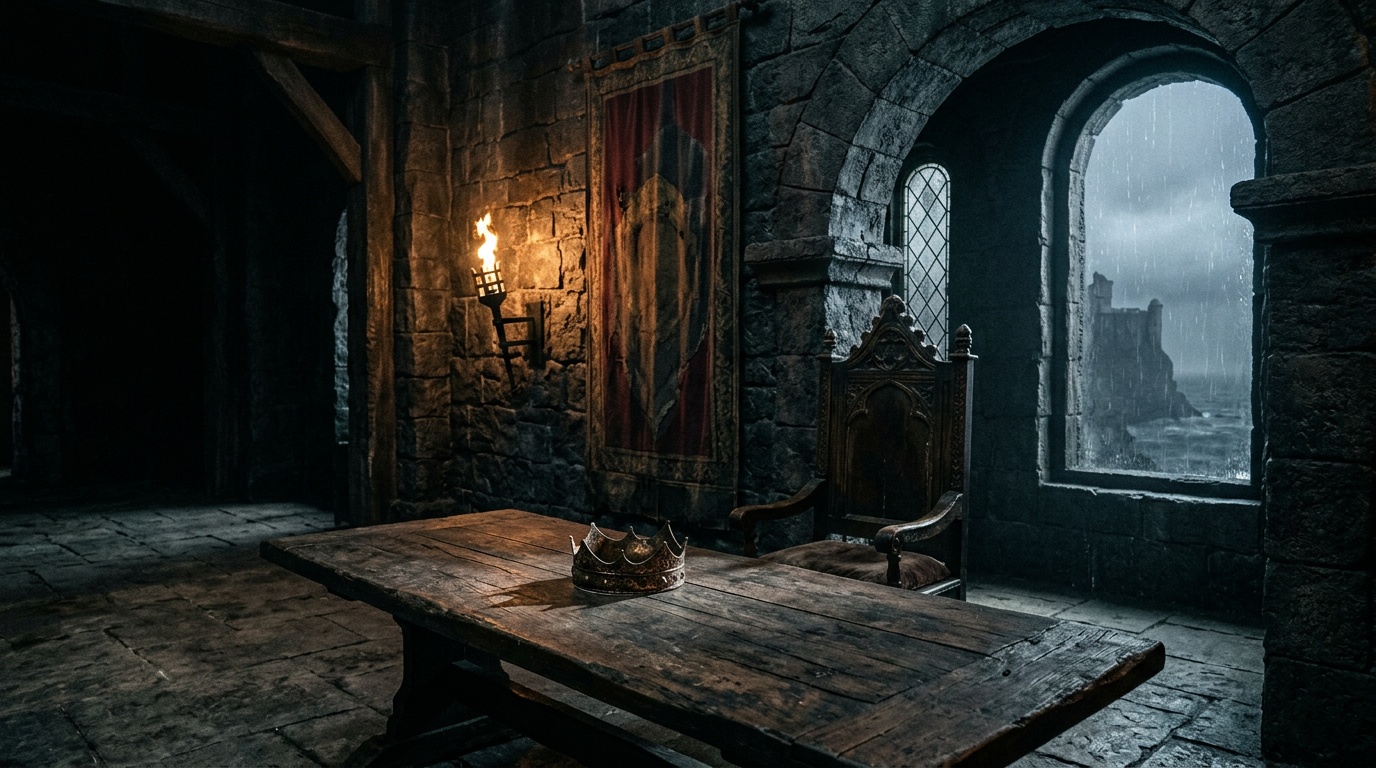
The Meeting Rhaenyra Is Engineering Is the One Alicent Cannot Survive Without a Confession
THE THEORY
Rhaenyra is quietly protecting a direct approach to Alicent from her own council, drawn to it not by strategic logic but by unresolved guilt over a false oath sworn at the most vulnerable moment of their friendship. Alicent, meanwhile, has been operationally ejected from her own faction and cannot move toward the peace she appears to want without confessing she never believed the succession claim firmly enough to justify the war it produced. Both women are moving toward the same meeting for symmetrical reasons, and the meeting is survivable only if each can bear what honesty would require of the other simultaneously.
How This Theory Works
Rhaenyra is not resisting her council's calls for dragon strikes out of caution. The Black Council scene establishes an institutional momentum toward escalation that she keeps deflecting with the argument that armies, not dragons alone, will win the war. This position is too strategically thin to be the real reason, and too consistently held to be improvisation. She is buying time for a move the room cannot know about. When Rhaenys reveals that Alicent personally sought her out in the hours following Viserys's death to avert a war before it started, Rhaenyra does not reject the overture Rhaenys urges. She storms away from it. That is not the response of a general who has evaluated a tactical option and found it wanting. It is the response of someone who needed to hear something she is not ready to act on yet, someone for whom the information has arrived at the wrong moment, carrying too much weight in the wrong direction.
The weight is personal and specific. Rhaenyra is the person who, at the moment of greatest vulnerability in their friendship, located exactly where Alicent trusted her most and used that ground to swear a false oath. She has lived with that ever since, and the show has been careful to preserve it as unresolved rather than processed. Her refusal to separate Alicent's reluctance from the faction's actions, her insistence that Alicent permitted the usurpation, that Lucerys's death follows from the chain Alicent set in motion, is too absolute to be a purely political assessment. It reads like a woman working to keep Alicent in the category of enemy because the alternative is harder: if Alicent was pressured rather than committed, if her private preference was always for non-war, then what Rhaenyra did to earn whatever enmity does exist becomes inseparable from the war itself. Rhaenys's framing threatens to restore Alicent to the position of someone Rhaenyra wronged, and Rhaenyra is not ready to hold that alongside everything else she is already carrying.
Alicent's situation is structurally symmetrical and psychologically more exposed. The structural dispossession is complete and the show has documented it precisely: Otto removed as Hand, Criston Cole marching beyond recall toward Harrenhal, Aemond demonstrably operating outside any authority she holds. The assassination attempt on Rhaenyra, which Rhaenys attributes not to Otto but to younger, more vengeful men, is the sharpest confirmation that the decoupling is already total. Alicent did not authorize it. She could not have stopped it. She remains at court lending legitimacy to escalations she neither sanctioned nor can check. But the structural reading, taken alone, is too comfortable. It positions Alicent as a captive of events whose moderation has simply been overrun, and it avoids the harder implication embedded in Rhaenys's observation that the younger men driving escalation will soon not even remember the reason the war began. A cause with genuine ideological weight does not require its adherents to remember its origin. The fact that the war's founding premise needs explaining, the fact that Otto's restraint can be contrasted with the younger men's forgetting, implies that the original architects understood from the beginning that the justification was thin enough to require active management. They were not defending a conviction. They were maintaining a premise.
Alicent was present the evening Viserys reaffirmed Rhaenyra's succession in coherent, deliberate terms. For his final delirious words to have reversed everything she witnessed that night, she would have needed to believe a dying man's last breath outweighed hours of lucid reiteration, and she was the one person positioned to interrogate that before acting on it. She did not interrogate it. The show has withheld direct confirmation of what she suppressed, and it has done so deliberately: Rhaenyra storms away from Rhaenys's suggestion rather than letting the question close. But Rhaenys does not frame Alicent's reluctance as the disillusionment of a former believer. She frames it as conditional at its origin, as a preference for non-war that predates the war itself and that the men around her have since overridden. The woman who is not fighting to reclaim her cause from those who have corrupted it, who is not demanding accountability for the unauthorized assassination, not reasserting herself against Aemond's autonomy, only watching, is not behaving like someone whose conviction has been hijacked. She is behaving like someone who has recognized, without being able to say so, that retraction requires confession, and confession requires naming the bad faith that was present in the founding moment.
The meeting these two trajectories are converging on is structurally overdetermined and psychologically nearly impossible for symmetrical reasons. Rhaenyra has Alicent's prior approach as both precedent and permission structure: Alicent reached out once before, secretly, without intermediaries, and the channel exists because she opened it. A second approach would logically follow the same form, with no council, no intermediary, in person. But the approach Rhaenyra would be making is not the approach Alicent's original overture assumed. That overture happened before the false oath was fully reckoned with, before the architecture of the restored friendship was exposed for what it was. Rhaenyra would be arriving to someone who may no longer be reachable by the terms she is still using. And Alicent, for her part, cannot offer what Rhaenys thinks she can offer, she cannot deliver a faction she no longer controls, unless she first names what she is proposing to move away from. Any peace Alicent gestures toward without that accounting is a gesture she cannot honor. The only peace she could actually deliver requires her to confess, to the one person she most needs not to confess to, that the ground on which the war was built was never as solid as she allowed it to appear. The cruelest design of this situation is that the only person positioned to receive that confession is the one who broke the original bond, and who has her own account to settle before she can hear it clearly.
Is this theory convincing?
Key Evidence
Rhaenys Confirms Alicent's Peace Overture
Rhaenys tells Rhaenyra that Alicent Hightower personally tried to convince Rhaenys to help avert war in the hours immediately following Viserys's death, establishing that Alicent's reluctance predates the war itself.
Arryk's Mission Disavowed from Alicent
Rhaenys concludes that Otto Hightower would never have sanctioned the assassination attempt on Rhaenyra's life, attributing it instead to younger, more vengeful men, which implies the act occurred without Alicent's knowledge or approval.
Alicent's Moderating Allies Removed
With Otto dismissed as Hand, Criston Cole marching toward Harrenhal, and Aemond demonstrably beyond her influence, Alicent has been stripped of every political ally who could have translated her reluctance into restraint.
Rhaenys Urges Direct Alicent Contact
Rhaenys explicitly urges Rhaenyra to reach out to Alicent as a potential route to peace, treating Alicent as someone whose private preference for non-war is genuine and potentially actionable.
Young Men Forgetting the War's Origin
Rhaenys observes that the younger, more vengeful men now driving escalation will soon not even remember the reason the war began, framing the conflict as having escaped the control of those who initiated it.
Rhaenyra Refuses to Distinguish Alicent's Guilt
Rhaenyra counters Rhaenys by pointing out that Alicent permitted the usurpation and Lucerys's murder, refusing to treat Alicent's reluctance as separable from the faction's actions, which is itself an argument the show has left unresolved.
Aegon's Agency Complicates the Reading
One reading in the cluster notes that Aegon has demonstrated independent agency in the Green Council, raising the possibility that Rhaenys underestimates Alicent's complicity by focusing on male pressure rather than Alicent's own choices.
Other Theories for S2E03
Harrenhal Selects for Fire, Processes Through Alys, and Destroys Through Recognition
Harrenhal operates as a three-stage trap: it admits claimants through fire as a structural criterion, uses Alys Rivers as its active processing mechanism to engineer the psychological sequence that follows, and delivers its killing blow not through spectral violence but through the one confrontation Daemon has organized his entire life to avoid.
Larys Manufactured the Threat He Sold Aegon
Larys Strong manufactured the council conspiracy rumor he presented to Aegon as a warning, engineering the very threat he claimed to be exposing in order to secure the Master of Whisperers appointment that now gives him control over the king's entire information supply.
A Local Feud Ignites the Dance of Dragons
The Dance of Dragons does not spread through the Riverlands by royal command but through feudal hatreds that use the succession crisis as permission to activate.
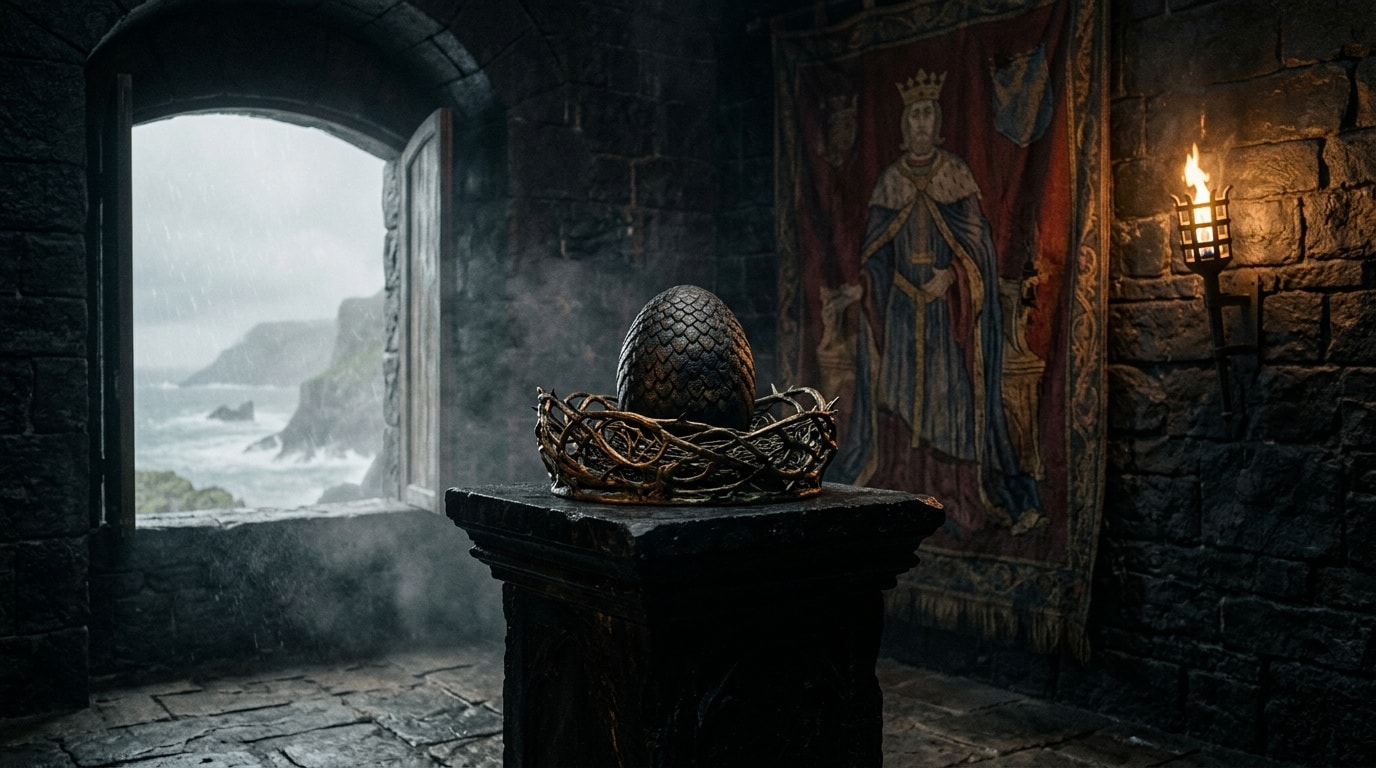
Dragon Eggs Sent to Pentos as Dynastic Failsafe
Rhaenyra has already run the losing scenario to its end, and the Pentos mission is what that conclusion looks like in practice: she is moving irreplaceable dynastic assets beyond the reach of any Westerosi outcome and installing a bonded Targaryen rider there by promising Rhaena a hatchling.
Simon Strong's 'Prince' Is a Power Move
Ser Simon Strong's repeated use of 'my Prince' instead of 'Your Grace' is a calculated refusal to recognize Daemon's kingship, not an old man's oversight.
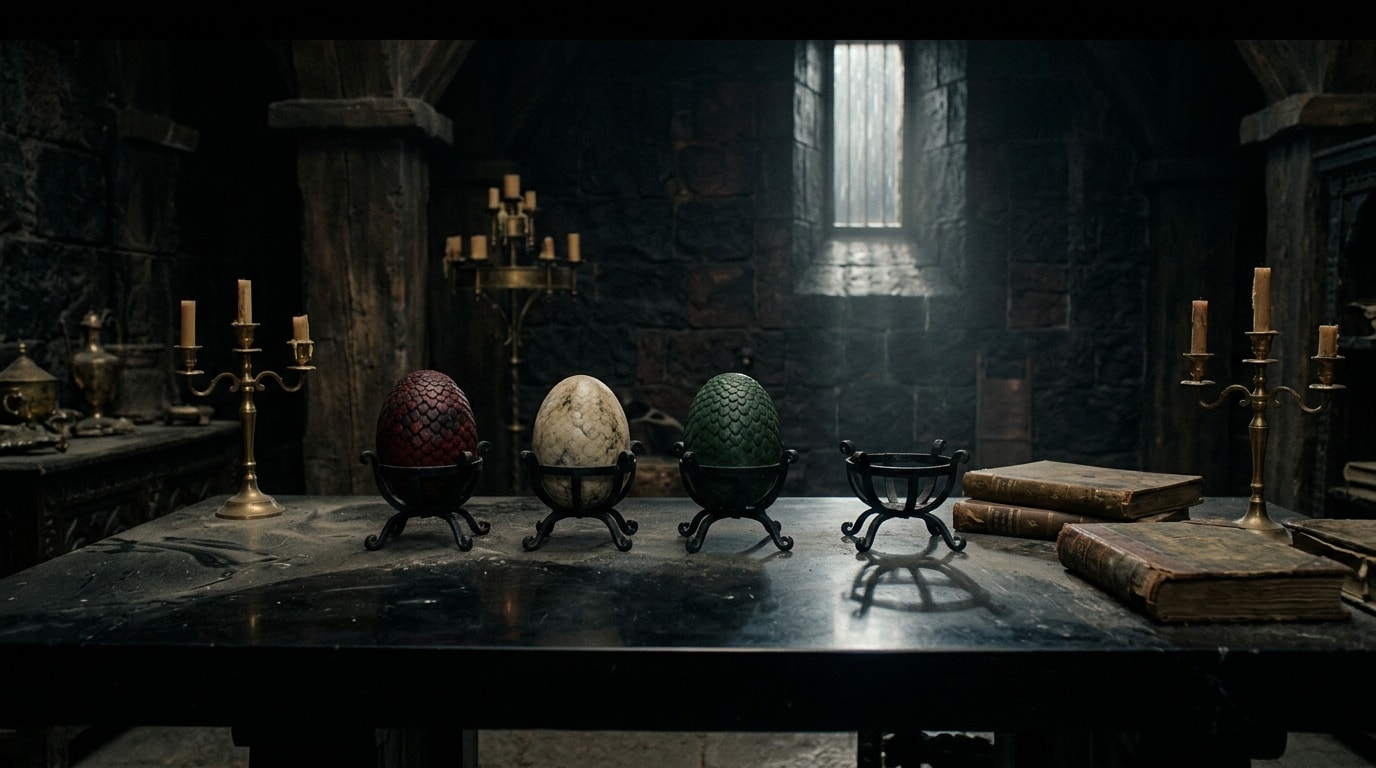
Rhaena's Four Eggs Become Daenerys's Three
The four dragon eggs Rhaenyra sends with Rhaena to Pentos are the same clutch that hatches into Drogon, Viserion, and Rhaegal at Daenerys Targaryen's wedding, with one egg lost somewhere in the intervening two centuries.