The War Rhaenyra's Question Started: How a Misdelivered Prophecy Ignited the Dance of Dragons
THE THEORY
Viserys's dying words are not a final royal instruction to Alicent. They are an answer to a question Rhaenyra asked him while he slept, a question Alicent never heard, in a conversation she was never part of. The Green cause does not rest on a king's last wish. It rests on a dying man's delirious reply to the wrong woman in the dark, made possible by the same sedation that allowed others to govern in his name.
How This Theory Works
The theory requires holding two conditions simultaneously: a king chemically incapable of clarity, and a queen receiving words whose full meaning lived only in a prior exchange she never witnessed. Neither condition alone produces the catastrophe. Together, they make it inevitable.
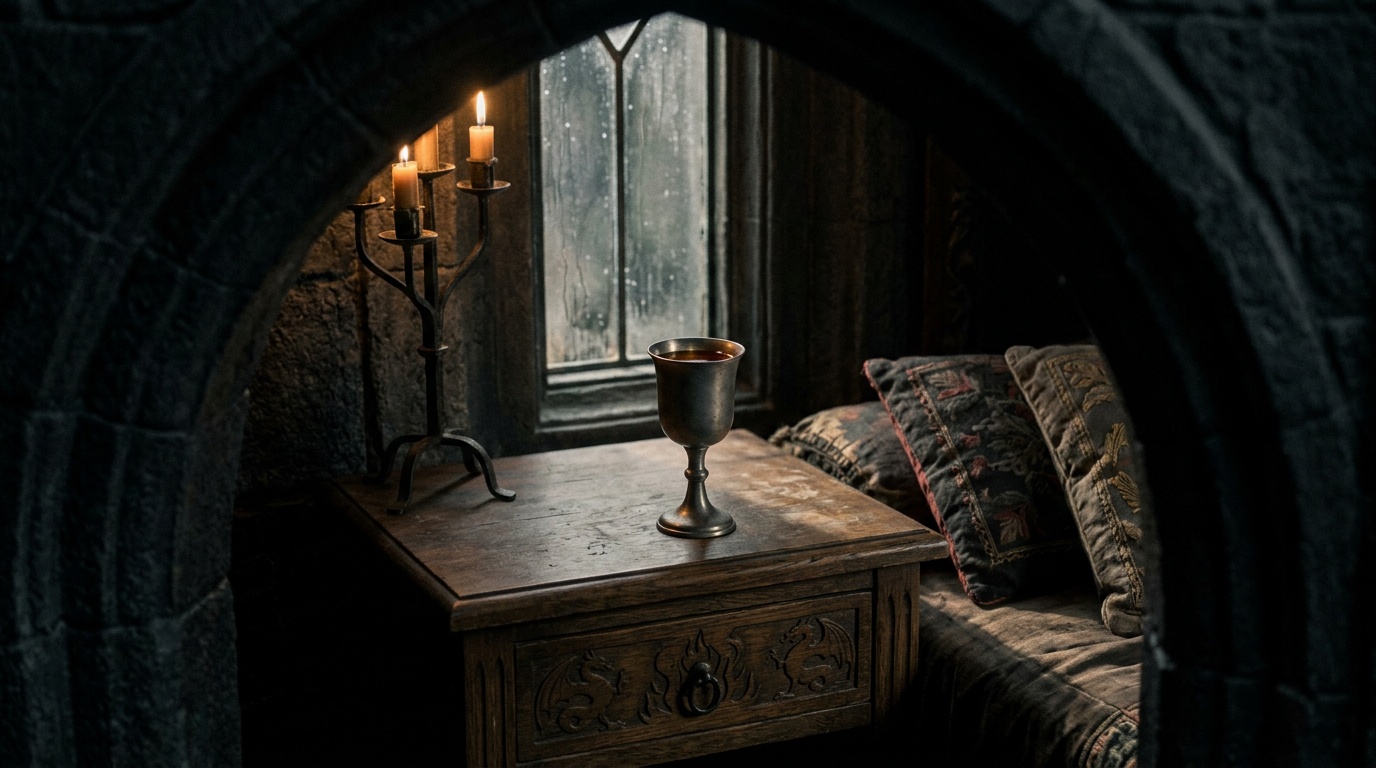
The sedation is not incidental. Daemon sniffs the cup at Viserys's bedside and frowns, not in grief, but in recognition. Rhaenyra and Daemon later accuse Alicent and Otto directly of keeping Viserys stupefied on milk of the poppy so that others can govern in his name. Alicent contests the intent, not the treatment. The chemical fog that rendered Viserys unable to distinguish his wife from his daughter was the same fog that made Hightower governance possible for months. The room in which the misidentification became inevitable was arranged, at least partly, by the people who benefit most from the confusion. Whatever Alicent believed about managing her husband's pain, the misidentification is not incidental to that arrangement. It is its terminal product.
But sedation alone does not explain the specific content of Viserys's dying words or why they carry the weight they do. That requires the prophecy's chain of custody. In the first episode, Viserys shared Aegon the Conqueror's dream, the Song of Ice and Fire, exclusively with Rhaenyra, charging her with carrying it forward. The prophecy runs through her by direct appointment. Later, Rhaenyra returns to her father's bedside while he sleeps and asks him aloud: 'The Song of Ice and Fire, do you still believe it to be true?' He does not answer. The question hangs open. What Viserys says in his final moments, delirious and addressing Alicent as though she were his daughter, reads as precisely the answer he could not give then: an affirmation, a reiteration of the charge, a dying man completing a conversation already in progress inside his own mind. Alicent, present in the chamber, has no access to that earlier exchange. She hears the words without the question that prompted them, the call without the signal that makes it intelligible.
The result is a transfer of meaning that neither party can recognize as false. Alicent does not fabricate what she hears. She reports it faithfully. The more damaging possibility is that she believes it completely and without reservation, because she has spent years interpreting Viserys, translating his silences and half-formed wishes into actionable policy, treating the space between what he said and what he meant as terrain she alone could navigate. When a dying man's final weighted attention appears to land on her, telling her she is the one, that she must carry it forward, she does not have the context to question it. She has the practiced instinct to absorb it as mandate. Ambition is present in that absorption, but it operates on a foundation of genuine epistemic tragedy: she cannot know what she doesn't know, and what she doesn't know is everything that makes those words mean something other than what she hears.
Viserys spent his entire reign converting private conviction into assumed consensus, believing that what he understood to be true was sufficiently communicated to the people around him, that the shape of his wishes was legible from the outside. His final act is that failure at its most catastrophic scale. A charge whispered to one woman, received by another, with no mechanism in the room to correct the error and no one lucid enough to attempt it. The Dance of Dragons does not begin with a lie or a usurpation. It begins with a dying man answering a question his daughter asked, in the dark, to the only person present, who happened to be the wrong one.
Is this theory convincing?
Key Evidence
Daemon Sniffs the Bedside Cup
After Viserys drinks from the cup by his bedside and Daemon takes it from him, Daemon sniffs it and frowns, visually signaling that he recognizes it as milk of the poppy and confirming the sedation has been ongoing.
Rhaenyra Accuses Alicent of Stupefying Viserys
Rhaenyra and Daemon directly accuse Alicent and Otto of keeping Viserys sedated on milk of the poppy so they can govern without his interference, establishing that the sedation is a deliberate political act rather than purely medical care.
Viserys Mistakes Alicent for Rhaenyra
In his final delirious moments, Viserys addresses Alicent as though she were Rhaenyra and imparts to her the secret of the Song of Ice and Fire, telling her she must carry it forward.
Dying Rulers Misidentifying Companions
The pattern of dying rulers in the world of Fire and Blood mistaking companions for lost loved ones provides a structural precedent for Viserys's error, suggesting the show is invoking a recognized narrative archetype.
Alicent Interprets as Royal Sanction
Because Alicent has no means of knowing Viserys believed he was speaking to Rhaenyra, she will interpret his final words as her husband granting her direct authority to act, potentially treating this as his blessing for her faction to rule.
Other Theories for S1E08
Vaemond's Driftmark Bid Serves Two Masters
Viserys's execution of Vaemond did not simply silence one man.
Alicent's Handmaid Reports to Mysaria
Talya is not simply a servant who sells information.
Daemon Baited Vaemond Into His Own Death
Daemon does not react to Vaemond's insult in the throne room.
The Managed King: How Alicent's Suppression Architecture Made Viserys's Final Act Possible and Necessary
Alicent Hightower's regency rested not on improvisation but on an inherited suppression architecture operating across three interlocking registers: chemical management of Viserys's cognitive availability, institutional silencing of inconvenient witnesses, and symbolic replacement of royal authority throughout the Red Keep.
Aemond's Toast Is a Calculated Bastard Accusation
Aemond's repeated use of 'strong' in his toast is not praise but a deliberate public invocation of Ser Harwin Strong, branding Jace and Luke as bastards before the assembled court through language no one can formally challenge.
The Dinner Truce Will Not Survive Morning
The reconciliation between Rhaenyra and Alicent is genuine, but Otto Hightower sealed the Green position before either woman sat down to dinner.
Rhaenyra's Sons as Dynastic Weapons: Symbol, Sentiment, and the Question of Who Pulled the Trigger
Rhaenyra's naming of her sons by Daemon as Aegon and Viserys is a calculated political act with two simultaneous targets: a deteriorating king whose emotional investment needed to be converted back into binding loyalty, and a Green faction whose claim to dynastic inevitability depended on exclusive ownership of both names.
Viserys Dies Reaching for Aemma
Viserys's final words are not addressed to anyone in the room but to Aemma, the wife he ordered killed and spent the rest of his life failing to grieve properly.