Aemond's Toast Is a Calculated Bastard Accusation
THE THEORY
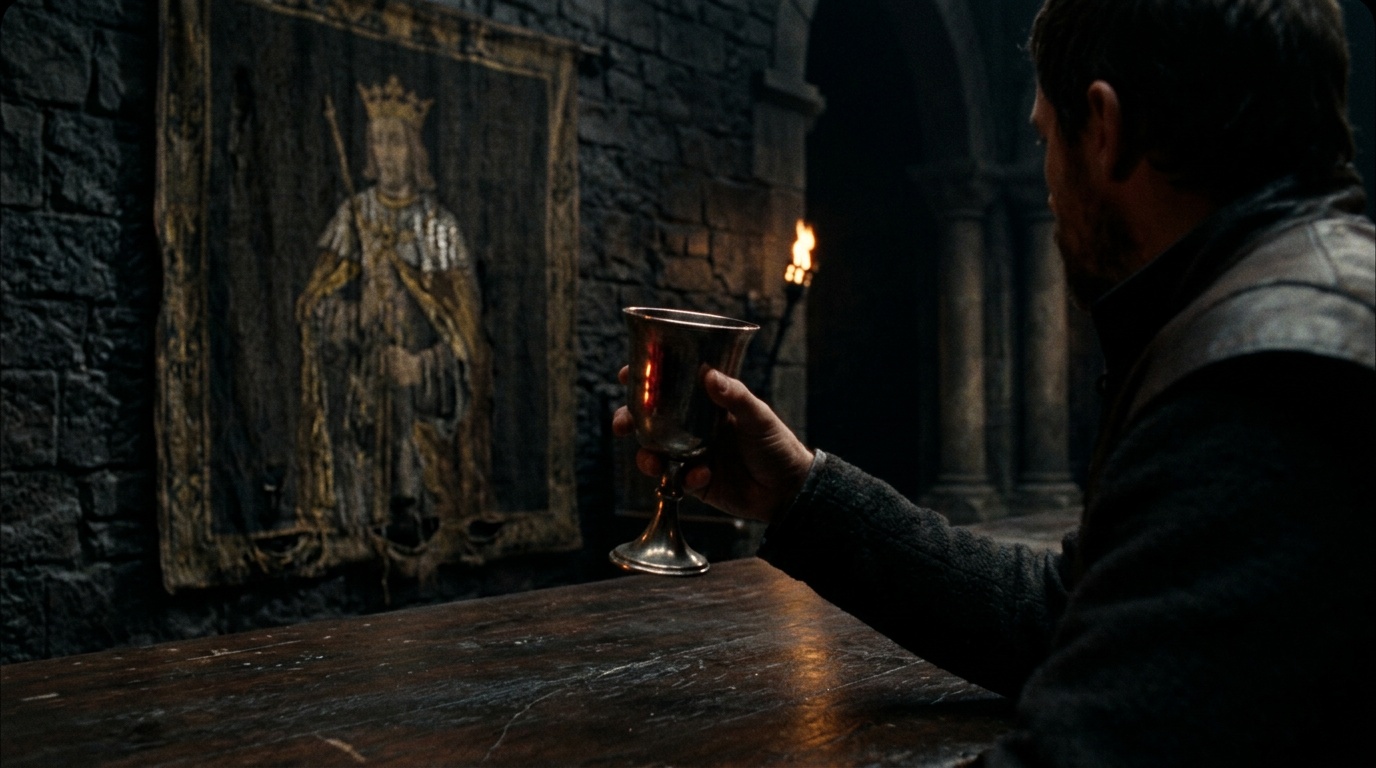
Aemond's repeated use of 'strong' in his toast is not praise but a deliberate public invocation of Ser Harwin Strong, branding Jace and Luke as bastards before the assembled court through language no one can formally challenge. The insult's cruelty is architectural: it is built so that naming it confirms it, leaving Rhaenyra no response that does not detonate the secret herself. The scene reveals not just Aemond's precocity but that he has been formed into a weapon by a faction already fighting the succession war through children.
How This Theory Works
Aemond has already understood that the succession war is won not by armies but by shame that cannot be spoken aloud. He chooses 'strong' and returns to it, and the repetition is the argument: one use is praise, two uses is emphasis, three uses is a name. Every person in that room who knows Harwin Strong and has watched Luke grow up beside Laenor Velaryon understands the signal. The show has not confirmed that Aemond intends the reference, but the structural logic of the scene makes accident nearly impossible to defend.
The theory gains its sharpest edge from Luke's pre-existing awareness. Luke already knows his resemblance to Harwin rather than Laenor is visible to the court, and that visibility is a direct threat to his inheritance of Driftmark and, by extension, to his mother's claim to the throne. When Aemond delivers the toast, Luke is not processing an abstract slight. He is hearing a public declaration of the exact vulnerability that could unmake him, delivered in a formal setting where every instinct of court decorum demands he absorb it without flinching. Aemond has found the fault line and pressed on it in the one room where silence is mandatory.
The plausible deniability structure is not incidental to the insult but is the insult's mechanism. Rhaenyra cannot rise to correct him without confirming that 'strong' meant what everyone knows it meant. Alicent cannot be accused of orchestrating it because her son was praising his nephews. The trap has no exit because naming it springs it. What this reveals about Aemond is not simply that he is cruel or precocious, but that he has internalized a doctrine his mother's faction lives by: the most effective accusation is one that forces the target to choose between absorbing the wound publicly or detonating the very secret the wound names. A ten-year-old boy delivering that doctrine in the language of a toast is not acting alone in his understanding. He has been shaped into a weapon and aimed, and the scene's real horror is that no one in the room can say so.
Is this theory convincing?
Key Evidence
Aemond's Repeated 'Strong' Emphasis
During his toast, Aemond calls Jace and Luke handsome, wise, and strong, but returns to the word 'strong' multiple times rather than moving on, a pattern that only serves a communicative purpose if the repetition is meant to signal the name Harwin Strong.
Luke's Velaryon Resemblance Problem
Luke is already self-conscious of the courtiers staring at him in the training yard because his face resembles Harwin Strong rather than Laenor Velaryon, establishing that he would immediately understand the weight of Aemond's word choice.
Double Entendre as Plausible Deniability
The toast is constructed so that anyone who challenges it can be told Aemond was simply praising his nephews' strength, giving him a clean escape from any accusation of deliberate insult while the meaning lands precisely for those who grasp it.
Other Theories for S1E08
Vaemond's Driftmark Bid Serves Two Masters
Viserys's execution of Vaemond did not simply silence one man.
Alicent's Handmaid Reports to Mysaria
Talya is not simply a servant who sells information.
The War Rhaenyra's Question Started: How a Misdelivered Prophecy Ignited the Dance of Dragons
Viserys's dying words are not a final royal instruction to Alicent.
The Managed King: How Alicent's Suppression Architecture Made Viserys's Final Act Possible and Necessary
Alicent Hightower's regency rested not on improvisation but on an inherited suppression architecture operating across three interlocking registers: chemical management of Viserys's cognitive availability, institutional silencing of inconvenient witnesses, and symbolic replacement of royal authority throughout the Red Keep.
Daemon Baited Vaemond Into His Own Death
Daemon does not react to Vaemond's insult in the throne room.
The Dinner Truce Will Not Survive Morning
The reconciliation between Rhaenyra and Alicent is genuine, but Otto Hightower sealed the Green position before either woman sat down to dinner.
Rhaenyra's Sons as Dynastic Weapons: Symbol, Sentiment, and the Question of Who Pulled the Trigger
Rhaenyra's naming of her sons by Daemon as Aegon and Viserys is a calculated political act with two simultaneous targets: a deteriorating king whose emotional investment needed to be converted back into binding loyalty, and a Green faction whose claim to dynastic inevitability depended on exclusive ownership of both names.
Viserys Dies Reaching for Aemma
Viserys's final words are not addressed to anyone in the room but to Aemma, the wife he ordered killed and spent the rest of his life failing to grieve properly.