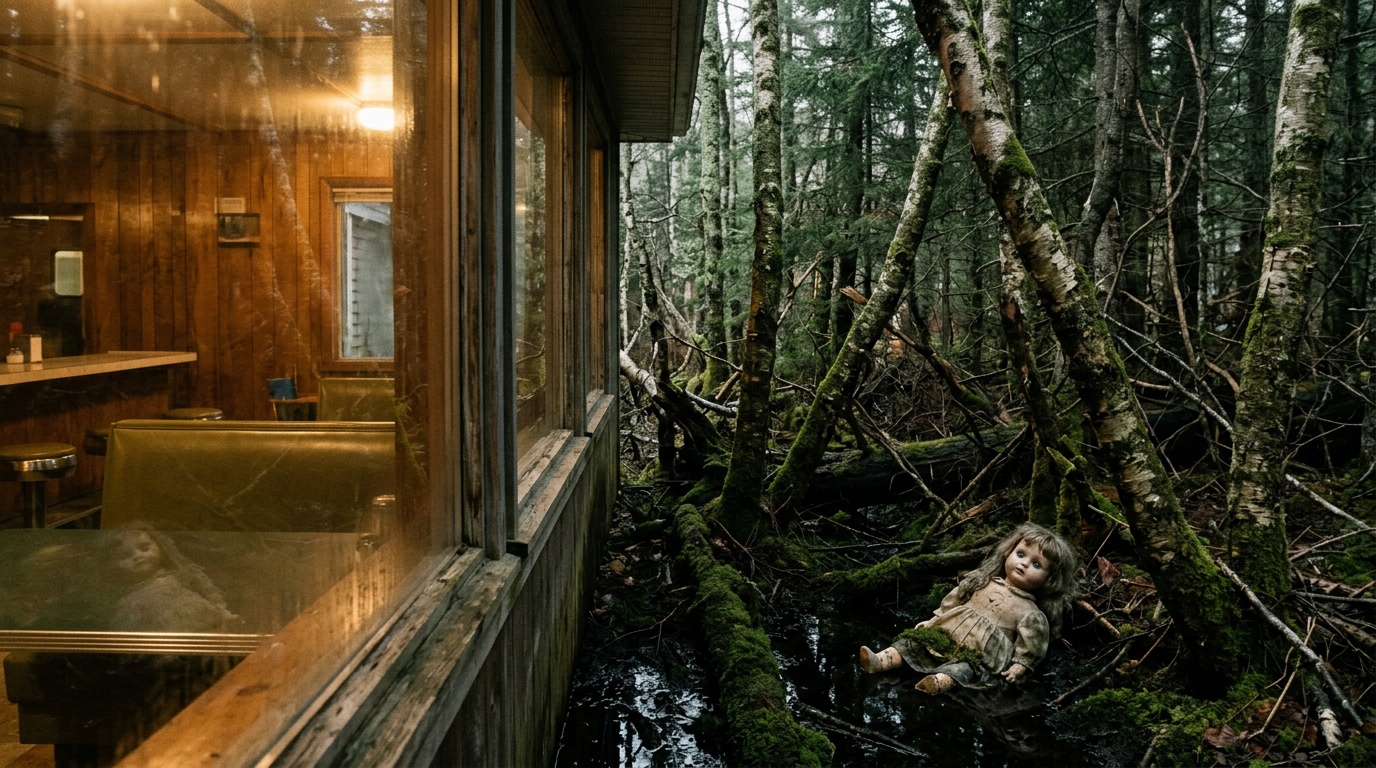
The Lake Holds Nightmares Until Their Owner Dies
THE THEORY
The Township does not produce its own monsters. It holds the nightmares of the living in suspension, using dolls sunk in the lake as containers anchored to each owner's survival, and releases those nightmares as physical lethal entities the moment the owner dies. The man in Tabitha's memory was one instance of a practice that spans the Township's entire history. Every person who has ever died there has unlocked something that was waiting in the water.
How This Theory Works
The Township does not generate monsters from its own logic. It stores them, anchored to the lives of the people who feared them, and releases them the moment those people die. Tabitha's recovered memory establishes the mechanism directly: a man threw dolls into the lake because he believed they caused his nightmares, and after his death those nightmares came out. The containment held as long as he lived. His death was the trigger.
This explains why Donna's instinct, after cutting one open and finding only stuffing, was to worry that the dolls were placed in the water to keep something from escaping rather than to mark a location or serve a ritual function. The stuffing is not what the doll held. What it held was a man's fear made latent, suspended between the water and his continued survival. The container was never the doll's physical interior. It was the life of the owner.
What sharpens this past a folklore reading is the scale of what that mechanism implies. The possessed doll that kills Roger is not residual or ambient. It is specific, physical, and lethal. If the dolls were sunk in sufficient numbers to suggest a long-term practice, the lake is not one nightmare's resting place but a managed repository for the accumulated fears of every person who has ever died in the Township. The man in Tabitha's memory was not the first. He may have inherited the practice without understanding what he was participating in. When he died, only his nightmares escaped because the other containers held. The Township has been running this system across its entire history, and the lake is full of fears that are not yet free because their owners have not yet run out of time.
Is this theory convincing?
Key Evidence
Dolls Found Wrapped in Weeds
The large objects pulled from the lake turn out to be dolls wrapped in weeds rather than bodies, and Donna immediately suspects they were placed there intentionally to keep something contained rather than as markers or offerings.
Donna's Containment Hypothesis
After cutting a doll open and finding only stuffing, Donna remarks aloud that she worries the dolls were in the lake to keep something from coming out, which frames the dolls as suppressors rather than symbols.
Tabitha's Recovered Memory
Tabitha remembers that an angry man threw her dolls into the lake because he believed they gave him nightmares, and that after his death his nightmares came out of the lake, directly establishing the death-release mechanism.
Doll Creature Kills Roger
A possessed doll breaks through the cabin wall and tears Roger's head apart, confirming that the released nightmares are not psychological phenomena but fully physical and lethal entities.
Nightmares Tied to Death of Owner
The mechanism Tabitha describes links containment directly to the life of the person whose fear is held: the nightmare stayed in the lake while the man lived and emerged only when he died, suggesting the doll's containment power is anchored to its owner's survival.
Township Absorbs Fear of the Dead
The doll-nightmare system is consistent with the Township's broader pattern of manifesting the fears of those who die within it, suggesting the lake functions as a managed overflow repository for that process.
Other Theories for S4E05
Townspeople, Not Creatures, Are the Killers
The townspeople, not the creatures, are the killers in every cycle, and the Township's controlling force has structured this outcome deliberately, using community fear as the mechanism that eliminates Jade each time he approaches understanding the system.
The Township Assigns Its Victims Roles, Not Deaths
Jade and Tabitha are not simply trapped in a repeating loop; they are assigned specific, distinct failure points the Township returns them to across cycles.

Sophia Weaponizes Touch to Inflict Visions
Sophia deliberately weaponizes physical contact to force targeted individuals into escalating dungeon visions, and she is selecting her moments with the precision of someone who understands exactly what the ability does and wants maximum psychological damage.
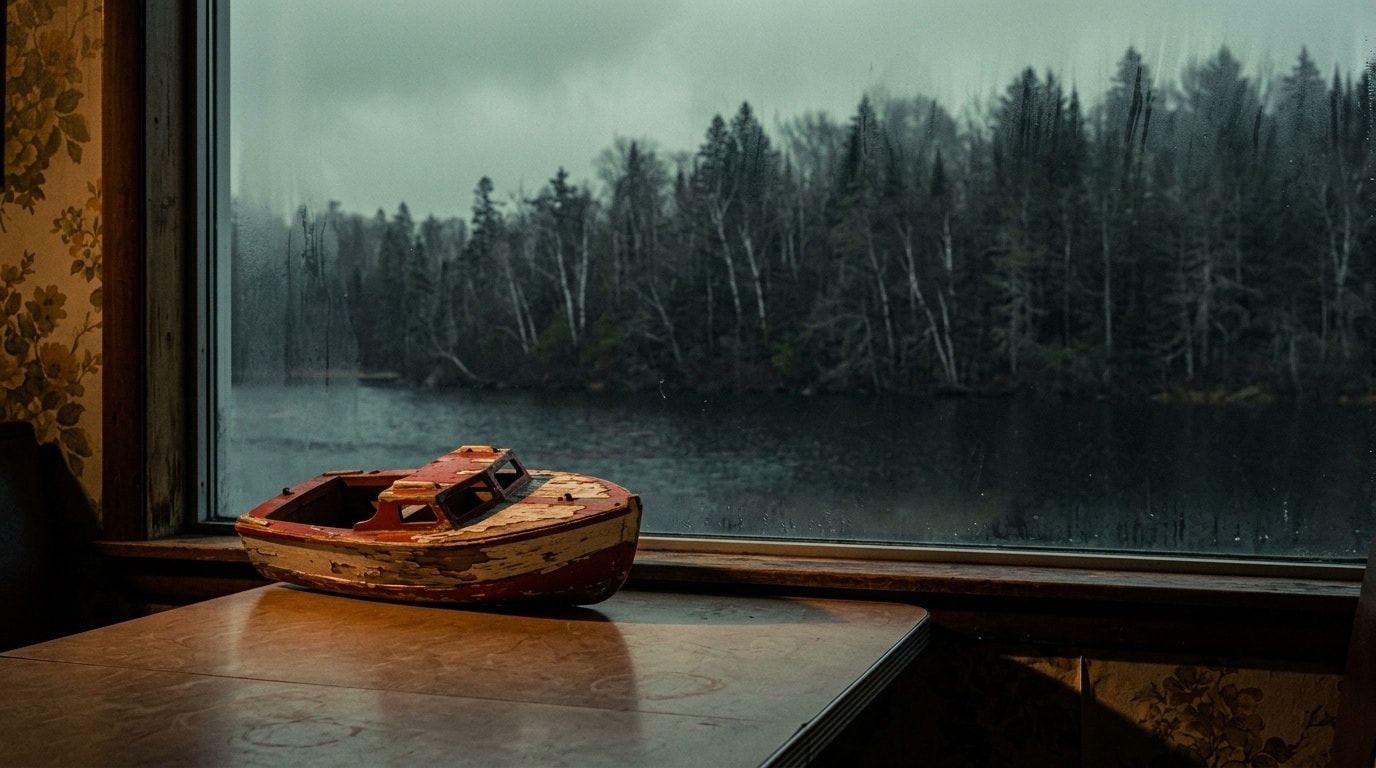
Tabitha's Childhood Grief Birthed the Lake Dolls
The lake dolls are not native Township creatures but manifestations of a specific human grief: a childhood memory tied to Tabitha's father, whose nightmares escaped the lake only after his death.
The Mushrooms Route Jade to Real Answers
The township's information architecture is only accessible through an altered state, making the mushrooms a deliberate navigational key rather than an accidental psychedelic.
Jade's Basement Door Hides Murdered Children's Bones
The bones beneath Colony House are the physical remains of Jade's murdered past lives, deposited there by the Township as part of an active ritual circuit that sustains whatever haunts this place.
Tabitha's Fate Is Worse Than Murder
Tabitha's fate across cycles is worse than Jade's because it may deny her the release that even repeated murder provides.
Spiders Mark the Price of Forbidden Knowledge
The spiders in Jade's visions are not supernatural atmosphere.