The Township Assigns Its Victims Roles, Not Deaths
THE THEORY
Jade and Tabitha are not simply trapped in a repeating loop; they are assigned specific, distinct failure points the Township returns them to across cycles. Jade is destroyed at the moment of recognition, when the community perceives what he is; Tabitha is returned not to her death but to the origin of a catastrophe she was already present for and failed to prevent. The Township does not repeat. It re-assigns.
How This Theory Works
The confirmed facts from the mushroom sequence establish a mechanism, not merely a pattern. Young Jade tells Jade directly that every prior incarnation, the Colonial Man, the Civil War Soldier, the Man Trapped by the Boulder, all four gathered around the same violin, was murdered not by the Creatures but by the townspeople once they understood what Jade is. That single detail is the analytical spine of everything that follows. The trigger is not what Jade does with that knowledge. It is not his behavior, his concealment strategy, or his level of integration into the community. The trigger is the threshold of understanding becoming visible: knowledge arriving at legibility. Young Jade does not describe hostile or perceptive townspeople making deliberate choices. He describes minnows in a shark's net. That image is precise rather than condemnatory: the community is not acting on malice but being moved through a system. The destruction of Jade is not a social outcome. It is an automatic one.
This mechanism-versus-behavior distinction is the sharpest pressure point in Jade's cycle. If the trigger were behavioral, concealment would be a viable strategy, and some prior version of Jade would have found his way through by simply withholding more carefully. None have. The violin sequence explains why: what carries across cycles is not just physical form but emotional imprint. Young Jade does not use abstract instruction to surface the gathered past selves; he uses the most private image available, Jade playing for his dying grandmother, and the past selves appear around that same instrument. Each iteration arrives already carrying the residue of the last, already trailing the emotional weight that makes him legible. The cycles are not clean resets. They are cumulative approaches to the same threshold, and every version of Jade reaches it. That Jade now knows this, knows the pattern, the trigger, the outcome, raises the cruelest possibility the show has not confirmed: that the understanding Young Jade just delivered is itself the threshold event. The knowledge of the trap may be indistinguishable, from the community's side, from the trap closing. Awareness may be the mechanism.
The Township assigns Tabitha a different role, and Young Jade's warning that her cycle is even worse than Jade's is where the theory becomes most structurally revealing. If her fate were merely parallel, recognized, then destroyed, worse would be a matter of degree. But the memory structure the show has given Tabitha points toward a categorically different failure point. Her flashbacks are not anchored in her established biography. They surface when she handles the dolls, fragment under ordinary pressure, and resolve into coherence only at the moment of crisis, exactly the pattern of Jade's visions, triggered by proximity to the object that carries the relevant history. The parallel is not incidental: the show has placed both characters in the same retrieval architecture, which means both are being returned to prior-life material rather than processing current-life trauma.
What the memory contains is what makes Tabitha's assignment worse. She recovers a coherent sequence: playing with the dolls as a small girl, a man seizing them in anger and throwing them into the lake because they gave him nightmares, his nightmares then emerging from the water after his death and scaling into the wall-breaching creatures that killed Roger. Tabitha's past self was present at the origin event. She was not a bystander in a general sense; she had a specific relationship to the dolls, as their keeper or their witness, at the exact moment the catastrophe began to accumulate. Whatever she knew, she did not stop it. The nightmare energy was already in the objects before the man died. Her failure was not exposure, as Jade's is. Her failure was proximity to something she understood too late to prevent. The Township does not return her to the moment of her death. It returns her to the moment of her failure, the origin point of the doll catastrophe, with exactly enough fragmented memory to feel the weight of responsibility and not enough to intervene differently.
That asymmetry is the synthesis the source theories point toward but do not fully articulate. Jade's cycle is about what the community does when it sees him; Tabitha's is about what she fails to do before the community is endangered. Jade's recognition loop and Tabitha's prevention loop are not the same mechanism applied to different people; they are role-specific assignments that together constitute the Township's complete operation against its recurring victims. Jade is the recognized threat. Tabitha is the failed guardian. Both cycles are self-sealing. Jade cannot prevent recognition by hiding better, because the threshold is built into the architecture of his presence. Tabitha cannot prevent the catastrophe by remembering faster, because her memory resolves only under crisis conditions the Township itself produces. The fragments are not recovery. They are re-assignment: the Township calibrating how much she needs to know to feel implicated without giving her enough to act. That may be precisely why Young Jade calls her situation worse: Jade is destroyed at the moment of arrival. Tabitha is returned alive, to the beginning, responsible for what she cannot stop.
Is this theory convincing?
Key Evidence
Young Jade Names Them Past Lives
During the mushroom trip, Young Jade explicitly tells Jade that the assembled figures are all his past lives, directly confirming what had previously been speculation about recurring entities like the Colonial Man.
Four Figures Playing Violins Together
Jade tracks violin music to Colony House and finds Christopher, the Colonial Man, the Civil War Soldier, and the Man Trapped by the Boulder all playing violins simultaneously, presenting them as a unified group rather than separate supernatural phenomena.
Past Lives Murdered by Townspeople
Young Jade tells Jade that none of his previous incarnations were killed by the Creatures; they were murdered by the people in town once those people realized what Jade is, establishing a pattern of community-driven violence across cycles.
Tabitha's Fate Is Even Worse
Young Jade warns that the cycle of recognition and murder is even worse for Tabitha than for Jade, suggesting her prior incarnations suffered a more severe version of the same fate and linking her mysterious flashbacks to the same cyclical pattern.
Violin as Emotional Unlock Mechanism
Young Jade uses the specific memory of Jade playing violin for his dying grandmother as the emotional trigger that allows deeper visions to surface, and the past selves are subsequently seen gathered around that same instrument, connecting personal trauma to cyclical memory.
Minnows in a Shark's Net
Young Jade describes the townspeople's eventual turn against Jade with the phrase 'minnows in a shark's net,' framing the community not as Jade's allies but as participants in a predatory system that consistently destroys him.
Other Theories for S4E05
Townspeople, Not Creatures, Are the Killers
The townspeople, not the creatures, are the killers in every cycle, and the Township's controlling force has structured this outcome deliberately, using community fear as the mechanism that eliminates Jade each time he approaches understanding the system.

Sophia Weaponizes Touch to Inflict Visions
Sophia deliberately weaponizes physical contact to force targeted individuals into escalating dungeon visions, and she is selecting her moments with the precision of someone who understands exactly what the ability does and wants maximum psychological damage.

The Lake Holds Nightmares Until Their Owner Dies
The Township does not produce its own monsters.
Tabitha's Childhood Grief Birthed the Lake Dolls
The lake dolls are not native Township creatures but manifestations of a specific human grief: a childhood memory tied to Tabitha's father, whose nightmares escaped the lake only after his death.
The Mushrooms Route Jade to Real Answers
The township's information architecture is only accessible through an altered state, making the mushrooms a deliberate navigational key rather than an accidental psychedelic.
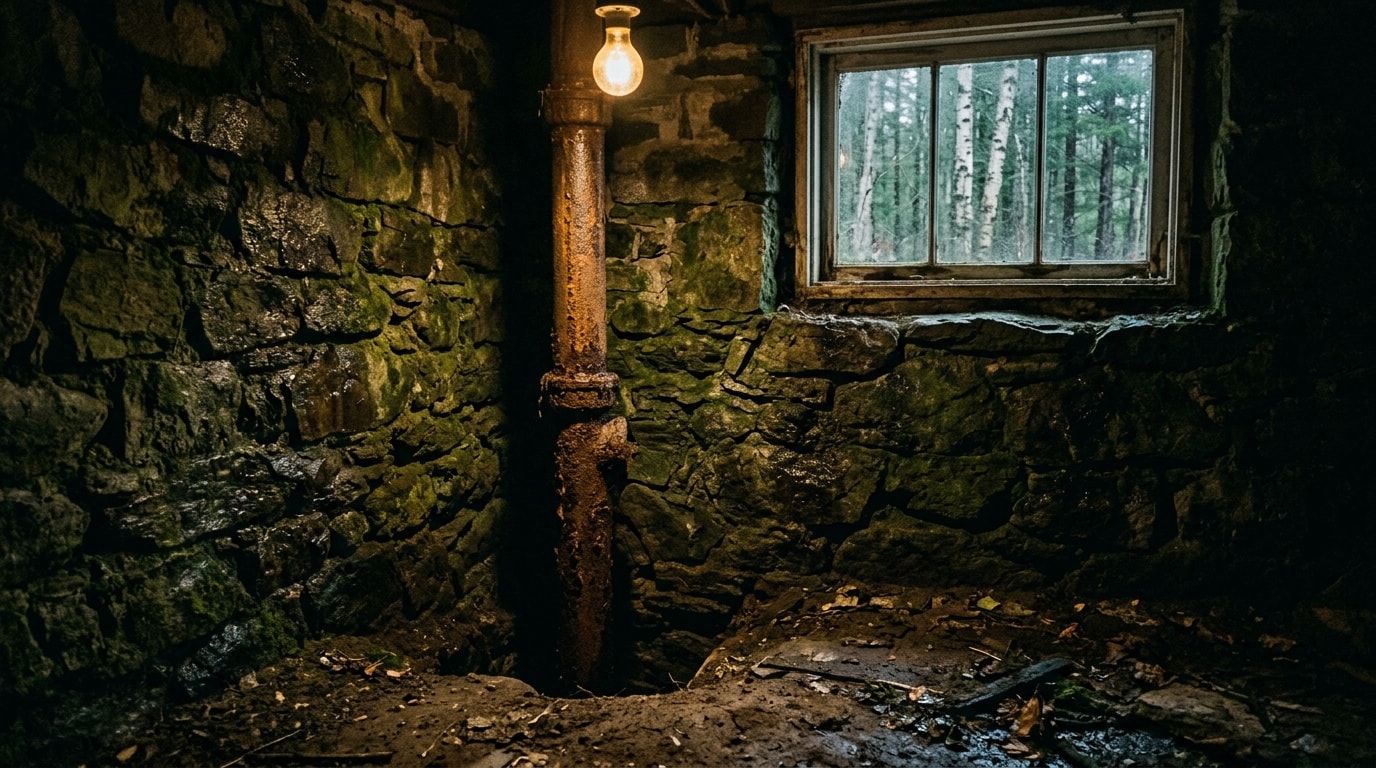
Jade's Basement Door Hides Murdered Children's Bones
The bones beneath Colony House are the physical remains of Jade's murdered past lives, deposited there by the Township as part of an active ritual circuit that sustains whatever haunts this place.

Tabitha's Fate Is Worse Than Murder
Tabitha's fate across cycles is worse than Jade's because it may deny her the release that even repeated murder provides.
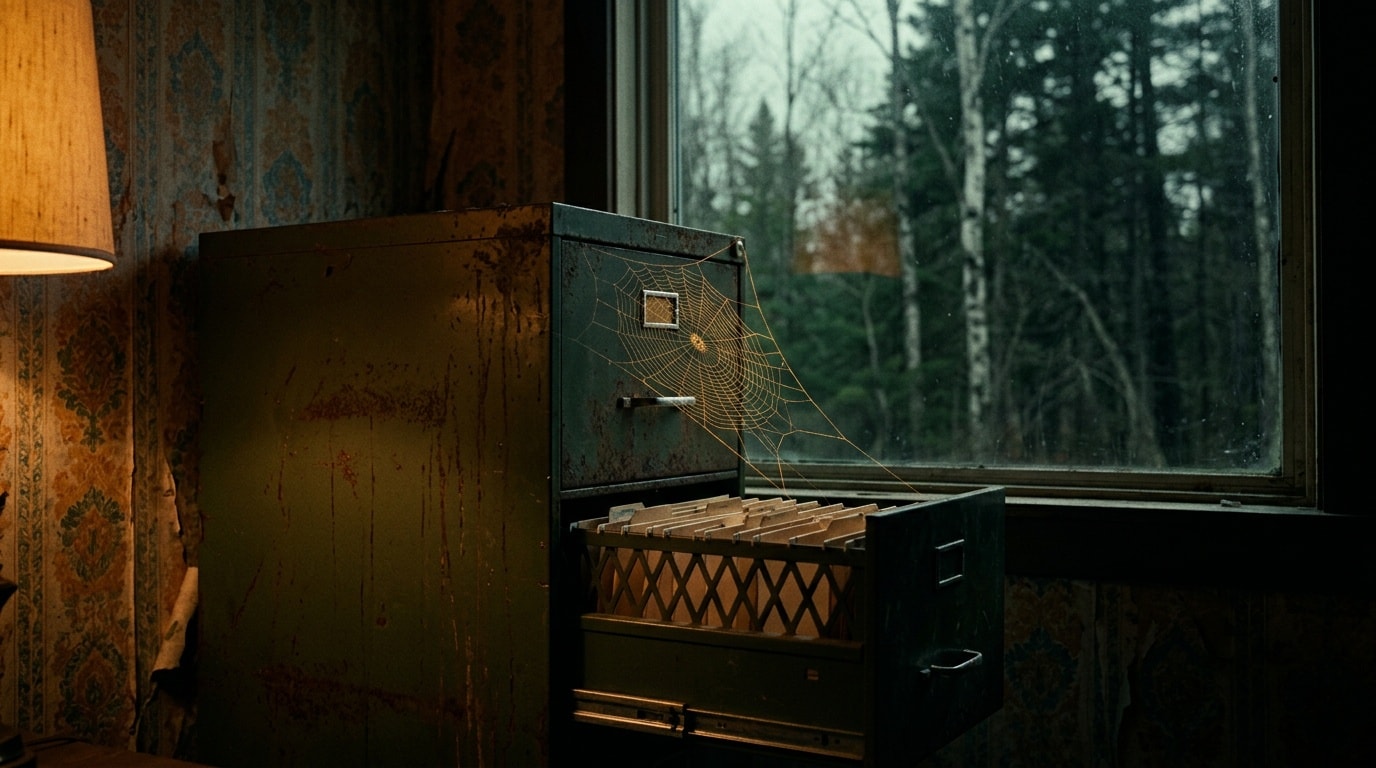
Spiders Mark the Price of Forbidden Knowledge
The spiders in Jade's visions are not supernatural atmosphere.