Smiley's Autopsy Confirms Creature Conversion and Bile as Fromville's Death-Management Substrate
THE THEORY
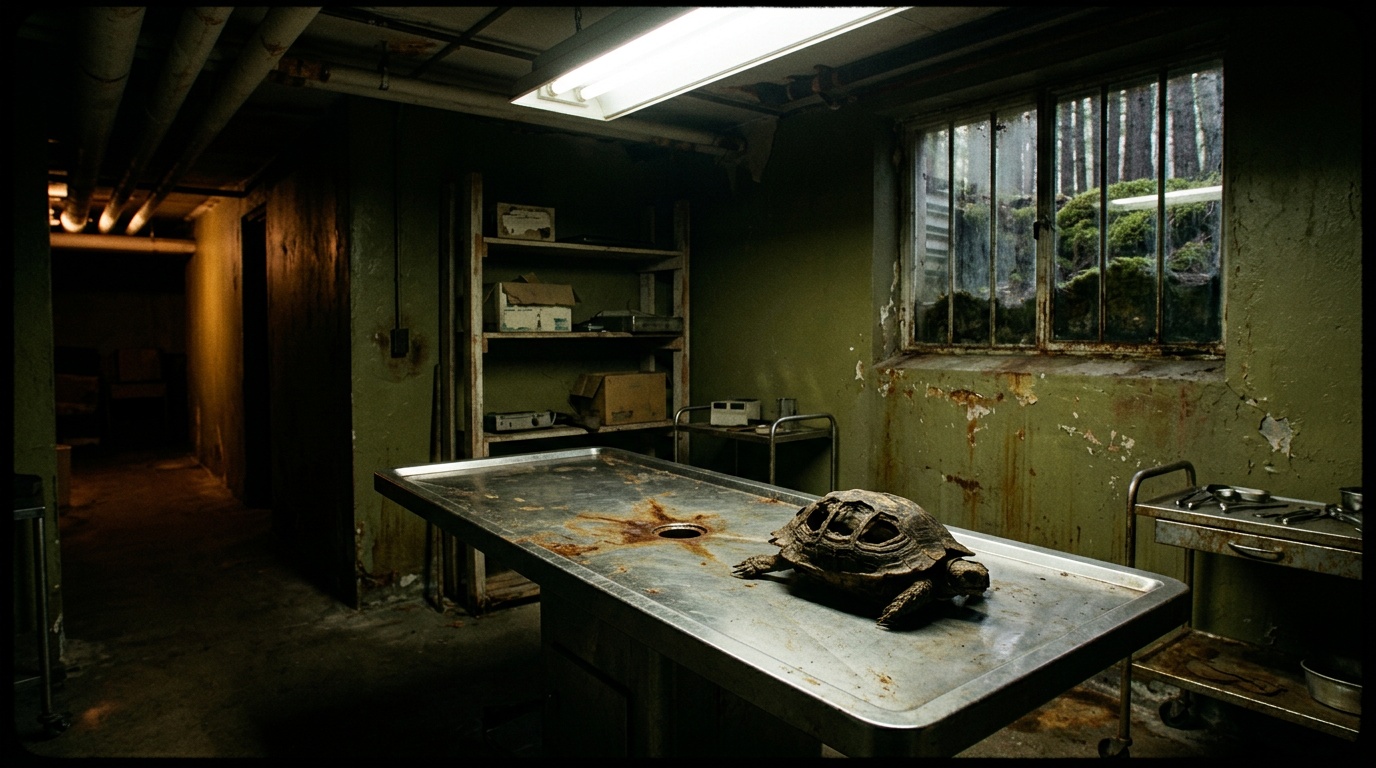
The autopsy of Smiley establishes two interlocking claims: the creature's structurally human interior confirms that Fromville's monsters are converted townspeople, not alien entities, and the complete absence of every fluid except bile, combined with post-mortem movement, identifies bile as the singular operational substrate that persists beyond apparent death. Together, these findings suggest that death inside Fromville is not a biological terminus but a threshold the town actively manages, with bile as the mechanism of that management.
How This Theory Works
The autopsy's argument arrives in two stages, and each stage requires the other to be complete. The first is structural: beneath the creature is a desiccated husk organized along unmistakably human lines. This is not a foreign organism or an alien architecture. It is a body that once held the same configuration as a person, drained of everything except its skeleton of biological form. The monsters are not something imported into Fromville. They are something the town manufactures from its own population. This reframes every prior creature encounter: their capacity to mimic, to speak in human registers, to wear recognizable faces is not imitation. It is residual memory. The conversion is the trap, not the cage.
The second stage is physiological, and it is the sharper of the two. Before the formal examination begins, Boyd cuts the creature's neck and nothing escapes. The autopsy interior confirms and extends that finding: no blood, no lymph, no fluid of any kind except bile isolated in the gallbladder. The show frames this not as grotesque texture but as data. A body produced by conventional biological processes maintains dozens of fluids as a baseline condition of existence. A body that retains exactly one is not operating under evolutionary rules; it is operating under a different set of rules entirely, and the bile is the whole of what makes it run. The worms explain the desiccation mechanically: when Boyd transferred his infection into Smiley, the creature collapsed in under a minute, a speed that forecloses parasitic accommodation and implies wholesale expulsion or consumption of every viable fluid. But the bile was not consumed. It was left. That selective remainder is not incidental. It is the tell.
The flinch is what elevates bile from inventory to implication. When Kristi makes her initial incision, the body moves: a localized flinch near the cut site, followed by visible hand movement. Kristi attributes this to post-mortem nerve reaction, the standard electrical discharge in recently deceased tissue. That attribution is scientifically coherent under one condition: that the creature's biology is close enough to human physiology for conventional reflex mechanisms to apply. It is not. Standard nerve transmission requires chemical signal propagation through fluid-saturated tissue. Smiley has no such fluid. Kristi's own explanatory framework cannot account for the movement she just observed, and the only candidate her autopsy leaves standing is the one fluid she found. If bile is the operational medium of creature physiology, it is also the medium through which their signals travel, and the flinch is evidence that those signals do not stop at the moment the show treats as death. The bile-based signaling system that animated Smiley in life continued transmitting after that boundary was crossed.
This is where the two stages lock into a single, harder claim. If what the show marks as Smiley's death did not terminate the signaling substrate, then the boundary drawn around death inside Fromville is a provisional one. The rules of dying are as contingent here as the rules of everything else. Kenny registers this without having language for it: his alarm during the autopsy is not directed at the dead creature but at whatever killed it, framing the worms as an active, uncontrolled agent still capable of damage. He is not frightened of the body. He is frightened of the persistence. The bile, bottled and preserved with deliberate visual weight, and Kenny's unanswered question about how the group intends to test it, confirm that the narrative understands bile as something that has not finished doing what it does. Weaponizing Boyd's infected blood was a workaround. The bile is the mechanism itself.
The Boyd thread unites both dimensions of the theory and sharpens them into something personal. The worms inside his arm share a system with the desiccated interior the autopsy just opened. The conversion the theory identifies as Fromville's central process has already reached the man holding the scalpel. The specific question the show refuses to resolve is whether Boyd's infection is an early stage of the same process that produced Smiley, or a parallel trajectory with a different endpoint. That distinction is not academic: it determines whether his investigation into the creatures is also an inadvertent self-study, whether the Clinic scene is less about what the creatures are and more about how far along the people studying them already are. Martin died carrying the worms. Smiley was desiccated in under a minute. Boyd hosts an active infection and remains functional, but the autopsy cannot tell Kristi whether his physiology is genuinely tolerating what destroyed a creature, or whether he is dying on a longer clock that has not yet run out. The community's only confirmed kill mechanism is inseparable from the one person who appears to survive it. The weapon and the man are on the same timeline. Smiley's autopsy establishes what that timeline measures.
Is this theory convincing?
Key Evidence
Creature Body Completely Drained of Fluid
During the autopsy, the only liquid found inside Smiley's body was bile in the gallbladder, suggesting the worms consumed or expelled every other fluid after being transferred into the creature.
Kenny's Fear of What Killed the Creature
Kenny's concern is not about the dead creature itself but about the parasitic worms that killed it, framing them as a dangerous and uncontrolled biological agent rather than a contained infection.
Worms Described as Poison to Creatures
In dialogue paraphrased by viewers, Boyd's worms are characterized as a poison to the creatures, with the argument that cutting the body open outside the clinic is necessary precisely because of their lethal potential.
Smiley Collapsed Immediately After Transfer
Boyd transferred his worm infection directly into Smiley, and the creature collapsed and died shortly after, suggesting the worms are fatally incompatible with creature physiology rather than simply parasitic.
Autopsy Undertaken to Study the Kill
Kristi overrules Kenny's objections and insists on bringing Smiley's body inside for autopsy, explicitly because this may be the only chance to understand how and why the creature died.
First Real Opportunity for Strategic Advantage
The creature's death marks the first time the community has confirmed evidence that something they possess can kill the creatures, raising the possibility of repeatable use as a defensive weapon.
No Blood Found When Creature's Neck Was Cut
Even before the formal autopsy, no blood escaped when Boyd initially cut the creature's neck, consistent with the theory that the worms had already desiccated the creature's internal biology.
Other Theories for S2E07
The Town Reads Its Residents and Weaponizes What It Finds
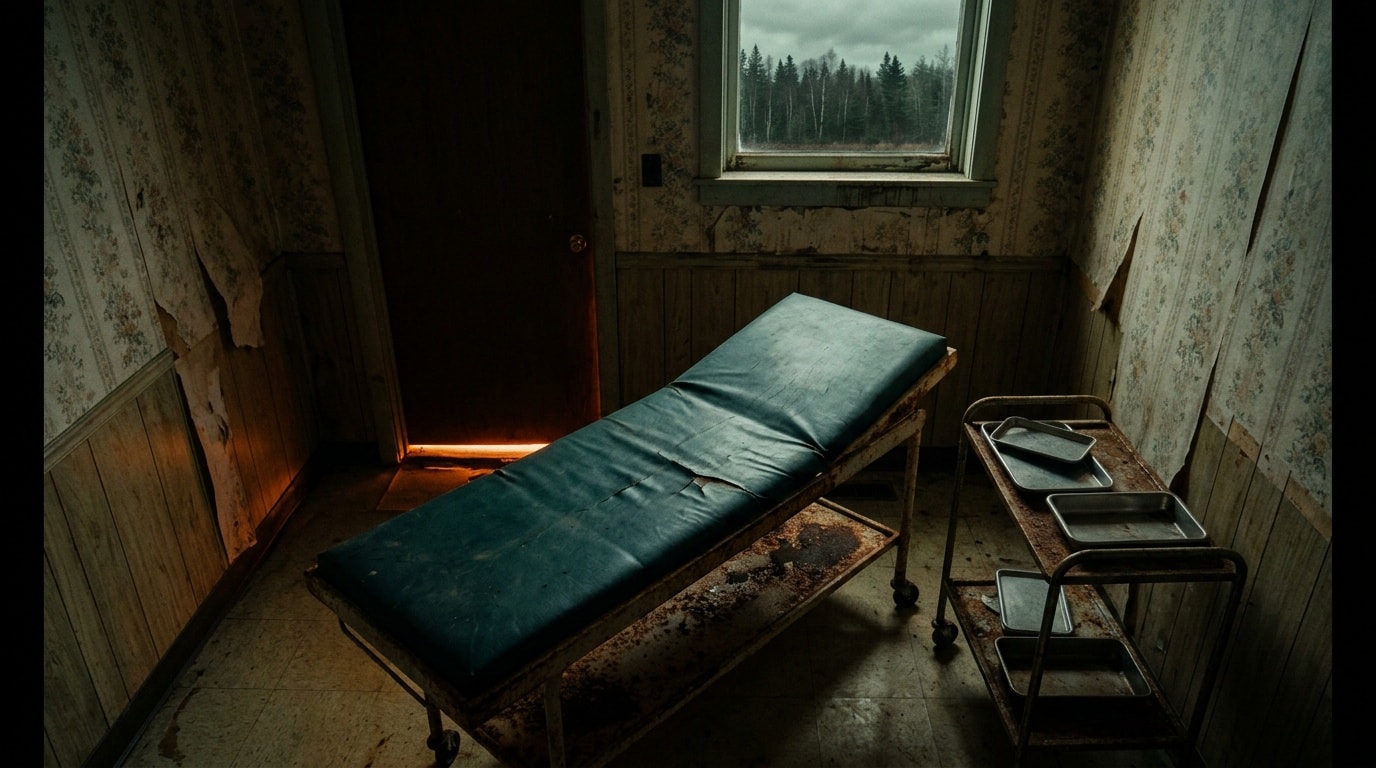
The entity controlling the town operates as a surveillance system of extraordinary intimacy, accessing private biological and psychological histories that no resident has disclosed within its borders and converting that information into targeted leverage.
The Music Box Spreads Like Infection
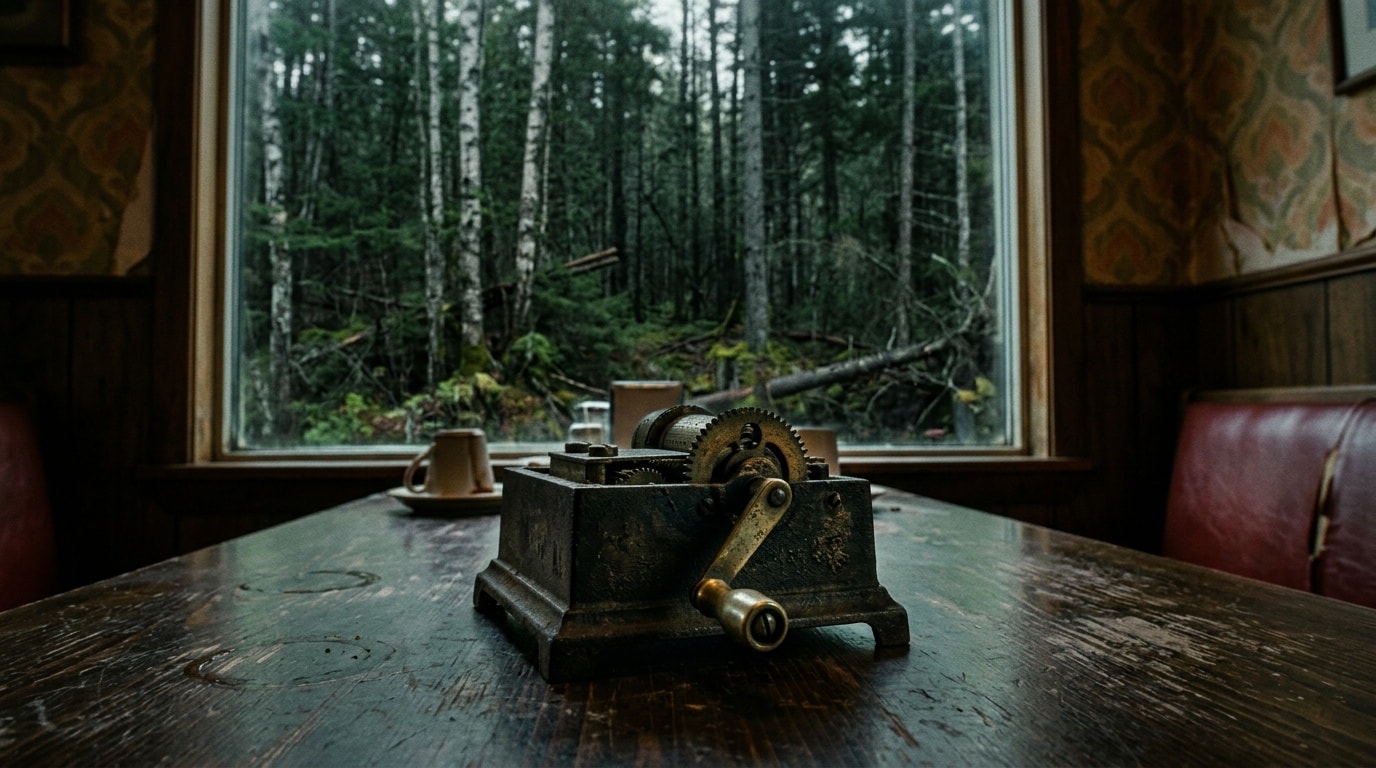
The music box is a transmission event, not a personal hallucination, spreading the same vision independently to Boyd, Elgin, and Mari within a single episode.
The Town's First Autumn Signals Something Worse
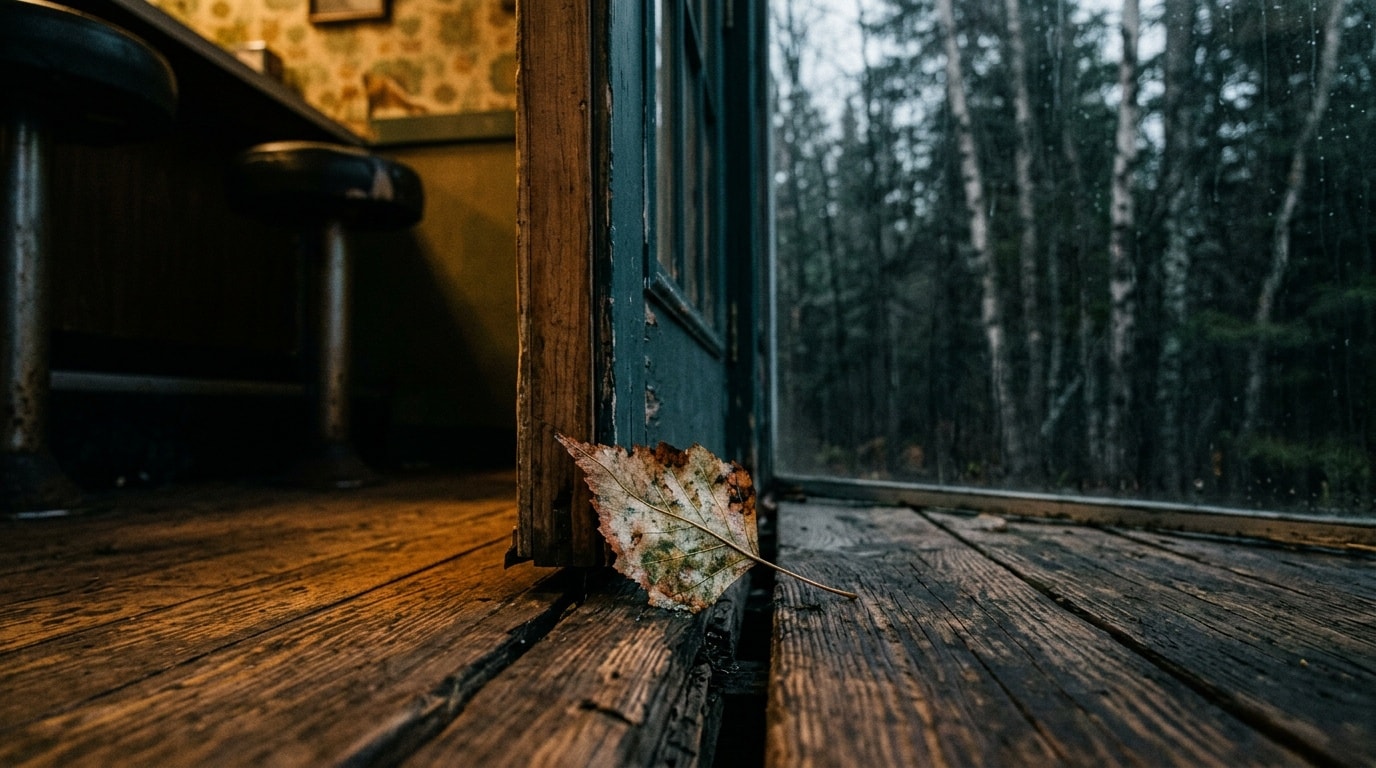
The town's perpetual summer was not natural stasis but a deliberate constraint on whatever forces govern this place, and its collapse into autumn signals that the constraint has failed.
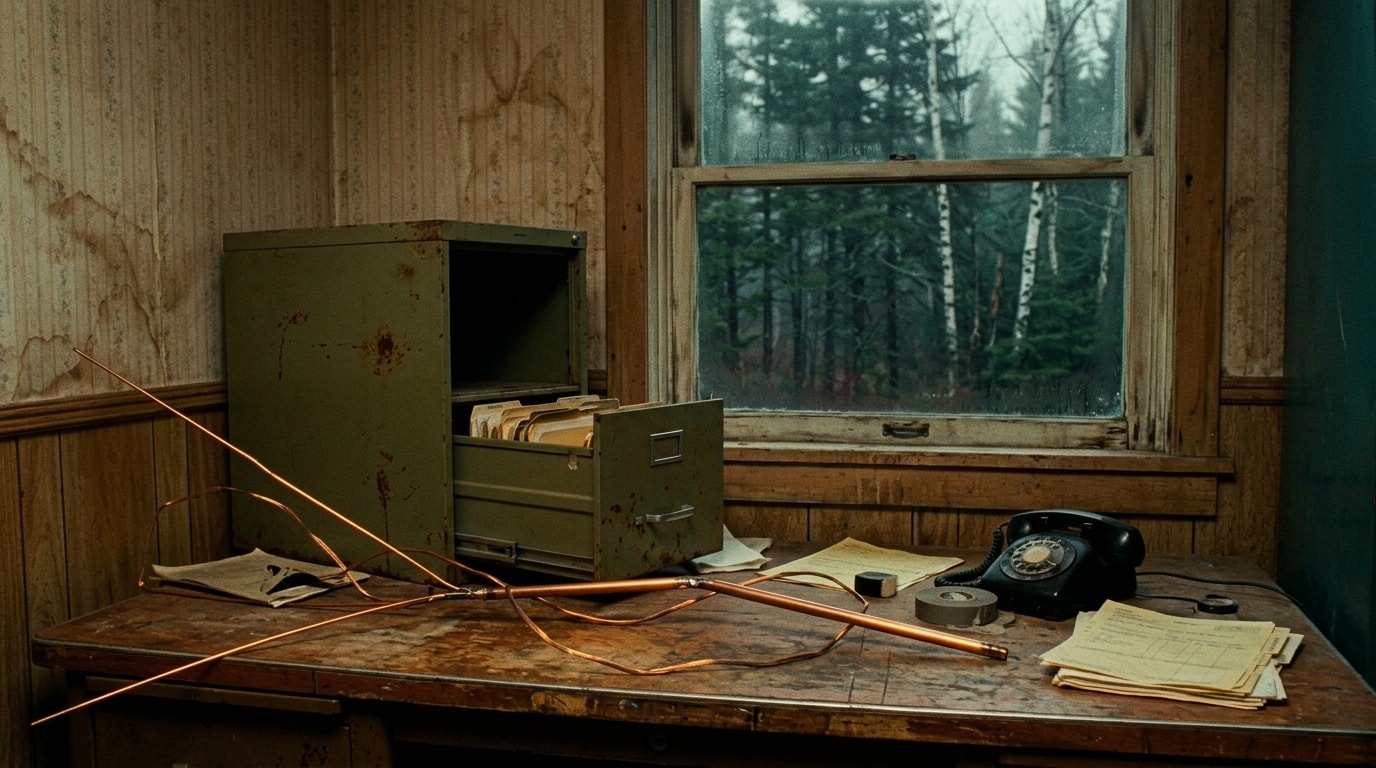
Attach the Antenna, Fly It Over
Jim believes attaching a stripped radio antenna to Randall's drone and flying it above the treeline could amplify or transmit a signal beyond the town's boundary.
Someone Inside the Town Is Complicit
Randall is not just floating an idea when he asks Jim whether someone inside the town might be in on the experiment.

Sunlight Doesn't Kill Them. Rules Do.
The creatures in FROM are not killed by sunlight, and their disappearance at dawn reflects administered behavioral rules rather than physical vulnerability.