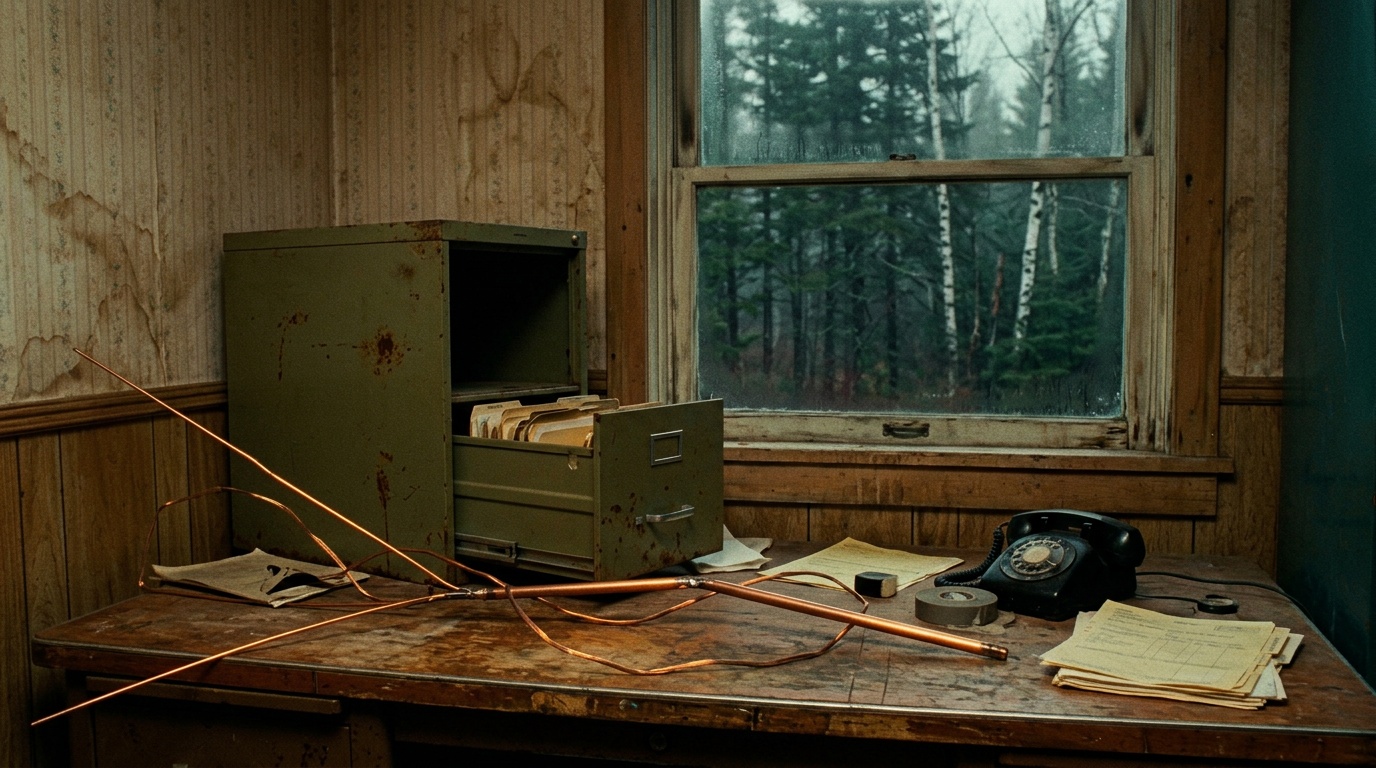
Attach the Antenna, Fly It Over
THE THEORY
Jim believes attaching a stripped radio antenna to Randall's drone and flying it above the treeline could amplify or transmit a signal beyond the town's boundary. The plan matters because it is the first time anyone has attempted to use the town's own containment logic against it: if signals are being managed rather than simply blocked, getting a transmitter above the enforcement layer might be the one move the system was not designed to suppress.
How This Theory Works
Jim's theory rests on the idea that the radio tower's signal is being blocked or contained at ground level. If the antenna could be lifted high enough by the drone, the signal might escape whatever boundary keeps the town isolated. This is why Jim's first question to Randall is about payload capacity. He is not interested in the drone as a scouting tool in the abstract. He wants to know if it can carry hardware.
The walk Jim takes Randall on confirms the plan is already in motion. The two arrive at the crashed RV, which Jim identifies as a source for a strippable antenna. The logic is practical: repurpose salvage from the town's detritus and attach it to the only airborne vehicle available to them. Jim has connected his radio tower obsession to a physical action, which marks a shift from theorizing to attempting.
What neither Jim nor Randall has considered is that the radio itself may not be a passive receiver waiting to be freed. The town has demonstrated it can activate signals in response to what residents are doing and understanding, not merely block them. A containment system that manages signals selectively is a different problem than one that simply jams everything. If the town registers the attempt, the drone does not need to crash to fail. The signal could be neutralized in flight, or worse, redirected, in a way that produces a false positive and sends Jim's investigation in the wrong direction.
This plan also doubles as a boundary test. If the drone can carry the antenna above the trees, Jim and Randall will learn something regardless of whether the radio signal escapes. An intact flight over the canopy would indicate no hard ceiling. A sudden failure or crash would suggest the town enforces its limits on airborne objects as it does on roads. Either outcome produces information the survivors currently lack.
Randall's question about insiders is the detail that sharpens the stakes of the whole operation. Jim has been thinking about the drone as a technical problem, but Randall introduces a social one: if someone in town is a plant, then the moment Jim and Randall start stripping the RV antenna, they are potentially being watched by someone with a reason to stop them. This reframes the crashed RV scene as a vulnerability rather than just a preparation. Jim chose a location outside town, but outside town is also where the creatures operate freely, and the plan requires them to be stationary and visible while doing mechanical work. If the drone fails mid-flight and the antenna comes down, they have burned their only airborne asset and revealed exactly what they were attempting to whoever, inside or outside the community, has an interest in keeping the signal contained.
Is this theory convincing?
Key Evidence
Jim Asks About Drone Payload
Jim's first substantive question to Randall is how much the drone can carry, directly establishing that his plan requires the drone to lift physical hardware rather than simply fly.
Walk Outside Town to Crashed RV
Jim invites Randall outside town and leads him to the crashed RV, where they begin discussing how to strip the antenna for drone attachment, confirming the plan has moved from idea to preparation.
Antenna Strip as Radio Amplification Plan
Jim frames the drone mission around getting home, but the mechanics he describes involve lifting the antenna to potentially reach outside the town, linking his radio tower theory to a physical escape attempt.
Randall's Suspicion About Insiders
Randall asks Jim whether, if this is all an experiment, some of the people in town might be in on it, raising the possibility that the drone plan could be observed or sabotaged from within.
Other Theories for S2E07
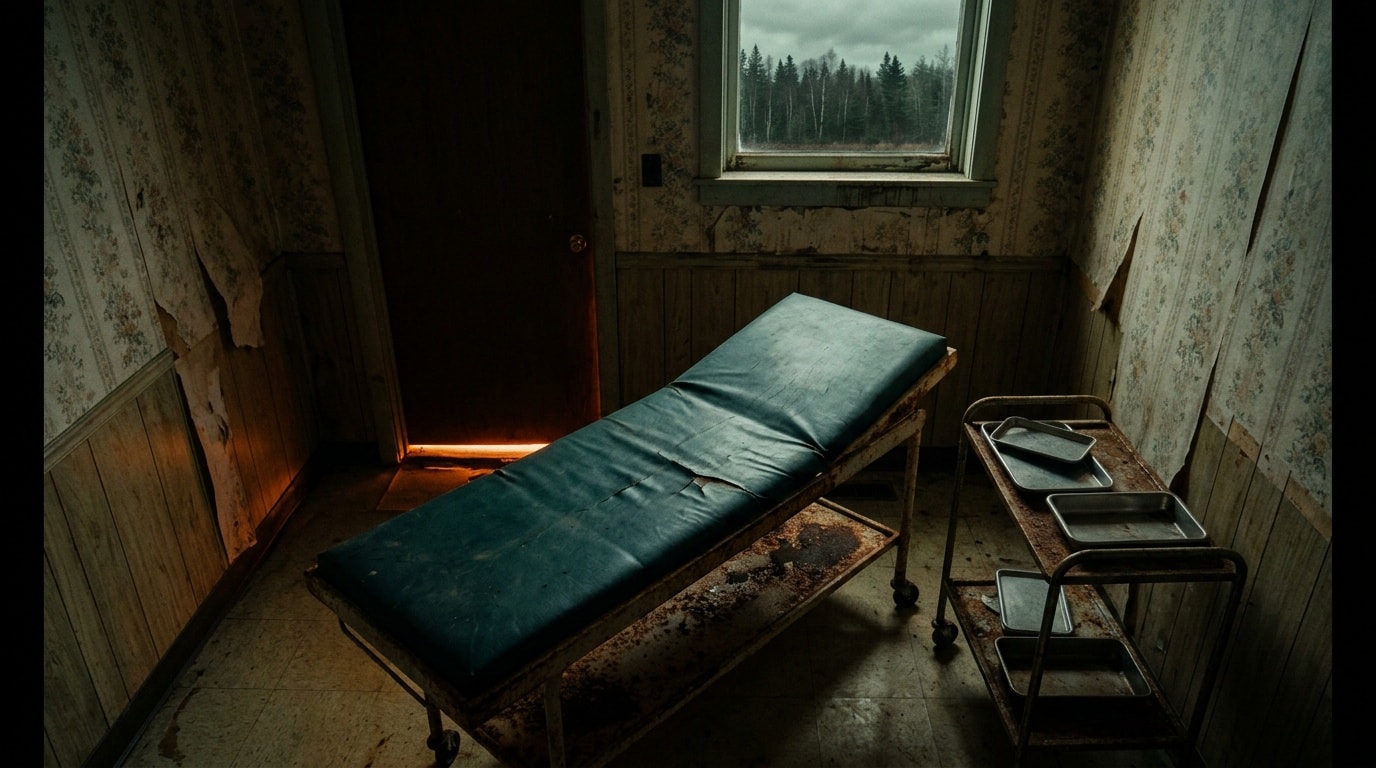
The Town Reads Its Residents and Weaponizes What It Finds
The entity controlling the town operates as a surveillance system of extraordinary intimacy, accessing private biological and psychological histories that no resident has disclosed within its borders and converting that information into targeted leverage.
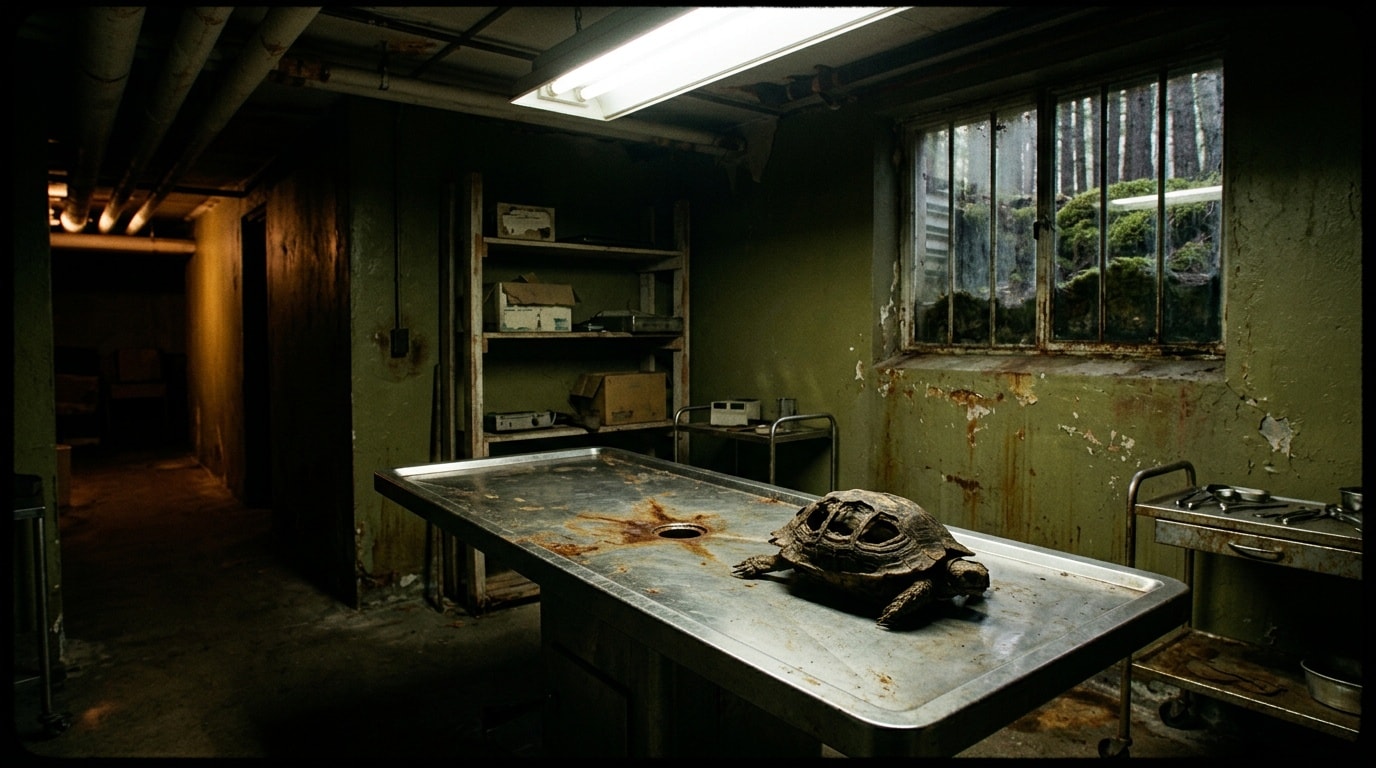
Smiley's Autopsy Confirms Creature Conversion and Bile as Fromville's Death-Management Substrate
The autopsy of Smiley establishes two interlocking claims: the creature's structurally human interior confirms that Fromville's monsters are converted townspeople, not alien entities, and the complete absence of every fluid except bile, combined with post-mortem movement, identifies bile as the singular operational substrate that persists beyond apparent death.

The Music Box Spreads Like Infection
The music box is a transmission event, not a personal hallucination, spreading the same vision independently to Boyd, Elgin, and Mari within a single episode.

The Town's First Autumn Signals Something Worse
The town's perpetual summer was not natural stasis but a deliberate constraint on whatever forces govern this place, and its collapse into autumn signals that the constraint has failed.
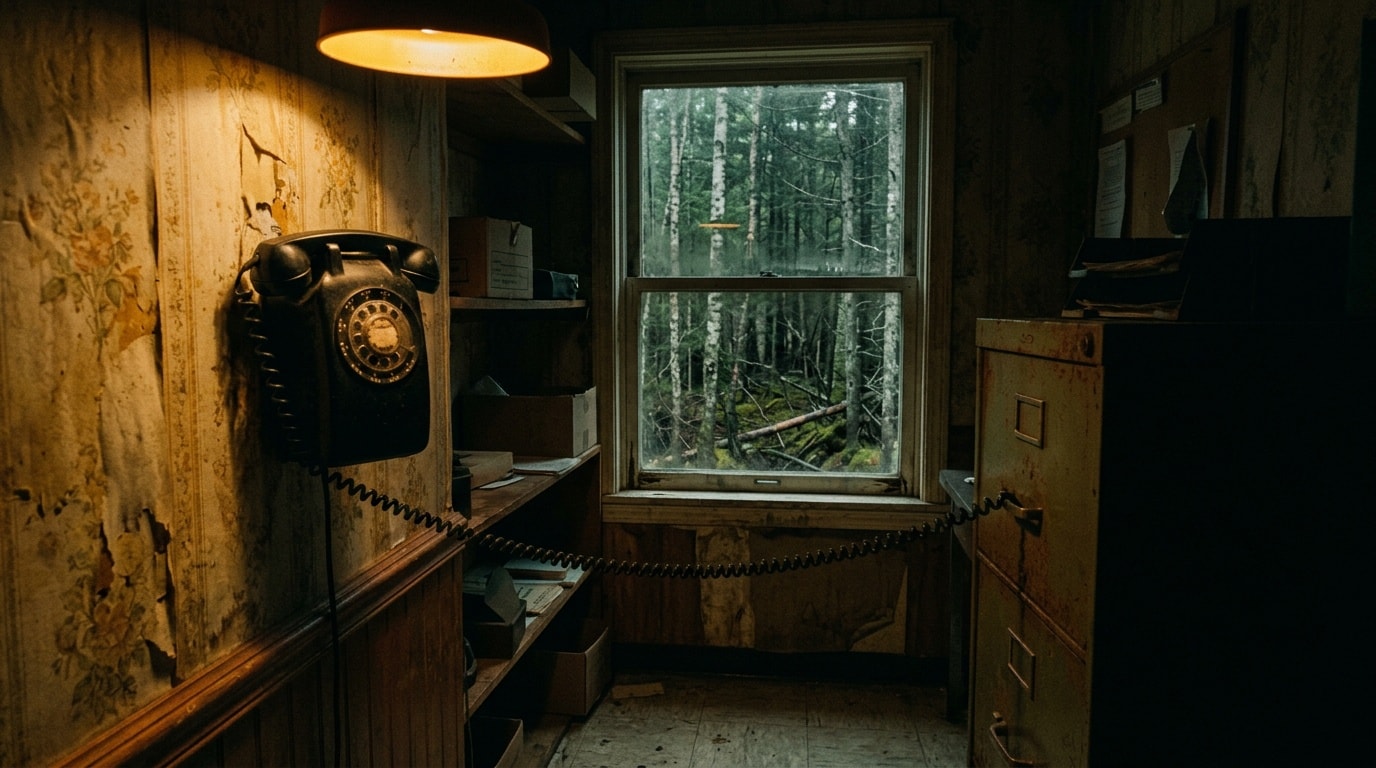
Someone Inside the Town Is Complicit
Randall is not just floating an idea when he asks Jim whether someone inside the town might be in on the experiment.
Sunlight Doesn't Kill Them. Rules Do.
The creatures in FROM are not killed by sunlight, and their disappearance at dawn reflects administered behavioral rules rather than physical vulnerability.