
Beautiful Stranger Asks to Come Inside
THE THEORY
The flower-woman is not an anomaly but evidence of a coordinated predatory architecture in which seduction and force serve complementary functions, together covering every failure mode of human resistance. The creatures employ permission-seeking as a tactic precisely because the rules requiring consent are known to them and exploitable. The system does not need overwhelming force -- it needs one person, sufficiently isolated, to open a window.
How This Theory Works
The creatures hunting this town do not merely apply force -- they have developed a division of labor between predation strategies, which means the system governing their behavior is not chaos but architecture. The flower-woman tests a protected threshold not by battering it but by asking politely, which reveals that the rules binding these entities are known to them and are being actively worked around. Permission-seeking is not a limitation the creature resents. It is a mechanism the creature has learned to exploit.
The flowers serve a dual function. They signal beauty and gift-giving, disarming the potential victim, and they may carry symbolic weight tied to the town's own strange logic around nature and the wilderness surrounding it. The phrasing 'when can I come inside' is not a demand but an invitation-seeking question, and the grammatical construction matters: it presupposes entry as inevitable and asks only about timing, nudging the listener toward consent rather than refusal.
The appearance at Colony House is significant because that building holds multiple survivors and functions as a communal refuge. An entity probing that location specifically suggests it understands the social and spatial structure of the town. If the creature can identify which buildings are occupied and which windows might be opened by a curious or lonely resident, it is operating with a level of intelligence and patience that makes it far more dangerous than the creatures that charge at doors.
What this division of strategies implies is that someone or something coordinates them. Brute force clears the exits while seduction tests the entry points. The system does not need every survivor to panic and run. It only needs one person, isolated enough or starved enough of beauty and kindness, to say yes. The town was not designed to kill everyone quickly. It was designed to kill the ones who eventually stop being careful.
Is this theory convincing?
Key Evidence
Flower Woman at Colony House Window
After nightfall, a creature in the form of a beautiful young woman appears on the Colony House balcony holding flowers and asks when it can come inside.
Threshold Request as Entry Strategy
The entity phrases its appearance as a question about when it may enter, suggesting the creatures may be bound by rules requiring permission before crossing into protected spaces.
Flowers as Disarming Prop
The creature carries flowers as part of its disguise, using a symbol of beauty and gift-giving to soften the encounter and lower the target's guard.
Bouquet Found on Colony House Porch
Julie discovers a freshly arranged bouquet of flowers on the Colony House porch, which Fatima confirms was placed there rather than grown naturally, connecting flowers to deliberate creature activity near the building.
Seduction Versus Force as Creature Tactic
Unlike the creatures that batter doors and windows, this entity uses the appearance of a desirable human woman rather than physical threat, implying the town's monsters employ multiple predatory strategies.
Other Theories for S1E06
Khatri's Two Deceptions Point to One Conclusion: He Already Knows the Town Has a Process
Khatri is not hiding Sara out of mercy, and he is not reassuring Tabitha out of pastoral duty.
The Town Is the Bible's Unwritten Book
Father Khatri proposes that the Bible's 73 canonical books are not its end.
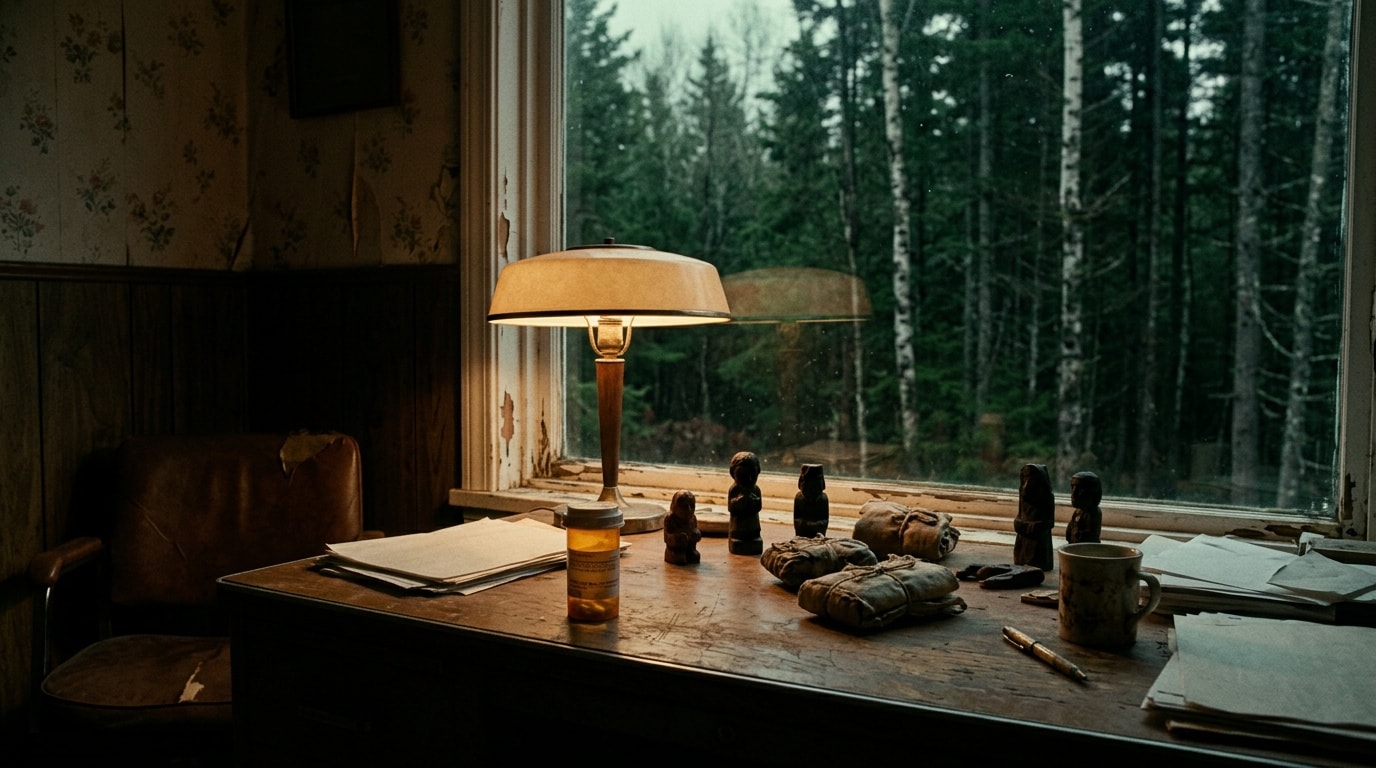
Boyd Bets His Life on the Talismans
Boyd intends to venture into the forest using talismans as protection, extrapolating from the fact that they worked inside the RV to the possibility that they could shield him beyond the town's perimeter.
The Bracelet Proves the Loop: The Town Targeted Julie Before She Could Walk
A bracelet handmade from a specific pair of bootlaces, lost the night Julie Matthews was born, turns up archived among the belongings of prior Town residents, establishing that the Town's relationship with this family predates their arrival by years and identifies Julie, not her parents, as the primary acquisition target.
The Town's Infrastructure Was Built to Be Traced to Nothing
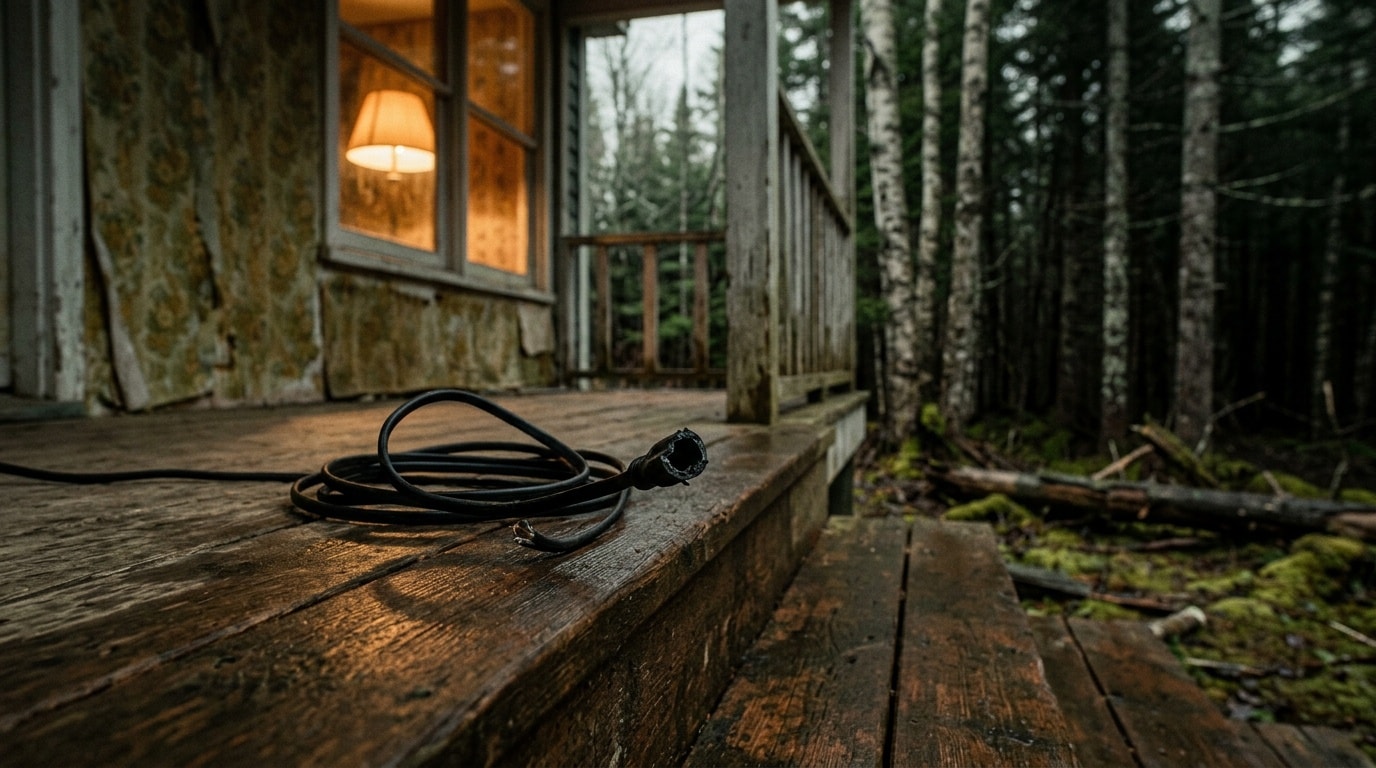
The town's electrical system is not an incomplete construction but a completed deception: surface-level mimicry of familiar infrastructure (fake outlets, hollow lamp cords, working lights) paired with an underground convergence point that transmits power through conductorless cables.
The Dragon's Cavern Hides an Escape Map
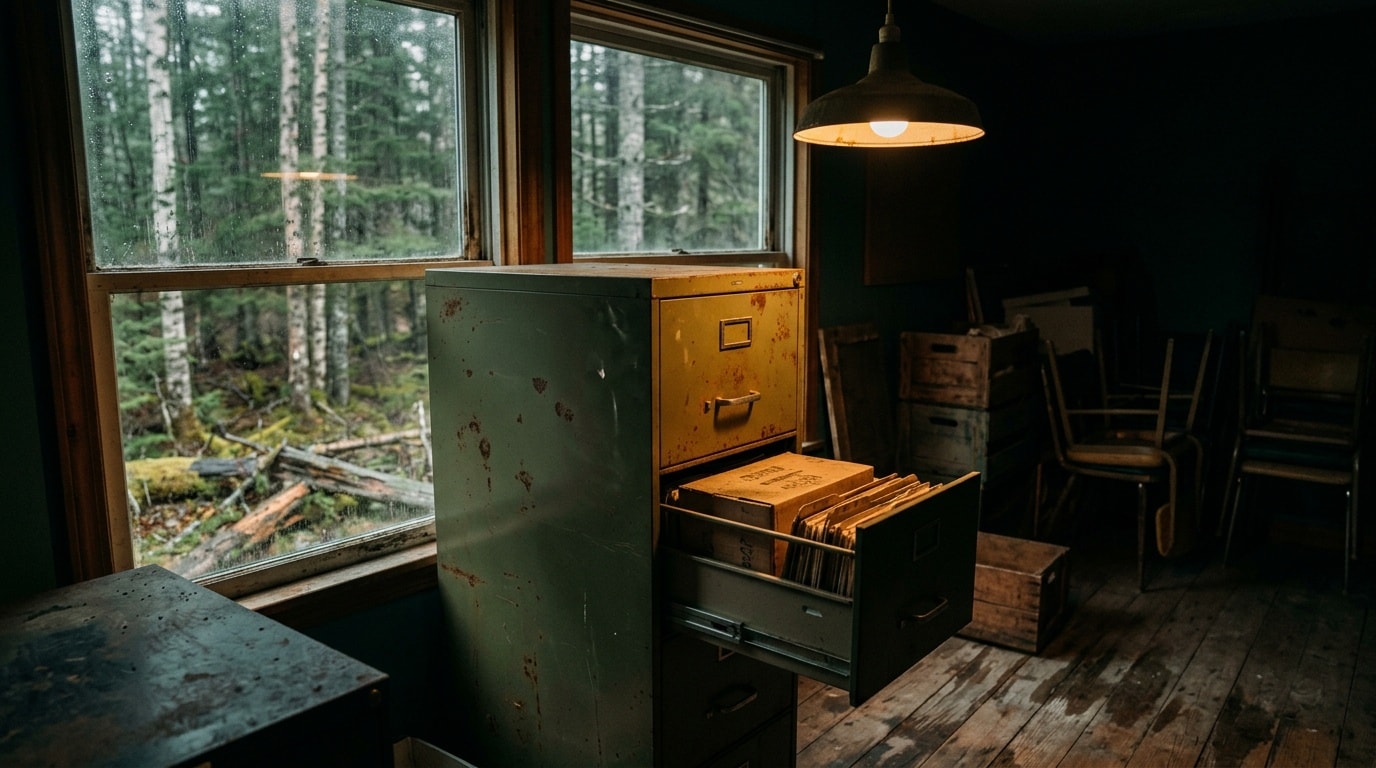
The diner storage room is the show's structural equivalent of the dragon's cavern: the place where the logic of escape is buried in accumulated objects left behind by the vanished.

Arranged Flowers Signal Deliberate Outside Contact
The arranged flowers on Colony House's porch represent deliberate communication from an actor with specific knowledge of the town's residents and, more pressingly, knowledge of which channels of contact the town cannot monitor or intercept.