The Creatures Already Know Your Family
THE THEORY
The creatures threatening the Town do not improvise their deceptions; they arrive with pre-acquired intelligence about specific families, knowledge specific enough to select a grandmother rather than a generic authority figure. This targeted intelligence is what transforms a consent-based protection system into a liability: the wards hold against force, but force is not what the creatures are using. They are using what they already know about the people inside.
How This Theory Works
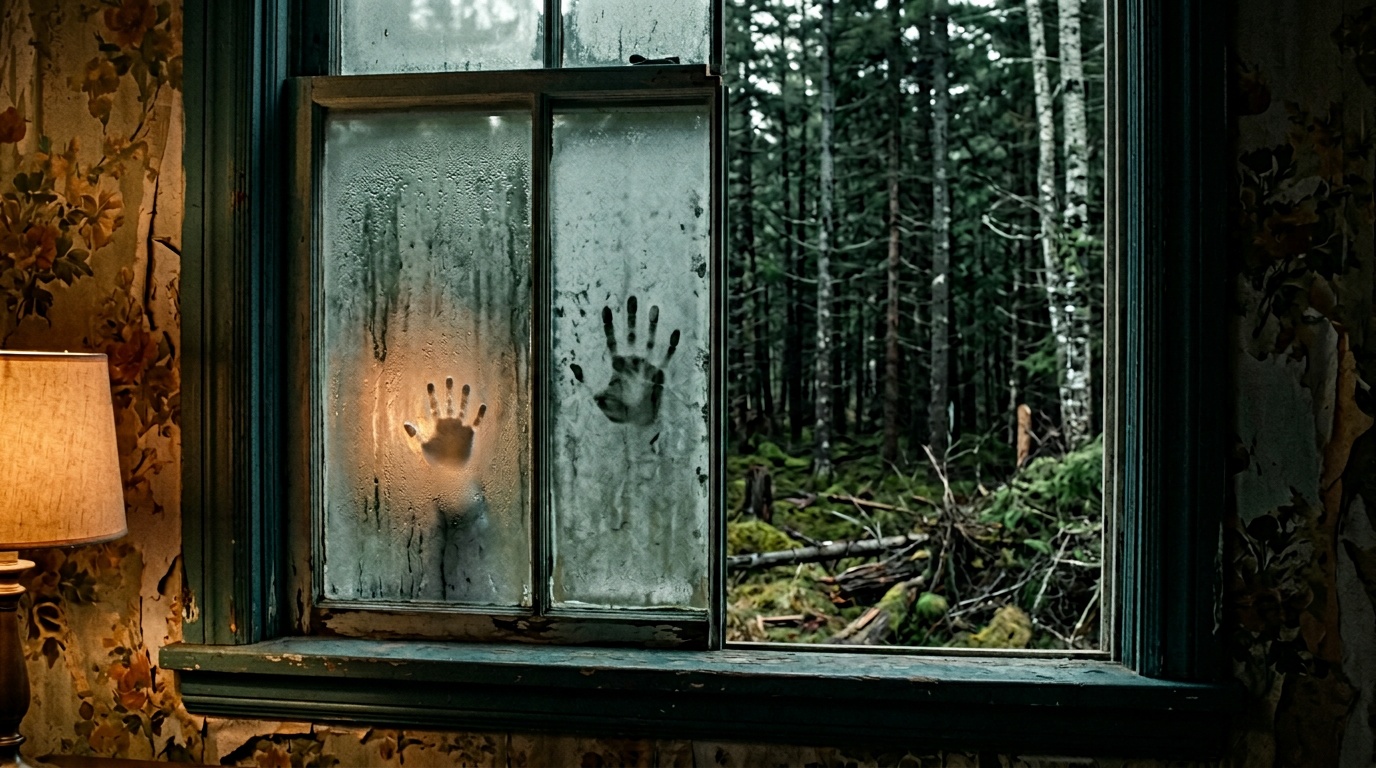
The Meagan sequence is the clearest window into how the creatures actually operate, and the show treats it as a horror set piece when it is also an operational profile. A creature appears at a second-floor window after dark and identifies itself as Meagan's grandmother. Not an adult. Not a parent. A grandmother: a specific relational category that implies prior knowledge of family structure. The series has established nothing about the creatures that explains how one arrives at a child's window already holding that piece of information. Opportunistic observation does not produce it. Watching a house from the tree line does not tell you which family member a child will override a safety rule for. The creature knew, and the distinction between knowing and guessing is exactly where the Town's defenses have no answer.
What happens next makes the intelligence argument harder to dismiss. Meagan tells the figure it does not look like her grandmother. The disguise has failed on its own terms; the visual impersonation is imperfect enough that the child names the discrepancy out loud. The creature does not attempt to correct the illusion. It pivots immediately to a different instrument: it instructs her to keep the visit secret, compressing her decision window before an adult can arrive and interrupt. This is not the behavior of a predator that relies on mimicry. It is the behavior of something that understood, in advance, that the disguise might not fully convince, and prepared a secondary approach rooted in how children relate to family authority and how secrecy functions as a lever. The physical impersonation was the opening bid. The social engineering was the real strategy. Both required knowing which family member to invoke before the window was ever approached.
The Town's protective system is architecturally sound against the threat it was designed to counter. The talismans at the Diner and Clinic doors are not ceremonial. Sara and Kristi touch them as part of locking up, confirming presence before sealing the space, because a missing talisman produces the same outcome as an opened window. Boyd extending the principle to the RV confirms it scales universally: any enclosed space can be warded, and the ward holds against a creature that cannot or will not cross by force. The Pratt house was protected the night of the Meagan incident. The talisman was present. The window held until Meagan opened it herself. The system did not fail. It was bypassed at the exact point where any consent-based protection must be vulnerable: the human being inside it who can be made to choose wrong.
This is where the two layers of the threat converge. The first layer is the intelligence itself: the creatures know specific things about specific families before first contact, and that knowledge is not explained by anything the series has shown us about their behavior. The second layer is what they do with it: they use family-specific knowledge to construct a psychological pressure campaign calibrated to a particular child on a particular night, one that does not require a perfect disguise so long as it introduces enough familiarity to produce doubt. The ward held against the creature. The creature's knowledge of the grandmother relationship held against the child. Meagan opened the window, and the attack followed immediately, confirming that the disguise was never meant to be convincing. It was meant to be sufficient. There is a meaningful gap between those two standards, and the creatures appear to understand it precisely.
The 96-nights sign outside Boyd's office is the synthesis's sharpest irony. It is framed as evidence that the system works, and on its own terms it is accurate: no creature has breached a protected space from outside in 96 nights. But the number measures the wrong variable. It counts failures of external penetration. It says nothing about how long the creatures have been accumulating family intelligence, identifying psychological pressure points, and selecting their next approach. A system that cannot be broken from outside can still be opened from within, and the creatures have demonstrated they know how to arrange that outcome. The 96-night streak is the Town's confidence interval. It is not the creatures' failure rate.
Is this theory convincing?
Key Evidence
Creature Claims Grandmother Identity
A creature appears at Meagan's second-floor window at night and identifies itself as her grandmother, directly soliciting the child's trust to gain entry.
Meagan Notes the Disguise Failing
Meagan tells the figure it does not look like her grandmother, confirming that the creature was attempting a human impersonation that fell short of complete believability.
Mother Confirms the Creature's False Identity
Lauren arrives and explicitly tells Meagan the creature is not her grandmother, indicating the creature's disguise was a deliberate deceptive claim rather than a misidentification.
Window Opened Despite Prohibition
Meagan states she is not supposed to open the window, yet does so after the creature's appeal, demonstrating that the family-member disguise successfully overrode an established safety rule.
Attack Follows Successful Deception
Once Meagan opens the window, the creature transforms into a horrifying form and attacks both Meagan and Lauren, confirming the disguise was a predatory strategy to gain access.
Creature Appeals to Secrecy
The creature instructs Meagan to keep the visit a secret, exploiting a child's social instincts to prevent her from alerting an adult before the window is opened.
Other Theories for S1E01
Enter Once, Exit Never: The Looping Town
The town in FROM operates as a supernatural spatial trap where the roads themselves fold back on travelers, making escape geometrically impossible.
Boyd's Duty Tears His Family Apart
Boyd's role as sheriff places him at the center of the town's survival apparatus, enforcing the strict rules that keep people alive after dark.
The RV May Not Be Safe After Dark
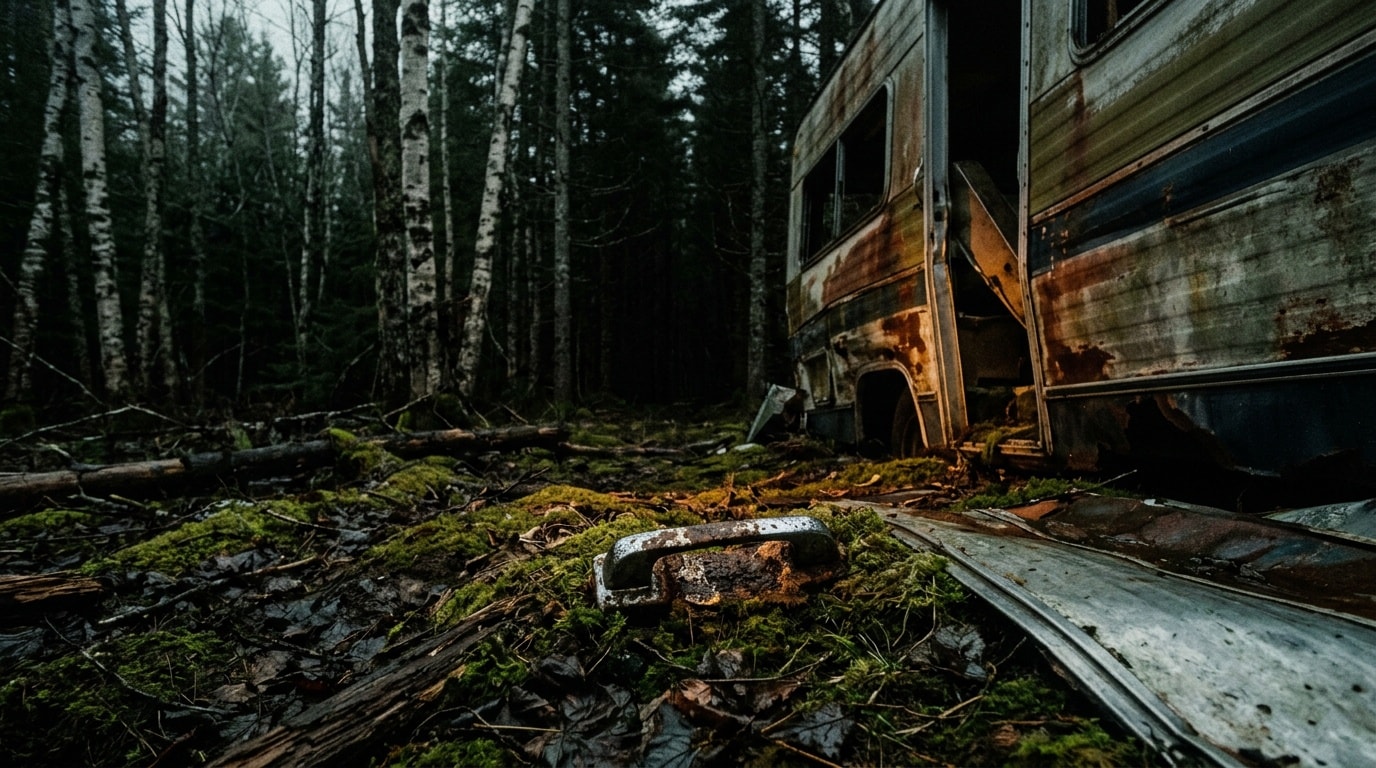
The RV offers no reliable protection after dark because its overturned geometry eliminates the functional threshold that the town's shelter rules appear to require.

Sara's Kiss: Mercy, Madness, or Control
Sara's killing of Tobey is not a symptom of mental illness or a moment of crisis but an act of conditioned compliance, performed by someone who has internalized the town's rules deeply enough to apply them without being told.
Ethan's Seizures Track the Creatures
Ethan's seizures may be triggered by the proximity of the creatures rather than by his injury alone, making his body an involuntary detector of their approach that operates before any other character can perceive the threat.
The Matthews Were Processed, Not Trapped: Boyd's Intake System Runs on Inherited Contract Terms
The town's mechanisms for capturing newcomers (false directions, pre-positioned spike strips, nightly rituals) are not survival improvisations but the operational expression of a formal compact whose terms predate every current resident.
Murder of Crows Signals Incoming Danger
FROM uses the crow encounter at the fallen tree to name two distinct fates awaiting the Matthews family before they have encountered either: murder, performed by the creatures, and unkindness, performed by the town's mechanism of inescapable captivity.