Murder of Crows Signals Incoming Danger
THE THEORY
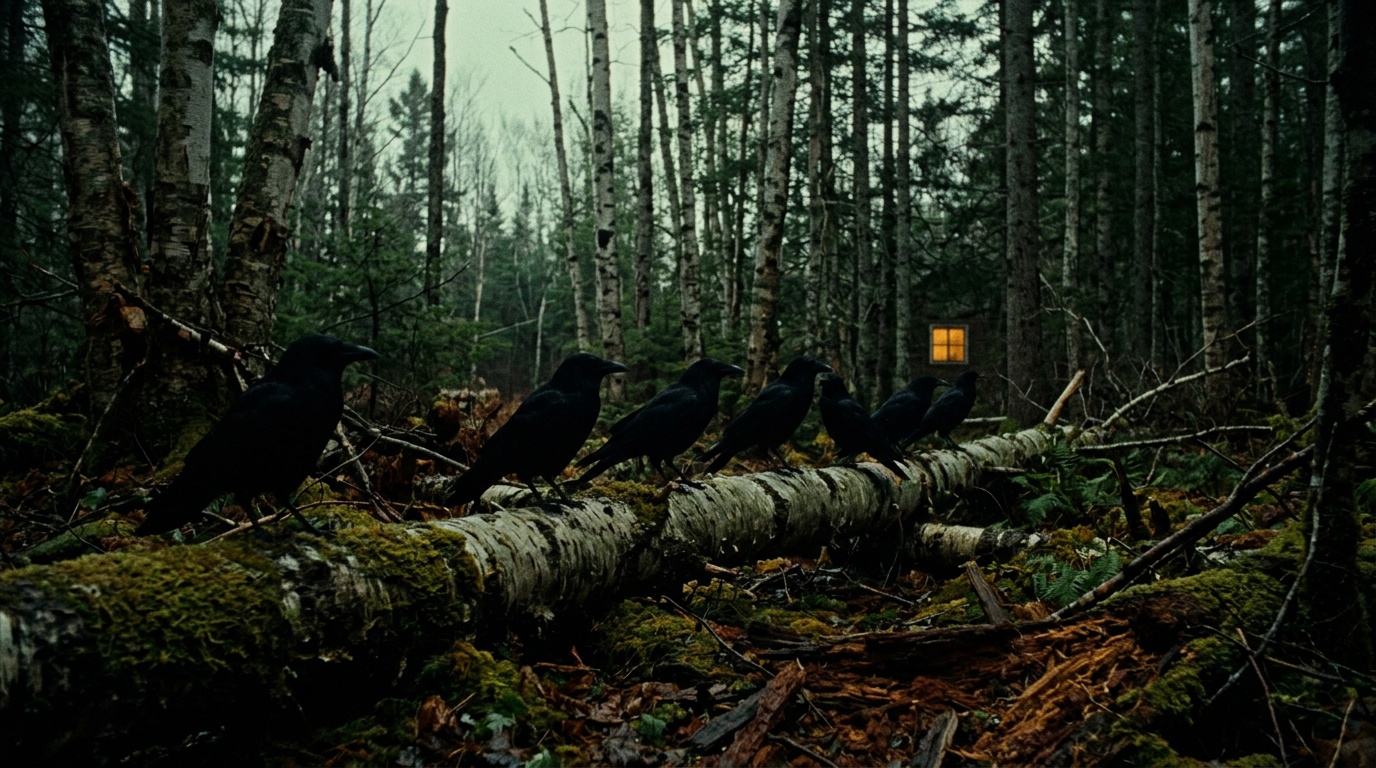
FROM uses the crow encounter at the fallen tree to name two distinct fates awaiting the Matthews family before they have encountered either: murder, performed by the creatures, and unkindness, performed by the town's mechanism of inescapable captivity. The show engineers the ambiguity deliberately by refusing to resolve whether the birds are crows or ravens, holding both collective nouns active at once. The encounter is not a warning the characters can act on but a structural annotation placed at the exact moment their agency is removed.
How This Theory Works
The crow encounter is not atmospheric dressing. It is the show's own verbal annotation of what the Matthews family is driving into, split across two registers before the family has any language for either. When Julie names the flock a murder, the episode is labeling the fate ahead. When Tabitha corrects her toward ravens and unkindness, the episode refuses to let the label resolve into one clean meaning. Both terms hold simultaneously because the town requires both.
The positioning enforces the argument. The birds appear at the fallen tree, the exact obstacle that ends the family's ability to choose their route. That is not incidental placement. The threshold between a normal road trip and an inescapable drift into the town is marked by creatures whose collective nouns the show has just taken care to define. The crows or ravens are not a warning the characters can act on. They are a structural signal the audience is being given at the moment agency is being removed.
In folklore, crows mark transition between the living and the dead. The episode positions the sighting between the Pratt murders and the creature siege of the RV, using the birds as connective tissue between two demonstrations of what the town does. That timing, across all four pieces of evidence, is too precise to read as coincidence.
The distinction between murder and unkindness deserves more weight than the theory has yet pressed. A murder is an act of violence with agency behind it. An unkindness is something withheld, a cruelty of denial rather than destruction. FROM uses both at once by refusing to resolve the species question, which means the show is pointing at two distinct mechanisms simultaneously: the creatures perform the killing, and the town performs the unkindness, the roads that loop back, the captivity dressed as shelter, the permanent refusal of exit. The Matthews family is approaching both fates at the fallen tree, and the birds are naming them before the family has encountered either. The ambiguity is not a loose end. It is the thesis.
Is this theory convincing?
Key Evidence
Julie Names the Flock a Murder
Julie explicitly tells Ethan that a group of crows is called a murder, and uses it to taunt him about being pecked in his sleep, with the show foregrounding the death-associated terminology at the moment the family is approaching the town.
Tabitha's Raven Correction
Tabitha corrects Julie by suggesting the birds may be ravens rather than crows, and notes that a group of ravens is called 'an unkindness,' maintaining the ominous register of the bird encounter regardless of species.
Crows at the Fallen Tree
The flock appears directly at the site of the fallen tree that blocks the family's road, placing the omen at the exact point where the Matthews lose control of their route and begin their inescapable drift toward the town.
Folklore Resonance with Episode Events
Crows carry a long folkloric association with death and darkness, and their appearance in the episode precedes both the revelation of the Pratt murders and the night-time creature siege of the overturned RV.
Other Theories for S1E01
Enter Once, Exit Never: The Looping Town
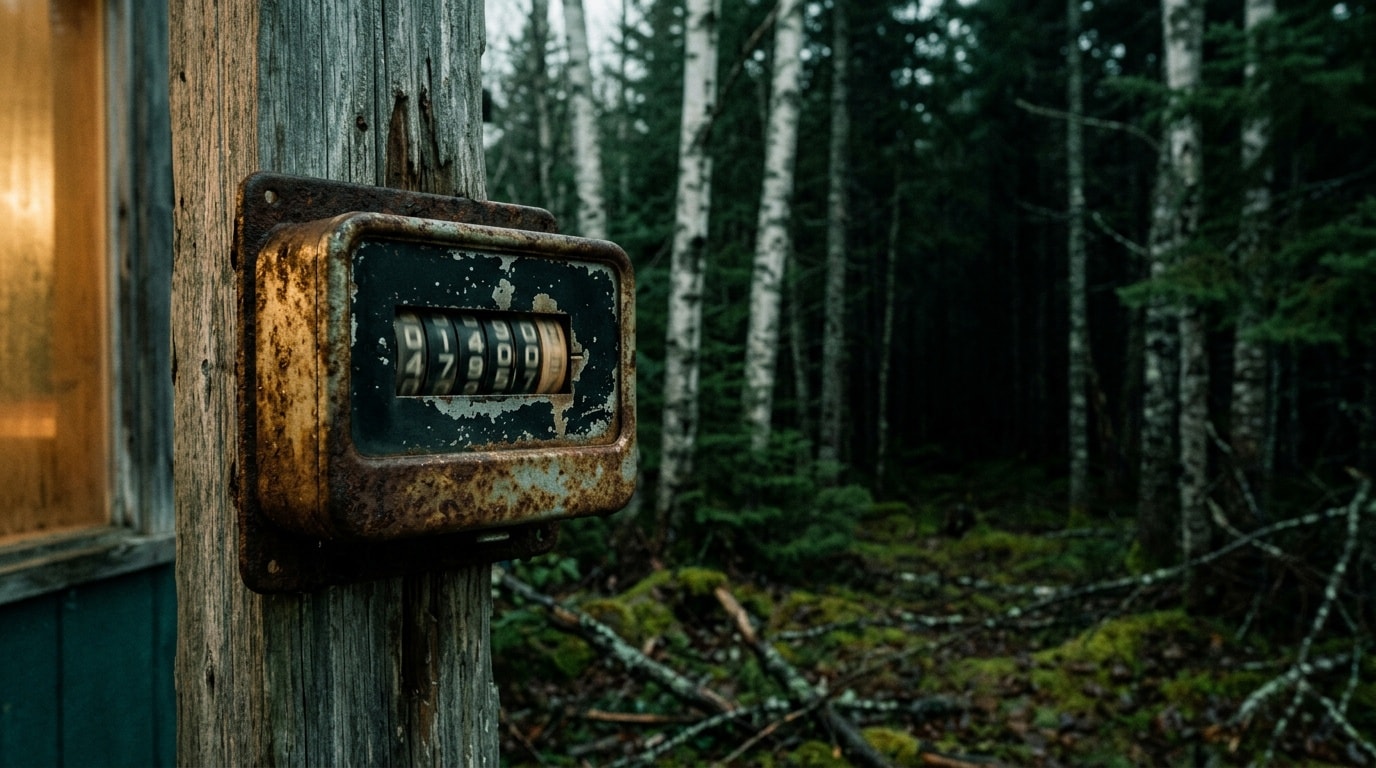
The town in FROM operates as a supernatural spatial trap where the roads themselves fold back on travelers, making escape geometrically impossible.
Boyd's Duty Tears His Family Apart
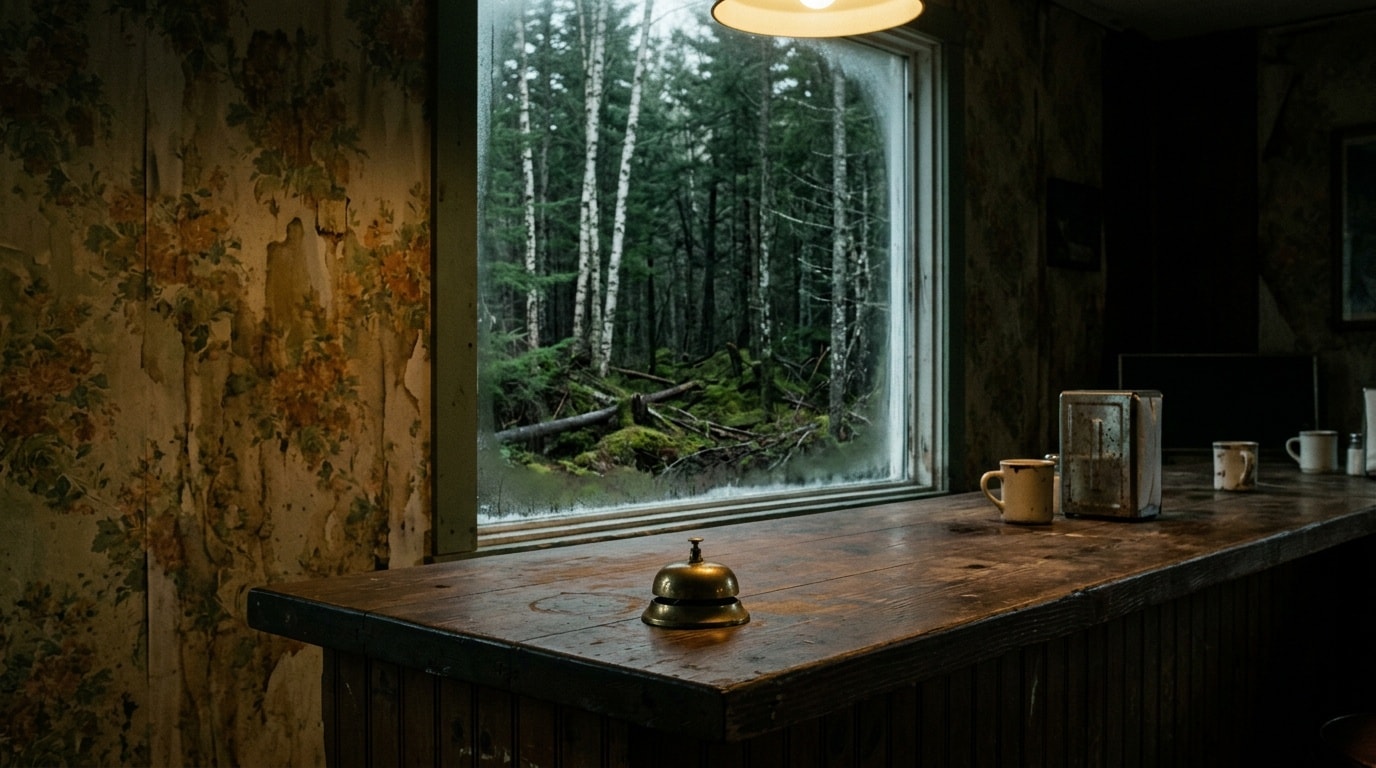
Boyd's role as sheriff places him at the center of the town's survival apparatus, enforcing the strict rules that keep people alive after dark.
The RV May Not Be Safe After Dark
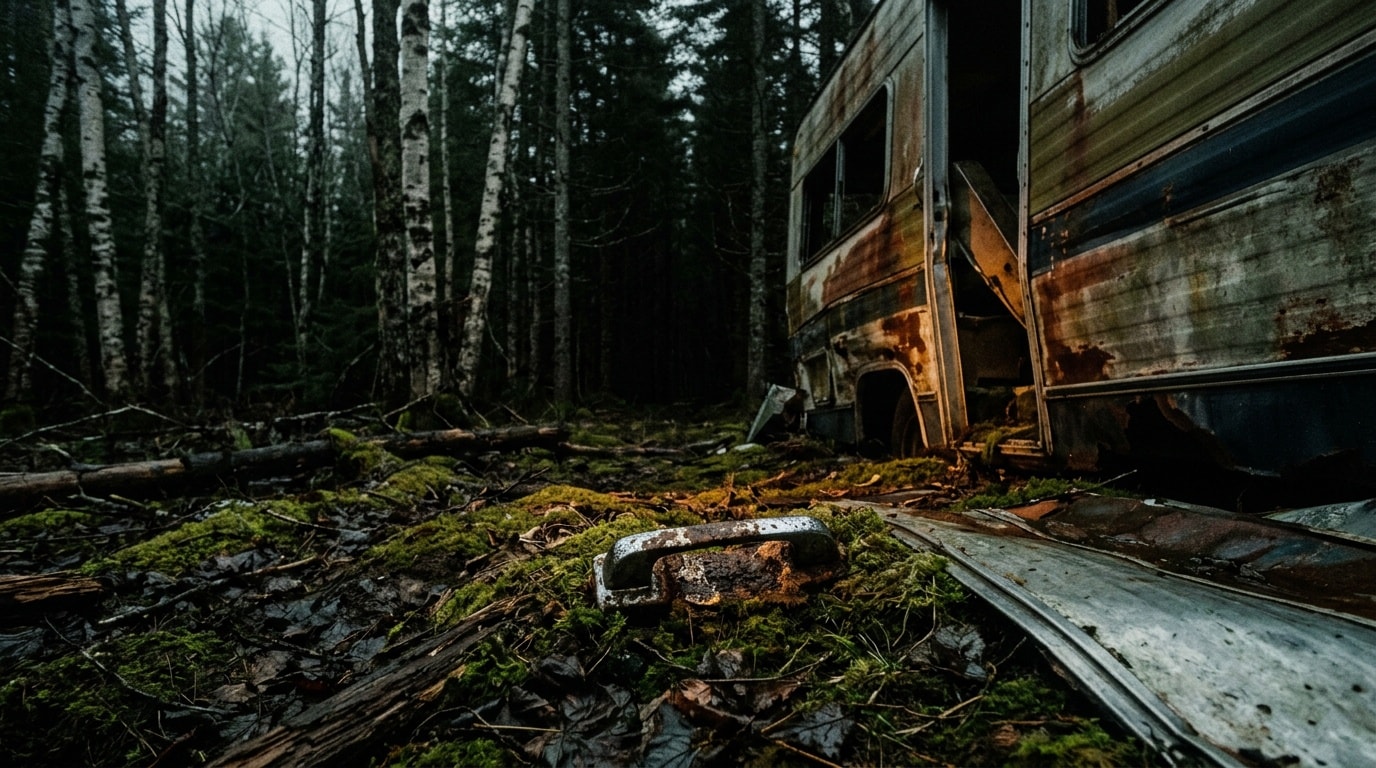
The RV offers no reliable protection after dark because its overturned geometry eliminates the functional threshold that the town's shelter rules appear to require.
The Creatures Already Know Your Family
The creatures threatening the Town do not improvise their deceptions; they arrive with pre-acquired intelligence about specific families, knowledge specific enough to select a grandmother rather than a generic authority figure.
Sara's Kiss: Mercy, Madness, or Control
Sara's killing of Tobey is not a symptom of mental illness or a moment of crisis but an act of conditioned compliance, performed by someone who has internalized the town's rules deeply enough to apply them without being told.
Ethan's Seizures Track the Creatures
Ethan's seizures may be triggered by the proximity of the creatures rather than by his injury alone, making his body an involuntary detector of their approach that operates before any other character can perceive the threat.
The Matthews Were Processed, Not Trapped: Boyd's Intake System Runs on Inherited Contract Terms
The town's mechanisms for capturing newcomers (false directions, pre-positioned spike strips, nightly rituals) are not survival improvisations but the operational expression of a formal compact whose terms predate every current resident.