
Boyd's Duty Tears His Family Apart
THE THEORY
Boyd's role as sheriff places him at the center of the town's survival apparatus, enforcing the strict rules that keep people alive after dark. That same sense of duty has fractured his relationship with his son Ellis, creating an irony at the heart of his character: the man responsible for protecting everyone in town cannot hold his own family together.
How This Theory Works
Boyd opens the episode as the town's enforcer, ringing the bell to call everyone inside before dark. This is not merely a procedural role. When he discovers the Pratt women dead, his rage at Frank is immediate and personal. He drags Frank upstairs to face what his absence caused. Boyd understands that the rules exist because failure has a body count, and he carries that weight visibly.
The contradiction at the center of Boyd's character emerges when he travels to Colony House to find Ellis. Ellis is there by choice, living apart from his father, and his reception of Boyd is cool and reluctant. Boyd has to ask his son to attend a funeral. The estrangement is not a background detail. It is the first real window the episode opens into who Boyd is beneath the badge.
By the episode's end, Boyd stays behind in the wrecked RV with Kristi and the injured Ethan, telling Ellis to take care of the Matthews family. He calls it duty. Ellis calls it suicide. The father who enforces protection for everyone in town has built a life where his own son expects him to die alone in a field. The protective philosophy that defines his public role has not translated into the relationships that matter most to him.
The sharpest detail here is the sequence of Boyd's two instructions: he tells Ellis to protect the Matthews family, a group of strangers who arrived hours ago, before he says anything about himself or their relationship. Ellis has lived long enough with this pattern to decode it instantly. He does not argue that his father should want to live. He argues that his father wants to die, which is a different accusation entirely. It positions Boyd's sacrifice not as courage but as preference, a recurring choice to stand between strangers and danger because that is where Boyd feels most himself. The sign outside his office counting nights without incident is not a record of the town's survival. It is the closest thing Boyd has to a personal history, and it has nothing to do with his son.
Is this theory convincing?
Key Evidence
Boyd Rings the Bell at Dusk
The episode opens with Boyd walking through town ringing a bell to signal residents inside before dark, establishing his role as the primary enforcer of the survival rules that govern the community.
Boyd Berates Frank Over Deaths
Boyd confronts a hungover Frank with visible fury, dragging him upstairs to see the bodies of his wife and daughter, making clear that Boyd holds the town's adults personally accountable for failing their families.
Boyd Travels to Colony House for Ellis
Boyd goes to Colony House specifically to ask his son Ellis to attend the Pratt funeral, and Ellis greets him with sullen reluctance rather than warmth, signaling a significant rift between them.
Ellis Calls Boyd's Plan Suicide
When Boyd stays behind at the RV overnight, Ellis tells him directly that he knows it is suicide, suggesting Ellis reads his father's self-sacrifice as a pattern he has learned to expect rather than admire.
Boyd Asks Ellis to Protect the Matthews
Boyd's final instruction to Ellis is to take care of the incoming family, not his own survival, which mirrors his broader role as town protector while underscoring that he delegates family responsibility rather than living it.
Nights Without Incident Sign
The sign outside Boyd's office reading 'NIGHTS WITHOUT INCIDENT: 96' positions him as the keeper of the town's survival record, reinforcing how thoroughly his identity is defined by his protective function rather than personal bonds.
Other Theories for S1E01

Enter Once, Exit Never: The Looping Town
The town in FROM operates as a supernatural spatial trap where the roads themselves fold back on travelers, making escape geometrically impossible.

The RV May Not Be Safe After Dark
The RV offers no reliable protection after dark because its overturned geometry eliminates the functional threshold that the town's shelter rules appear to require.
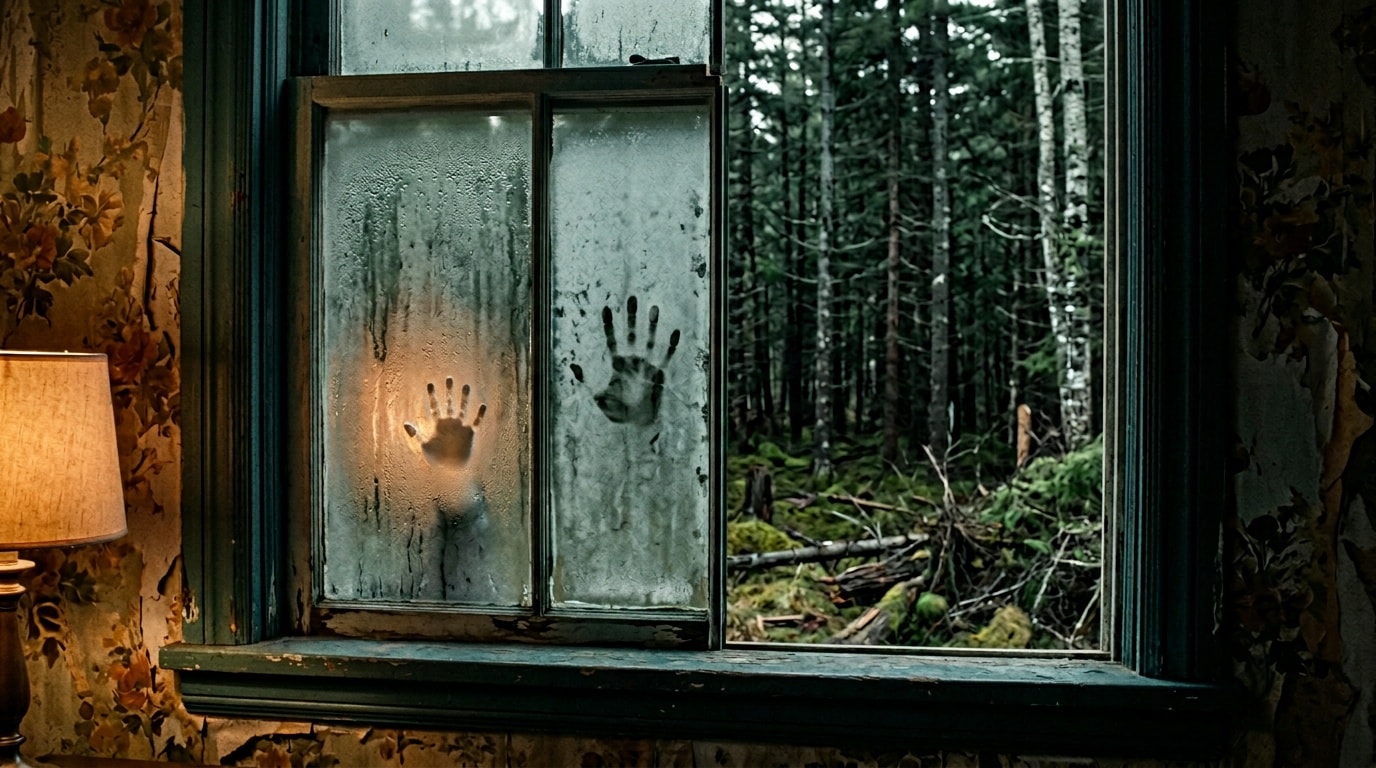
The Creatures Already Know Your Family
The creatures threatening the Town do not improvise their deceptions; they arrive with pre-acquired intelligence about specific families, knowledge specific enough to select a grandmother rather than a generic authority figure.

Sara's Kiss: Mercy, Madness, or Control
Sara's killing of Tobey is not a symptom of mental illness or a moment of crisis but an act of conditioned compliance, performed by someone who has internalized the town's rules deeply enough to apply them without being told.

Ethan's Seizures Track the Creatures
Ethan's seizures may be triggered by the proximity of the creatures rather than by his injury alone, making his body an involuntary detector of their approach that operates before any other character can perceive the threat.

The Matthews Were Processed, Not Trapped: Boyd's Intake System Runs on Inherited Contract Terms
The town's mechanisms for capturing newcomers (false directions, pre-positioned spike strips, nightly rituals) are not survival improvisations but the operational expression of a formal compact whose terms predate every current resident.
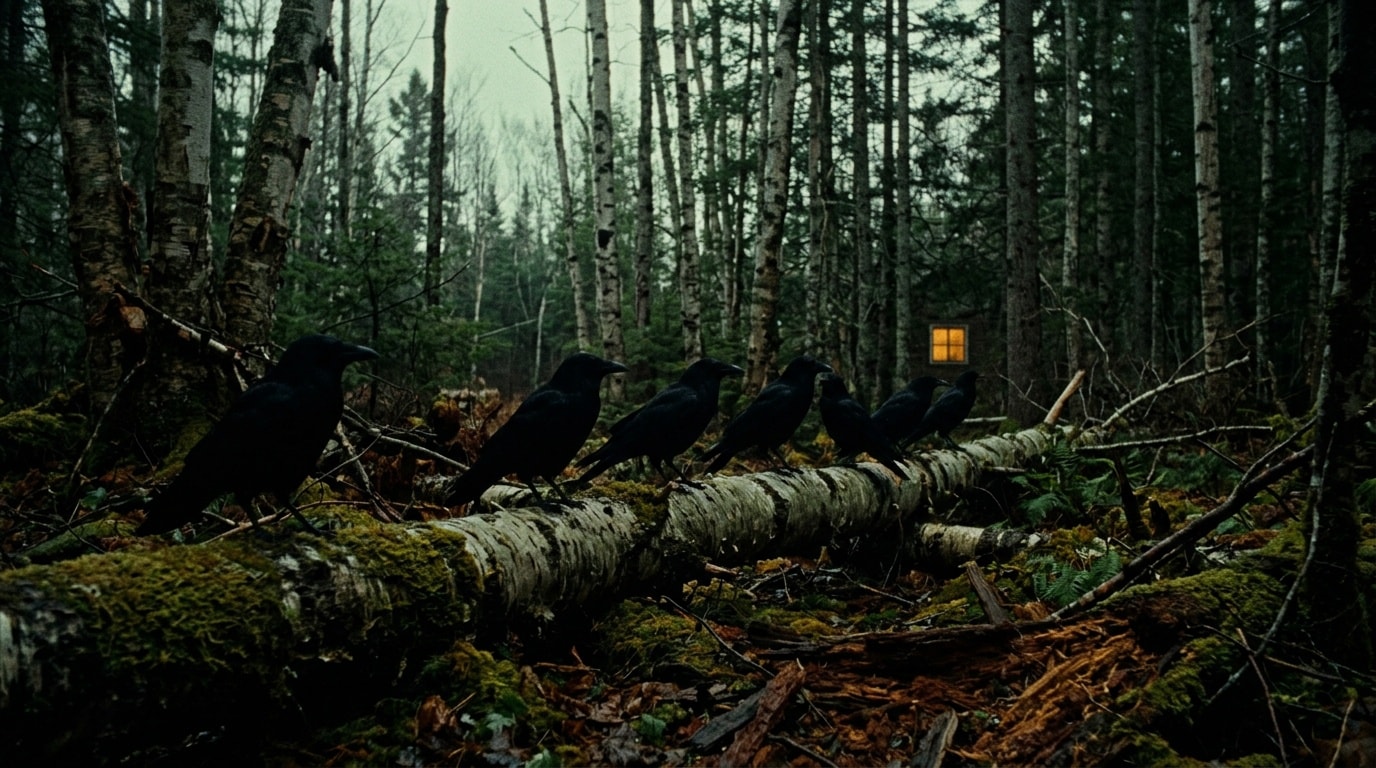
Murder of Crows Signals Incoming Danger
FROM uses the crow encounter at the fallen tree to name two distinct fates awaiting the Matthews family before they have encountered either: murder, performed by the creatures, and unkindness, performed by the town's mechanism of inescapable captivity.