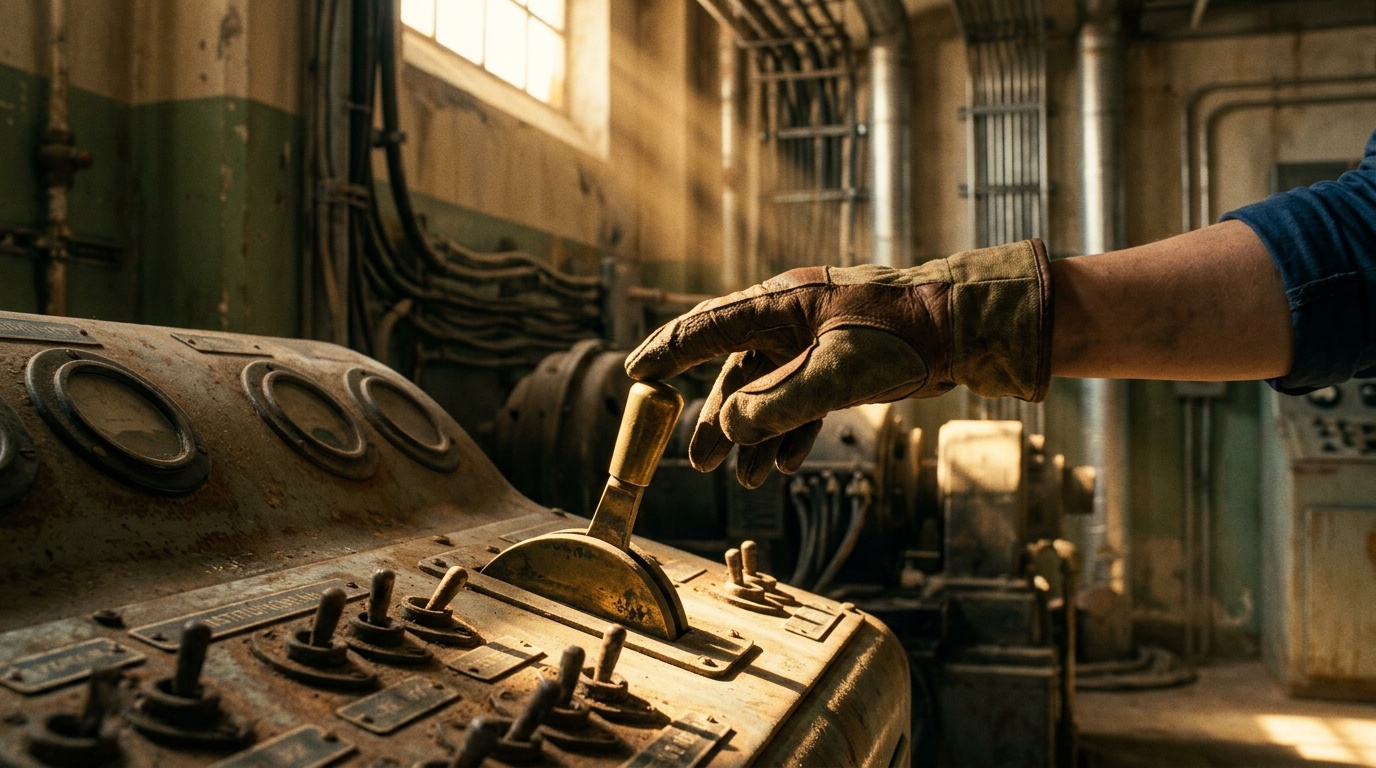
Lucy MacLean Has Already Replaced Her Moral Framework — She Just Cannot Name What With
THE THEORY
Lucy has not lost her moral framework. She has already replaced it with something she did not choose and cannot identify. The Sonny's Sundries killing is not a turning point but a forensic disclosure: a killing structured as deliberate procedure, not survival reflex, executed by someone who looked for an internal objection and found none.
How This Theory Works
The Sonny's Sundries sequence earns its weight through its architecture, not its outcome. Lucy does not stumble into a killing. She issues warnings. She draws first. She waits for the man to comply, watches him refuse, and fires. That sequence is procedure — the same compressed grammar that governs every competent wastelander's threat assessment — and the show stages it at the precise location of Lucy's intended recovery. She traveled to Sonny's Sundries to get clean. She leaves having killed a man and stolen a power fist, with less apparent friction between those two facts than the situation seems to warrant. The trip to cure herself produces a killing instead, and the killing does not register as a deviation from the cure. That is the tell.
What separates this killing from Lucy's prior violence is the absence of a closing exit. Her Season 1 engagements shared a quality of enclosure — circumstances that had eliminated other options before she reached for a weapon. Sonny's Sundries does not have that quality. The situation is threatening but recoverable. The man is dangerous but the door exists. Lucy has options she does not take, not because she fails to see them, but because the threshold at which lethal force requires justification has already moved. She issues the warnings. The warnings are not met. She fires. This is not panic processing faster than thought. It is thought, compressed into the shape panic used to occupy.
Her visible disturbance after the killing is the show's most precise piece of evidence, and it is frequently misread as guilt. Guilt requires a surviving standard the act fell short of. What Lucy's expression registers is something structurally different: vertigo. She looked for the standard and it was not there. The 'I don't know' she produces when asked who she is does not express confusion about her future. It reports an absence in her present. The vault used to answer the question 'who are you' automatically, and it answered it in terms of restraint, negotiation, the preference for exits over escalation. That answer is gone. Something else responded to the man in the store, and Lucy knows it, and she cannot name it because she did not choose it.
The Buffout addiction thread is not a subplot. It is the structural parallel that clarifies what kind of collapse is happening. Both the chemical dependency and the new moral default are substitutes Lucy is reaching for because the original architecture has already failed — not failed under pressure, but failed prior to the pressure, which is why the pressure no longer produces the old responses. The Ghoul refuses to enable either one, and that refusal is the show's clearest signal that both are the same problem in different clothes. He is not withholding the Buffout because addiction is wrong in the abstract. He is withholding it because he recognizes that treating the chemical dependency will not restore what she thinks it will restore. The withdrawal and the killing are symptoms of the same underlying vacancy, and you cannot Addictol your way out of a vacancy.
The sharpest thing the combined evidence points toward is also the most uncomfortable: this void is not transitional. Lucy is not between frameworks, in the liminal space where a person discards one identity while constructing another. The theft without deliberation, the killing as procedure, the disturbance at how naturally both arrived — these are not pressure responses from someone still operating under inherited constraints. They are the behaviors of someone who has already stopped waiting for constraints to reassert themselves. The question the show is circling, and has not yet answered, is whether what fills that space constitutes a self at all, or whether it is simply the shape a person takes when every borrowed structure has collapsed and nothing has been consciously chosen to replace it. The Ghoul has lived inside that shape for two centuries. His silence at the scene is not indifference. It is recognition.
Is this theory convincing?
Key Evidence
Lucy's 'I Don't Know' Response
When asked 'Who are you?' after killing the man in the store, Lucy responds 'I don't know' with visible disturbance, signaling that her vault identity has dissolved without a replacement.
Theft Without Deliberation
Unable to afford the inflated price at Sonny's Sundries, Lucy bypasses any attempt at negotiation and directly steals the Addictol along with a power fist, a decision she makes without apparent moral conflict.
Killing Without Hesitation
Lucy shoots the man pretending to be the shop owner when he reaches for a gun, using lethal force instinctively rather than attempting to escape or disarm him, a response that contrasts sharply with her Season 1 behavior.
Post-Kill Visible Disturbance
After the shooting, Lucy's expression reflects not guilt over having killed but a deeper unease at how naturally the act came to her, suggesting she recognizes the shift in herself.
Buffout Addiction as Parallel Collapse
Lucy's ongoing Buffout withdrawal, which the Ghoul refuses to enable, runs alongside her moral deterioration in the same episode, framing both as forms of dependency on external structures that are now gone.
Violence Mirroring Norm's Struggles
Lucy's instinct toward violence and subsequent self-questioning mirrors Norm's parallel moral struggles in the vault, suggesting the MacLean siblings are both losing their inherited ethical frameworks simultaneously.
Other Theories for S2E05
House Closed the Trap Before Cooper Reached Las Vegas
Robert House ran a two-stage operation against Cooper Howard: a pre-arrival intelligence assessment that identified Cooper as a recruitable asset alienated from Vault-Tec, followed by a deliberate penthouse encounter that converted Cooper's moral restraint — his refusal to use the poison — from a potential complication into the confirming data point House needed to finalize his decision.
Lucy Is the Key Cooper Plans to Use on Hank, Not on the Deathclaws
Cooper Howard has spent two centuries systematically eliminating empty vaults until Hank MacLean — a senior Vault-Tec operative with pre-war knowledge of the management facility beneath the Strip — became his only remaining compass needle.
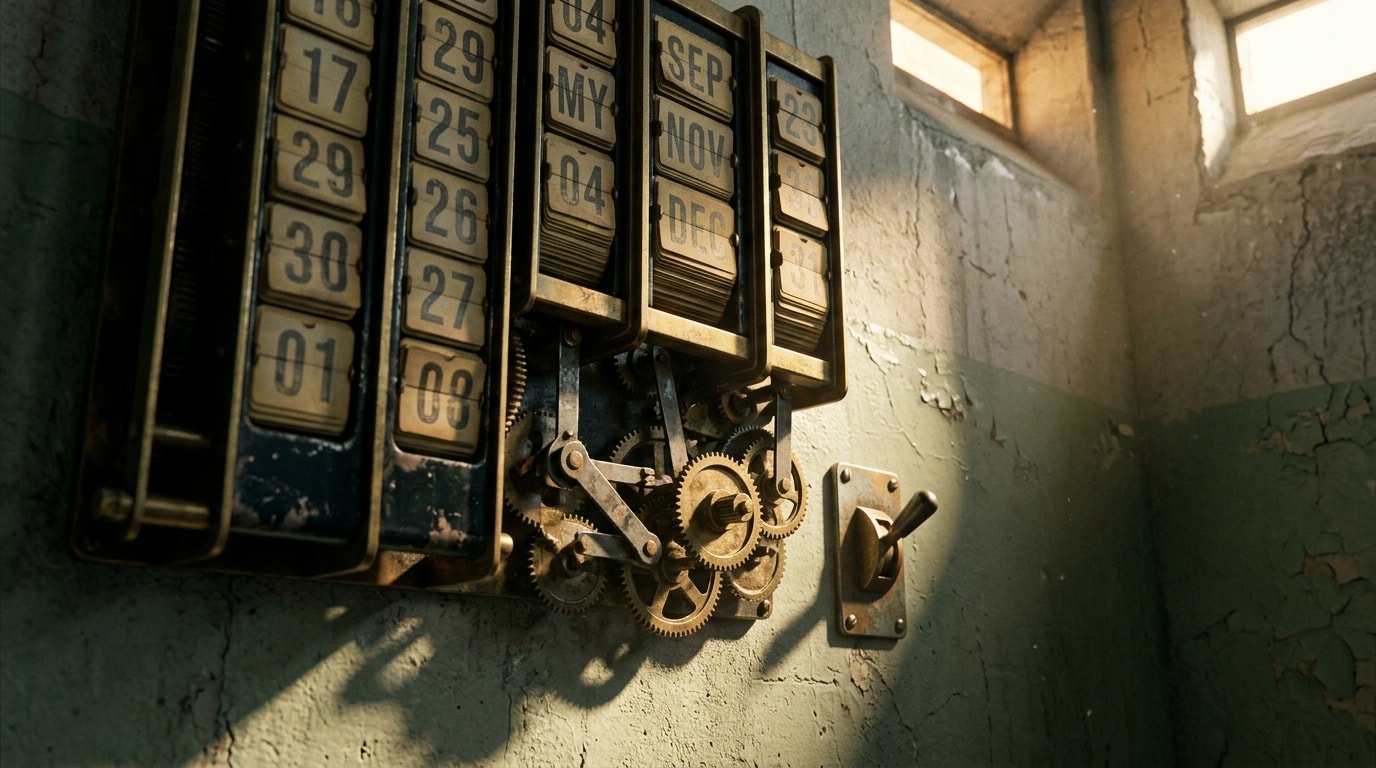
Cooper's Presence Physically Rewrote the Apocalypse
Cooper Howard is not merely a witness to the apocalypse but a causal variable inside it: his ticket purchase physically delayed the date of nuclear war by one month, according to House's own predictive system, and the show has not explained the mechanism.

Hank's Memory Wipe Is a Weapons Test
Hank's memory wipe program is not an interrogation tool or a punishment mechanism but a field-agent production system, and the salesman's survival marks the first confirmed proof that it can be applied to wasteland-native subjects.
Someone Unleashed the Deathclaws on the Strip
The deathclaws blocking access to the New Vegas Strip were deliberately driven there to seal the underground Vault-Tec management Vault from outside reach, functioning as a perimeter rather than a natural hazard.

Future Enterprise Ventures Is Vault-Tec's FEV Program
Future Enterprise Ventures is the institutional cover identity for Vault-Tec's FEV program, meaning the Vault experiments were never primarily social but biological, with selected populations serving as controlled subjects for the Forced Evolutionary Virus.