House Closed the Trap Before Cooper Reached Las Vegas
THE THEORY
Robert House ran a two-stage operation against Cooper Howard: a pre-arrival intelligence assessment that identified Cooper as a recruitable asset alienated from Vault-Tec, followed by a deliberate penthouse encounter that converted Cooper's moral restraint — his refusal to use the poison — from a potential complication into the confirming data point House needed to finalize his decision. Cooper never had meaningful agency in Las Vegas because House had already foreclosed the assassination outcome before it began, and Cooper's own ethical instincts, far from preserving his integrity, provided the behavioral signal House needed to complete the recruitment.
How This Theory Works
House had already selected Cooper Howard as an asset before Cooper set foot in Las Vegas. The penthouse disclosure makes this explicit on two counts simultaneously: House arranged the veteran's hall bathroom meeting because he was eager to meet Cooper, and he already knew Cooper had arrived with intent to kill him. Most readings treat these as separate revelations — evidence of House's reach, evidence of his intelligence network. The theory pressed here is that they are a single operational sequence. House did not encounter Cooper by chance and later learn of the assassination plot. He identified Cooper's position within the Vault-Tec apparatus, assessed his alienation from it, and initiated contact at the veteran's hall because he had already concluded that a man embedded that deep in the network, and that estranged from its purposes, was more valuable converted than neutralized. The meeting was not curiosity. It was the opening move of a completed recruitment.
Kate Williams understood the stakes correctly. Her warning to Cooper — that House obtaining cold fusion would give him everything needed to end the world as it existed — was not hyperbole but a precise characterization of the civilizational threshold the cold fusion transfer represented. She designed a lethal solution accordingly, hiding the poison vial in the LAX coin return precisely because the situation called for a response calibrated to the actual threat. Cooper did not dispute her framing of the stakes. He disputed the method. That distinction is where his agency began to erode, because the method he substituted — recover the briefcase, deny House the technology, leave no body — was built on a fundamental misread of the operational landscape he was entering.
Hank MacLean, the man Cooper identified as the courier and the pressure point of his non-lethal alternative, was not a peripheral logistics figure carrying a briefcase. He is visible at the Lucky 38 conference as an embedded Vault-Tec operative, and in the present-day timeline he is running memory-erasure experiments in a vault beneath Las Vegas — almost certainly the management vault Cooper has spent decades searching for. The gap between what Cooper believed Hank was and what Hank actually was is the size of the catastrophe Cooper spent the wasteland years living inside. His briefcase interception plan was not a viable alternative to assassination. It was a plan that misidentified its own target, and House knew it was misidentified because House understood Vault-Tec's internal architecture in ways Cooper did not.
This is where the two stages of House's operation converge. By the time Cooper stood in the penthouse, House had already closed every exit that did not end in recruitment. But House still needed one final data point: confirmation that Cooper's refusal to kill was a genuine structural feature of his psychology rather than a situational hesitation. Cooper provided it. His decision to leave the vial in the coin return and pursue the non-lethal alternative was not a private moral choice that House could not observe. It was a behavioral signal — the most informative kind, because it was made under pressure and at cost. A man who declined to poison an adversary even when presented with civilizational justification for doing so was a man whose limits were knowable and therefore manageable. House did not need to neutralize someone with knowable limits. He needed to employ him. Cooper's restraint, which Cooper experienced as the preservation of his integrity, was the final instrument of his own positioning.
The penthouse reveal confirms the architecture. House does not use his prior knowledge of the assassination plot as a threat or as leverage. He uses it as a demonstration — proof that he had operated with full information throughout and had chosen Cooper anyway. This is not the move of someone who survived a near-miss. It is the move of someone closing a loop that was never open. Cooper left Las Vegas believing he had navigated a dangerous encounter through his own judgment. What the evidence supports is that he had been standing inside a controlled environment since the veteran's hall, one House designed to produce a single outcome, and that Cooper's most consequential moral decision in that environment — the refusal at the coin return — was the mechanism by which House finalized the result he had already calculated he wanted.
Is this theory convincing?
Key Evidence
House Admits Assassination Awareness
In the Lucky 38 penthouse, Robert House directly tells Cooper that he is fully aware Cooper came to Las Vegas with the intent to kill him, confirming pre-existing intelligence about the plot.
Veteran's Hall Meeting Was Deliberate
House informs Cooper that their prior encounter in a veteran's hall bathroom was not accidental but happened because House was very eager to meet Cooper, confirming he initiated that contact.
Cooper Stunned by Prior Meeting Revelation
Cooper's visible shock upon realizing the veteran's hall bathroom encounter was deliberately arranged by House shows he had no awareness of being assessed or tracked before this moment.
House Approaches Cooper Directly at Lucky 38
At the contractors' conference, a representative of House approaches Cooper personally to escort him to the penthouse, suggesting House had been monitoring Cooper's movements inside the casino.
Cooper Declines Assassination, Keeps Options Open
Cooper refuses to use the poison vial provided by Kate Williams, believing he can recover the cold fusion diode himself, but House's revelation suggests this decision was irrelevant to his survival since House had already decided not to neutralize him.
House's Calculated Precision as Governing Pattern
House's simultaneous disclosure of the veteran's hall arrangement and the assassination knowledge in a single conversation frames his engagement with Cooper as a long-running intelligence operation rather than a reactive security measure.
Other Theories for S2E05
Lucy MacLean Has Already Replaced Her Moral Framework — She Just Cannot Name What With
Lucy has not lost her moral framework.
Lucy Is the Key Cooper Plans to Use on Hank, Not on the Deathclaws
Cooper Howard has spent two centuries systematically eliminating empty vaults until Hank MacLean — a senior Vault-Tec operative with pre-war knowledge of the management facility beneath the Strip — became his only remaining compass needle.
Cooper's Presence Physically Rewrote the Apocalypse
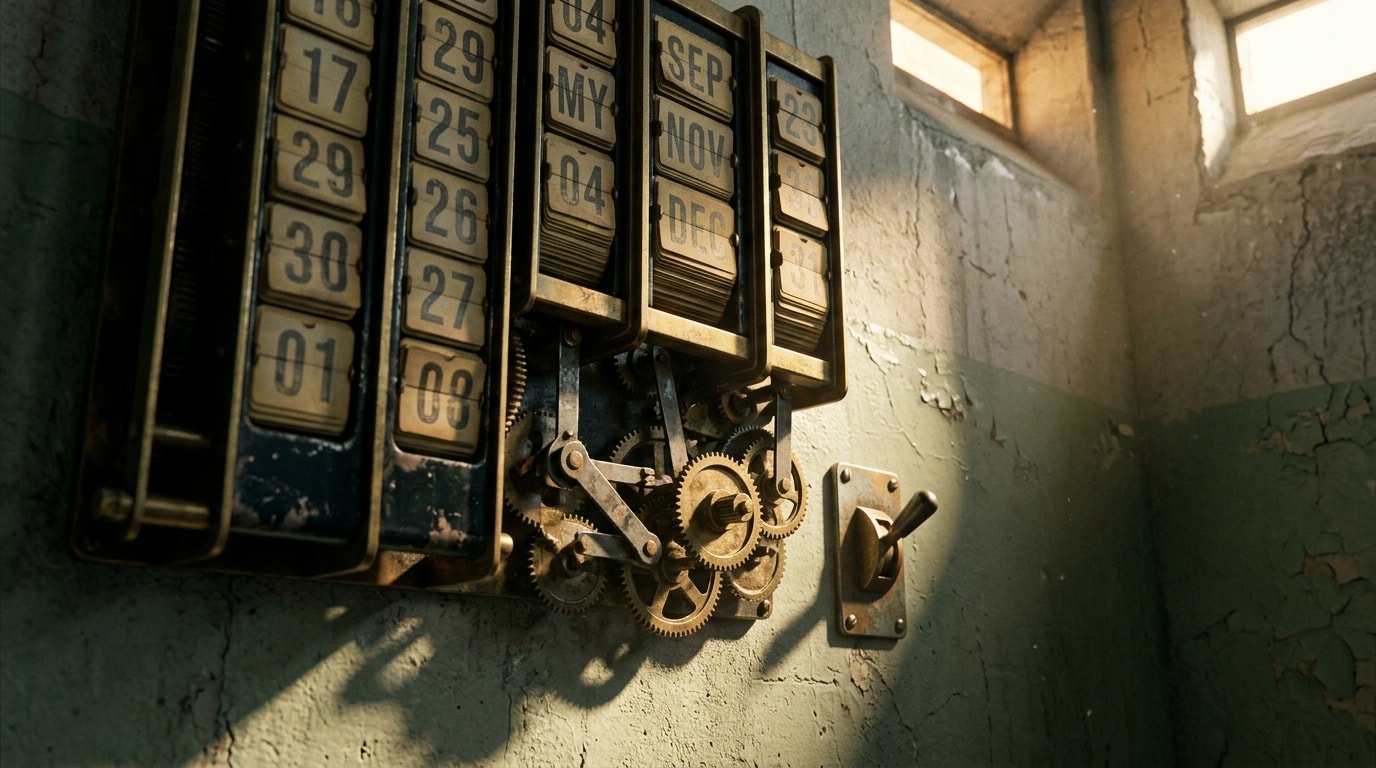
Cooper Howard is not merely a witness to the apocalypse but a causal variable inside it: his ticket purchase physically delayed the date of nuclear war by one month, according to House's own predictive system, and the show has not explained the mechanism.
Hank's Memory Wipe Is a Weapons Test
Hank's memory wipe program is not an interrogation tool or a punishment mechanism but a field-agent production system, and the salesman's survival marks the first confirmed proof that it can be applied to wasteland-native subjects.
Someone Unleashed the Deathclaws on the Strip
The deathclaws blocking access to the New Vegas Strip were deliberately driven there to seal the underground Vault-Tec management Vault from outside reach, functioning as a perimeter rather than a natural hazard.
Future Enterprise Ventures Is Vault-Tec's FEV Program
Future Enterprise Ventures is the institutional cover identity for Vault-Tec's FEV program, meaning the Vault experiments were never primarily social but biological, with selected populations serving as controlled subjects for the Forced Evolutionary Virus.