Three Young Strangers Guard Something Beyond Silo 17
THE THEORY
The three young people guarding the territory beyond Silo 17 are operating under rules they did not invent, enforcing a perimeter with lethal force before asking any questions, which means something inside that perimeter is still worth protecting. Their claim to have killed Solo is the linchpin: Solo survived years of total isolation, and the mechanism by which three ragged young people overcame him points either to prior familiarity or to an organizational capability that does not come from improvised survival. The show has planted the question of who gave them their orders without yet allowing that question to be asked.
How This Theory Works
Three coordinated young people are enforcing a territorial boundary with standing orders to kill, not responding to a specific threat. An archer shoots Juliette before she can speak. A warning follows before she can identify herself. That sequence is not panic. It is protocol.
Their physical state reinforces the duration of whatever operation they are running. Ragged clothes, scarred features, and primitive weapons describe people who have lived entirely outside silo infrastructure for years. They are not malfunctioning remnants of Silo 17's population. They are something that grew in the space between what the silos were designed to produce and what actually survived.
Their claim to have killed Solo is the sharpest piece of evidence. Solo was not careless. He outlasted a full silo collapse and years of complete isolation. If these three are responsible for his death, the show needs to explain the specific mechanism: did they catch him through prior familiarity, suggesting a longer relationship with him before the kill, or did they simply overpower someone who had already proven capable of surviving everything else? That distinction matters because familiarity implies Solo knew what they were guarding, and was killed because of it rather than despite it. The prior pattern of a hidden watcher evaluating Juliette before contact now reads differently: not curiosity, but threat assessment protecting something that cannot afford exposure.
Three people with lethal standing orders, living outside all silo infrastructure, maintaining a perimeter they will enforce before asking a single question describes an active operation, not improvised survival. Perimeters exist because something inside them has value. Whatever Juliette has reached the edge of is not a ruin. It is a place still being kept, by people who were either born into the job or assigned to it by someone who is still giving orders.
Is this theory convincing?
Key Evidence
Arrow Shot on First Contact
The first young person Juliette encounters shoots her with an arrow without any prior confrontation or warning, indicating a standing order to repel outsiders rather than a panic response.
Territorial Warning Issued
The archer issues a threat to kill Juliette unless she leaves, framing the encounter as an enforcement of territorial rules rather than self-defense.
Claim of Killing Solo
One of the young people claims responsibility for Solo's death, which would mean they overcame a survivor who had outlasted Silo 17's total collapse and years of isolation.
Primitive Weapons and Adapted Appearance
The three are described as ragged, scarred, and armed with bows and arrows, suggesting they have lived entirely outside silo infrastructure for an extended period.
Coordinated Group Rather Than Individual
Juliette finds not one attacker but three, indicating a small organized unit rather than a lone survivor, which implies structure, shared purpose, and possibly outside instruction.
Hostility Before Identification
The group attacks before learning anything about Juliette, suggesting their hostility is tied to location or prior association rather than to Juliette personally, possibly including her visible connection to Solo.
Other Theories for S2E08
Quinn Erased History to Save It
Salvador Quinn engineered his own historical vilification as the price of making his intervention irreversible, understanding that any exculpatory truth left in circulation would reconstitute the memory he was trying to destroy.
Silo 17's Teenagers Survived Without Solo Knowing
A hidden population has been reproducing and organizing inside Silo 17 for long enough to raise teenagers, which means Solo's account of decades of solitude was not ignorance but an incomplete survey of a silo that was never actually empty.

Walker's Betrayal Will Hollow the Rebellion
Walker has not been coerced into betrayal so much as she has been given permission to act on a priority she already held: Carla above the cause.
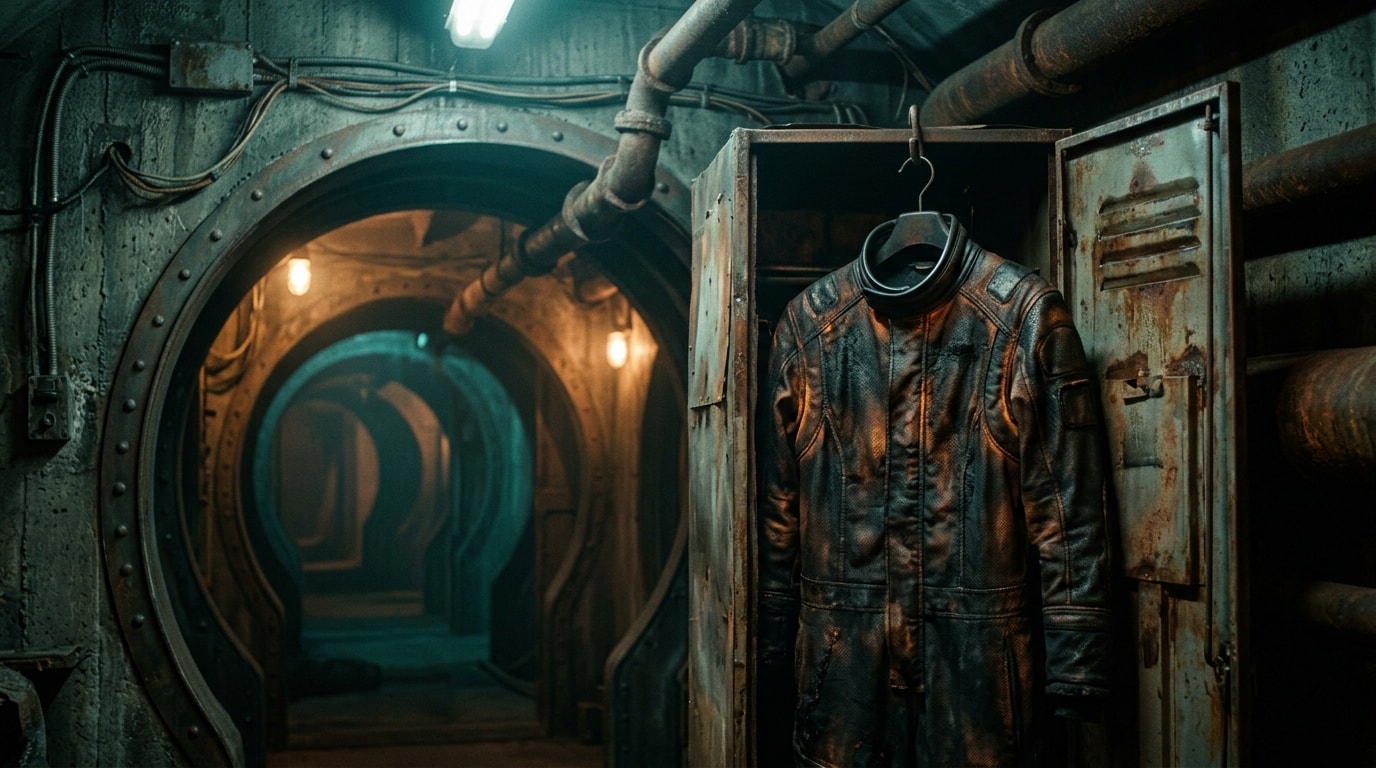
Bernard's Suit Built to Survive Fire
Bernard's walk into the incinerator may have been a premeditated escape rather than a final defeat, enabled by a specialized IT suit with heat-resistant properties unavailable to ordinary residents.