Quinn Erased History to Save It
THE THEORY
Salvador Quinn engineered his own historical vilification as the price of making his intervention irreversible, understanding that any exculpatory truth left in circulation would reconstitute the memory he was trying to destroy. Bernard holds this as operational knowledge and discloses it only in private, to a shadow archivist, because the controlled-disclosure structure Quinn built is still active. The gap between what Bernard knows and what Quinn's own descendants believe is not a wound in the system but proof the system is intact.
How This Theory Works
Quinn did not merely suppress history. He chose to become the lie that history required, which means his act was not sacrifice in the ordinary sense but something more corrosive: a deliberate self-annihilation extended forward in time to punish his own bloodline. The misunderstanding is the mechanism. If the population had understood what he did and why, the knowledge he was suppressing would have remained alive in the act of explaining its suppression. The cover had to be total, which meant Quinn's own family inherited the shame without the context.
The cipher Quinn used to communicate across that total cover is itself evidence of how precisely he understood the problem. By keying his encrypted letter to a physical object outside the silo's institutional record, a book that could only be used by someone who already held it, Quinn ensured that the exculpatory truth could travel only through channels that left no institutional trace. The cipher is not a workaround. It is the same logic as the vilification: the truth is preserved only where it cannot spread. The Wizard of Oz copy survives because it is invisible to the archive. Quinn's reputation is destroyed for the same reason the book is safe: neither can be found by the people who would weaponize them.
Bernard's relationship to this structure is not that of a historian who discovered it but of an operator who has chosen to sustain it at personal cost. The private disclosure to Lukas mirrors Quinn's original controlled-disclosure architecture exactly. Bernard is not rehabilitating Quinn. He is administering the same instrument, and the fact that he does so while trading away his political alliances confirms that access to this knowledge has become worth more to him than the authority he is losing to hold it.
Bernard tells Lukas that rebellions recurred precisely because people remembered the previous ones. The historical record was not a passive archive but the engine of the cycle. Quinn destroyed the servers, burned the books, and drugged the water because he understood that memory itself was the threat. The cipher and the controlled disclosure are the positive image of that destruction: where the erasure removes what must not circulate, the cipher preserves what must not be lost. Both moves are expressions of the same design principle.
Quinn's descendants asking to change their family name is the evidence that closes the argument. These are people with the closest possible proximity to the truth and they have none of it. They carry the social cost of his act without any exculpatory context. That is not historical drift. It is the system working exactly as Quinn designed it. The vilification had to reach the family for the erasure to be credible to everyone else. Quinn did not accept that his family would suffer this as an unfortunate consequence. He had to have understood it was a structural requirement. The shame passed to his children was not collateral damage. It was load-bearing.
Is this theory convincing?
Key Evidence
Bernard Names Quinn a Hero Privately
Bernard tells Lukas directly that Quinn was a hero, not a failure, and that he severed the Silo from its history to stop rebellions that recurred every twenty years because people remembered the previous ones.
Descendants Curse Quinn's Name
Quinn's own family views him with contempt, with a family member calling him a bastard, and they are actively trying to change their surname to escape the association.
Official History Inverts the Truth
The Silo's taught version of events holds that Quinn let rebels erase the servers and burn the books, casting him as weak or complicit, when Bernard confirms the opposite was true.
Water Drugged to Manufacture Forgetting
Quinn did not merely destroy physical records but chemically suppressed the population's memory, indicating the intervention was designed to be irreversible and self-concealing.
Twenty-Year Rebellion Cycle as Root Cause
Bernard explains that rebellions recurred on a roughly twenty-year cycle because citizens retained historical knowledge of previous uprisings, meaning the record itself was the mechanism of instability.
Lukas as Sole Recipient of Corrected History
Bernard delivers the true account of Quinn exclusively to Lukas in his shadow archivist role, mirroring the original controlled-disclosure structure Quinn himself used.
Other Theories for S2E08
Silo 17's Teenagers Survived Without Solo Knowing
A hidden population has been reproducing and organizing inside Silo 17 for long enough to raise teenagers, which means Solo's account of decades of solitude was not ignorance but an incomplete survey of a silo that was never actually empty.
Walker's Betrayal Will Hollow the Rebellion
Walker has not been coerced into betrayal so much as she has been given permission to act on a priority she already held: Carla above the cause.
Three Young Strangers Guard Something Beyond Silo 17
The three young people guarding the territory beyond Silo 17 are operating under rules they did not invent, enforcing a perimeter with lethal force before asking any questions, which means something inside that perimeter is still worth protecting.
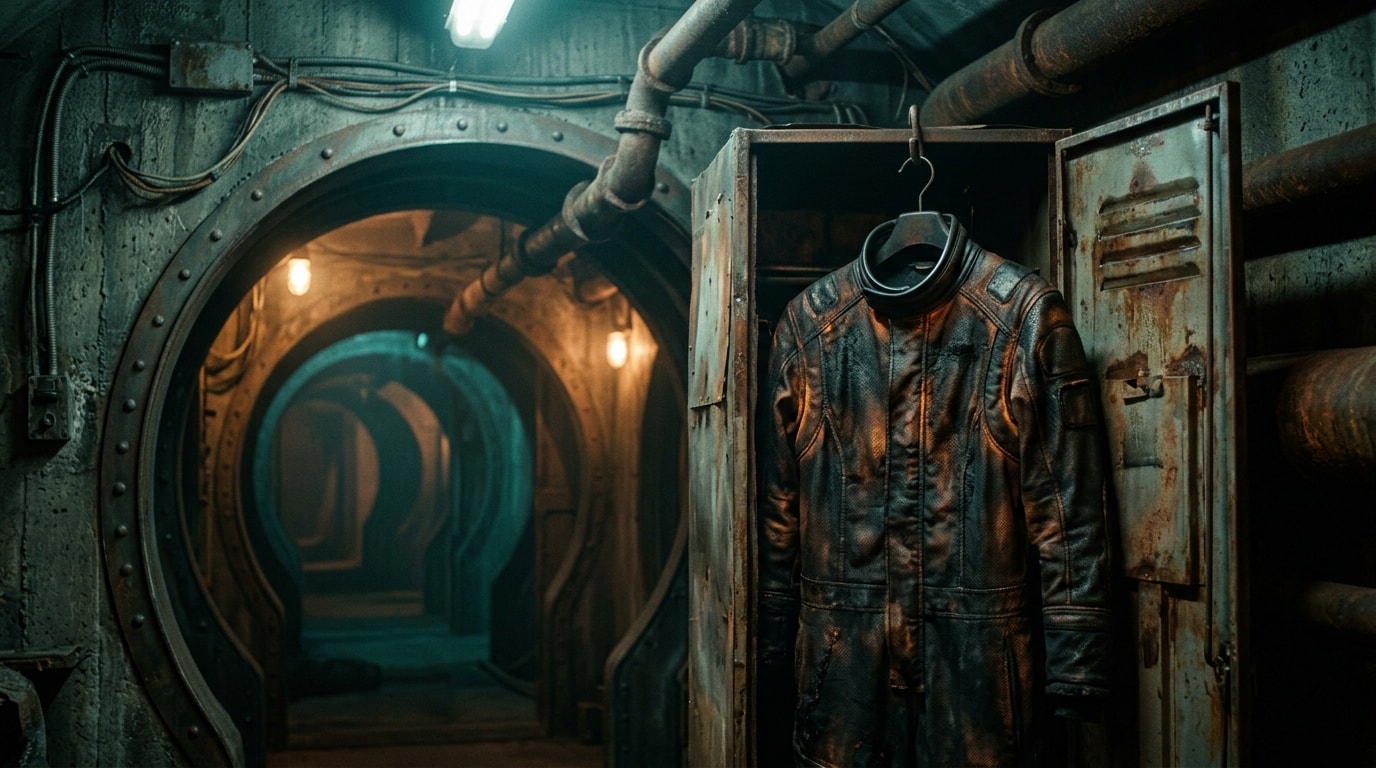
Bernard's Suit Built to Survive Fire
Bernard's walk into the incinerator may have been a premeditated escape rather than a final defeat, enabled by a specialized IT suit with heat-resistant properties unavailable to ordinary residents.