
Bernard's Blockade Is the Order Executing Itself
THE THEORY
The food blockade strangling Mechanical is not Bernard improvising under pressure but the Order's institutional protocol running exactly as written — a premeditated sequence with a calculated timer, no branch for truth, and no off switch. Bernard is not abusing the system. He is the system, and the system was never designed to protect everyone inside the silo.
How This Theory Works
The clearest evidence that Bernard is executing a prewritten protocol rather than responding to a crisis is the phrase 'ran all the calculations.' That is not the language of crisis management. It is the language of someone who sat with a plan before the conflict began and is now watching it proceed on schedule. His stated satisfaction that vegetables reaching the lower levels accelerates his timeline confirms the deprivation was never a defensive measure. It was a timer, and Bernard set it deliberately. The Order does not instruct him to negotiate, to surface truth, or to find a resolution both sides can accept. It instructs him to divide the population, assign blame to Mechanical, and escalate. These are not emergency adaptations. They are the protocol. Which means the institution designed to preserve the silo is also the mechanism producing its destruction — automatically, without malice, exactly as written.
The nine-missed-meals threshold is where premeditation becomes undeniable. Bernard does not stumble onto food scarcity as a lever. He already understands, with precision, that nine missed meals is the distance between a functioning society and a riot. By controlling the supply blockade, he controls the caloric clock — when the lower levels break, how they break, and crucially, what that breaking can be classified as afterward. A riot he engineered is a riot he can present as proof that the lower levels are ungovernable. The suppression that follows is not a restoration of order. It is the order he intended to install from the beginning. Knox and Shirley arming up, pushing the barricade ten floors, and seizing the farm on level 122 is not an unintended consequence of the blockade. It is the blockade's designed output, the manufactured evidence Bernard needs to justify the escalation the Order has already authorized.
The radio shutdown operates on identical logic in a different register. When Billings requests a formal investigation into Meadows's death, Bernard does not redirect him, delay him, or co-opt him. He cuts the channel. The Order contains no procedure for institutional accountability and no branch for truth surfacing. It contains only procedures for preventing those things. The blockade and the radio silence are the same move: Bernard has pre-identified every chokepoint in the silo's infrastructure — supply, communication, oversight — and is closing each one in sequence as it becomes a threat to his control of the narrative. This is not improvisation under pressure. This is a man who arrived at the crisis with a map of every valve and is turning them in order.
Bernard's access to the full Order and his knowledge of the wider silo system is what converts his authoritarianism into something more disturbing than personal corruption. He is not a man making choices in the dark. He is a man executing a logic that was sealed before he arrived, and that knowledge functions as obligation rather than power. When Camille deflects his questions about her protection of Knox and Shirley, it reveals that even his internal security structure is drifting out of alignment — but Bernard cannot adapt to that either. His decision-making functions only when events conform to the protocol's expected parameters. When Billings breaks from expected compliance, Bernard cannot negotiate; he eliminates the variable. The system is not losing coherence because Bernard is failing. It is losing coherence because perfect adherence to the protocol has already eliminated every adaptive mechanism the silo possesses.
The deepest implication points past Bernard entirely. A protocol this detailed — targeting food, communication, and institutional accountability simultaneously, with a prebuilt timeline and a prebuilt classification for the disorder it manufactures — does not emerge from one administrator's contingency thinking. It was embedded in the Order's architecture before Bernard read it. Whoever designed that architecture either failed to see that a starvation blockade against an armed workforce would produce an armed advance, or they designed it in. The silo is not being destroyed by a man who lost control of a situation. It is being consumed by a system that was always designed to be turned against the population it claims to sustain — and no one inside it has the vocabulary to name that, because the system is what defines which actions are even available to them.
Is this theory convincing?
Key Evidence
Supply Blockade Triggers Armed Advance
Bernard's decision to block supplies to the lower levels directly precedes Knox and Shirley's armed assault on the barricade and seizure of the farm on level 122, confirming the blockade as the proximate trigger for escalation.
Order's Instruction to Divide and Blame
The Order explicitly tells Bernard he cannot give the opposing side the truth they are asking for, and frames preparation for conflict as requiring escalation, blame directed at Mechanical, and population division.
Radio Shutdown Silences Investigation
When Billings requests a formal investigation into Meadows's death via radio, Bernard immediately shuts down communication rather than engaging, eliminating the institutional channel for accountability.
Bernard's Knowledge Justifies Authoritarianism
Bernard's access to the full text of The Order and his awareness of the wider silo system frames his authoritarian decisions not as personal choices but as obligations derived from information no one else in the silo possesses.
Rigidity When Events Deviate From Script
Bernard's behavior throughout the episode reflects a decision-making pattern that functions only when events conform to expected parameters; when Billings breaks from expected compliance, Bernard cannot adapt and instead eliminates the variable.
Camille Deflection Reveals Institutional Fracture
Bernard questions Camille about her decision to protect Knox and Shirley, and her deflection signals that even his internal security structure is no longer fully aligned with his directives.
Other Theories for S2E06

Billings Chooses Law Over Bernard's Order
Billings's demand for a formal investigation into Meadows's death is not a good-faith procedural request.

Bernard's Blockade Destroyed Itself: How Coercive Pressure Handed the Down Deep Its Own Food Supply
Bernard's supply blockade has not merely failed — it generated the conditions for its own failure.
Billings' Herbs Were Making Him Sick
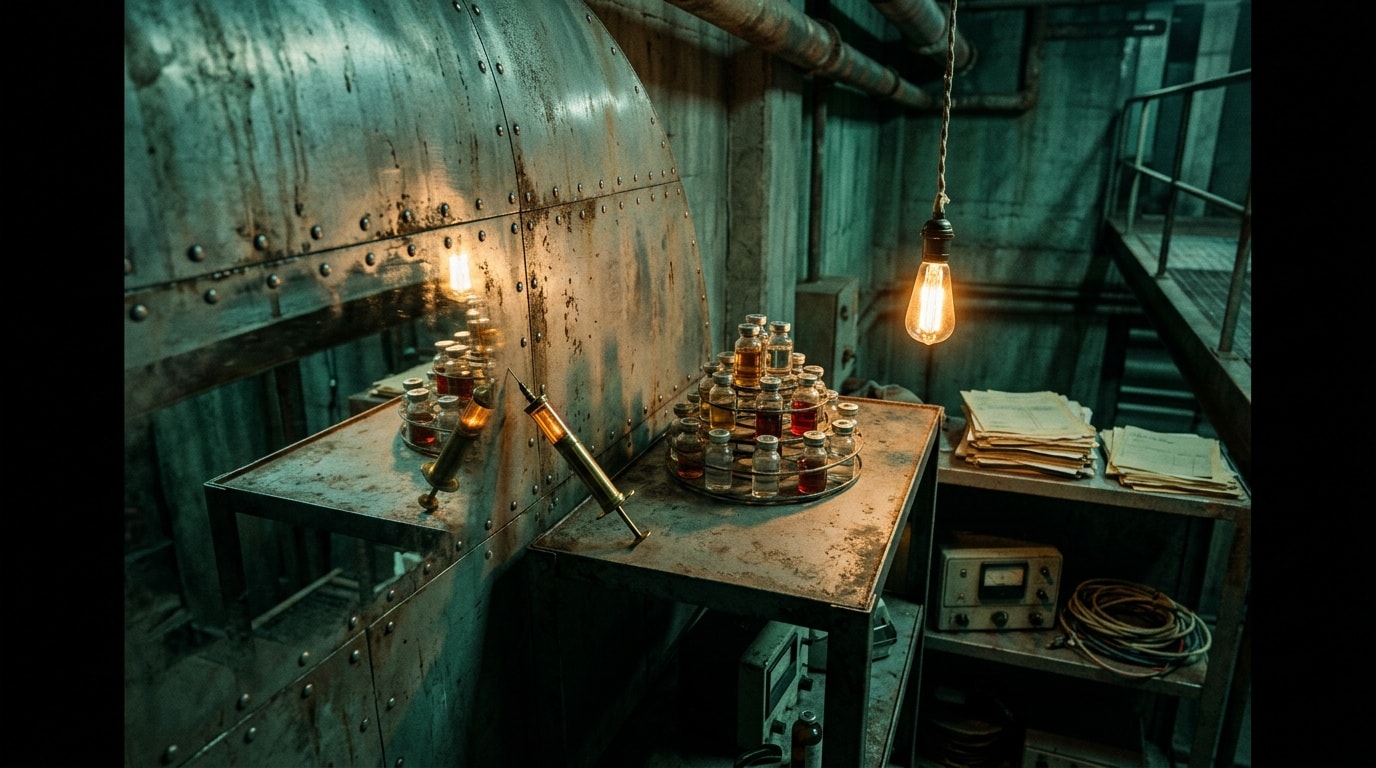
The herbs Billings takes for his Syndrome are likely causing his tremors, not suppressing them, meaning the silo's medical establishment has been administering a control mechanism disguised as treatment.

Quinn's Cipher Selects Its Own Heir, and Bernard Has Already Handed Over the Key
Bernard's offer to make Lukas his shadow is not mentorship but a coerced concession: the cipher in Quinn's letter exceeds Bernard's own capabilities, and Legacy access is the only bribe that keeps Lukas cooperative without a formal breach of protocol.

Knox Locked Down the Armory First
Knox's two-part directive to his metal shop contact was not a precaution.

Camille Is Using Protocol as a Weapon
Camille's deflection of Bernard using Judicial protocol was a prepared move, not improvised self-preservation, and preparation implies she coordinated with Robert Sims before the interrogation rather than after it.
Bernard Chains Lukas With the Legacy
Bernard's decision to make Lukas his shadow is a mechanism of capture, not a reward: the cipher in Quinn's letter did not convince Bernard that Lukas could help him, it convinced Bernard that Lukas was already dangerous enough to require containing.

Sims Never Planned to Pay Patrick
Sims recruited Patrick Kennedy with a payment he never intended to deliver, using an unverifiable promise of a memory-erasure drug as leverage against a man he designed to be ignorant of his own exposure.