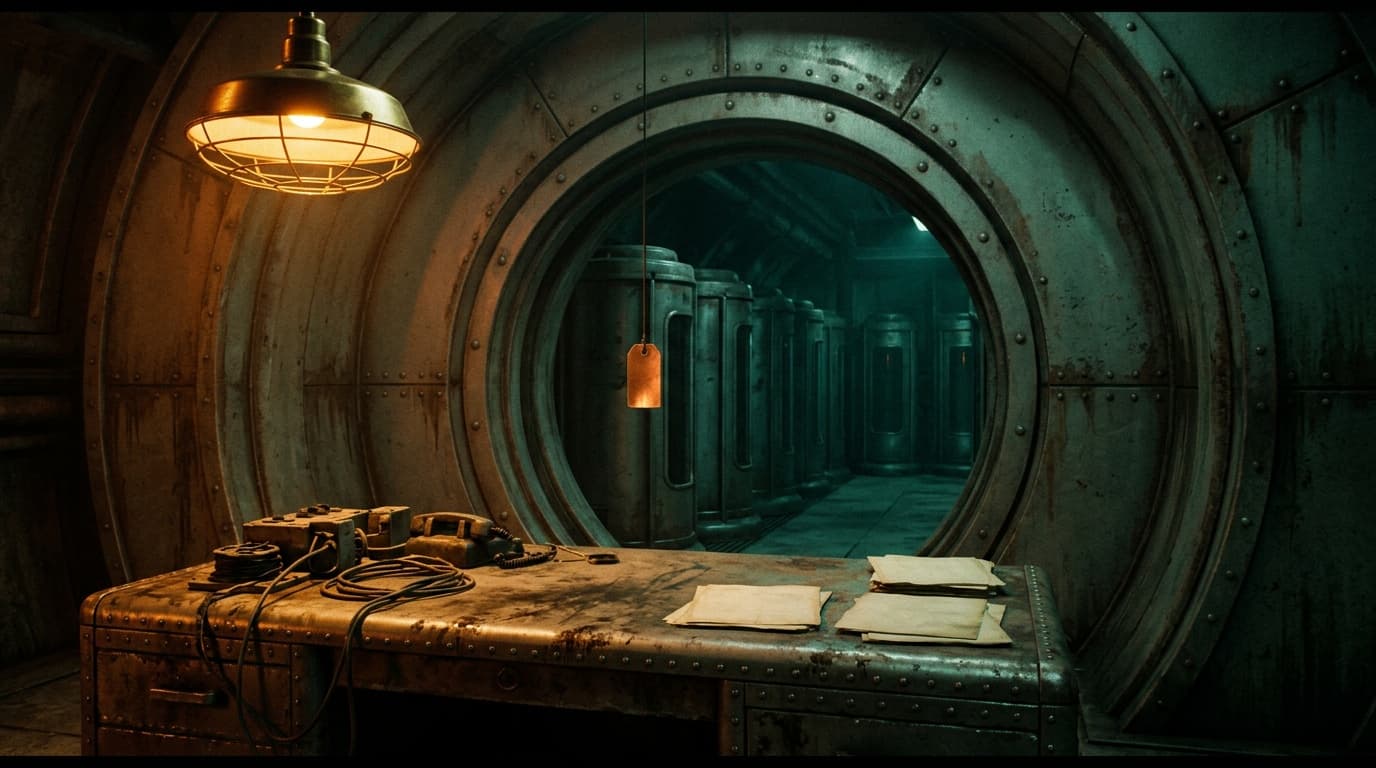
Judicial Erases Its Own Crime Scene
Back to Theory

Judicial Erases Its Own Crime Scene

71%

Plausibility Score

(?)

Convinced

(?)

#340

of 705 theories

Theory Ranking

(?)
Ad

READER VERDICT

Is this theory convincing?

Trend builds after 10 votes.

Be among the first to weigh in.

Ad

THEORY ASSESSMENT

The episode ground truth directly confirms both key facts the theory rests on, but the theory's 'systematic cover-up' framing requires inferring intent that the episode leaves ambiguous, preventing a higher score.

Episode Narrative Fit(?)
78 / 100
Evidence(?)
Mix of pattern and dialogue evidence

STORY CONTEXT

IT vs. Judicial vs. the Mayor: but who's really pulling the strings? This thread traces the shadow hierarchy that seems to operate above and beyond the Pact.

WHY THIS MATTERS

The body disappearances show that Judicial's power operates not just through sentencing and enforcement but through the control of physical evidence itself, making accountability structurally impossible. This connects directly to Knox's argument that Mechanical has been historically framed for rebellions it did not cause, suggesting the cover-up mechanism is generational rather than improvised.

Ad

Other Theories for S2E04

77%

Solo Steps Outside His Walls

Solo is not recovering through connection with Juliette; he is being broken open by the first person to offer him recognition after decades of isolation, and his capacity to survive that contact is not established.

66%

Solo's Eye Hides a Rebellion Secret

Solo's heterochromia records a decision he made during the Silo 17 rebellion rather than an injury passively received, and his inability to speak about it after decades of solitude follows the pattern of guilt rather than grief.

63%

Meadows Reduces Lukas's Sentence Strategically

Meadows reduces Lukas's sentence as an act of institutional management, not mercy or defiance: she transfers forbidden knowledge to a man whose death in the mines guarantees it goes nowhere, performing leniency that costs the system nothing.

51%

Solo's Numbers Track Time in the Vault

Solo entered the vault knowing, not hoping, that someone would arrive within a specific window, and the chalkboard sequence is the record he kept to measure that window's close.

67%

Quinn's Letter Broke Meadows From Within

Meadows had privately withdrawn from belief in the silo's legitimacy before Bernard poisoned her, and her choice to disclose the letter to him was not a slip but an act of quiet defection.

50%

Where Did Meadows Go for Four Days?

Meadows used her four missing days to investigate something about the silo's machinery that made the Shadow role untenable, then spent twenty-five years managing that secret at close range rather than disclosing it.

43%

Russell's Gift: A Title Without Substance

Russell almost certainly gave Solo the Shadow title as a psychological management strategy, not as institutional recognition, because keeping Solo functional inside a sealed vault with no exit required giving him a story about himself that made the isolation bearable.