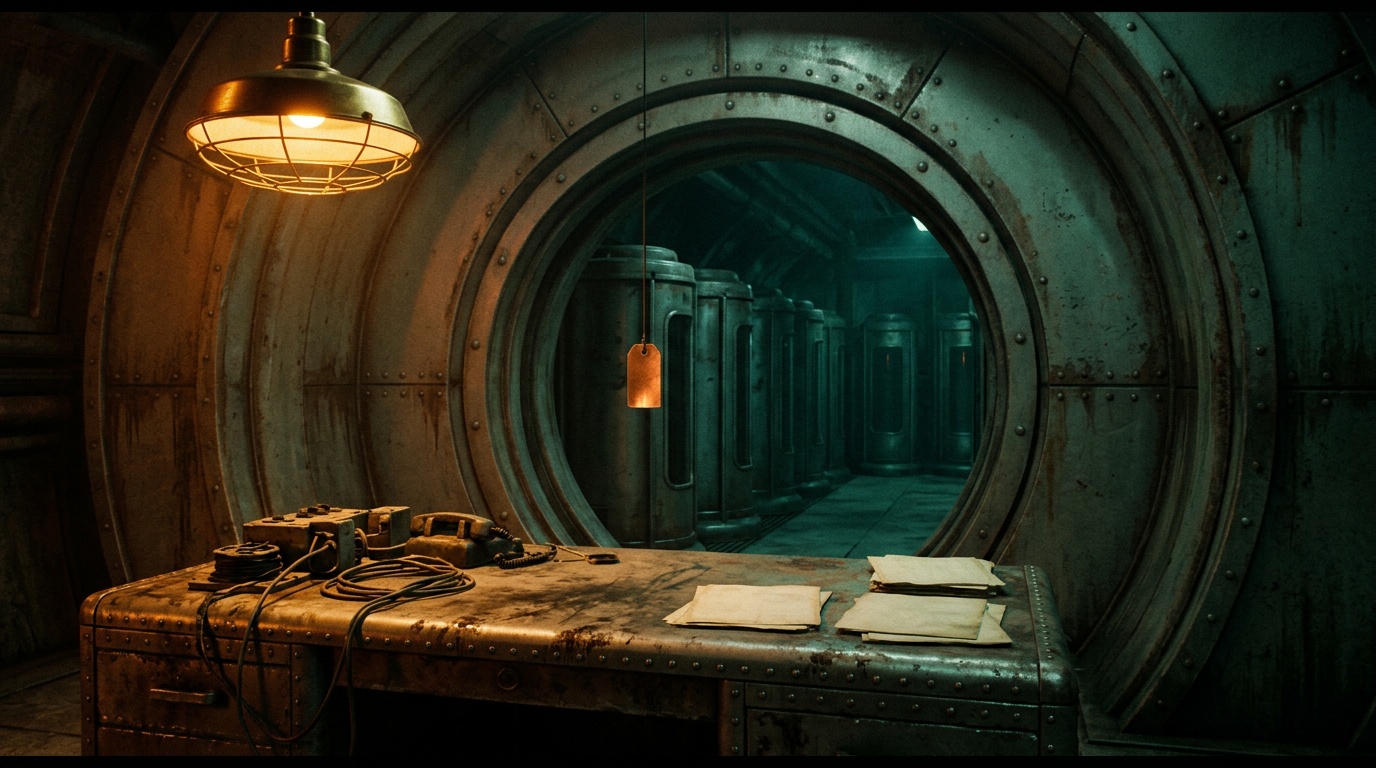
Judicial Erases Its Own Crime Scene
THE THEORY
Judicial operates a two-track evidence removal system that converts institutional authority into the sole author of the official riot record, using formal procedure to claim Cooper's body and informal erasure to eliminate the instigator's. This is not a cover-up of a single incident but the operating logic of a system that maintains class control by ensuring physical evidence of rebellion never survives long enough to contest the attribution of blame. Judicial does not police violence and then record it; it polices the record itself, which means every historical account of Mechanical rebellion has been produced by the same institution with the most to gain from Mechanical guilt.
How This Theory Works
Judicial does not investigate riots. It authors their official record before any independent examination is possible, and the empty morgue Billings finds is the mechanism of that authorship made visible. Cooper's corpse is formally claimed with no justification offered beyond a look that communicates institutional authority as its own complete answer. The instigator's body leaves no paperwork, no claim, no trace inside the system's own procedures. The institution does not need to hide both bodies the same way. It only needs them both gone.
The two-track removal is not a coincidence of logistics. One disappearance carries procedural cover; the other carries none. That distinction is structural. Judicial is demonstrating that it can operate inside its own rules when useful and outside them when necessary, and that no external body has standing to demand an accounting either way. The look Billings receives in place of an explanation is not rudeness. It is a statement about jurisdictional reality: there is no mechanism by which he could compel an answer, and Judicial knows this before he asks.
The timing closes the argument. Judicial moves on Cooper's body the same morning Billings goes to examine it. The institution is not reacting to an investigation. It is preempting one. That requires either surveillance of Billings's movements or active monitoring of the morgue itself, which means Judicial is not passively holding power but deploying it against internal scrutiny in real time. In a silo where Knox has already argued that Mechanical has been historically blamed for rebellions it did not start, this is the precise mechanism behind that pattern: physical evidence of what actually happened is removed before attribution can be contested, and the version of events that serves Judicial becomes the only version available for documentation or dispute. The scapegoating does not require fabrication. It requires only that the truth become unexaminable.
The uncomfortable implication that the theory approaches but stops short of stating is this: if Judicial can preempt scrutiny in real time, the historical record of every prior rebellion is not a record at all. It is a series of managed erasures. Which means the system was never designed to produce justice following internal violence. It was designed to produce a particular story about who causes violence, repeat that story across generations without physical evidence to contest it, and thereby ensure that the class most likely to rebel is also the class most permanently associated with having always deserved suppression. The empty morgue is not an anomaly. It is the institution performing its primary function.
Is this theory convincing?
Key Evidence
Cooper's Body Claimed by Judicial
Billings investigates and is told that Judicial hauled Cooper's body up that morning; when he asks for a reason, he receives no explanation beyond an implicit institutional authority.
Instigator's Body Simply Gone
The body of the riot instigator has disappeared entirely from the morgue, with no official claim or paperwork attached, suggesting removal outside even Judicial's formal procedures.
Two Bodies, Two Removal Methods
Cooper's body is formally claimed by Judicial while the instigator's body vanishes without acknowledgment, a two-track pattern that implies coordinated rather than incidental evidence removal.
Billings Finds Empty Morgue
Billings arrives expecting to examine the bodies connected to the Mechanical riot and finds both gone, with no documentation or explanation offered by the institution responsible.
Judicial's Unexplained Authority
When Billings presses for a reason that Judicial took Cooper's body, the response is purely a look conveying institutional power rather than any legal or procedural justification.
Evidence Removal Precedes Investigation
Judicial moves Cooper's body the same morning Billings goes to examine it, suggesting the institution is actively tracking and preempting independent scrutiny of the riot's aftermath.
Instigator's Fate Left Unconfirmed
Because the instigator's body cannot be located or formally accounted for, questions arise about whether the individual is actually dead or has been removed alive, deepening the opacity of Judicial's actions.