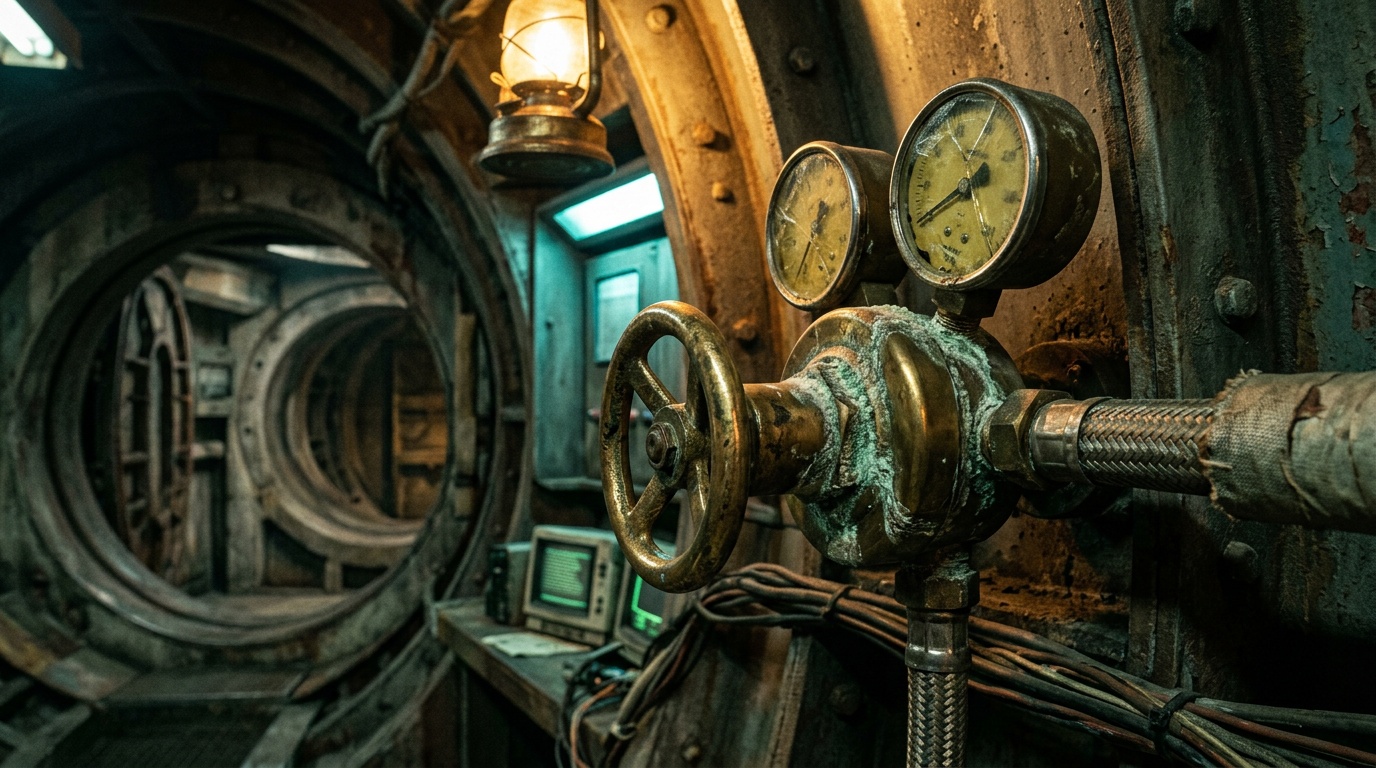
The Suits Kill, Not the Sky
THE THEORY
The suits, not the atmosphere, are the instrument of death for Cleaners sent outside the Silo. The predictability of Cleaner deaths, confirmed by residents willing to wager on exact timing, points to a controlled delivery mechanism rather than a variable natural environment, and birds surviving in the same air eliminates the atmosphere as the selective killing agent. If the timing is engineered, the authorities are not sending people into a hostile world but executing them with the sustained appearance of one, and the open question is whether anyone currently running the Silo still knows that is what they are doing.
How This Theory Works
The death mechanism is not the sky. The Silo's official story requires the outside atmosphere to be universally lethal, but birds are visibly alive and flying in it. Selective lethality is not a property of a toxic environment. It is a property of a delivery system.
The timing evidence presses this further. Residents place bets on how long Cleaners last, which means the duration of survival is consistent enough to be predicted. A natural environment does not produce clockwork deaths. Variable wind, variable exertion, variable lung capacity would scatter the outcomes. A controlled agent in the air supply would not. The calm, euphoric affect Cleaners display before collapsing is consistent with nitrogen asphyxiation or sedation, not with the distress expected from atmospheric poisoning. The suits' air tanks appear too small to sustain the time spent outside, which raises the question the show never answers directly: what exactly is in them.
A secondary strand of the theory does not require deliberate poisoning. Over 140 years of sealed living, human physiology may have drifted far enough from baseline that unfiltered outside air is now incompatible with Silo-adapted bodies. On this reading, the suits need not contain poison. But this strand has a specific unresolved problem: if the mechanism is biological drift, then the timing of deaths should correlate with individual physiology and vary person to person. It does not. The bets land. That predictability is harder to explain through adaptation than through a consistent chemical agent. The two strands cannot both be true simultaneously, and the show has not resolved which one is.
What the evidence forces is a question the show declines to answer: does the air tank deliver a lethal dose on a timer, or does it deliver outside air to lungs that have been physiologically conditioned over generations to require something else? The mechanism matters because it determines culpability. A timer means someone programmed it. Biological drift could mean the authorities are administering a sentence they no longer fully understand, performing an execution through institutional habit rather than live malice. That second possibility is the more disturbing one. It means the killing could continue long after anyone inside remembers why it started, the suits passing down their function through generations of technicians who service them without asking what the tanks contain, each Cleaner dying on schedule for a reason that has become purely procedural.
Is this theory convincing?
Key Evidence
Birds Flying in Open Air
As Holston stands outside, birds are visibly flying in the sky above a green and lush landscape, suggesting the atmosphere supports animal life and is not simply toxic to all biology.
Holston Removes His Helmet
Holston removes his helmet while still outside and dies within moments, but viewers cannot determine from this action alone whether the cause is the external atmosphere or something already introduced through the suit's air supply.
Predictable Cleaner Death Timing
Silo residents place bets on exactly how long a Cleaner will survive outside, implying the duration of survival is consistent enough to be wagered on, which suggests a controlled mechanism rather than a variable natural environment.
Euphoric Calm Before Death
Cleaners display a calm, almost euphoric demeanor before dying outside, which some read as consistent with nitrogen asphyxiation or a sedative agent rather than straightforward atmospheric toxicity.
Tiny Air Tank Volume
The cleaning suit's air tanks appear small relative to the time Cleaners spend outside, raising questions about whether the tanks contain breathable air, a sedative gas, or simply too little oxygen to sustain life.
Generational Biological Adaptation
The theory suggests that over 140 years of living in the Silo's artificial atmosphere, human bodies may have adapted in ways that make unfiltered outside air physiologically incompatible, meaning the killing agent is not deliberate but the result of long isolation.
Other Theories for S1E02

George Wilkins Knew Too Much to Live
George Wilkins was murdered to prevent him from disclosing what he found in the Silo's forbidden tunnels, and Allison Becker's handwriting on documents inside his hidden camp proves she was an active participant in the same investigation before her own death.
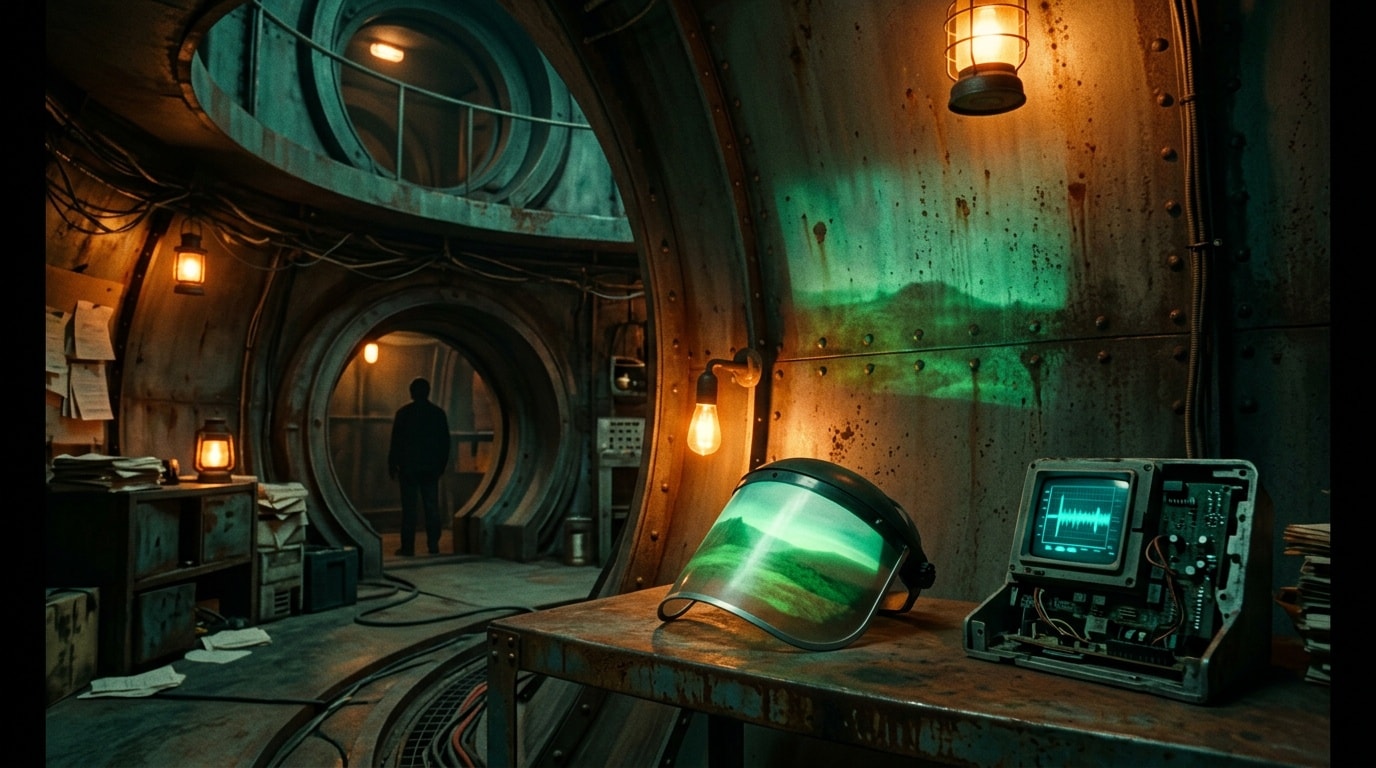
The Cleaning Runs Two Feeds: One for the Exile, One for the Silo
The cleaning ritual operates a dual-channel deception: the visor inside each suit projects a preloaded lush landscape to engineer the exile's compliance and labor extraction in their final moments, while the external camera feed transmits fabricated desolation to the silo population to manufacture consent to captivity among those who remain.
Jahns's Order Restarted the Sequence She Was Trying to Identify
By sending Holston to clean, Mayor Jahns did not merely repeat a historically dangerous precedent — she triggered the same institutional collapse sequence that produced the previous Rebellion, one she was actively researching before it was too late.
The Silo's Authorities Control What People See
The Silo's false feed of the outside world is not a passive inheritance but an actively maintained and institutionally refined deception, with each generation of leadership briefed rather than deceived.
Holston's Signal Was His Cleaning
Holston's Cleaning was a calculated communication modeled on what he realized Allison's cleaning had already been: a structured message delivered through the only channel Judicial could not suppress.