Jahns's Order Restarted the Sequence She Was Trying to Identify
THE THEORY
By sending Holston to clean, Mayor Jahns did not merely repeat a historically dangerous precedent — she triggered the same institutional collapse sequence that produced the previous Rebellion, one she was actively researching before it was too late. The simultaneous multi-level arming now visible across the Silo is not a warning sign of approaching breakdown but the early structure of cross-level solidarity, which Judicial and Knox are each working to suppress not by resolving the underlying grievance but by preventing the Silo's separated fragments from recognizing what they share.
How This Theory Works
Jahns is not conducting general historical research. She is searching the records for any prior instance of a Mayor ordering a Sheriff to clean — that specific action, not the Rebellion in the abstract. The precision reveals what she suspects: that the prior collapse did not begin with ideology or organized agitation but with a single executive decision identical to the one she just made. Marnes reads her fear aloud, and the show does not contradict him. Whatever Jahns found in those records was specific enough to send her back looking for it the moment Holston walked outside. She already believes she knows the mechanism. The question the theory presses is whether she is right.
The structural logic behind that fear is what makes this more than circumstantial pattern-matching. A Sheriff is not an ordinary citizen facing a sentence. The Sheriff is the person who enforces every sentence — the human proof that the system's rules apply to others and that compliance earns standing. Sending that person out to clean does not merely punish one individual. It communicates, in terms no decree can walk back, that no role confers protection. In a sealed system where there is nowhere to go and no external authority to appeal to, that message does not stay contained to the level that witnessed it. It travels, because every resident at every level is now asking the same question: if the Sheriff can be sent out, what exactly am I protected by?
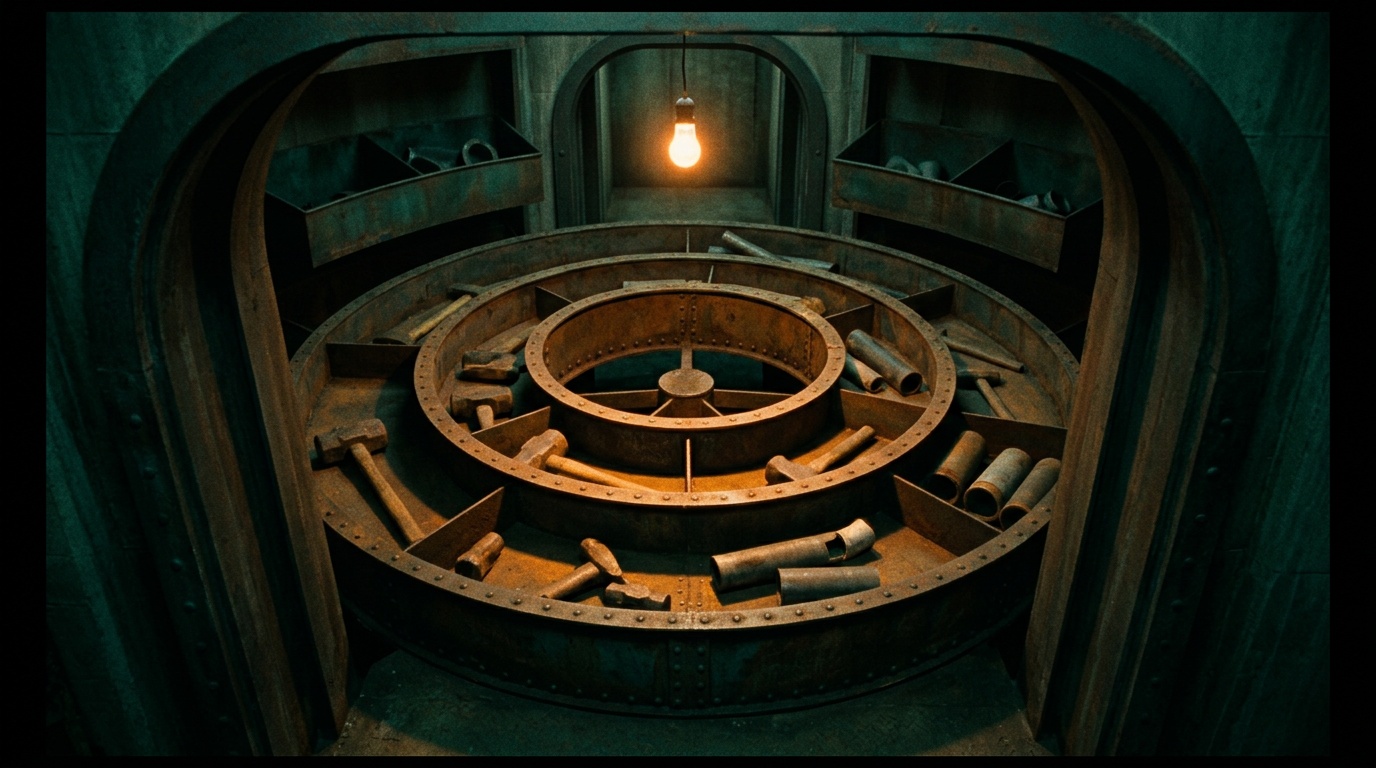
The answer the Silo's population is already giving is visible in Sandy's report to Marnes: people are lining up at recycling stations across the entire Silo requesting hammers, pipes, sledgehammers — anything that can be held and swung. The geography is the evidence. This is not concentrated unrest in the Deep Down, not a single block of accumulated grievance finding release. It is the same conclusion being drawn simultaneously at every level, which is what cross-level solidarity looks like before it has named itself. Populations do not require coordination to arm in parallel. They require only the shared belief that no one institutional actor is coming to protect them — and the Sheriff's cleaning made that belief rational.
Judicial's response exposes precisely where institutional authority has already broken down. When a sledgehammer dispute at a recycling station threatens to turn violent, Sims does not mediate the dispute or address what is driving it. He records names. That is not crowd control. That is surveillance conducted by an institution that has already concluded the situation may exceed its management capacity and needs to be able to identify participants later. Judicial is not ahead of the unrest. It is improvising documentation of it, which means the Silo's legal and enforcement apparatus is no longer directing events — it is watching and cataloguing, the bureaucratic behavior of power that cannot yet suppress something but intends to punish it eventually. The name-list is the tell.
Knox's intervention in the Deep Down cafeteria appears at first to run against this reading, but it confirms it. Knox redirects his workers' anger upward and outward — framing the Silo's problems as belonging to Up Top and the Mids, insisting the fight is someone else's. That misdirection only becomes necessary if the alternative is real: if left unredirected, Deep Down workers and Mids residents and Up Top residents would recognize that their grievance is the same grievance, and that the people who share it vastly outnumber the people who benefit from their separation. Knox is not neutral. He is performing a containment function that complements Judicial's surveillance lists, and the fact that both are operating simultaneously is the confirmation that cross-level solidarity is exactly what the suppression apparatus exists to prevent. The Silo's one functional defense against rebellion is not the resolution of grievance. It is the maintenance of separation between populations that already share one.
Is this theory convincing?
Key Evidence
Silo-Wide Recycling Station Weapon Requests
Sandy reports to Deputy Marnes that people are lining up at recycling stations across the entire Silo requesting hammers, pipes, and anything usable as a weapon, indicating the response is coordinated across multiple levels.
Sledgehammer Dispute Requiring Judicial Intervention
At a recycling station, an argument over a sledgehammer threatens to turn violent and is only suppressed when Robert Sims of Judicial arrives and records the names of the two men involved.
Jahns Fearing Rebellion Precedent
Mayor Jahns searches Silo records for any prior case of a Mayor sending a Sheriff to Clean, and Marnes concludes she fears the previous Rebellion may have been triggered by exactly this kind of action.
Deep Down Cafeteria Erupts After Cleaning
Juliette storms out of the Deep Down cafeteria calling Holston a liar, and fights break out among the workers watching the Cleaning, requiring Knox and Deputy Hank to intervene.
Knox Redirecting Worker Anger Downward
Knox calms the Deep Down workers by insisting the problems belong to Up Top and the Mids, not to them, framing this as a deliberate attempt to contain the unrest before it spreads into organized resistance.
Judicial Presence as Early Suppression Signal
Sims recording names at the recycling station dispute suggests Judicial is already monitoring and suppressing the unrest, implying the institution views the weapon-gathering as a serious threat to order.
Other Theories for S1E02

George Wilkins Knew Too Much to Live
George Wilkins was murdered to prevent him from disclosing what he found in the Silo's forbidden tunnels, and Allison Becker's handwriting on documents inside his hidden camp proves she was an active participant in the same investigation before her own death.
The Cleaning Runs Two Feeds: One for the Exile, One for the Silo
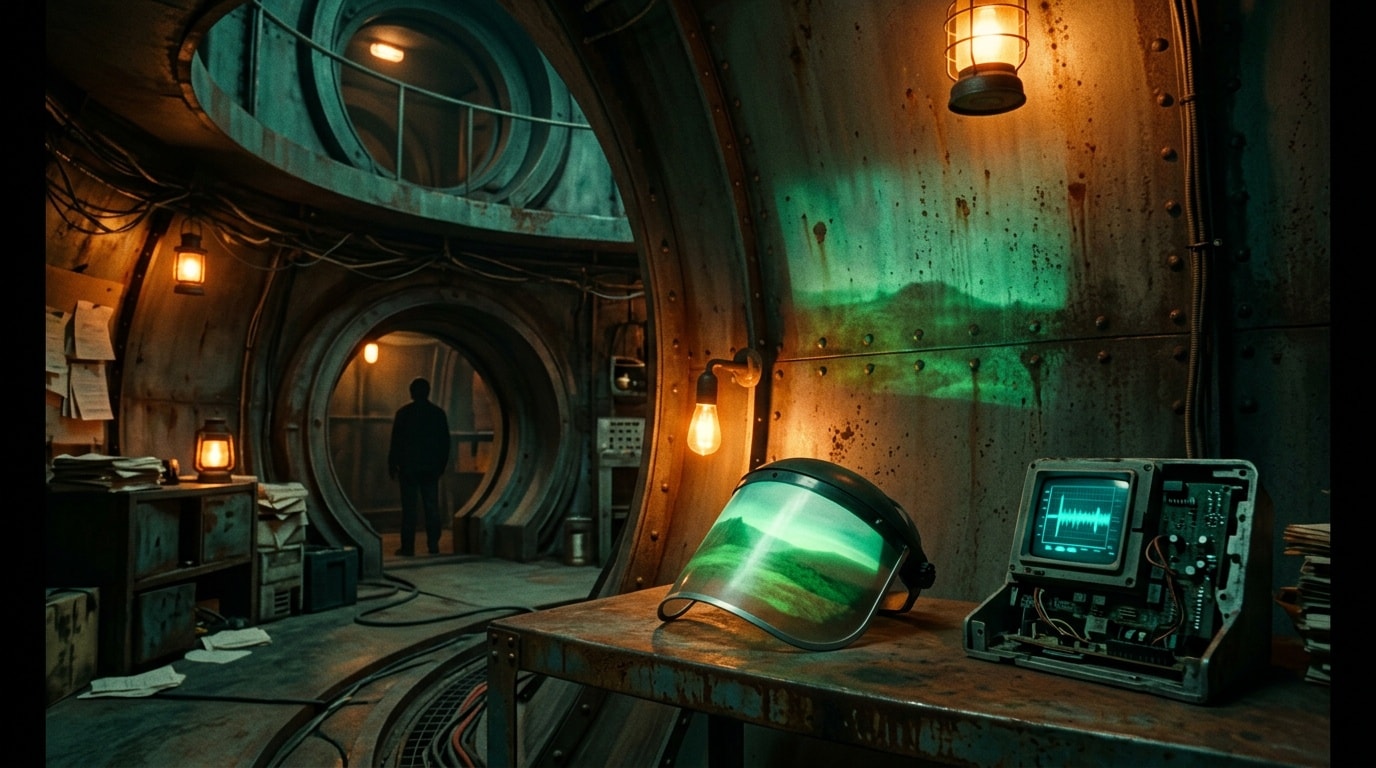
The cleaning ritual operates a dual-channel deception: the visor inside each suit projects a preloaded lush landscape to engineer the exile's compliance and labor extraction in their final moments, while the external camera feed transmits fabricated desolation to the silo population to manufacture consent to captivity among those who remain.
The Silo's Authorities Control What People See
The Silo's false feed of the outside world is not a passive inheritance but an actively maintained and institutionally refined deception, with each generation of leadership briefed rather than deceived.

The Suits Kill, Not the Sky
The suits, not the atmosphere, are the instrument of death for Cleaners sent outside the Silo.
Holston's Signal Was His Cleaning
Holston's Cleaning was a calculated communication modeled on what he realized Allison's cleaning had already been: a structured message delivered through the only channel Judicial could not suppress.