The Visor Shows A Beautiful Lie
THE THEORY
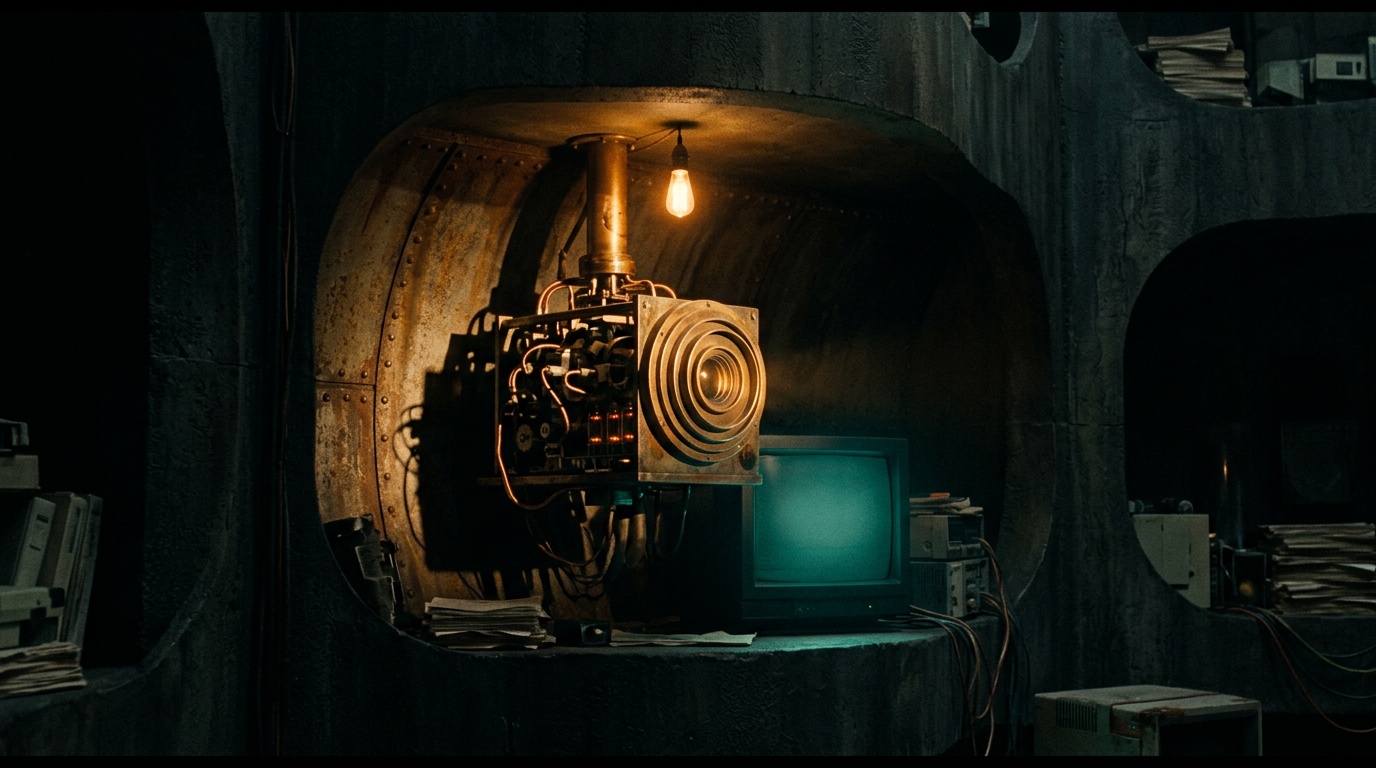
The visor in each cleaner's suit projects a fabricated habitable world, ensuring compliance through manufactured experience rather than force. If George's footage was captured through a visor feed rather than a pre-collapse recording device, then the image Juliette risks everything to broadcast is not forbidden truth but administered deception that has escaped its chain of custody. The resistance arc and the administrative control apparatus do not oppose each other. They run on the same image.
How This Theory Works
The containment suits issued to cleaners are not merely protective gear but delivery systems for a constructed reality, and the silo's entire political order, including its resistance movements, is downstream of that construction. Whatever the true state of the outside environment, the helmet display overlays a habitable world onto what the cleaner actually sees. The cleaner walks out believing the outside is safe and livable, which is precisely why they always clean the sensors rather than return.
The mechanism serves a dual purpose for the silo's administrators. A cleaner who sees a desolate wasteland might panic, resist, or die in ways that create problems. A cleaner who sees open sky and fresh air will walk calmly, clean dutifully, and expire without incident. Bernard's calm certainty that Juliette will clean, despite her stated refusal, fits this reading. He has seen it happen before. The suit does the work. The suit was always going to do the work. His certainty is not cruelty. It is institutional memory.
George Wilkins's video of the outside, which Juliette fights to broadcast across the silo, becomes the theory's hardest pressure point. The question is what that footage actually is. Martha cannot identify the device George used to capture it. That failure matters. If the device were a visor feed recorder, something built into the suit's own architecture, Martha's ignorance would be expected. Silo engineers know materials and mechanisms. They do not know the full inventory of what administrators upstream might have embedded in standardized equipment. A pre-collapse external recording device would be alien to her. A purpose-built administrative capture tool, stripped of any identifying context, would be equally opaque. Either way, the footage's provenance is unverifiable by anyone inside the silo, including Juliette.
That unverifiability is what Bernard's two-stage response reveals. He smashes the hard drive and blacks out the screens not because the image shows the real outside, but because the image shows the administered outside, and its meaning can only be controlled as long as its circulation is controlled. Under his custody, he knows its provenance and can determine what it signifies. Once Juliette broadcasts it freely, the image escapes administrative context, and with it the ability to determine which version of the outside people believe they are seeing.
This creates a closed loop the silo's designers may have anticipated. The surface camera feed delivers one image of the outside to the general population: barren, lethal, inescapable. The visor delivers a different image to the cleaner: open, breathable, almost beautiful. Both images are controlled outputs. The first enforces resignation. The second enforces compliance at the moment of death. When visor footage leaks into the population's hands, it does not contradict the camera feed so much as it creates a second administered reality competing with the first, one that appears to be contraband truth precisely because it conflicts with the official channel. The conflict between the two images is itself a feature. It generates exactly the kind of resistant belief that sends people toward the cleaning ritual voluntarily.
The heat tape on the suit wrists, the careful engineering of every sensory detail the cleaner wears, points to the same institutional habit: the cleaner's entire experience of reality is a sequence of decisions someone upstream made before the cleaner ever volunteered. The visor is the most consequential of those decisions because it faces outward and because its output becomes the evidence future resisters will die for. Juliette does not escape the deception by acquiring the footage. She becomes its carrier. The system was built to ensure that would always be the case.
Is this theory convincing?
Key Evidence
Bernard Shuts Down All Screens
When Juliette broadcasts the outside image silo-wide, Bernard immediately enters a command to black out every screen, suggesting extreme institutional control over what images of the outside are permitted to circulate.
Bernard's Certainty Cleaners Always Comply
Bernard tells Juliette that all cleaners say they won't clean, and then they do, implying the suit itself produces an experience that overrides the cleaner's prior intentions.
Hard Drive Smashed Before Juliette Cleans
Bernard physically destroys the hard drive containing the outside footage before Juliette is sent out, eliminating the only widely-seen image of the outside and controlling what version of reality remains in circulation.
Heat Tape Applied to Suit Wrists
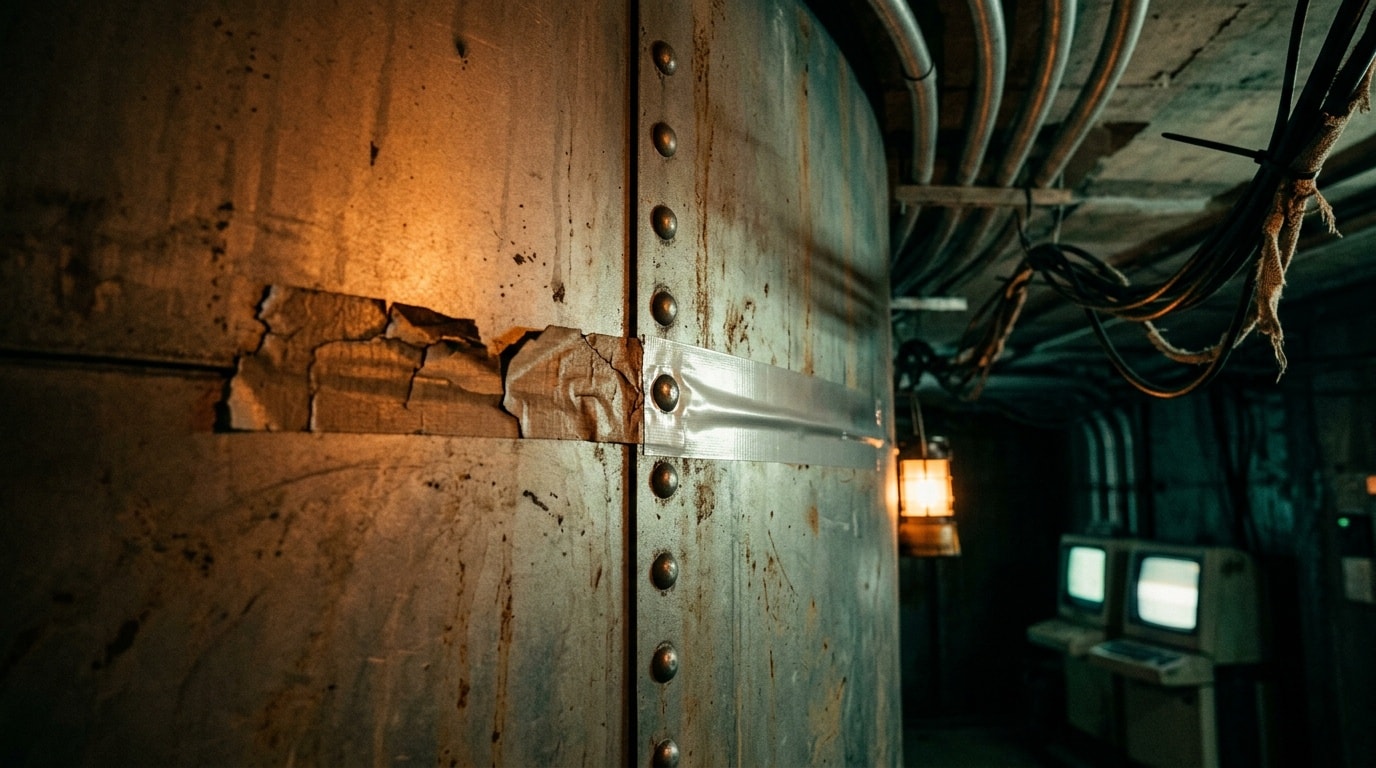
As Juliette is suited up, heat tape is wrapped around her wrists to prevent exposure, foregrounding the suit's construction and the deliberate engineering decisions embedded in what cleaners wear.
Other Theories for S1E10
Martha's Tape Swap Saves Juliette's Life
IT's heat tape is engineered to fail, making the cleaning ritual a reliable execution system rather than a gamble against a toxic environment.
Bernard's Spectacle Creates Its Own Martyr
Bernard's decision to march Juliette through the full stairwell in shackles reveals a man who no longer believes in his own system of control and is performing authority as a substitute for exercising it.
Bernard Keeps Sims Deliberately in the Dark
Bernard Holland maintains a deliberate information gap with Robert Sims because he has privately judged that Sims, fully informed, would become uncontrollable rather than useful.
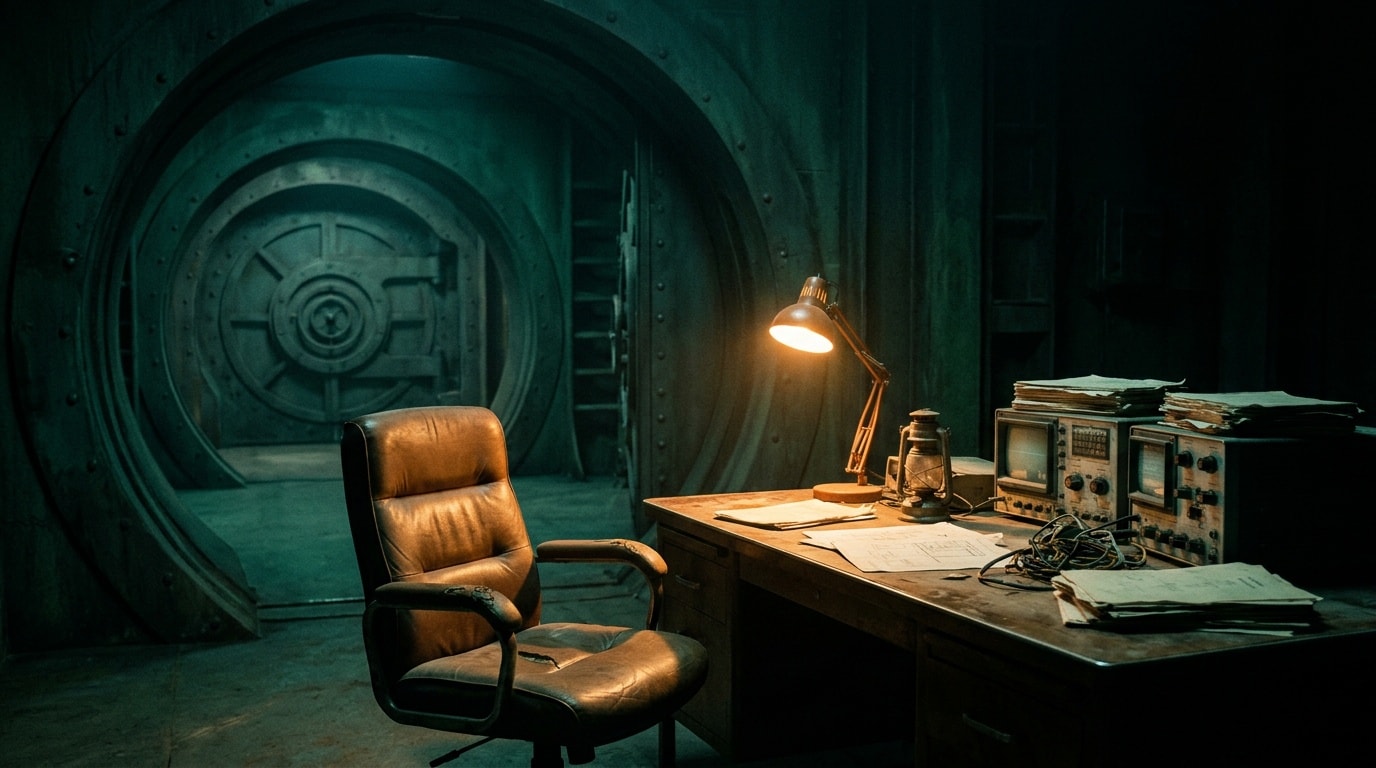
Bernard Never Knew About the Door
Bernard was structurally excluded from knowledge of the steel door by the same hierarchy he believes he serves.
Cleaning as Theater, Not Punishment
The Cleaning ritual is a periodic, state-administered re-dosing of the founding lie, using the condemned as a delivery mechanism to demonstrate futility to the watching population rather than to punish the individual being sent out.