Bernard's Spectacle Creates Its Own Martyr
THE THEORY
Bernard's decision to march Juliette through the full stairwell in shackles reveals a man who no longer believes in his own system of control and is performing authority as a substitute for exercising it. By manufacturing the largest public spectacle the Silo has seen, Bernard transforms a containment problem into a founding myth, distributing Juliette's story at the exact moment he most needed it suppressed. His system of managed ignorance is structurally self-defeating: it generates the crises it was designed to prevent, and the visible force used to suppress those crises is not governance but self-deception at institutional scale.
How This Theory Works
Bernard does not believe the Cleaning will contain Juliette's story. He knows it will not. The shackled march, the record crowd, the full stairwell route are not miscalculations. They are the action of a man who has already accepted that Juliette cannot be quietly erased and has decided that a visible, ritualized destruction is the next best instrument. Bernard is not trying to solve the problem. He is trying to own the narrative of its escalation before someone else does. The Pressure Valve speech is not a rationalization after the fact. It is the logic of a manager who knows his information architecture has already failed and is now performing control rather than exercising it.
The connection between Bernard's information control and his current crisis is not incidental. He tells Juliette that he gave her imperfect information, she reached an erroneous conclusion, and now he must punish her for it. His own system of managed ignorance produced the threat he is now neutralizing. His order to unsee what the technicians have seen underlines how fragile the architecture of belief in the Silo actually is. Destroying the image does not restore the belief. It only confirms, to everyone in that room, that there was something worth destroying.
Walking a shackled sheriff past every level of the Silo does not demonstrate the system's power. It demonstrates the system's anxiety. It ensures that everyone knows who Juliette is, what she found, and what was done to her in response. Martha Walker, who has not left her workshop in twenty-five years, walks out her door and goes to the cafeteria. She is not a bystander who happened to be moved. She is the precise measurement of Bernard's failure: the person who had made her peace with not caring has been given a reason to care again.
Bernard's pressure-valve logic required an invisible release. Instead he opened the valve in front of the largest crowd the Silo has seen. The record attendance, the screens he had to kill, the technician he had to silence, Martha in the cafeteria, all register the same outcome. Juliette is not a problem Bernard solved. She is a problem Bernard published. And if Bernard already understood the march would amplify her rather than erase her, then the performance was never for the Silo's population. It was for Bernard himself. The sharpest thing the theory can say is this: Bernard is not a true believer who has lost control. He is a man who stopped believing his own system long ago and has been staging its rituals ever since, not to preserve the Silo, but to postpone the moment when he must confess, to himself, that the system's survival and his own have become the same selfish calculation. The Cleaning of Juliette is not an act of governance. It is an act of self-administered anesthesia.
Is this theory convincing?
Key Evidence
Bernard Admits His Own Information Trap
Bernard tells Juliette directly that he gave her imperfect information, she reached an erroneous conclusion because of it, and now he must punish her, acknowledging that his own system of lies created the crisis he is suppressing.
Pressure Valve Speech as Political Logic
Bernard compares running the Silo to Juliette's job as an engineer watching pressure valves, framing her Cleaning as a necessary adjustment to prevent an explosion rather than a personal punishment.
Record Crowd at Juliette's Cleaning
Bernard and Sims note that Juliette's Cleaning has drawn the largest crowd in the Silo's recent memory, larger even than Holston's, which directly undermines Bernard's goal of quiet containment.
Screens Shut Down Silo-Wide
After Juliette's outside image reaches the monitor room, Bernard immediately kills all screens Silo-wide and orders the technicians to unsee what they witnessed, revealing how fragile public belief in the outside imagery actually is.
Martha Leaves Her Workshop
Martha Walker, who has not left her workshop in twenty-five years, walks out and goes to the cafeteria as Juliette is being marched to her Cleaning, suggesting Juliette's public treatment has already moved people who were previously inert.
Shackled March Through the Stairwell
Bernard orders Juliette walked through the full stairwell in shackles before her Cleaning, ensuring every level of the Silo witnesses her arrest and her defiance, giving her the platform a quieter removal would have denied her.
Other Theories for S1E10
Martha's Tape Swap Saves Juliette's Life
IT's heat tape is engineered to fail, making the cleaning ritual a reliable execution system rather than a gamble against a toxic environment.
Bernard Keeps Sims Deliberately in the Dark
Bernard Holland maintains a deliberate information gap with Robert Sims because he has privately judged that Sims, fully informed, would become uncontrollable rather than useful.

Bernard Never Knew About the Door
Bernard was structurally excluded from knowledge of the steel door by the same hierarchy he believes he serves.
Cleaning as Theater, Not Punishment
The Cleaning ritual is a periodic, state-administered re-dosing of the founding lie, using the condemned as a delivery mechanism to demonstrate futility to the watching population rather than to punish the individual being sent out.
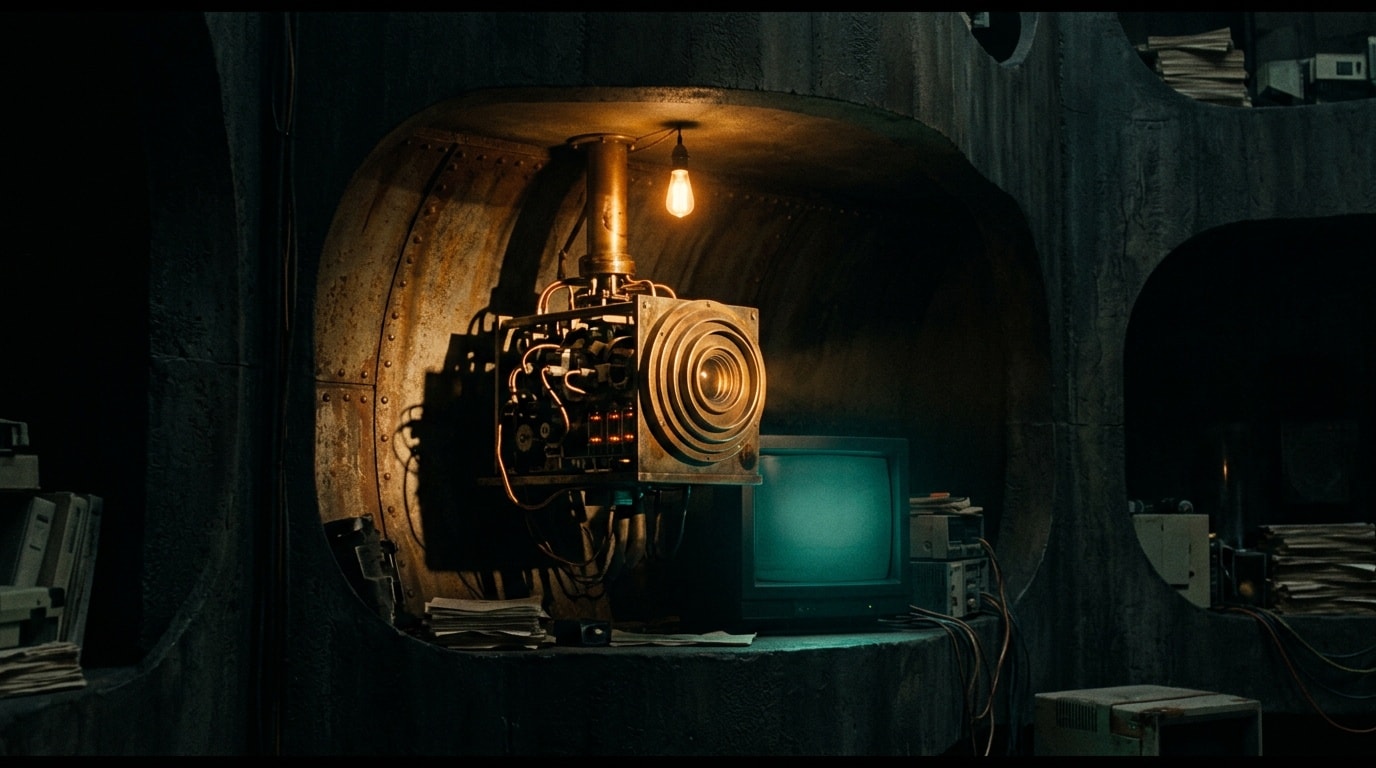
The Visor Shows A Beautiful Lie
The visor in each cleaner's suit projects a fabricated habitable world, ensuring compliance through manufactured experience rather than force.