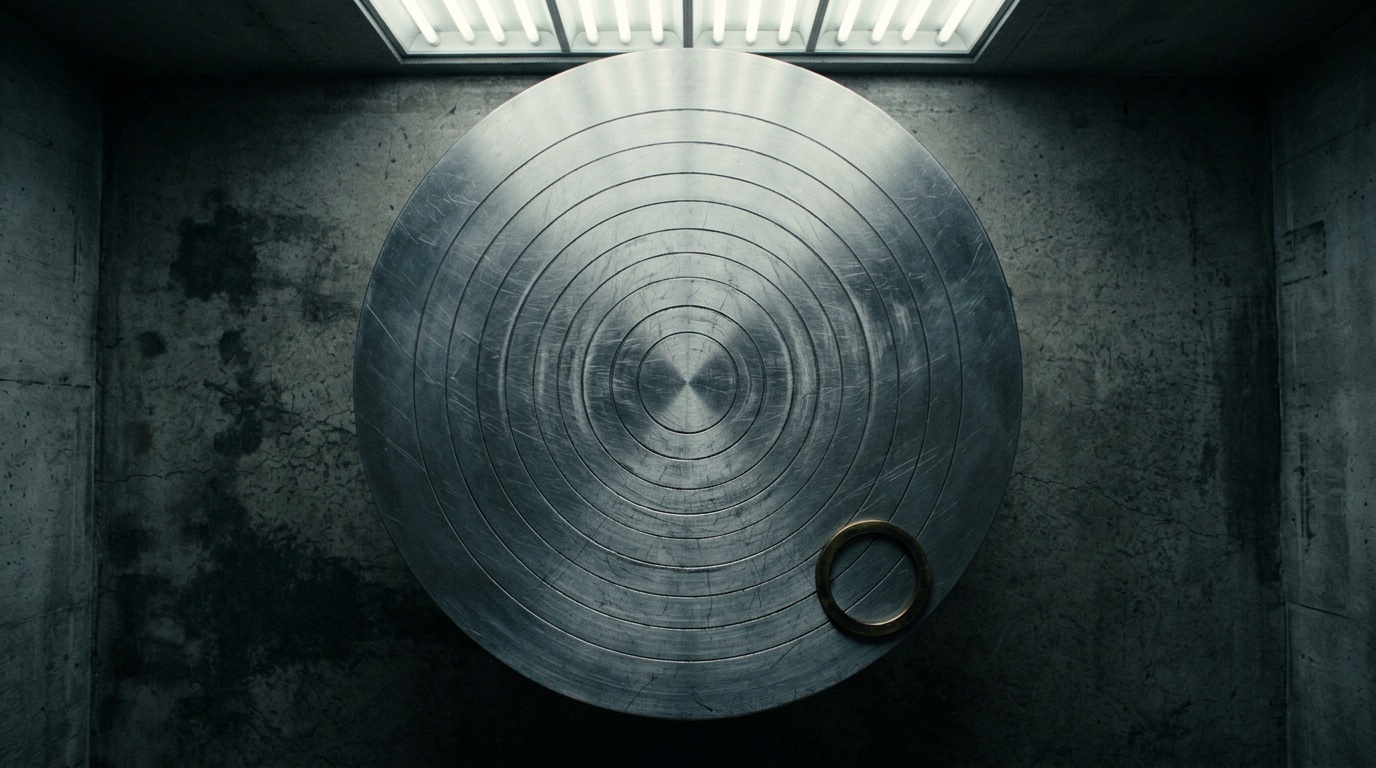
Smashing the Toy Destroys Miss Huang's Childhood
THE THEORY
The ring toss ritual is not an isolated moment of cruelty. It is a repeatable psychological procedure, a mechanism Lumon has designed to ensure that anyone advanced through its ranks arrives stripped of private selfhood and owing their formation entirely to the institution. Miss Huang is not a special case. She is a proof of concept.
How This Theory Works
Start with what the ritual actually requires. The handbook does not suggest or permit the destruction. It mandates it. Milchick calls the act a 'material sacrifice,' which is precise institutional language. Lumon has named what it is taking and written that name into procedure. An organization that encodes sacrifice into its advancement protocols has decided that the cost to the individual is not a side effect. It is the mechanism.
The design of the ritual makes the mechanism legible. The toy is Kier-themed. The weapon is a Kier bust. Miss Huang is not surrendering some generic childhood relic. She is surrendering the specific affection Lumon cultivated in her, using an instrument bearing the face of the figure she was taught to revere, following instructions the institution wrote for exactly this moment. Lumon provides the love, then requires the subject to destroy it on command. The founder's face is on both the thing being killed and the thing doing the killing. That is not coincidence. It is architecture.
The transfer order arriving the same night closes the final exit. Miss Huang expected to finish the quarter. That small expectation, a reasonable assumption of continuity, is denied. The destruction and the departure are paired deliberately, so that nothing anchors her to what came before. She cannot grieve it later. She cannot return to the room where it happened. Lumon schedules the rupture to coincide with the ritual, ensuring the subject carries neither the object nor the time to process its loss.
What this points toward is a replicable template with a specific, falsifiable output: people who advance through Lumon's ranks should show a consistent pattern of having surrendered their most personal pre-institutional attachments at a mandated threshold, under ceremonial language, with no recovery window built in. The ritual is designed to produce subjects who experience their own compliance as sacrifice freely given, which is the psychological condition Lumon needs in order to trust anyone with greater access. If the show later reveals other advancement ceremonies, or other figures who passed through a version of this threshold, the question will not be whether Lumon does this but how early it starts and how many times it repeats before someone reaches the level where the sacrifices are no longer toys.
Is this theory convincing?
Key Evidence
Handbook-Mandated Toy Destruction
Milchick explicitly tells Miss Huang that the handbook requires her to place her ring toss game on the table and smash it with the Kier bust as a 'material sacrifice,' making the destruction an institutional obligation rather than a spontaneous gesture.
Kier Figure as Childhood Comfort
The ring toss game Miss Huang has carried throughout the season features a bathing-costumed Kier Eagan figure, identifying the toy as both a personal comfort object and a Lumon-sanctioned artifact she has kept close since childhood.
Kier Bust as Instrument of Destruction
The weapon used to destroy the childhood toy is itself a bust of Kier Eagan, meaning Lumon's founder is literalized as the force that obliterates the last remnant of Miss Huang's private, playful identity.
Unexpected Immediate Transfer Order
Miss Huang believed she would finish the quarter, but Milchick informs her the shuttle comes tonight, pairing the destruction of her toy with a total rupture of continuity that leaves her nothing to return to.
Sacrifice Framing in Ceremony Language
Milchick uses the word 'sacrifice' when instructing Miss Huang to destroy her toy, framing the act as a ritual offering rather than a procedural formality and implying Lumon views her relinquishment of childhood as something of value being surrendered.
Other Theories for S2E09
Outie Dylan's Threat Erases His Innie's Only Life
Outie Dylan's resignation is an act of self-protective erasure driven by his inability to tolerate proof of his own deterioration, and the severance system is designed to let him commit it without experiencing it as harm to anyone.

Burt Severed to Buy His Own Innocence
Burt chose severance as a private act of conscience management, using the procedure to manufacture a version of himself clean enough to love and be loved.

Dylan Chose Oblivion Over an Empty Existence
Dylan's innie resigned not because his outie forced him to but because he had privately concluded that existence without Gretchen was not worth sustaining, making his departure the first act of deliberate self-termination an innie has chosen rather than had imposed.
Burt Was the Driver Who Let Irving Go
Burt has been functioning as a Lumon operative whose role is to transport people to outcomes he does not acknowledge, and his decision to put Irving on a train was not a defection but a managed exit Lumon may have designed from the start.
Helly Knows She Is Helena Eagan
Helly has already concluded she is Helena Eagan and has been performing innie ignorance while holding that knowledge.

Lumon Used Gretchen to Kill Irving's Message
Lumon deployed Dylan's relationship with Gretchen as a precision instrument to neutralize Irving's map before Dylan could act on it.
Helly Inherits Irving's Secret Investigation
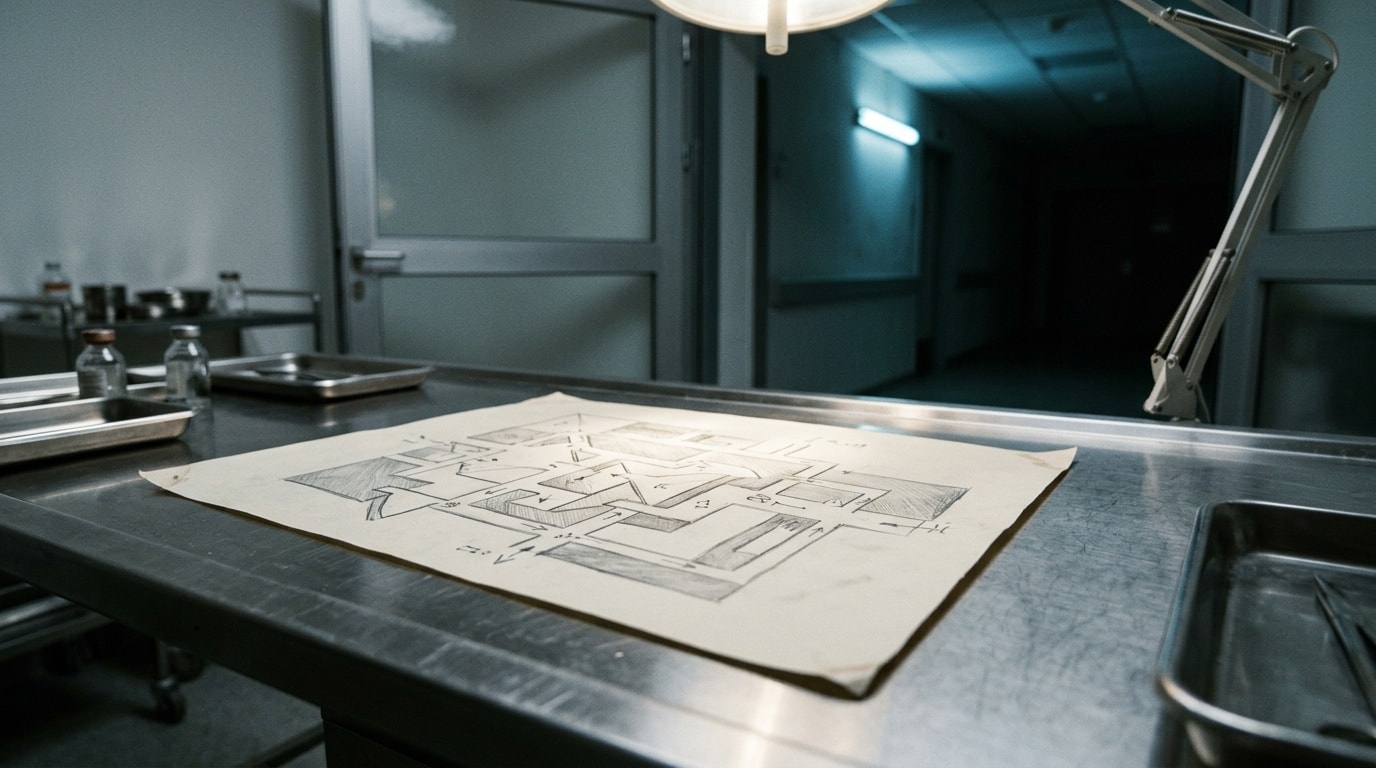
Helly is not preserving Irving's map as a memorial gesture.
Cobel Has Transferred Loyalty to Herself, and Her Help Is the Protocol's Architect Still Calibrating Outcomes
Cobel has not switched sides from Lumon to Mark — she has switched sides from Lumon to herself, and Mark is only useful to her because she can no longer enter the building.