Burt Was the Driver Who Let Irving Go
THE THEORY
Burt has been functioning as a Lumon operative whose role is to transport people to outcomes he does not acknowledge, and his decision to put Irving on a train was not a defection but a managed exit Lumon may have designed from the start. The conditions Burt attaches to the ticket, his ungrounded certainty that Lumon will not retaliate, and Irving's emotionally-driven exoneration of him all point in the same direction. The show has confirmed Burt's confession of complicity but has not confirmed whether his apparent mercy was his choice to make.
How This Theory Works
Burt has not defected from Lumon. He has been managing Irving's exit on Lumon's behalf, and his emotional investment in Irving is what makes him the perfect operative for this kind of work. That is the claim the theory approaches and does not commit to.
The evidence for Burt's operative role is not speculative. He reads Irving's notes aloud, notes that name him as a possible enforcer or goon, and then corrects only the language, not the function. He never disputes that he drove people and did not ask what happened to them afterward. That is a confession of complicity, not an exoneration. Irving accepts it as such, which is why he asks, while riding with Burt, whether Burt is doing the same thing to him now.
What makes the train scene sharp is the asymmetry Burt introduces. He tells Irving he can never come back to Kier, that Burt cannot know where Irving gets off, and that Lumon will not come after Burt for sparing him. That last claim is presented without grounding. Burt offers it as reassurance, but it is precisely the kind of statement a managed operative would use to move a target onto a train without resistance. The conditions Burt attaches to the ticket are not the conditions of a spontaneous rescue. They are the conditions of a controlled exit: directional, bounded, one-way, and monitored by Lumon's preferred ignorance about the final stop.
Irving's reversal compounds the problem. He decides he was wrong about Burt, that Burt is not with Lumon. But that conclusion was driven by their personal relationship, not by any structural evidence that Burt had severed his ties with the company. Burt's emotional farewell at the station does not clear him. The most uncomfortable reading of that scene is not that Burt chose Irving over Lumon. It is that Burt was chosen by Lumon precisely because he would choose Irving, and that the grief on his face at the platform is real and also irrelevant to what he has just completed.
Is this theory convincing?
Key Evidence
Burt Corrects the Language, Not the Role
When Burt reads Irving's notes aloud, he objects only that Lumon uses very specific language and they never used words like 'enforcer' or 'goon,' without disputing that the functional description of his role was accurate.
Confession About Driving People
Burt tells Irving directly that he drove people places and did not ask what happened once they got there, which Irving recognizes as a structural admission of complicity in Lumon operations.
Irving's Question About the Ride
When Burt asks Irving to get in the car, Irving hesitates and later asks outright whether Burt is doing to him now what he did to the others he drove, showing that even Irving treats Burt's operative past as an open question about the present.
Burt's Ungrounded Safety Guarantee
Burt tells Irving that Lumon will not come after Burt for sparing him, a claim he offers with certainty despite having no visible basis for it, which is consistent with Burt having been given clearance or acting under instruction.
Irving Initially Wrong, Then Convinced
Irving states that he now knows he was wrong and that Burt is not with Lumon, but this reversal was based on their personal relationship, not on any structural evidence that Burt had cut his ties with the company.
Train Ticket With Conditions
Burt buys Irving a one-way ticket and specifies the line goes as far as he can go, that Burt cannot know where he gets off, and that Irving can never return to Kier — conditions that frame the gesture as a controlled exit rather than a spontaneous rescue.
Other Theories for S2E09
Outie Dylan's Threat Erases His Innie's Only Life
Outie Dylan's resignation is an act of self-protective erasure driven by his inability to tolerate proof of his own deterioration, and the severance system is designed to let him commit it without experiencing it as harm to anyone.

Burt Severed to Buy His Own Innocence
Burt chose severance as a private act of conscience management, using the procedure to manufacture a version of himself clean enough to love and be loved.

Dylan Chose Oblivion Over an Empty Existence
Dylan's innie resigned not because his outie forced him to but because he had privately concluded that existence without Gretchen was not worth sustaining, making his departure the first act of deliberate self-termination an innie has chosen rather than had imposed.
Smashing the Toy Destroys Miss Huang's Childhood
The ring toss ritual is not an isolated moment of cruelty.
Helly Knows She Is Helena Eagan
Helly has already concluded she is Helena Eagan and has been performing innie ignorance while holding that knowledge.

Lumon Used Gretchen to Kill Irving's Message
Lumon deployed Dylan's relationship with Gretchen as a precision instrument to neutralize Irving's map before Dylan could act on it.
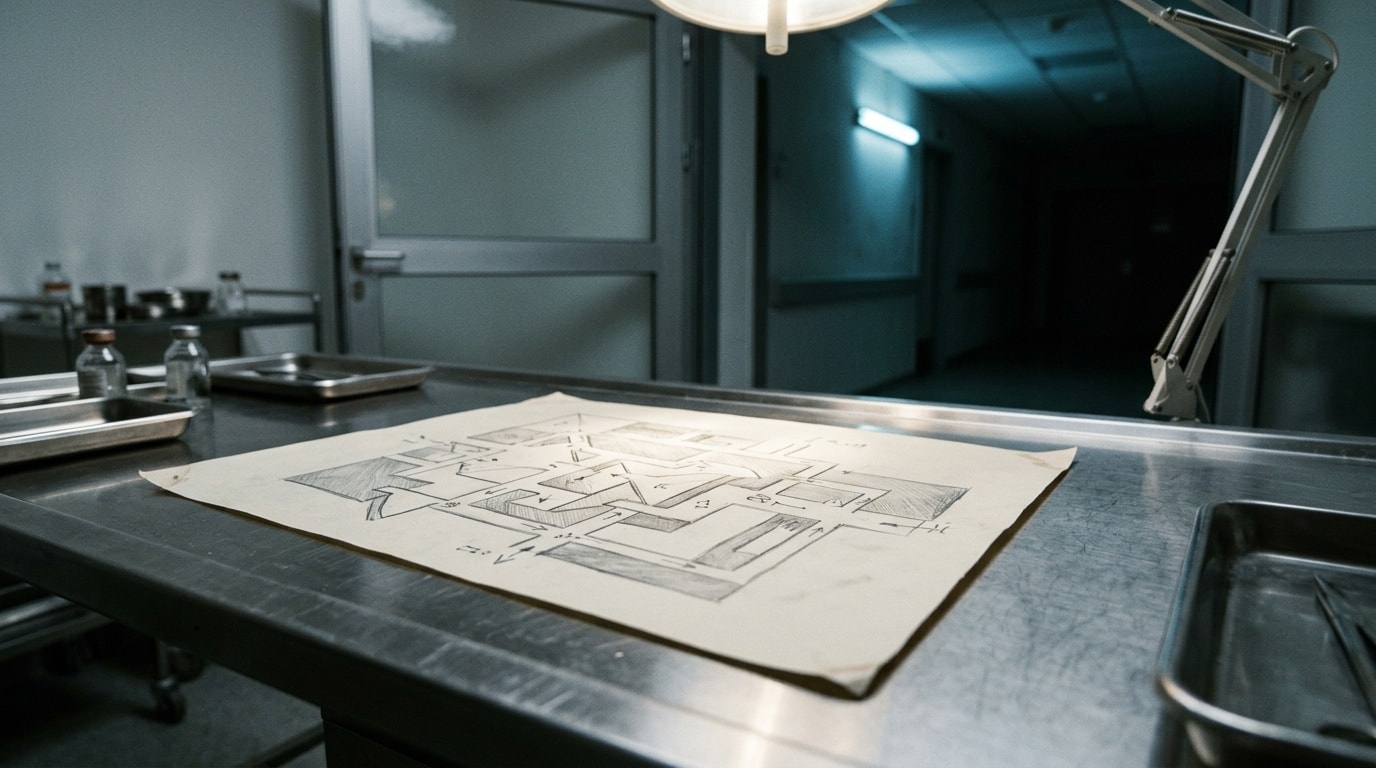
Helly Inherits Irving's Secret Investigation
Helly is not preserving Irving's map as a memorial gesture.
Cobel Has Transferred Loyalty to Herself, and Her Help Is the Protocol's Architect Still Calibrating Outcomes
Cobel has not switched sides from Lumon to Mark — she has switched sides from Lumon to herself, and Mark is only useful to her because she can no longer enter the building.