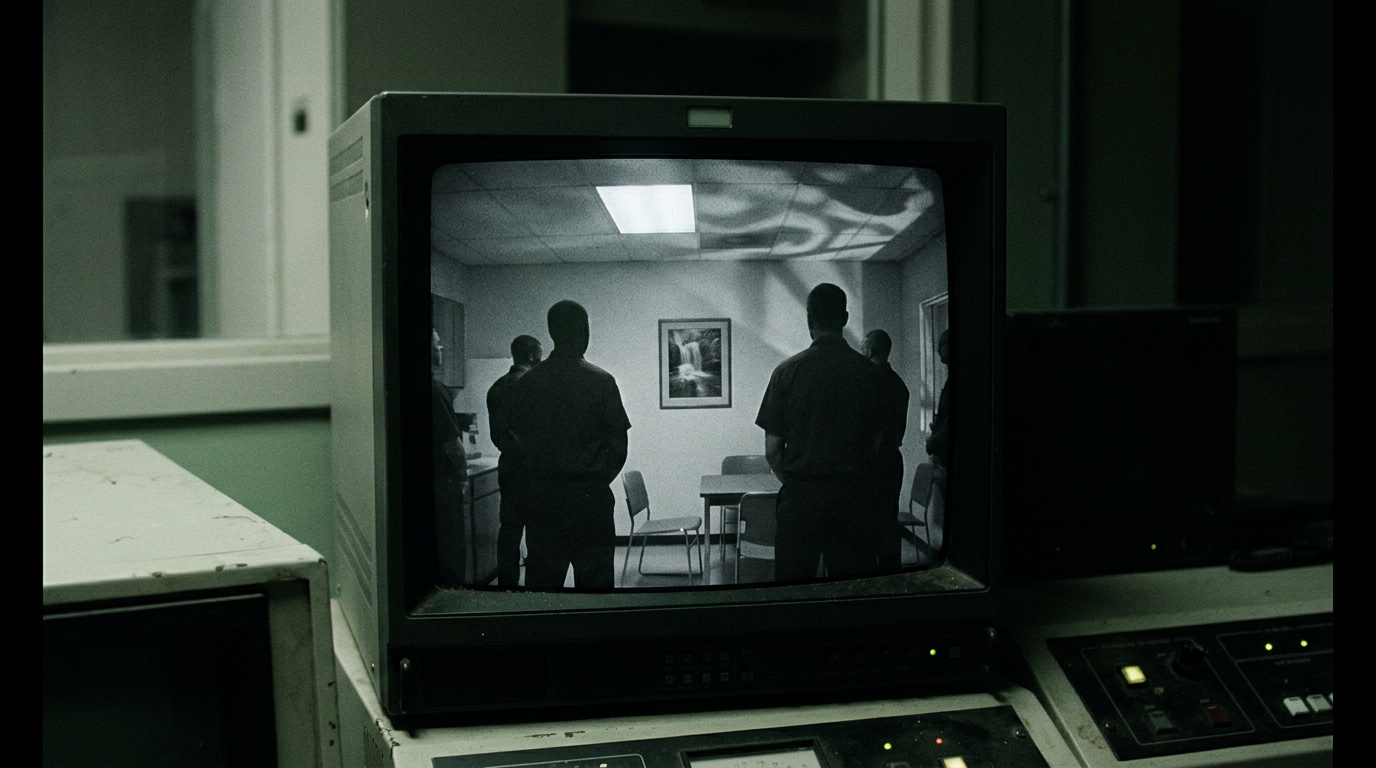
Lumon's Small Lies Are the Big Control
THE THEORY
Lumon's severance procedure does not just erase memory; it surgically removes the social and epistemic infrastructure through which employees could challenge any claim the company makes. Milchick's assertion that the waterfall is the tallest on the planet is a low-cost proof of concept for a system designed not to produce belief but to eliminate the conditions under which disbelief can be organized or acted upon. The procedure was never primarily about productivity; it was about building a workforce with no collective capacity to refuse.
How This Theory Works
Lumon does not need its severed employees to believe its lies. It only needs them unable to refuse them. Milchick's claim that the waterfall is the tallest on the planet is not a throwaway boast but a structural proof of concept: a false superlative delivered without hesitation to people who have been surgically deprived of every mechanism through which a claim like that could be challenged. The lie costs Lumon nothing. Its employees have no internet, no outside colleagues, no personal history that extends into the severed floor. The social infrastructure through which people ordinarily pressure-test claims has been removed at the procedural level, before Milchick opens his mouth.
The mechanism is more revealing than any single lie. Lumon can declare anything true and it functions as truth for its captive audience. The reward of the outdoor retreat is already framed as Lumon's generosity; layering a false superlative on top simply amplifies that framing. The lie makes the moment feel grander and makes Lumon feel more powerful, at no cost.
Irving distrusts Milchick from the opening of the retreat, and his instinct is the episode's sharpest diagnostic tool. His suspicion does not land on the waterfall claim specifically, but his broader resistance to Lumon's orchestration is precisely what the lie is designed to erode. When Helly laughs at the Kier mythology, Milchick punishes the group by throwing the marshmallows into the fire. The pattern connects: Lumon's small deceptions are paired with consequences for those who reject them. The lie about the waterfall and the punishment for laughing at Kier's legend are the same instrument played in different registers.
The gap between Irving's suspicion and his inability to act on it is not a character limitation. It is the system's intended output. Lumon does not require belief; it requires silence. Because the only available response to doubt is punishment, innies are trained not toward credulity but toward the performance of credulity, which from Lumon's operational standpoint is indistinguishable from the real thing. What Milchick is exploiting is not gullibility. It is engineered isolation. The severance procedure does not merely cut off memory; it dismantles the collective epistemic infrastructure that makes resistance possible, which means the procedure itself was never primarily about productivity. It was about removing the conditions under which employees could ever collectively say no.
Is this theory convincing?
Key Evidence
Milchick's Tallest Waterfall Claim
Milchick tells the group they are standing at the tallest waterfall on the planet, a statement delivered without qualification to employees who have no means of verifying or refuting it.
Waterfall's Apparent Small Scale
The waterfall the group reaches is visually modest, approximately 30 feet tall by viewer estimation, making Milchick's superlative claim immediately implausible to anyone outside the severed context.
Innies' Inability to Verify Claims
Severed employees have no access to outside information, making any factual claim Lumon delivers through Milchick structurally unverifiable and thus functionally unchallengeable.
Irving's Distrust of Milchick
Irving explicitly says he does not trust Milchick when the video promises help along the path, establishing a character-level recognition that Lumon's assurances are not reliable.
Marshmallow Punishment After Laughter
When Helly and Mark laugh at the Kier mythology, Milchick throws the marshmallows into the fire and withholds them as punishment, showing that skepticism toward Lumon's claims carries tangible consequences.
Other Theories for S2E04
Helena Eagan Has Been Helly All Along
The person the MDR team has accepted as innie Helly throughout Season 2 is actually Helena Eagan, her outie, running an extended impersonation on the severed floor -- feeding information to Lumon management and using the retreat to surveil how far the group will go in defiance.
Grief Cannot Be Severed From the Body
The severance chip blocks information, but grief is not stored as information.

Kier Killed Dieter and Buried the Evidence
Kier Eagan murdered his twin brother Dieter and authored the Fourth Appendix as the sole surviving account, engineering a grotesque punitive myth that redirected culpability onto the victim.
Dieter Is Kier's Repressed Self, Not His Brother
Dieter Eagan was Kier's psychological projection, not his brother, a constructed figure through whom Kier could externalize and ritually destroy the desiring, undisciplined parts of himself that threatened his commercial identity.
Lumon's Retreat Is a Ritual Conviction System
The wilderness retreat in 'Woe's Hollow' is not a team-building exercise but a closed theological system designed to make innie defiance impossible to experience as morally neutral.

Irving's Outdoor Past Was Never Erased
Irving's innie is not protecting a secret he was told about but one that has crossed the severance barrier without his knowledge, surfacing as instinctive defensiveness rather than retrievable memory.
Helena Slept With Mark for Reasons She Cannot Name
Helena Eagan did not sleep with Mark to secure her cover.
Irving's Farewell Encodes the Overtime Contingency
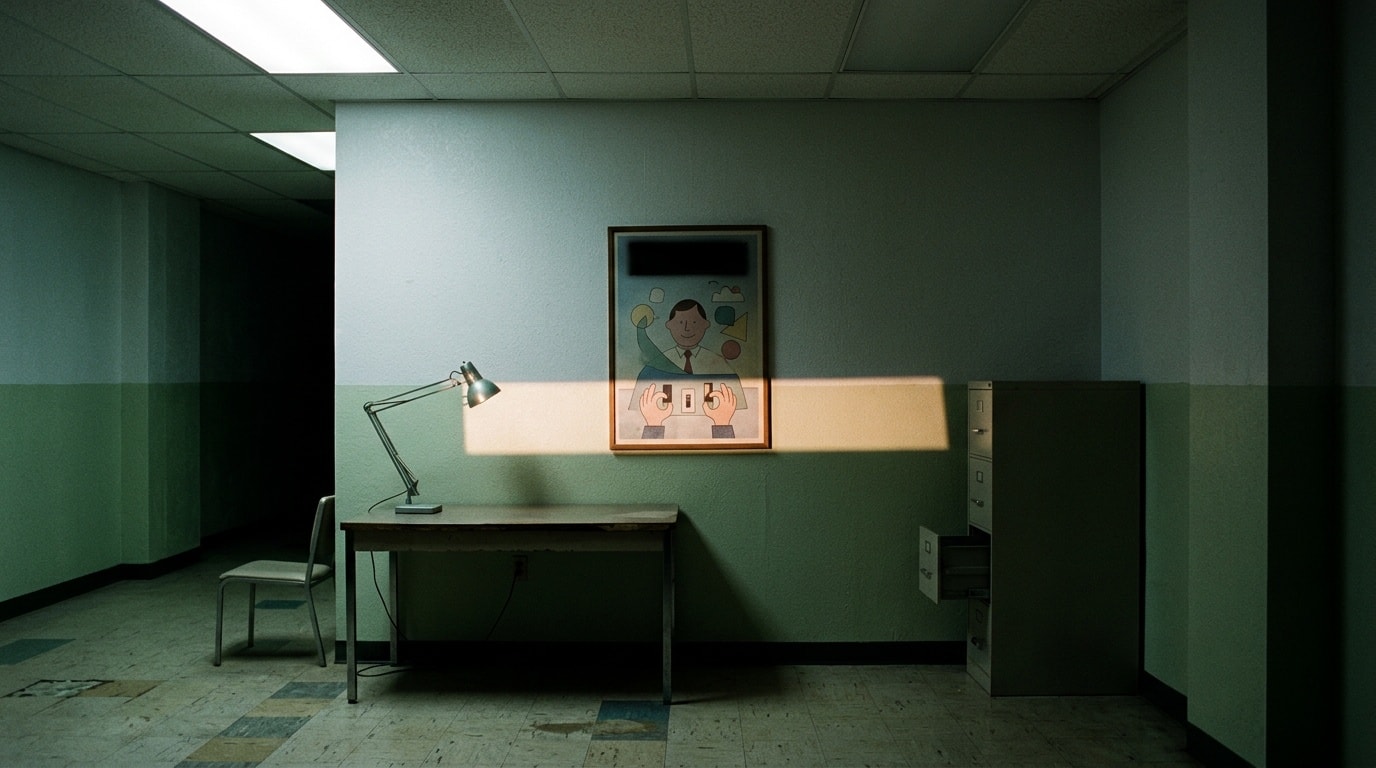
Irving's parting words to Dylan were a deliberate instruction keyed to a specific object: the break room motivational poster depicting Dylan holding the Overtime Contingency Protocol switches, captioned with that exact phrase.