Lumon Builds a World Without Testimony
THE THEORY
Lumon operates a two-stage linguistic architecture of control: internally, corrective language reframes every punitive act as care, leaving employees with no vocabulary to identify or report what is being done to them; externally, Helena's apology video preemptively discredits any witness who breaks through anyway by reframing their account as personal instability. The genius of the system is not that it suppresses testimony after the fact. It engineers conditions in which credible testimony cannot form in the first place.
How This Theory Works
The architecture begins well before any camera rolls. When Devon asks Milchick whether Mark will be punished for his innie's actions at the gala, Milchick does not deflect or soften the question. He abolishes the category entirely, telling her that Lumon has no punishments and is simply concerned with how Mark is doing. This is not a manager defaulting to corporate softness. It is a trained performance of an ideology, and its function is precise: if there are no punishments, there is nothing to report. Any action Lumon takes against an employee, from break room sessions framed as reflection to terminations framed as procedural outcomes, has been stripped of the vocabulary that would make it legible as harm. The absence of the word is the mechanism of control. It does not describe reality. It forecloses the ability to describe reality.
The pattern holds with a consistency too complete to be accidental. Dylan's termination is attributed to an altercation he initiated, delivered as a procedural outcome rather than a penalty. Irving's firing is preceded by a solicitous inquiry about his evening. Every corrective act wears the grammar of care. The architecture reaches its clearest expression when Milchick tells Mark that his innie was brave and that he would hate to reward that bravery with non-existence. Non-existence is the most severe sanction Lumon can impose on a severed employee. Milchick names it not as a threat but as an outcome he is personally working to prevent. The ideology has consumed its own vocabulary so thoroughly that erasure can be spoken aloud as an act of concern. An innie subjected to this language is not being gaslit in the ordinary sense. They are being denied the conceptual tools that testimony requires.
This is the condition Helly R lives inside, and it is the condition she briefly, catastrophically escapes at the gala. What she says there, that she is being tortured, that her life is not her own, is the first time a severed employee has produced public testimony about their own suffering in a setting Lumon does not control. It is also the most dangerous thing the company has faced, not because it is sensational but because it is specific and firsthand and delivered by someone who cannot be dismissed as an outsider. Helena understands the threat immediately. Before recording her response, she reviews security footage of the full scope of what was exposed. She learns that Natalie is already doing media outreach and that guest footage has been seized. The video Helena then records is not a personal impulse toward damage control. It is the external face of the same corrective architecture that operates inside Lumon every day.
The video's construction is clinical. Helena claims she was under the influence of alcohol and a non-Lumon medication, which removes agency from Helly R's account and deflects any residual blame onto something outside the company. Neither claim can be verified by anyone watching. She explicitly states that Helly R's gala remarks were a joke and a lie, directly neutralizing the most damaging line of testimony the severed workforce has ever produced. She frames the episode as her personal embarrassment, recasting institutional suffering as a failing she must atone for, and closes by affirming her commitment to Lumon, restoring the image of a loyal Eagan precisely where a rupture had just appeared. Each element patches a specific edge of the wound. This is not a contrite heiress recounting a bad evening. It is someone who knows the exact shape of the testimony she is dismantling and has designed a counter-structure around it.
The two stages of the architecture are not parallel systems that happen to reinforce each other. They are the same design applied to different audiences. Inside Lumon, the severance chip removes the innie's memory while the no-punishments doctrine removes the outie's words. The innie cannot carry a continuous experience of harm across sessions. The outie cannot name the harm in terms that map onto any recognizable category of abuse. What Helly R overcomes, briefly, at the gala is this double erasure. Helena's video reasserts it. The apology does not need anyone to believe Helena. It only requires that enough people find her story, a medication reaction, a bad joke, an Eagan learning a lesson, easier to hold than Helly R's. The internal architecture primed the audience for exactly that preference long before the gala happened.
Is this theory convincing?
Key Evidence
Alcohol and Medication Cover Story
Helena's recorded statement specifically claims she was under the influence of alcohol and a non-Lumon medication at the gala, framing her damaging remarks as chemically induced rather than truthful.
Joke and Lie Framing
Helena explicitly states in the video that it was a joke and a lie when she said her innie was being tortured, directly neutralizing the most damaging claim Helly R made at the gala.
Coordinated Media Outreach
Before recording, Helena tells Cobel that Natalie is already doing outreach to the media and that guest footage has been seized, establishing the video as one element of a planned damage control operation.
Helena Rewatching Security Footage
Helena reviews security camera footage of Mark and Helly's conversation and their kiss before recording the statement, indicating she was calculating the full scope of what was exposed before constructing her response.
Institutional Suffering Reframed as Personal Failing
Helena's recorded remarks recast Lumon's treatment of its severed employees as her personal embarrassment, stating that when the company falters its employees suffer first and that she must atone for causing fear and insecurity.
Affirmation of Lumon Commitment
Helena closes her recorded statement by affirming her commitment to Lumon, a rhetorical move that restores the image of a loyal Eagan immediately after the moment of rupture Helly R created.
Other Theories for S2E02
Innie Mark Told Devon Gemma Is Alive
Innie Mark used the Overtime Contingency to deliberately reach Devon and tell her Gemma is alive, a revelation Lumon is now suppressing through an implicit threat against the innie's continued existence.
Lumon Built Cold Harbor From Grief
Lumon did not merely survive Gemma Scout's car crash.
Lumon Fires Innies to Bury the Uprising
Lumon's terminations of Irving and Dylan are a targeted suppression strategy calibrated to map and seal the OTC breach before its scope can be documented or contested.
Lumon's Advisory Council Is a Repeatable Containment Architecture, and Cobel Is Building It Herself
The Severance Advisory Council is not a reward for Cobel's crisis competence but a purpose-built psychological cage, constructed around her specific vanity and designed to neutralize her unsanctioned knowledge without releasing her from Lumon's legal and institutional orbit.

Irving Is Running a Secret Anti-Lumon Network
Irving's outie is an operative inside an organized anti-Lumon network, not a bystander who grew suspicious, and he was placed inside Lumon already recruited.
Cold Harbor Closes on Mark: How Lumon Converts His Moral Architecture into the Trap
Lumon's post-reintegration strategy operates on two interlocking levels: institutionally, every concession — the fired team's reinstatement, the board's reversals, Helena's 'long enough' framing — is calibrated to keep Mark compliant only until Cold Harbor is complete, after which his innie becomes expendable; psychologically, Milchick's parting line converts the final act of that institutional trap into something Mark experiences as a moral obligation, making refusal feel like cruelty rather than resistance.
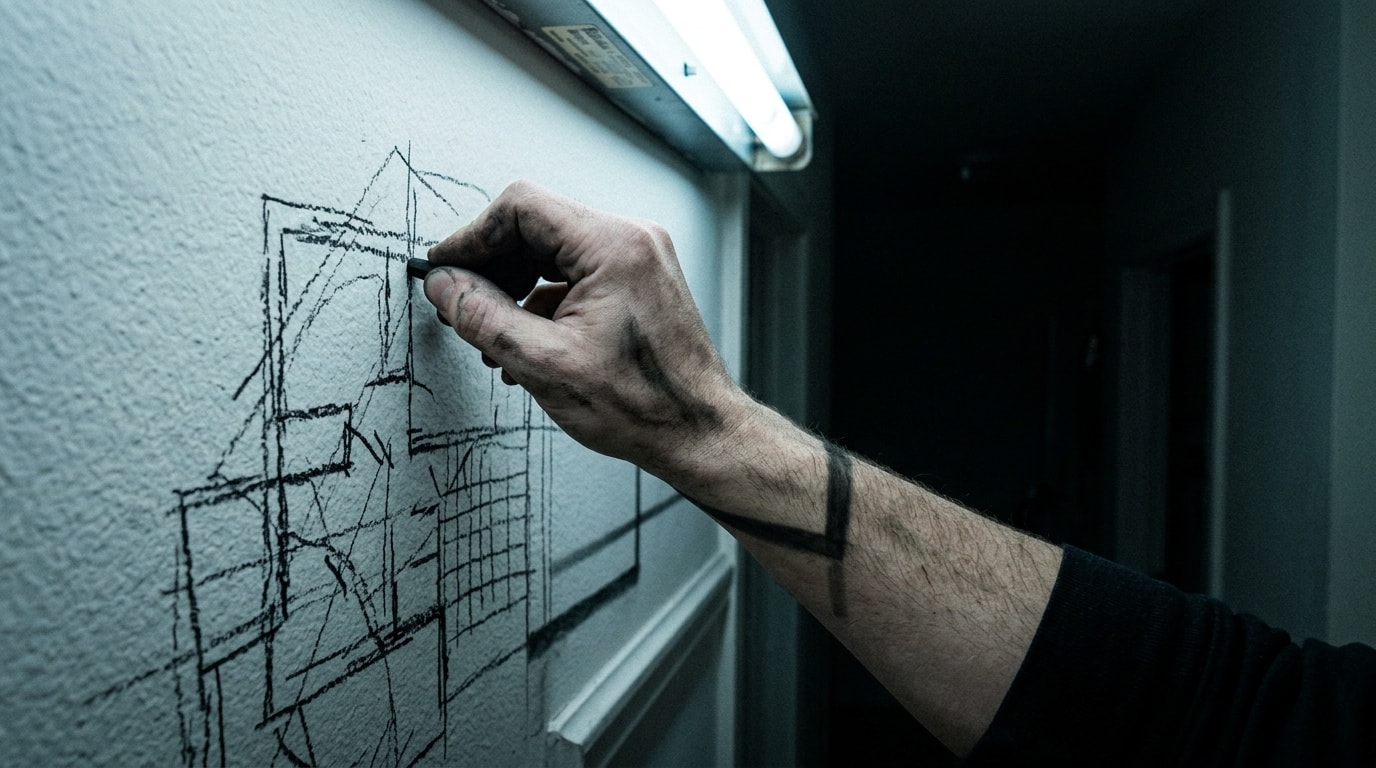
Irving's Paintings Are Messages to His Innie
Irving's compulsive paintings are not artistic output but an unconscious attempt to reach a part of himself he cannot consciously access, which has accidentally exploited a structural flaw in severance's memory containment.
Helena Is Watching Her Own Innie Fall in Love
Helena Eagan's private replay of her innie's kiss footage is not surveillance but preparation: she is studying a life she intends to reenter.