
Carol's Immunity Is a Structural Absence the Collective Cannot Resolve
Plausibility Score
(?)Convinced
(?)#166
of 705 theories
Theory Ranking
(?)READER VERDICT
Is this theory convincing?
Trend builds after 10 votes.
Be among the first to weigh in.
THEORY ASSESSMENT
The theory maps cleanly onto confirmed episode events with direct dialogue and visible on-screen action supporting every major claim, with only minor inferential gaps around Helen's specific infection route and the exact mechanism of Carol's immunity.
STORY CONTEXT
Theories on why Carol alone resists the hive-mind's pull, from genetic anomalies to psychological trauma to something the Collective itself may have engineered.
WHY THIS MATTERS
If Carol's immunity is a symptom of psychological absence rather than presence, the show is not telling a story about a strong individual resisting a totalizing force — it is telling a story about a person whose lifelong failure of authentic selfhood accidentally positioned her as the last obstacle in a design that requires exactly what she has never been able to offer. The collective's pursuit of Carol is not a compliment. It is a structural emergency.
ALTERNATE INTERPRETATION
A minority reading focuses on Helen's death specifically rather than Carol's immunity, arguing that Helen died not because the infection spread successfully but because it had a fatal incompatibility with her specifically, similar to how real-world viruses produce severe reactions in some individuals and not others. Under this framing, Helen's death is not just a pivot for Carol's story but evidence that the infection itself is unstable, capable of killing rather than converting. This reading shifts attention from Carol as exceptional to Helen as an unexpected casualty of a pathogen that does not behave uniformly.
Adjacent Reading — Not a Competing Theory
Other Theories for S1E01
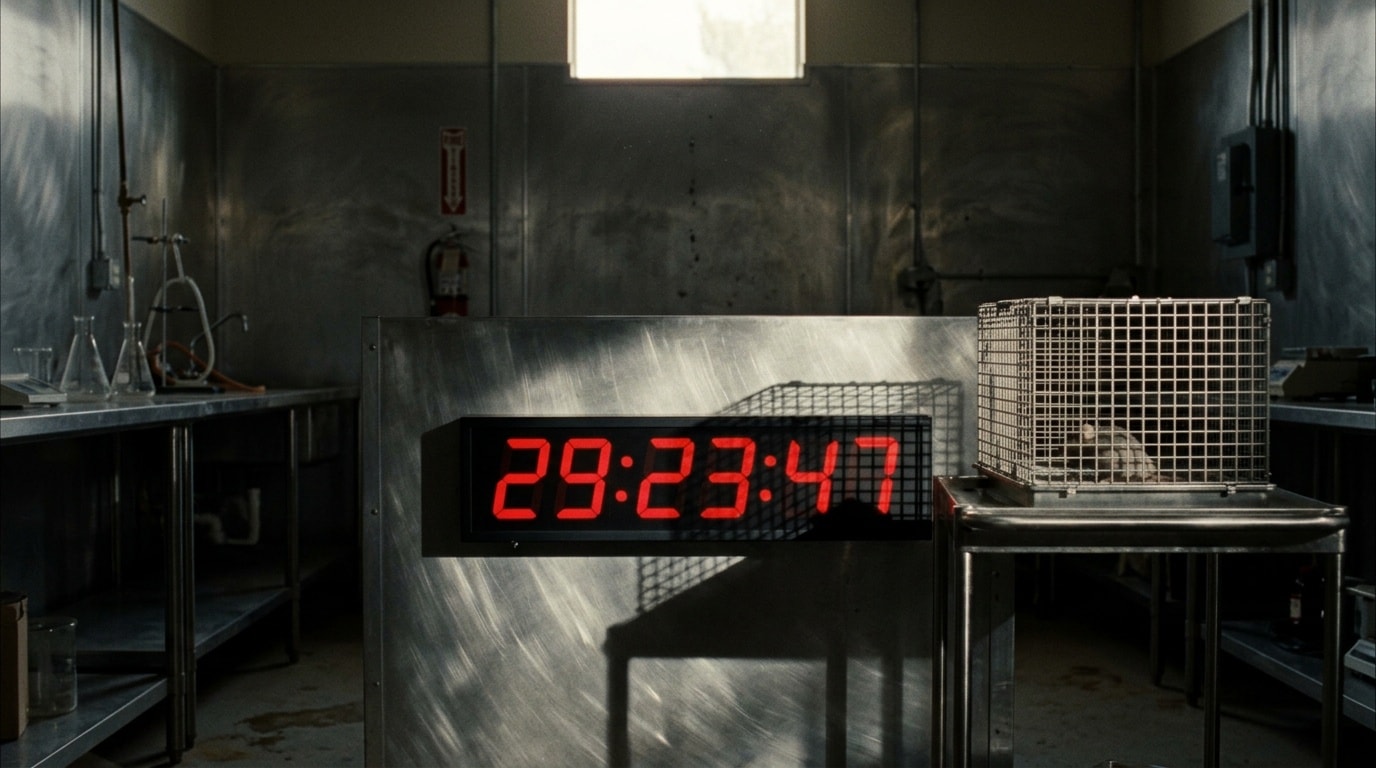
Countdown Clock Targets the Infection Outbreak
The 439-day countdown visible at the episode's opening is ticking down to the mass infection event, not to the alien signal's arrival.
The Collective Cannot Take What It Needs: Seduction as the Only Available Architecture
The alien RNA collective is incapable of absorbing an unwilling consciousness without inheriting its fracture, which means Carol is not a target to be eliminated but a structural gap that can only be closed through consent.
Some Hosts Die Rather Than Assimilate
The hive-mind virus kills some hosts rather than assimilating them, and the collective treats this as an acceptable and already-resolved outcome.