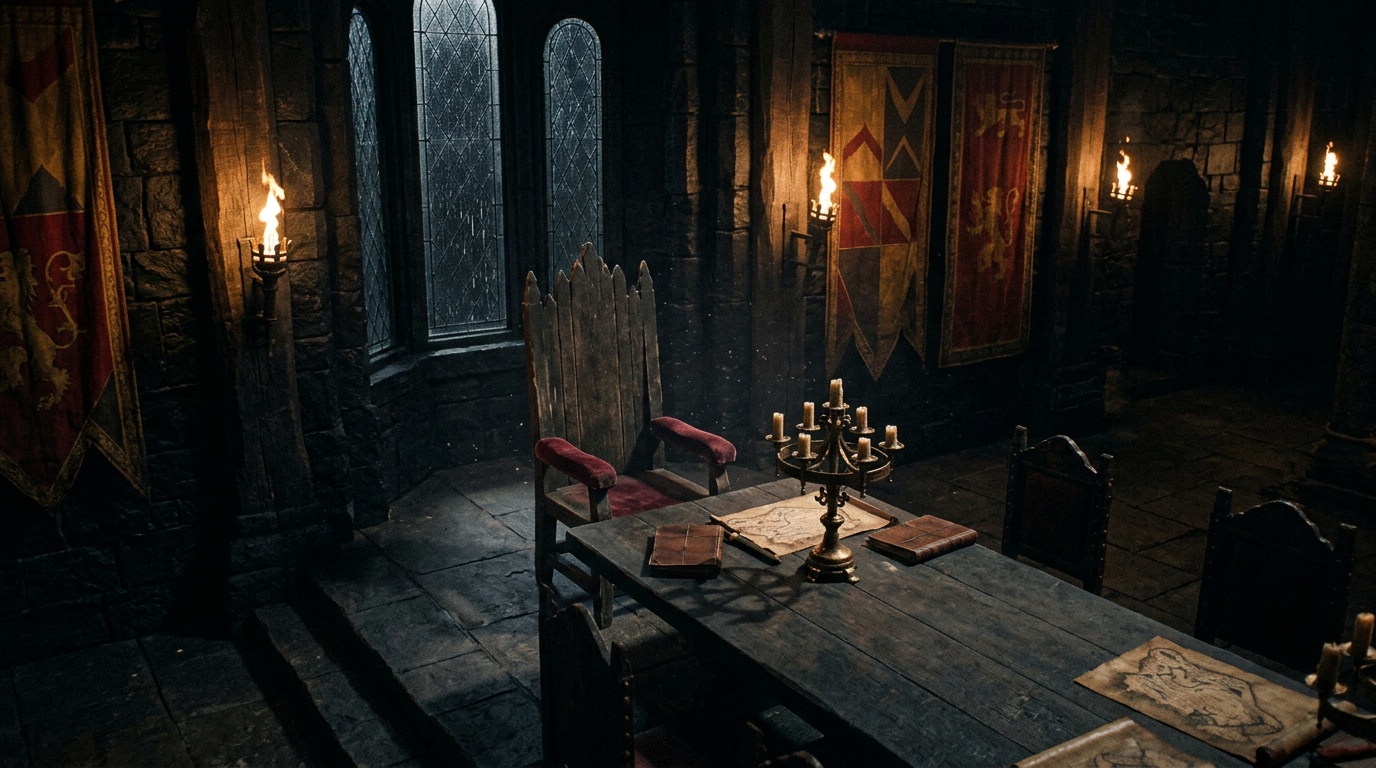
Otto Hightower Is A Prisoner Of War
THE THEORY
Otto Hightower is being held captive by House Beesbury, the Reach family taking direct vengeance for the death of their lord at the Season 1 Small Council table. His imprisonment is not a side consequence of the war but its hidden fulcrum: the one Green figure capable of engineering a negotiated exit has been removed at the exact moment one is needed. Alicent's desperate solo peace mission to Dragonstone is what happens when a daughter stops waiting for a father she cannot reach.
How This Theory Works
The show has confirmed the captivity. The episode's final montage places Otto in a cell, the first visual account of his whereabouts since early Season 2. What the show has not confirmed is who put him there. House Beesbury has. The logic is direct: Lord Lyman Beesbury died opposing Aegon's coronation in the room Otto controlled. No Green figure was ever held to account for that death. House Beesbury responded by raising arms against the Greens, which the Small Council has now acknowledged in open session. Otto ran the meeting. Otto is the target. The visual and the political history close around the same answer.
Alicent's letters to her father have gone unanswered for weeks. The simplest explanation the show invites is that Otto is managing something elsewhere. The harder explanation, the one the captivity shot forces into view, is that he is not managing anything at all. The Greens have been operating without their chief strategist at the precise moment the war turned against them, and no one on their side has noticed the absence for what it is.
The sharpest version of this theory is not about what Otto's captivity explains but about what it threatens. Alicent has traveled to Dragonstone alone, without counsel, to broker a secret peace with Rhaenyra. That is not how Otto would have handled the endgame. He would have worked through courts and intermediaries, through leverage and managed information. Alicent is improvising because she has no choice. But Otto is alive. If the Beesburys are using him as a bargaining piece rather than a body, he could be returned. And a returned Otto does not ratify whatever Alicent builds in his absence. He dismantles it. The peace Alicent is reaching for is most fragile not if it fails, but if her father comes back to inherit it.
Is this theory convincing?
Key Evidence
Otto Shown Captive On Screen
The episode's final montage includes a brief shot of Otto Hightower held captive somewhere unknown, the first visual confirmation of his whereabouts since early Season 2.
Beesbury Uprising Referenced In Council
Small Council dialogue during the season explicitly references House Beesbury raising arms against the Greens, establishing that the family whose lord died in Season 1 became active combatants against the Green cause.
Lyman Beesbury's Death Unaddressed
Lord Lyman Beesbury died opposing Aegon's coronation in Season 1 and no Green character was ever held accountable, giving House Beesbury a concrete grievance and a specific target in Otto Hightower.
Alicent's Unanswered Letters
Alicent has repeatedly failed to receive responses from Otto throughout Season 2, a pattern now explained by his captivity rather than strategic withdrawal.
Alicent Negotiating Without Otto
Alicent's solo journey to Dragonstone to broker a secret peace with Rhaenyra is the act of someone operating without her father's guidance, consistent with Otto being unavailable and unreachable.
Other Theories for S2E08
Alicent's Surrender Is a Confession: She Is Trading Aegon's Life to Protect the One Child She Never Fully Broke
Alicent's secret journey to Dragonstone is not a peace overture but a surrender negotiation in which she offers Rhaenyra a bloodless throne in exchange for her own survival, and accepts Aegon's death as the price without refusal.
Helaena Is a Reliable Narrator, and That Is Why Both Clauses Must Be Believed
Helaena's accusation that Aemond burned Aegon at Rook's Rest is not grief or suspicion but a prophetic verdict, and the show has deliberately structured the scene to establish her accuracy before she names the God's Eye as the precise location of Aemond's death.
The Weirwood Shows Daemon His True Role
The weirwood vision does not persuade Daemon through loyalty or love but through erasure: it shows him a future in which he is structurally absent, and Helaena confirms that absence is his role.
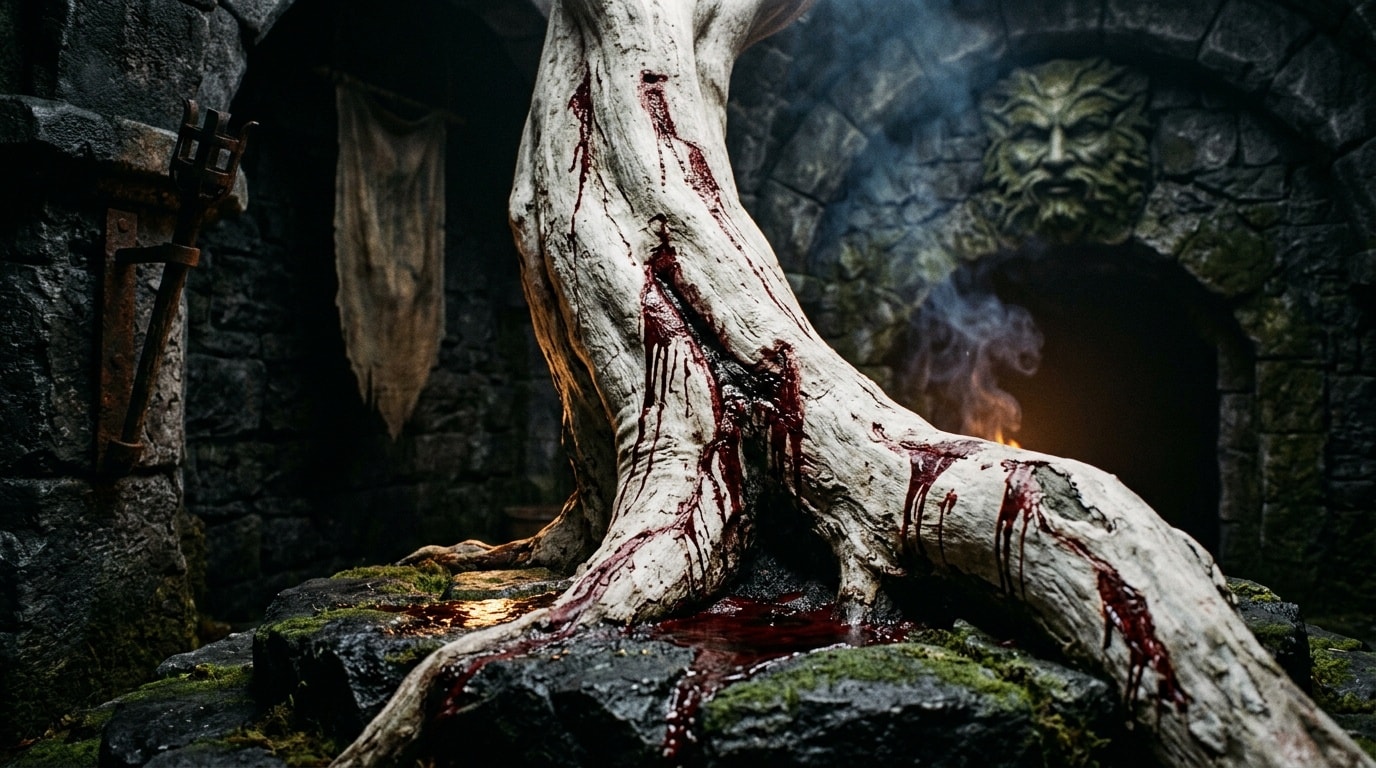
The Green Man Staged Daemon's Vision to Document the Three-Eyed Raven's Emergence
The horned figure that vanishes behind Harrenhal's heart tree immediately before Daemon's vision is a Green Man, an ancient guardian of the weirwood network, whose presence signals that the vision was a managed transmission rather than a passive haunting.
Larys Uses Aegon as His Escape Insurance
Larys Strong is using Aegon as a portable claim to the Iron Throne, a bargaining asset to be held in reserve in Braavos while the war consumes every other player.
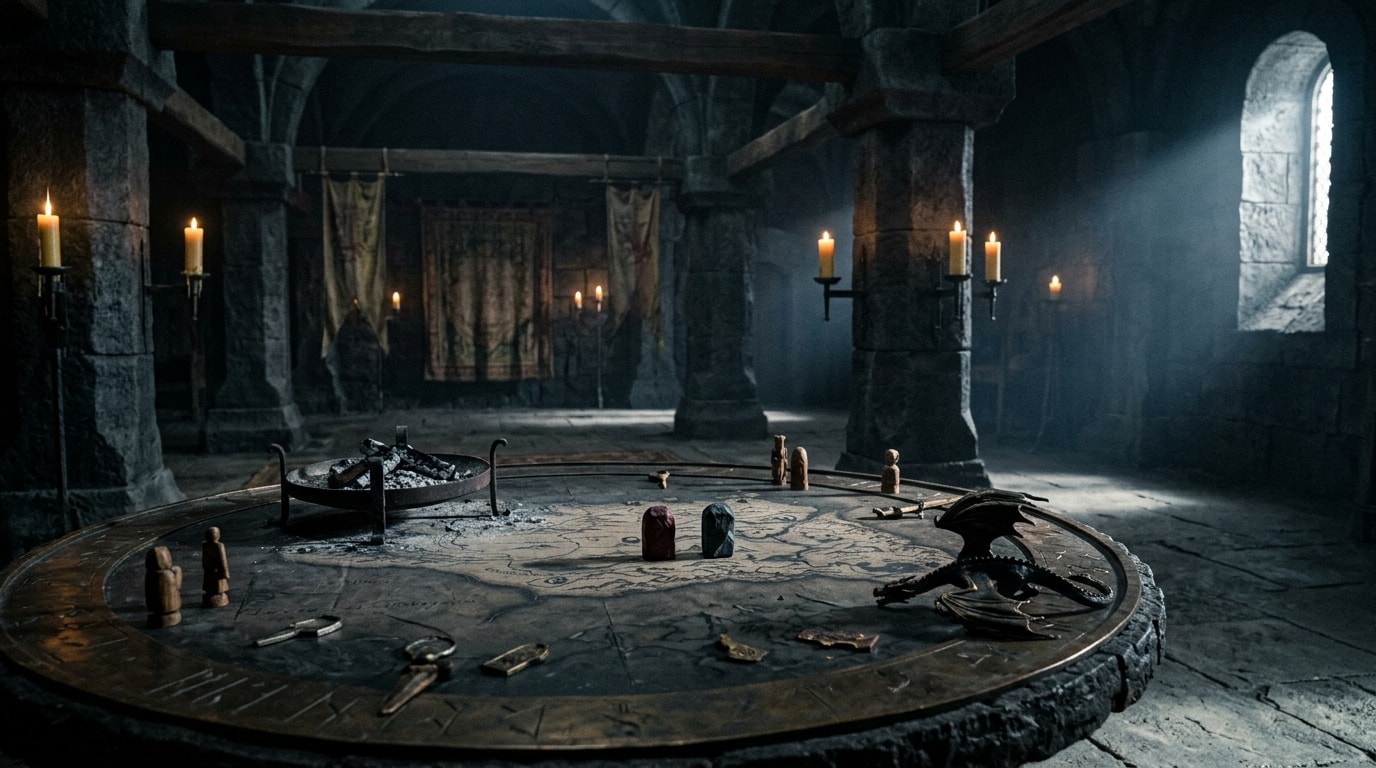
Rhaenyra's Strike Will Cost Her the Peace
Rhaenyra's strike on Lannisport and Oldtown will fracture her coalition before it can win the war, because the dissent already on record at her own war council signals that the civilian casualties her dragonriders inflict will delegitimize her claim faster than any military victory can secure it.
Broome Tried to Flip Daemon Against Rhaenyra
Ser Alfred Broome attempted to flip Daemon against Rhaenyra at Harrenhal, and Daemon's decision to reject him privately rather than deliver him to Rhaenyra's custody left the treason alive inside the Black host.
Alicent's Peace Offer Conceals a Trap
Alicent's peace offer is a coordinated delay designed to neutralize Rhaenyra's dragon advantage while the Triarchy fleet and Green armies reach their positions, with the three-day deadline functioning as a military clock rather than a surrender condition.