Rhaenyra's Strike Will Cost Her the Peace
THE THEORY
Rhaenyra's strike on Lannisport and Oldtown will fracture her coalition before it can win the war, because the dissent already on record at her own war council signals that the civilian casualties her dragonriders inflict will delegitimize her claim faster than any military victory can secure it. The objections from Hugh and Baela are not a debate to be resolved; they are the first rupture in an alliance built on incentive rather than shared conviction, and Rhaenyra's own stated guilt about dooming thousands confirms the show is building toward a moral cost that will define her reign before she ever sits the throne. If Hugh or Baela defects or breaks discipline mid-assault, the strike becomes an atrocity Rhaenyra ordered and could not control, which destroys both the military objective and the legitimacy argument simultaneously.
How This Theory Works
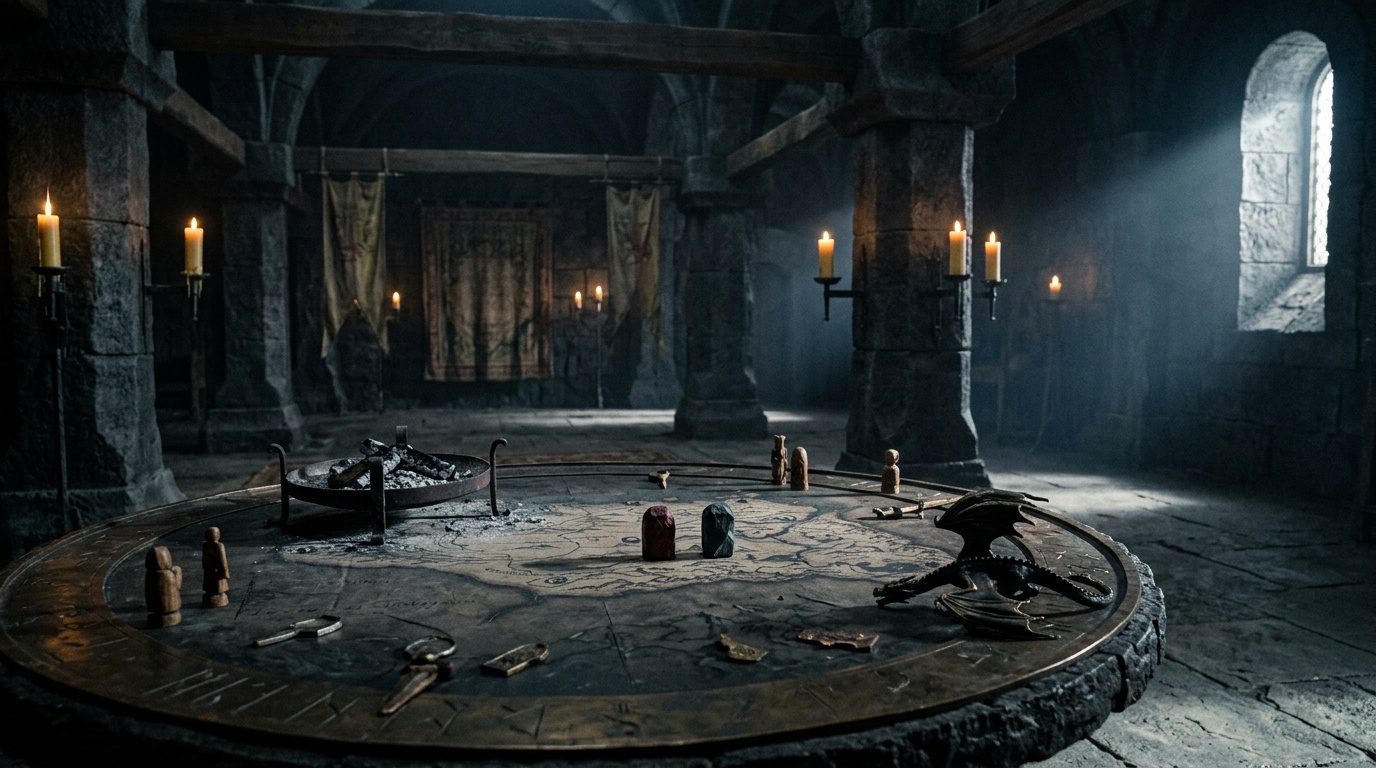
Rhaenyra's decision to strike Lannisport and Oldtown is not a military gamble. It is the moment her claim to the throne converts from a legitimacy argument into a conquest argument, and the show has staged that conversion to make the cost visible before the first dragonfire falls. The framing of the supper scene does the opposite of endorsing the plan. Two of the riders whose loyalty she most needs, Hugh and Baela, immediately push back on the killing of thousands of innocents. That objection does not come from enemies. It comes from people she just bound to her cause with promises of knighthood two days before ordering them to burn civilian cities.
What the show has constructed around this plan is a structure of competing legitimacies. Rhaenyra's claim rests on Viserys's decree and lawful inheritance. The moment she orders mass civilian deaths to take that throne, she hands the Greens the narrative they need to portray her as a dragonlord who burns cities rather than a queen who rules them. Jace's counterargument, that more innocents die if Aemond remains, is correct as far as it goes, but it is a utilitarian calculation that Rhaenyra herself cannot fully commit to. Her own admission to Mysaria that striking dooms thousands to their deaths is not a queen steeling herself for hard choices. It is a queen who has already identified the flaw in her own plan and cannot name an alternative.
Ulf volunteering to challenge Aemond personally, convinced Silverwing can face Vhagar, is the most dangerous element in the room and no one treats it as such. Rhaenyra's new dragonriders are not disciplined soldiers operating from shared conviction. They are people she incentivized with glory and titles, and Ulf's reckless certainty signals exactly the kind of uncoordinated action that turns a military strike into a massacre with no clear author. The civilian casualties Baela and Hugh named will not be a regrettable side effect of the assault. They will be its defining image, and the dissent was already on the record at Rhaenyra's own table before she gave the order. The sharpest question the show has placed in front of the audience is not whether the strikes succeed militarily. It is whether Hugh or Baela breaks from the plan mid-assault, produces exactly the chaos Ulf's overconfidence promises, and transforms Rhaenyra's coordinated campaign into the atrocity her enemies need her to commit.
Is this theory convincing?
Key Evidence
Rhaenyra Names Oldtown and Lannisport
At the supper table, Rhaenyra explicitly announces they will leave in two days to strike the Green strongholds of Lannisport and Oldtown, committing her dragonriders to a coordinated assault on the wealthiest Green-held cities.
Baela and Hugh Voice Civilian Objections
Both Baela and Hugh express shock and concern over the plan to burn cities and kill thousands of innocents, providing immediate in-council dissent before any attack has been launched.
Rhaenyra's Own Guilt Before the Strike
Rhaenyra tells Mysaria that to claim the throne she must strike, and in striking she dooms thousands to their deaths, signaling that she herself recognizes the moral catastrophe built into her plan.
Knighthood Promised to Untested Riders
Rhaenyra promises knighthood to Addam, Hugh, and Ulf at the same supper where the plan is announced, binding newly won and untested allies to an assault on civilian-populated cities with glory as the incentive rather than shared conviction.
Ulf's Overconfidence About Vhagar
Ulf declares he will personally challenge Aemond and that Silverwing is not afraid of Vhagar, projecting a reckless certainty that undermines the coordinated discipline the dual-city assault would require.
Jace's Utilitarian Endorsement
Jace supports his mother by arguing that more innocents will die if Aemond holds the throne, framing the attack as a lesser evil rather than a just action, which reinforces rather than resolves the moral weight Rhaenyra's own council has named.
Other Theories for S2E08
Alicent's Surrender Is a Confession: She Is Trading Aegon's Life to Protect the One Child She Never Fully Broke
Alicent's secret journey to Dragonstone is not a peace overture but a surrender negotiation in which she offers Rhaenyra a bloodless throne in exchange for her own survival, and accepts Aegon's death as the price without refusal.
Helaena Is a Reliable Narrator, and That Is Why Both Clauses Must Be Believed
Helaena's accusation that Aemond burned Aegon at Rook's Rest is not grief or suspicion but a prophetic verdict, and the show has deliberately structured the scene to establish her accuracy before she names the God's Eye as the precise location of Aemond's death.
The Weirwood Shows Daemon His True Role
The weirwood vision does not persuade Daemon through loyalty or love but through erasure: it shows him a future in which he is structurally absent, and Helaena confirms that absence is his role.
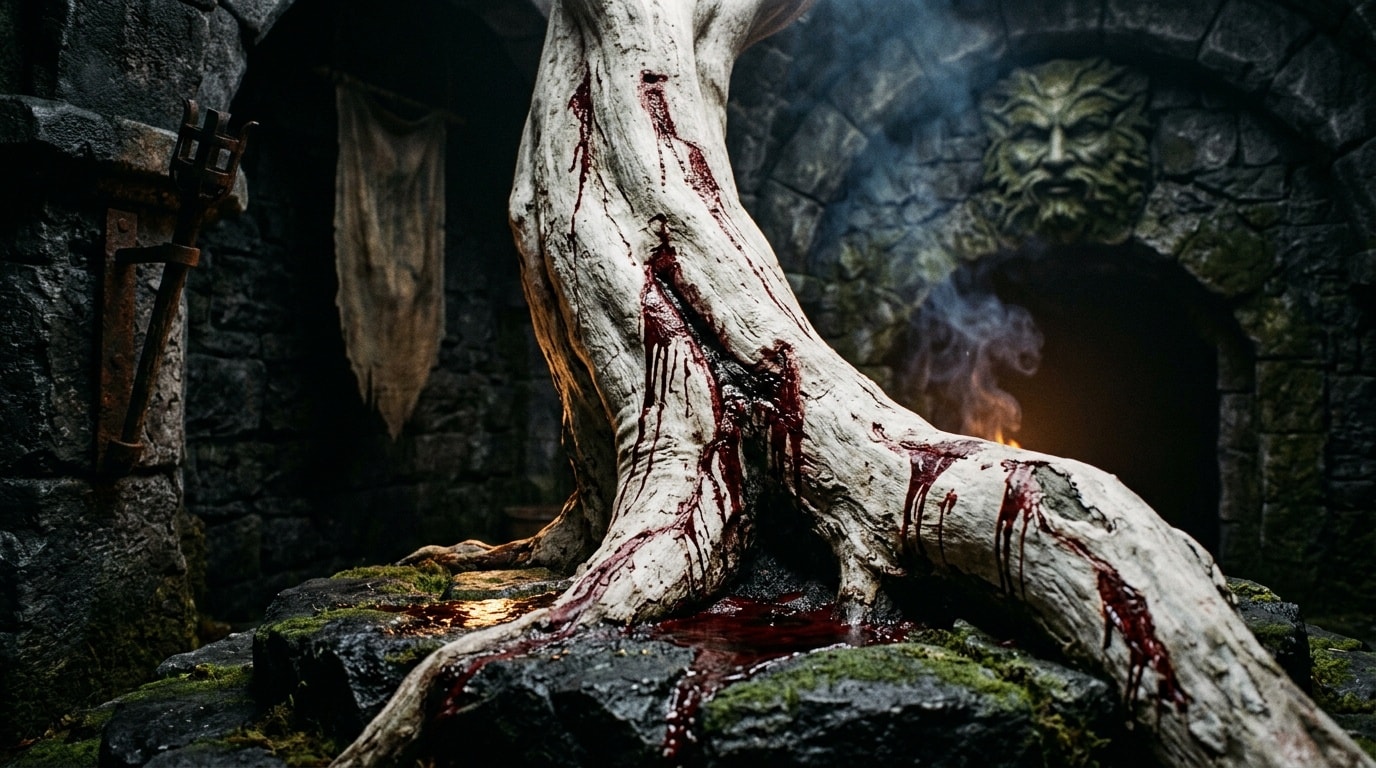
The Green Man Staged Daemon's Vision to Document the Three-Eyed Raven's Emergence
The horned figure that vanishes behind Harrenhal's heart tree immediately before Daemon's vision is a Green Man, an ancient guardian of the weirwood network, whose presence signals that the vision was a managed transmission rather than a passive haunting.
Larys Uses Aegon as His Escape Insurance
Larys Strong is using Aegon as a portable claim to the Iron Throne, a bargaining asset to be held in reserve in Braavos while the war consumes every other player.
Broome Tried to Flip Daemon Against Rhaenyra
Ser Alfred Broome attempted to flip Daemon against Rhaenyra at Harrenhal, and Daemon's decision to reject him privately rather than deliver him to Rhaenyra's custody left the treason alive inside the Black host.
Alicent's Peace Offer Conceals a Trap
Alicent's peace offer is a coordinated delay designed to neutralize Rhaenyra's dragon advantage while the Triarchy fleet and Green armies reach their positions, with the three-day deadline functioning as a military clock rather than a surrender condition.
Aemond's Rage Is Impotence Disguised as Power
Aemond's destruction of Sharp Point is not a military calculation but a psychological confession: turned back at Dragonstone and unable to strike what actually threatens him, he incinerates a defenseless city to restore a self-image that the war has already begun to destroy.