Daemon's Conversion: How Architecture, Operation, and Psychology Will Make His Usurpation Feel Like Loyalty
Plausibility Score
(?)Convinced
(?)#205
of 705 theories
Theory Ranking
(?)READER VERDICT
Is this theory convincing?
Trend builds after 10 votes.
Be among the first to weigh in.
THEORY ASSESSMENT
The episode ground truth directly confirms both the 'King' demand and Daemon's stated intention to claim the Iron Throne with Rhaenyra by his side, making this one of the most directly evidenced theories in the catalog.
STORY CONTEXT
The Rogue Prince has always wanted something, but fans can't agree on what. Theories range from pure crown ambition to genuine love for Rhaenyra to a death wish dressed up as loyalty, with every smirk and sideways glance entered into evidence.
ACTIVE SIGNALS
This theory ranks among the most-contested in the Theory Atlas catalog — a grounded competing reading meaningfully challenges the dominant interpretation.
WHY THIS MATTERS
If this reading is correct, House of the Dragon is staging something more unsettling than a power struggle between rivals: it is staging the mechanics by which a loyal instrument gradually becomes the threat it was deployed to stop, without any single moment of conscious betrayal that either party can name or resist. Rhaenyra's actual enemy may not be Aegon on the Iron Throne but the husband at Harrenhal who is being converted, layer by layer, into a man who thinks he is saving her.
ALTERNATE INTERPRETATION
A minority reading within the evidence holds that Daemon's demand to be called 'King' may reflect wounded pride and a decades-long grievance about his exclusion from power rather than a coherent plan to actually displace Rhaenyra. Under this view, his statements to Alys Rivers are expressions of bitterness and fantasy rather than a settled political program, and the show may ultimately reveal that Daemon knows he cannot realistically claim the throne and is performing kingship rather than pursuing it.
Adjacent Reading — Not a Competing Theory
Other Theories for S2E05
Dead Dragon Cracks Targaryen Divine Mystique
The smallfolk's horror at Meleys's severed head signals the collapse of the theological premise that made Targaryen rule feel inevitable rather than merely imposed.
Alicent Built the Logic That Erased Her at Both Levels Simultaneously
Alicent's removal from power is not a betrayal of the system she constructed but its correct functioning: the instrumentalizing parenting logic she applied to Aemond and the patriarchal institutional logic she spent her political life defending are the same logic operating at different scales, and she built both.
Aemond Left Aegon Alive on Purpose
Aemond used the Battle of Rook's Rest as deliberate cover to remove his brother from power, then chose to leave Aegon comatose rather than dead, calculating that a breathing king was more politically useful than a martyr.
Cole's Silence Built the Trap: Aemond's Regency Is Engineered to Collapse
Criston Cole withheld Aemond's role in the Battle of Rook's Rest from Alicent before the Small Council named a regent, a sequenced act of deflection that transferred power from Alicent to Aemond while ensuring she remained the only person positioned to eventually destroy that authority.
Jace's Frey Deal Bypasses Rhaenyra's Authority
Jace has not simply acted without authorization.
Jeyne Arryn's Loyalty Has a Dragon-Sized Price
Jeyne Arryn has already decided the terms of her withdrawal from the Black coalition, and Rhaenyra cannot see it because Jace's unauthorized workaround at the Twins has patched over the evidence.
Dragonstone's Records Hold the War's Key
Jacaerys's plan to recruit thin-blooded and bastard-born Targaryen descendants as dragonriders is an ideological capitulation the Black faction has not yet admitted to itself.
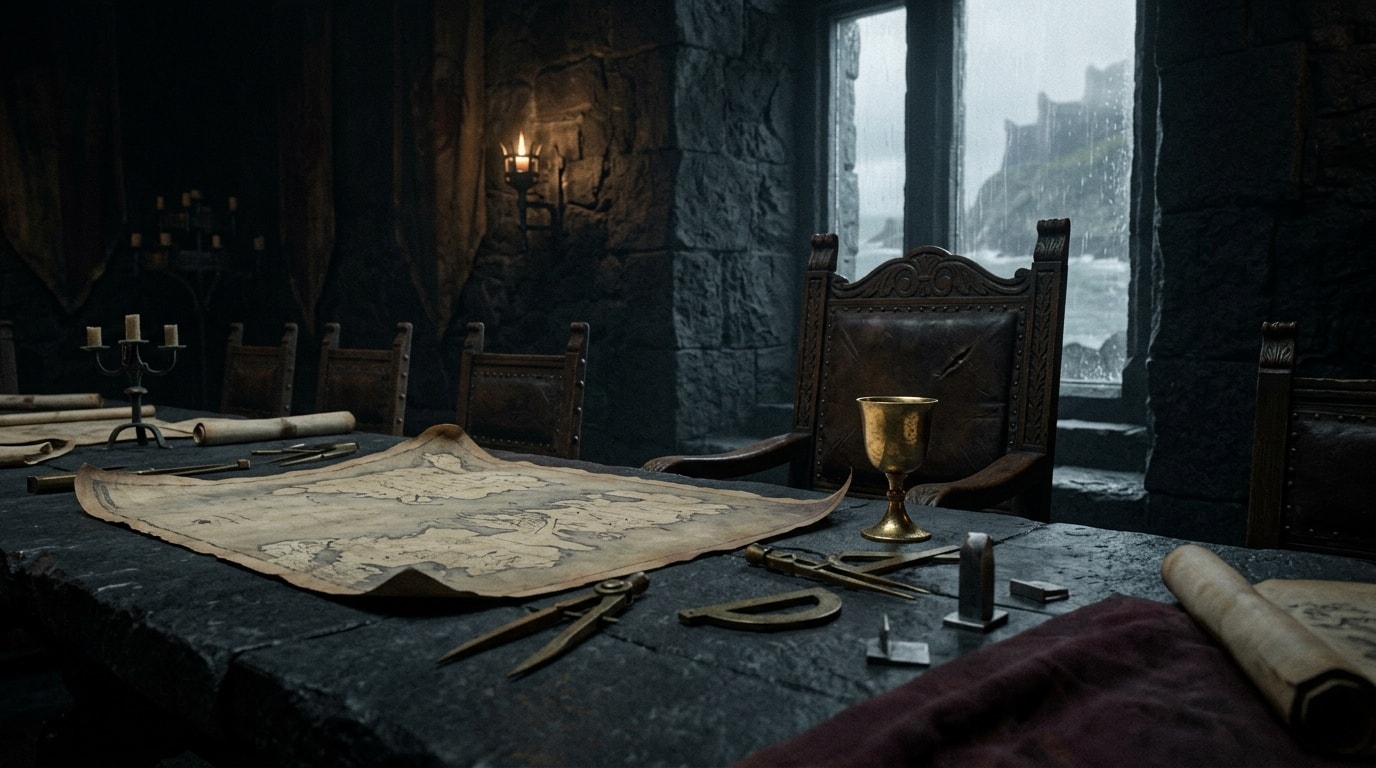
Rhaenyra's Competence Gap Will Cost the Blacks
Rhaenyra's private admission that she was structurally excluded from military knowledge is not a wound she can resolve through self-awareness.