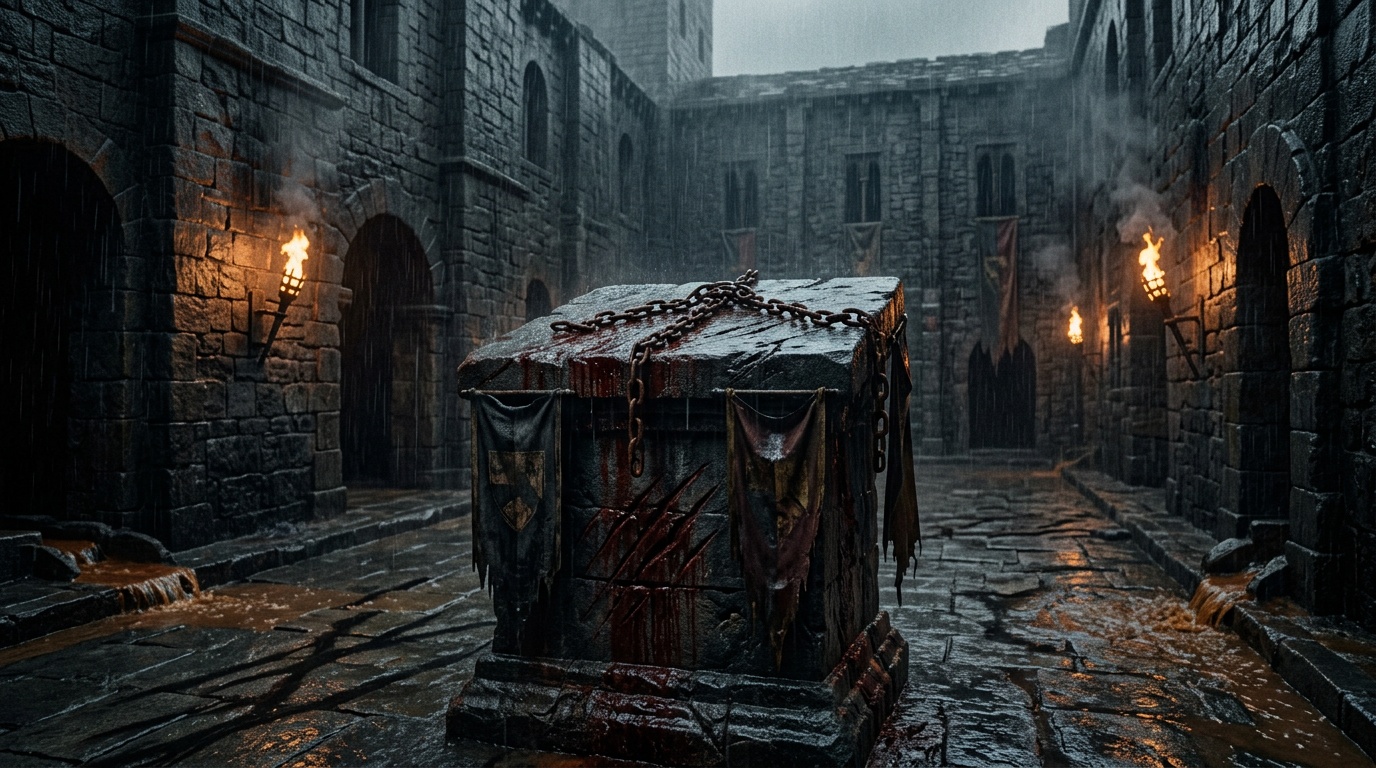
Dead Dragon Cracks Targaryen Divine Mystique
THE THEORY
The smallfolk's horror at Meleys's severed head signals the collapse of the theological premise that made Targaryen rule feel inevitable rather than merely imposed. By killing a dragon and displaying the evidence, the Greens have not demonstrated strength but disproved the foundational myth that dragons and their riders exist beyond mortal reach. That disproof is irreversible, and Mysaria is already building strategy around it.
How This Theory Works
The death of a dragon does not consolidate Targaryen power. It dissolves the precondition for it. For generations, Meleys flew over King's Landing as proof that the ruling house existed outside the ordinary logic of mortality. The smallfolk did not submit to Targaryen rule because they were forced to. They submitted because the evidence of their own eyes made resistance feel cosmically futile. A dragon overhead is not a weapon. It is a theological argument.
When Criston Cole drags Meleys's severed head through streets already emptied by hunger, he does not present a trophy. He presents a refutation. The smallfolk see not Green strength but a dragon reduced to meat, and they call it a bad omen. Criston is baffled because Green leadership has confused military victory with symbolic authority. These are not the same thing. Killing a god does not prove you are stronger than a god. It proves gods can be killed.
The irreversibility of this is what the theory presses toward. Once the smallfolk have seen a dragon's head at street level, the prior condition cannot be restored. Submission that rested on the impossibility of Targaryen death is now submission that must be maintained by other means, none of which the Greens possess in a blockaded, hungry city. Mysaria understands this before Rhaenyra does. The sentiment the parade was designed to suppress is now a political resource, and Rhaenyra operationalizes it immediately by dispatching Elinda Massey as a spy. The crowd's horror is not a mood. It is an opening.
Is this theory convincing?
Key Evidence
Smallfolk Treat Head as Omen
When Criston parades Meleys's severed head through King's Landing, the near-starving smallfolk do not celebrate but instead regard it as a bad omen, directly inverting the intended propagandistic effect.
Criston's Bafflement at Reaction
Criston Cole is visibly baffled by the smallfolk's negative response, signaling that the Green leadership does not understand how the sight of a dead dragon is being received at the street level.
Dragon as Untouchable Symbol
Meleys had flown over King's Landing repeatedly across generations, functioning as a living emblem of Targaryen permanence and divine elevation above ordinary mortality.
Mysaria Identifies Street Sentiment
Mysaria advises Rhaenyra to trust in the help of the common people of the capital, explicitly building strategy around the smallfolk's negative reaction to the dragon's death rather than treating it as irrelevant.
Rhaenyra Dispatches Spy to Capital
On Mysaria's advice, Rhaenyra sends her handmaiden Elinda Massey to King's Landing as a spy, operationalizing the theory that popular disillusionment with Green rule is now actionable.
Other Theories for S2E05
Daemon's Conversion: How Architecture, Operation, and Psychology Will Make His Usurpation Feel Like Loyalty
Daemon Targaryen is not on a path to consciously betray Rhaenyra.
Alicent Built the Logic That Erased Her at Both Levels Simultaneously
Alicent's removal from power is not a betrayal of the system she constructed but its correct functioning: the instrumentalizing parenting logic she applied to Aemond and the patriarchal institutional logic she spent her political life defending are the same logic operating at different scales, and she built both.
Cole's Silence Built the Trap: Aemond's Regency Is Engineered to Collapse
Criston Cole withheld Aemond's role in the Battle of Rook's Rest from Alicent before the Small Council named a regent, a sequenced act of deflection that transferred power from Alicent to Aemond while ensuring she remained the only person positioned to eventually destroy that authority.
Aemond Left Aegon Alive on Purpose
Aemond used the Battle of Rook's Rest as deliberate cover to remove his brother from power, then chose to leave Aegon comatose rather than dead, calculating that a breathing king was more politically useful than a martyr.
Jace's Frey Deal Bypasses Rhaenyra's Authority
Jace has not simply acted without authorization.
Jeyne Arryn's Loyalty Has a Dragon-Sized Price
Jeyne Arryn has already decided the terms of her withdrawal from the Black coalition, and Rhaenyra cannot see it because Jace's unauthorized workaround at the Twins has patched over the evidence.
Dragonstone's Records Hold the War's Key
Jacaerys's plan to recruit thin-blooded and bastard-born Targaryen descendants as dragonriders is an ideological capitulation the Black faction has not yet admitted to itself.
Rhaenyra's Competence Gap Will Cost the Blacks
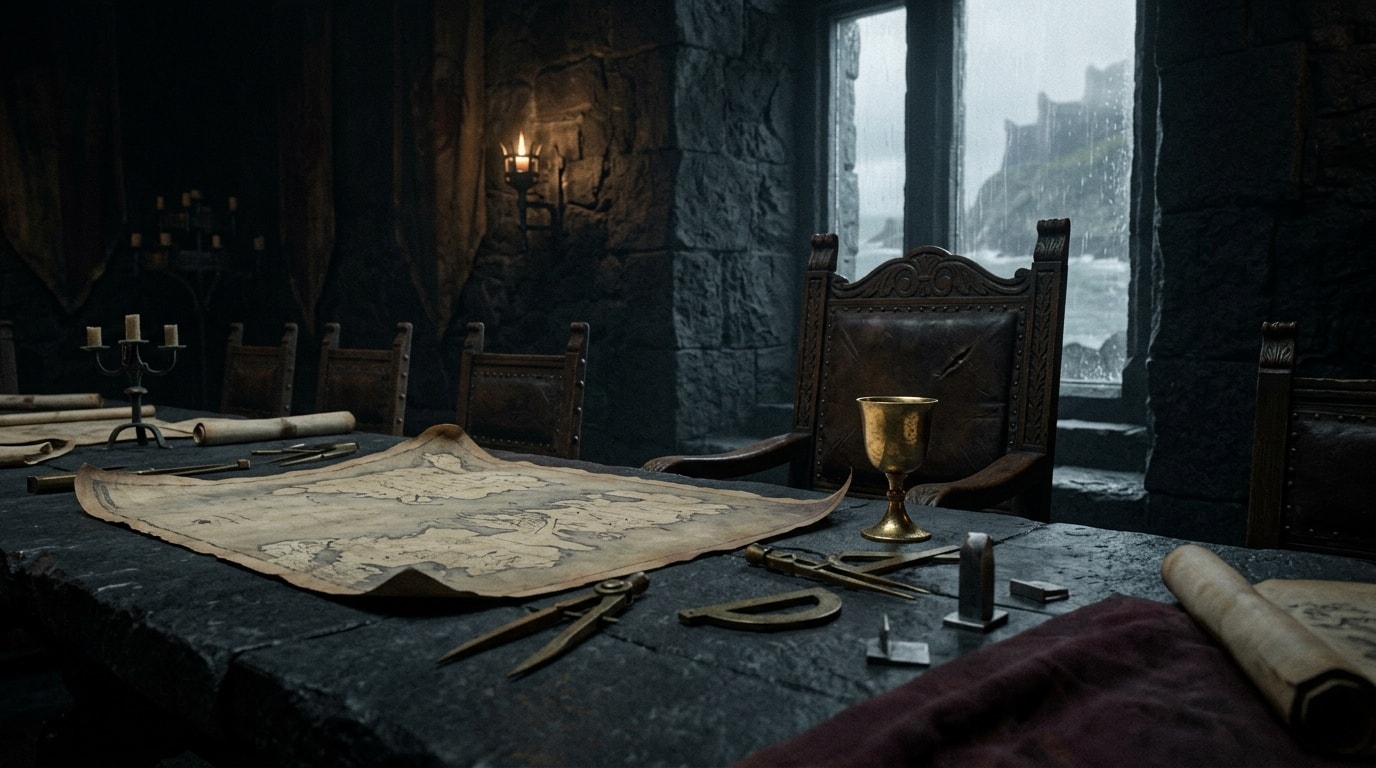
Rhaenyra's private admission that she was structurally excluded from military knowledge is not a wound she can resolve through self-awareness.