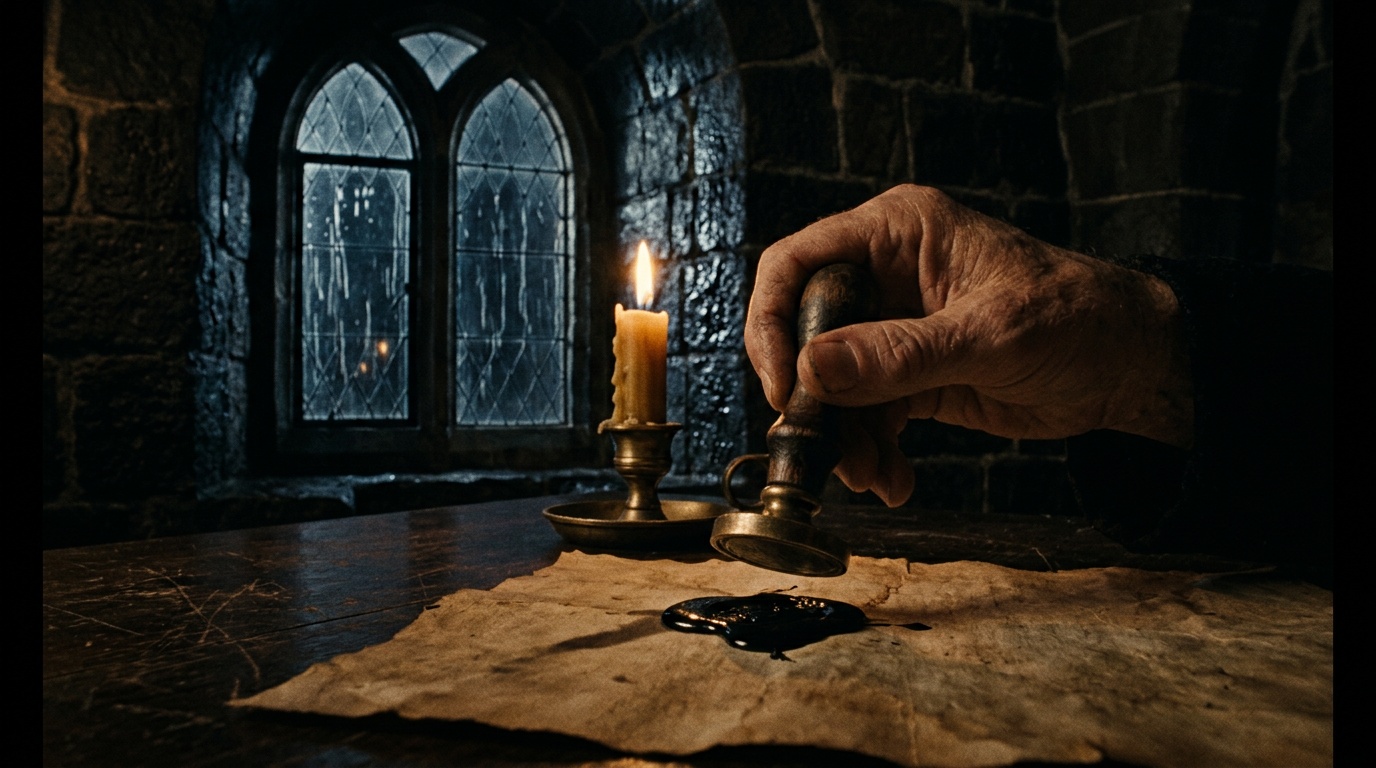
Otto Knew Viserys Never Named Aegon
THE THEORY
Otto Hightower recognized Alicent's misreading of Viserys's final words and chose not to correct it, building Aegon II's coronation on a succession story he knew to be false. His dismissal from the small council removes the one person who understood that the Green cause's legitimacy was a managed construction rather than a fact. The succession is now a fraud with no one left to maintain it.
How This Theory Works
Otto Hightower understood exactly what Viserys was saying when he died. His familiarity with Targaryen lore almost certainly extended to Aegon the Conqueror's prophecy about the Song of Ice and Fire, and when Alicent reported that Viserys had named Aegon as heir, Otto recognized her misreading for what it was. He chose to let it stand. The succession was not built on a misunderstanding he failed to correct. It was built on one he decided not to correct.
This reading reframes everything Otto does in the confrontation with Aegon over the ratcatcher executions. His fury is not strategic frustration at wasted political capital. It is the rage of an architect watching his construction defaced by someone he regards as a prop rather than a ruler. Otto spent years building the narrative infrastructure that would make Aegon's claim appear legitimate, carefully managing the council and the public story of legitimacy. When Aegon says he prefers to spill blood rather than ink, he is not being reckless. He is announcing that he never needed to understand the mechanism by which he sits on the throne, because someone else carried that knowledge for him. That someone is Otto.
Otto's reply to Aegon's claim that Viserys named him king, 'Is that what you think,' is the most clarifying line in the episode. It is not a question. It is the controlled response of a man who knows the official story diverges from what actually happened and has spent years ensuring no one examines that gap too closely.
The dismissal from the small council is therefore not a political setback. It is a structural rupture. Otto was not only the coup's architect. He was its institutional memory, the single person who understood that the Green succession rested on a constructed narrative rather than a fact. Without him, that gap between story and truth has no one left to manage it. Criston Cole answers to a king who experiences counsel as a challenge to his authority. The fraud does not become more stable once its author is gone. It becomes a weight with no one holding the rope.
Is this theory convincing?
Key Evidence
Otto's 'Is That What You Think' Response
When Aegon II claims Viserys named him king, Otto's reply 'Is that what you think' implies Otto knows the official succession story diverges from what Viserys's words actually meant, signaling he constructed the narrative rather than received it.
Alicent's Misread Prophecy Words
Alicent heard Viserys muttering about 'Aegon's dream,' which referred to Aegon the Conqueror's prophecy about the Song of Ice and Fire, not a directive naming Aegon II as heir, and Otto's deeper familiarity with Targaryen lore suggests he understood this distinction.
Otto's Fury at Aegon's Ratcatcher Executions
Otto's explosive confrontation with Aegon over the ratcatcher mass executions reveals a man who believes the throne's legitimacy was earned through his own political labor, not through Aegon's inherent right to rule.
Otto Frames Rhaenyra as Murderer
Otto's deliberate decision to blame Rhaenyra for Jaehaerys's murder regardless of actual culpability demonstrates his pattern of constructing political narratives over truth, consistent with a man who built the succession itself on the same method.
Aegon Dismisses Otto From Council
Aegon's removal of Otto from his position strips away the one figure who held the institutional knowledge of how the Green succession was constructed and why its narrative required careful management.
Other Theories for S2E02
Otto Hightower's Propaganda Has Two Instruments: A Dead Child and a Living Widow
Otto Hightower does not believe Rhaenyra ordered Jaehaerys's murder and does not need to.
Aegon II's Two-Part Declaration: The Viserys Model Dies First, Then Otto's War Does
Aegon II's destruction of Viserys's Old Valyrian model and his mass execution of the rat catchers are not separate emotional episodes but a sequential governing argument delivered in rapid succession.
Two Mirroring Pathologies: Why the Aegon–Otto Rupture Was Structurally Inevitable
The dismissal of Otto Hightower was not a political miscalculation that a shrewder Hand could have avoided; it was the predetermined outcome of two incompatible pathologies colliding.
Cole Sends Arryk to Die to Bury Two Confessions at Once
Criston Cole's decision to send Arryk Cargyll on a fatal solo mission to Dragonstone is not a military calculation but a mechanism for destroying the one witness who can place Cole's absence during Jaehaerys's murder, an absence caused by his presence in Alicent's chambers.
Aemond's Remorse Is Real But Privately Contained
Aemond has engineered a confession that costs him nothing.
Daemon's War Is His Own, Not Hers
Daemon ordered the assassination of Jaehaerys not to serve Rhaenyra's cause but to prosecute a decades-old grievance against his dead brother, with the Crabfeeder precedent and the Blood and Cheese moment both confirming that Daemon's defining response to powerlessness is unilateral, irreversible action taken on his own timeline.
Aegon's Mace Sealed the Conspiracy's Secret
Aegon's execution of Blood did not only express grief, it permanently sealed the conspiracy's chain of command from investigation.
Aemond's Guilt Will Break the Green Cause
Aemond Targaryen has already emotionally defected from the Green cause, and the show has constructed that defection with precision.