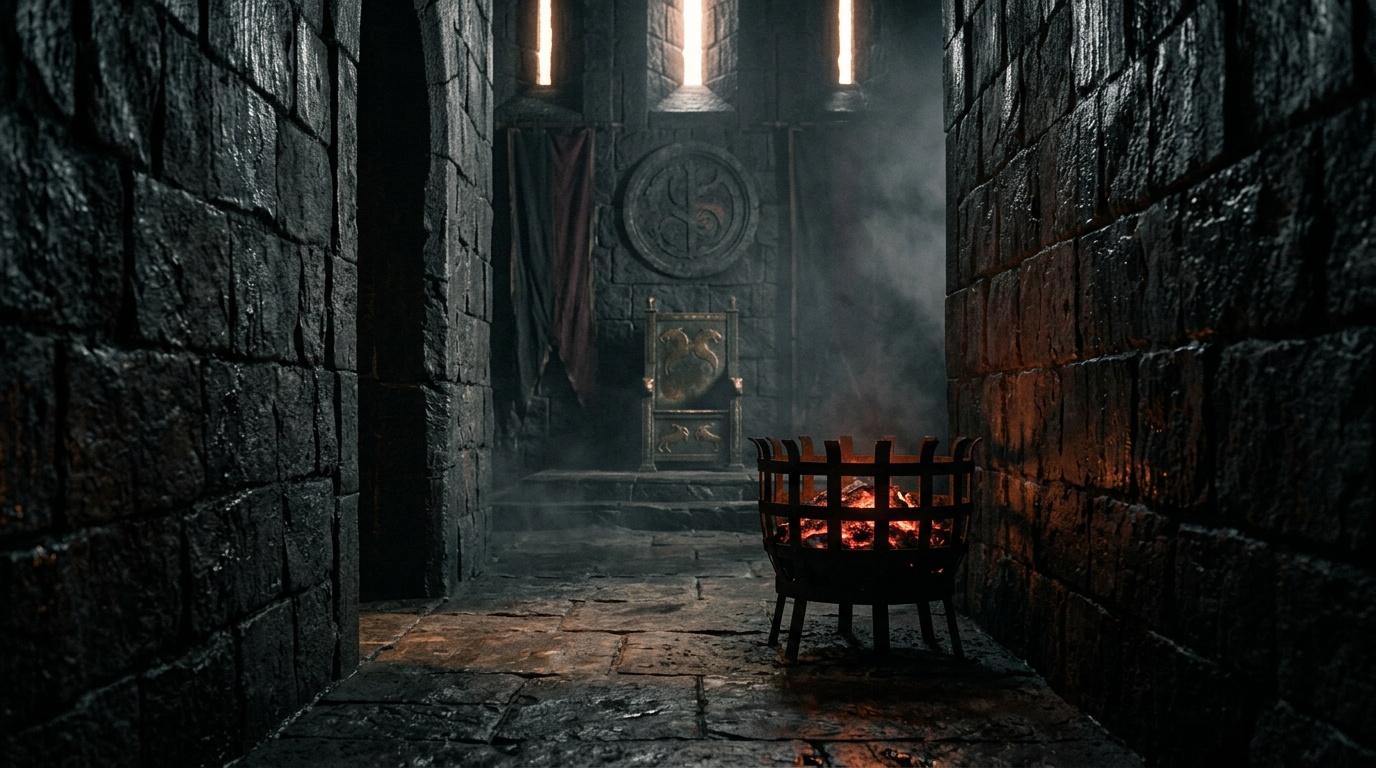
The Hightower Two-Layer Operation: How Hobert Manufactures Consensus Otto Then Exploits
THE THEORY
Otto and Hobert Hightower are running a sequenced, two-layer operation to install Aegon as heir apparent without ever openly contesting Rhaenyra's position. Hobert executes the public layer first, manufacturing noble consensus through premature acclamation, so that Otto can execute the private layer second, entering the royal pavilion not to advise but to present a fait accompli disguised as counsel. The operation's most dangerous feature is that Otto does not experience it as usurpation; he experiences it as correction, which means he will reframe every escalation as rescue rather than recognize it as betrayal.
How This Theory Works
The designation 'Second of His Name' belongs to kings who have ascended the throne, not to infants whose fathers have named a different heir. When Hobert Hightower leads the assembled lords at the hunting encampment in hailing the newborn Aegon by that title, before Viserys has altered a single word of the succession, he is not predicting a future. He is installing one. The acclamation is a political instrument calibrated to a specific problem: Rhaenyra holds the formal designation of heir, which means any move against her requires either a royal reversal or a manufactured alternative reality in which her designation already feels like the disruption. Hobert's public performance creates that reality. By the time Viserys speaks, the court has already been invited to treat Aegon's kingship as settled. Any pro-Rhaenyra declaration now arrives not as a decision but as a challenge to consensus that nobody voted for but everyone witnessed.
That the acclamation was coordinated rather than spontaneous is confirmed by what happens in private. Before the hunt departs, Hobert does not consult Otto; he assigns him. He urges his brother to push Viserys toward formally naming Aegon heir, packaging the ask in the language of Westerosi tradition as though it were constitutional principle rather than family ambition. The framing is instructive precisely because of what it reveals about the brothers' relationship. Otto has spent years deploying family members as political instruments; here, Hobert is doing exactly that to Otto. The Hand's proximity to the throne, his accumulated credibility with the king, his posture as the realm's disinterested counselor: these are resources Hobert is spending. Otto is not a partner in the operation. He is its second instrument.
Otto performs his assigned function with the operational precision of someone who has already decided the outcome. He enters the royal pavilion and offers Viserys not an argument for changing the succession but a solution to an administrative inconvenience, the flood of marriage suits arriving for Rhaenyra. His proposal to betroth Rhaenyra to Aegon is framed as relief from that burden, not as a succession maneuver. The framing is the operation. By disguising the move as problem-solving, Otto advances Aegon's claim without ever being required to defend it openly or to acknowledge that he is contradicting the king's declared intent. Viserys laughs it off. But a seed planted in the soil of a king's convenience does not need to germinate immediately. The betrothal proposal has done its work simply by making Aegon the center of any subsequent succession discussion, and it has done so while leaving Otto in possession of the posture of a neutral Hand.
The two-track structure is only fully intelligible when read as coordinated. Hobert's public acclamation creates pressure: the spread of noble assumption that Aegon is the real heir, visible in Jason Lannister's remark to Rhaenyra that she will be 'well compensated for her loss in station' when she weds him. That language did not originate with Jason; it is the downstream conclusion of what Hobert announced over the cradle. Otto's private framing then appears to relieve that pressure by offering the king a tidy resolution. The two moves form a closed circuit: Hobert generates the problem Otto's proposal appears to solve, and Otto's proposal anchors Aegon at the center of every solution while Hobert never needs to enter the room. The separation of roles gives each man plausible distance from the other's action. This is not a family working toward a shared goal. It is a sequenced operation with assigned layers and deliberately maintained separation between them.
The most important thing to understand about Otto is that he does not believe he is betraying the king. He believes he is correcting a mistake the king does not yet know he has made, and that belief is precisely what makes him undeterrable. A pure opportunist can be stopped when the cost of exposure rises high enough. A man who has genuinely internalized the conviction that he alone sees clearly, that the realm's stability requires Aegon, that Viserys's trust in Rhaenyra is a sentimental error that will cost thousands of lives, cannot be stopped by the same mechanisms. He will not stop when the pressure becomes visible. He will reframe it. Every maneuver becomes rescue. Every escalation becomes correction. The king's trust, which Viserys extends precisely because he believes Otto is his most reliable counselor, becomes the instrument through which the king's own heir is made impossible. Otto is not nursing dynastic hope. He is managing the sequence of pressure required to produce the only outcome he has already concluded is correct, and he will continue managing it until something breaks that he cannot reframe as anything other than what it is.
Is this theory convincing?
Key Evidence
Hobert's Private Counsel to Otto
In private, Lord Hobert Hightower explicitly urges his brother Otto to persuade Viserys to name Aegon heir apparent, invoking Westerosi tradition as justification.
Lords Hailing Aegon at Camp
Upon the royal family's arrival at the hunting encampment, Lord Hobert leads the assembled nobility in cheering for the infant Aegon, hailing him as the 'Second of His Name' in a display that frames him as heir before any formal declaration.
Otto's Aegon Betrothal Proposal
Otto approaches Viserys during the hunt and suggests betrothing Rhaenyra to Prince Aegon, framing it as a solution to the marriage pressure problem while functionally centralizing Aegon in all succession discussions.
Coordinated Public and Private Pressure
Hobert's public acclamation of Aegon among the lords and Otto's private counsel to Viserys occur within the same event, suggesting a coordinated two-track strategy rather than coincidental family opinion.
Otto Framing Aegon as Convenient Solution
Otto presents the Aegon betrothal not as a succession argument but as a remedy for the bother caused by noble suits for Rhaenyra's hand, disguising a succession maneuver as administrative problem-solving.
Other Theories for S1E03
Daemon Would Rather Die Than Be Rescued
Daemon's solo charge into the Crabfeeder's position is not a military decision but a psychological one: he would rather die than let Viserys become the author of his survival.
The Concession Already Made: How Viserys and Rhaenyra Surrendered the Succession in Opposite Directions
Viserys and Rhaenyra share a private understanding that the succession he proclaimed cannot hold, but they have arrived at this knowledge through opposite emotional trajectories, and they have never spoken it aloud to each other.
The Hart Chose Rhaenyra, Not Aegon
The white hart's appearance to Rhaenyra, after eluding every hunter sent out in Aegon's name, is the show's structural inversion of Otto Hightower's staged political omen, and the inversion is most damaging not because Rhaenyra receives the sign but because she refuses to deploy it.
Criston Cole Is Rhaenyra's Real Choice
Rhaenyra had already chosen Criston Cole before the marriage negotiations began, and the Kingswood scenes are not the origin of that attachment but its confirmation.